Opinion | Zagros To Dasht-e-Lut, Why Iran's Terrain Could Be A Challenge For US Ground Troops
Iran is often called a 'fortress' owing to its formidable mountain ranges, which virtually form a wall to its North, West and South.
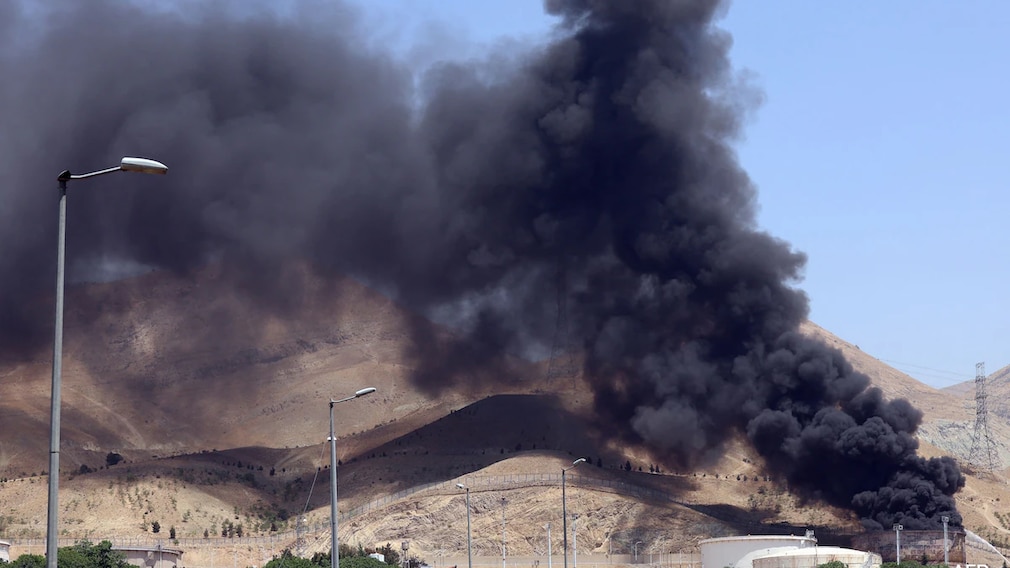
The war in Iran has been ongoing for a month and is showing no signs of ending. On the contrary, with every passing day and newer military engagements, the escalation ladder only seems to be moving up. The US-Israel combo, which had initiated this war through pre-emptive strikes into Iran on February 28 are finding the going difficult as Iran is proving to be more resilient and stronger than what was initially projected. Despite the killing of its Supreme Leader in a targeted strike on Day One as well as the continuing losses and damages to key infrastructure thereafter, Iran is hitting back hard, forcing the US and Israel to think of newer options to ensure the achievement of their objectives as well as an early end to the war.
What The US Is Aiming For
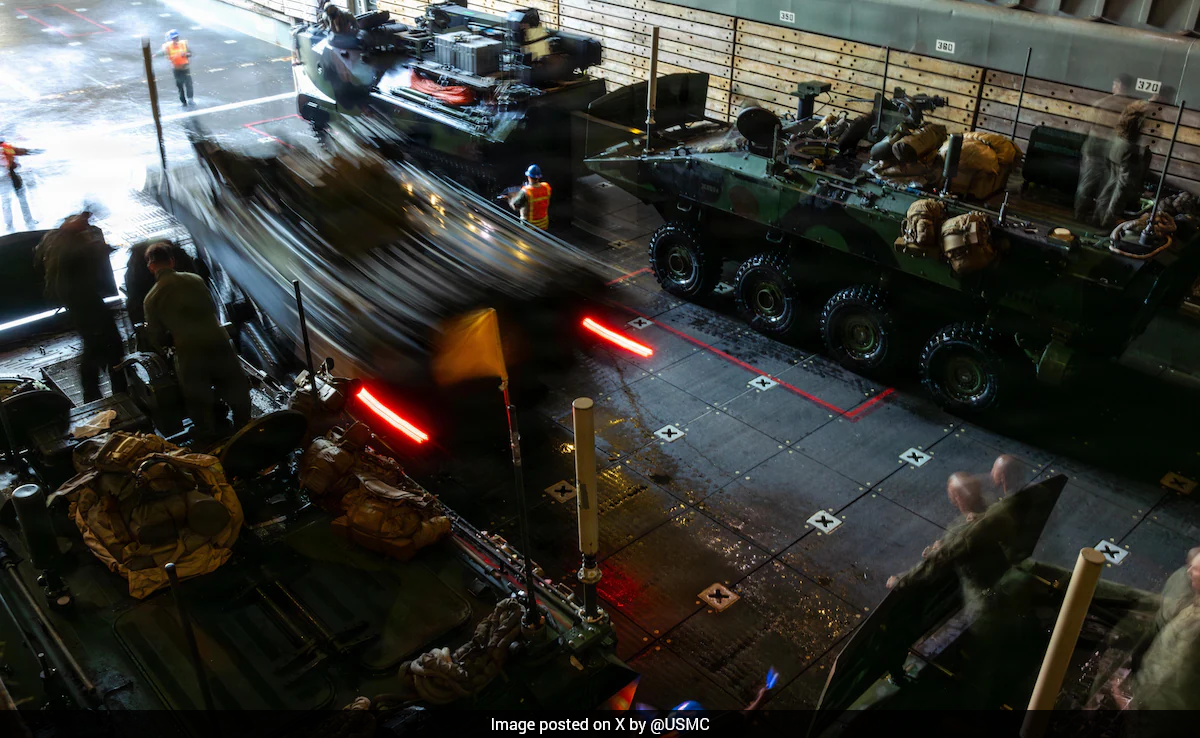
Among one such options is the possibility of inserting a few thousand ground troops into Iran. Reports already indicate that an estimated 5,000 to 7,000 troops have been mobilised and dispatched and are likely to be fully assembled by April 6-7 for the launch of the offensive. This deployment includes the 82nd Airborne Division with about 2,500 paratroopers as well as American naval ships, USS Tripoli, an America-class amphibious assault ship carrying 2,500 Marines of the 31st Marine Expeditionary Unit (MEU) and USS Boxer with 2,200 Marines of the 11th MEU.
The likely objectives of this ground offensive could vary from taking control over strategically located islands in the Persian Gulf, to the launch of special forces to recover the 460-odd kilograms of highly enriched Uranium (enriched up to 60%) hidden somewhere in Iran, or the capture of strategically located ports and airports. In addition to how Iran may counter any such move, one of the major factors in planning and the success of such an operation is the terrain. In fact, in the planning of any military operation, it is the terrain analysis that precedes any operational planning, and, therefore, a brief overview of the formidable terrain that Iran presents to any invading force is very important to analyse.
The Two Mountain Shields
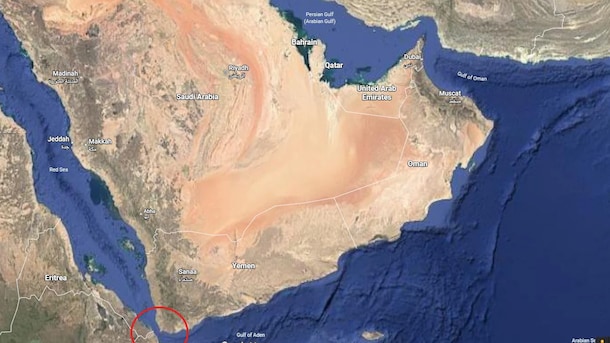
Iran is a huge country, measuring almost 1,650 km North to South and 1,800 km East to West. It is the 17th-largest by size in the world, almost twice the size of Iraq and about 75-80 times the size of Israel. It is often called the 'Fortress Iran' owing to its formidable mountain ranges, which virtually form a wall to its North, West and South. The diverse landscape also includes deserts in the centre, a 750-km coastline along the Caspian Sea in the North and a 2,250-km coastline in the South along the Persian Gulf and Oman Sea.
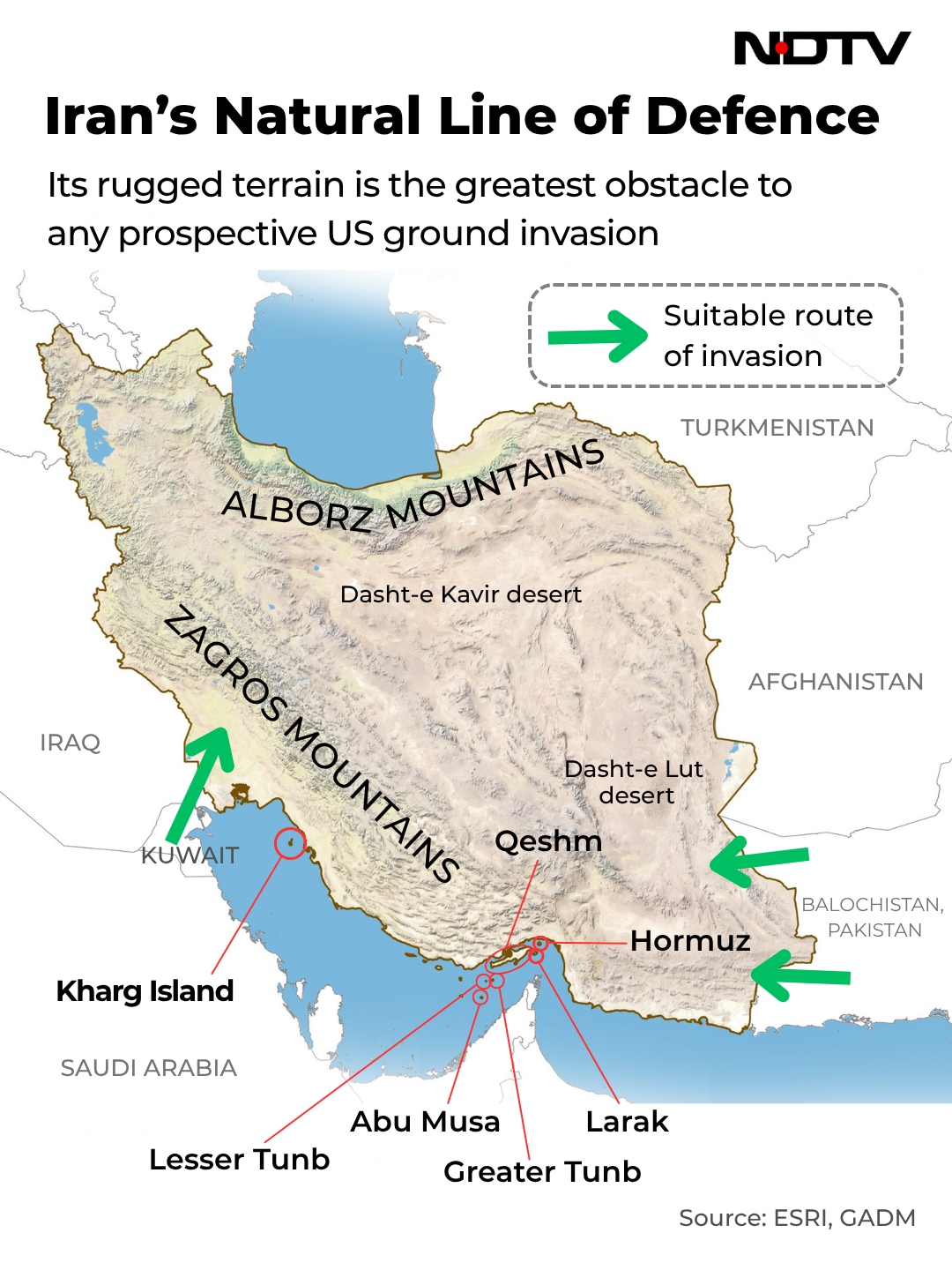
The highlights of Iran's topography are the two major mountain ranges: the Zagros Mountains in the North-west and the Alborz Mountains in the north. The Zagros Mountain range forms a virtual wall stretching over 1,500 kilometres from the northwest to the southeast of the country, protecting Iran from any foreign forces attempting to invade from Iraq and Turkey. In fact, this mountain range extends well into the southern coastline, up to Bandar Abbas, adding a layer of defence to the coastline. The Alborz Mountain range in the North runs parallel to the southern coast of the Caspian Sea, adding a layer of formidable obstacles along with the Caspian Sea. It also has Iran's highest peak, Mount Damavand, with a height of 5,610 meters.
These mountain ranges form a natural defensive shield and are an integral part of Iran's defence strategy. From the rugged terrain of the Zagros and Alborz mountains to the expansive deserts of Dasht-e Kavir and Dasht-e-Lut, Iran's physical geography makes ground operations, especially manoeuvre warfare, a very expensive option, both in terms of troops, equipment and time.
The Three Groups Of Islands
For ground operations, the primary target currently being discussed is the Kharg Island. A 20 sq. km piece of land in the Persian Gulf formed by coral reef and limestone rocks, the island is strategically located close to Iran, merely 25 km off the coastline in the northern Persian Gulf. Its importance comes from the fact that it is a major export terminal and has deep-water ports that allow ships to dock and load crude oil and other products. It exports almost 2 million barrels of crude oil per day, which is pumped into it through pipelines from the mainland.
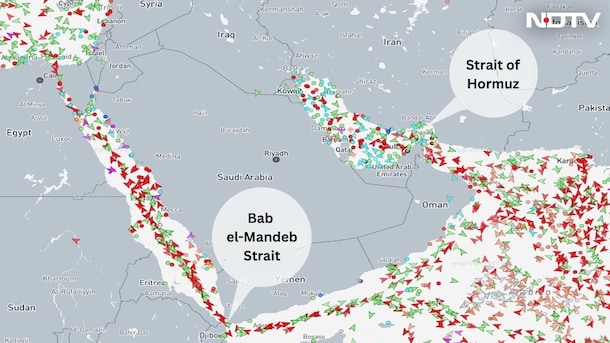
About 8 km long and 4-5 km wide, it is located in the Northwestern end of the Persian Gulf, almost 500 km away from the Strait of Hormuz and very near the coast of Kuwait. The terrain in it is flat with an average elevation of 10 metres, the highest being 70 metres at Kūh-e Dīdeh Bānī. As a result, it is easy for an amphibious landing to take place, and in a military engagement, it offers unobstructed fields of fire and very little natural concealment, giving a clear advantage to the defender. Its close proximity to the Iranian coast makes it easy for Iranian defence to engage invading forces with not only missiles and drones but also field artillery. Any capture of Kharg island will thus necessitate the capture and domination of the coastline to prevent direct interdiction by Iran.
The next set of islands is the three islands of Abu Musa, Greater Tunb and Lesser Tunb. They are located near the entrance of the Strait of Hormuz in the Persian Gulf, closer to the UAE coast. Iran claims that the islands were historically part of Persian territories. After British forces withdrew in 1971, Iran took control of the three islands, considering them an integral part of its territory. However, according to the UAE, the islands belonged to the emirate of Ras al-Khaimah until Iran seized them by force just days before the UAE's independence from Britain in 1971.
Though the size of these islands is very small, the strategic importance of these islands is that due to the greater depth of sea, large oil tankers and ships pass between Abu Musa and Greater and Lesser Tunb islands. The islands are located 40-60 km from Iran's coast, and with heavy fortification and deployment, they offer good options to control the flow of tankers towards the Strait of Hormuz. The landing of heliborne troops launched from the UAE offers a viable option. However, with the Iranian coast nearby and a total lack of natural cover, holding on to positions once troops have landed could be a challenge.
The third set of islands is the Hormuz islands, consisting of Qeshm Island, Hormuz Island, and Larak Island, which are located near or within the Strait of Hormuz. These are the gateway or 'toll gate' of the Strait of Hormuz, and anyone who controls them has significant leverage over keeping the Strait open or closed. With very strong fortifications, close proximity to Iran's coastline and lack of natural cover, any sustained operations on it are likely to be met with stiff resistance.
America's Limited Options
The mountain ranges and the rough terrain towards the North and West preclude any major operations. However, a small stretch in the South, closer to the Kuwaiti border, provides a suitable gap for the insertion of ground troops. This is an axis that helps the US land and assemble troops safely in Kuwait. Thereafter, the attack could move through Kuwait and Iraq, progressing operations gradually towards the cities of Abadan and Ahvaz in Iran's Khuzestan province. Thereafter, the troops could avoid the Zagros mountains and progress operations towards the South and East, along the coast, to capture the Bushehr nuclear plant and the important port of Bandar Abbas. These would be important military as well as political objectives to capture. Plus, with the coastline up to Bandar Abbas under control, the ground troops would have a better chance at controlling the Kharg island, too.
The other option could be to land troops in Pakistan and then initiate ground operations through the Balochistan border. The rugged semi-mountainous terrain provides good cover for limited operations but has severe restrictions for armoured tanks, etc. However, with very limited objectives of significance in the South and East, the efficacy of sending troops through Pakistan will be limited.
Wanted: A Clear Plan
Any ground operation will have to be launched with a specific and limited military objective. Otherwise, it could end up in an endless deployment with huge costs and limited success, akin to Afghanistan and Iraq. For retrieving the enriched Uranium, operations will have to concentrate around Iran's nuclear sites of Natanz, Fordo, Isfahan, etc, all of which are almost alongside the Zagros mountains, far away from the coastline and expected points of initial drop or deployment of troops. A heliborne or paradrop operation is possible; however, for that, the exact location of enriched Uranium is vital. Otherwise, it could result in troops walking into an ambush. Plus, the fact that enriched Uranium is extremely volatile for transport adds to the challenge.
Landing of troops on Kharg island or the development of operations along the coastline in the West is feasible, but the terrain poses challenges in sustaining the operations, mainly due to close proximity to Iran's main defences and total lack of natural cover.
As the US moves troops into the theatre of operations, it looks certain that the ground operations, if launched, could face major challenges, if not a complete failure. While Iran is ready with its defences prepared and missiles locked, it is the terrain that adds a formidable layer to the defensive wall, converting Iran into a fortress, difficult to conquer.
(The author is a retired Army officer and a senior research consultant at Chintan Research Foundation)
Disclaimer: These are the personal opinions of the author
-
Opinion | Pakistan, And The One Big Difference Between 'Broker' And 'Mediator'

Neither Washington nor Tehran appears willing to invest Pakistan with the political capital required for mediation.
-
Houthis Threaten Strait No 2 As Iran War Expands. What It Means For India
Yemen's Houthi rebels have opened a second front in the Iran war, threatening Bab al-Mandab just as the Strait of Hormuz comes under pressure, and squeezing one of the world's most important oil corridors from both ends.
-
Europe Split Over Trump's Iran War, Spain Leads Defiance
Europe is sharply divided on how to view fighting in West Asia and subsequent pressure on the global energy trade, which has seen fuel and gas prices increases worldwide.
-
More Fighting, Deaths, Oil Prices: 4 Worrying Points If US Invades Iran
In case of a ground invasion, US troops will likely be forced to fight on multiple fronts - Iran proxies Houthis in Yemen, Hezbollah in Lebanon, and Hamas in Gaza, as well as smaller Shiite militia in Iraq and Bahrain.
-
Opinion | Why This Is The Most 'Deceptive' Point Of The US-Iran War - Yet
Beneath the 'lull' you see today being packaged as a thaw, the war is expanding insidiously.
-
Ground War On? US Rushes 57,000 Troops As Iran Crisis Escalates
US troops in West Asia hit 57,000+ amid war on Iran - the largest buildup since 2003. USS Tripoli's 3,500 Marines arrived with 82nd Airborne paratroopers for a possible assault on Kharg Island, while air and naval bases in Qatar, Kuwait, Bahrain, and other Gulf nations are already involved.
-
Opinion | Shadow Wars: The 'Inside Networks' Helping Israel Target Iran And Its Leaders
Since September 2025, Tehran has delivered execution orders against dozens of people accused of spying for Israel.
-
Gate Of Tears: The Next Chokepoint That Could Make Shippers Cry After Hormuz
The Bab el-Mandeb strait at the southern tip of the Red Sea is now emerging as a second front in what experts describe as the most severe disruption to global energy markets in modern history.
-
Opinion | Have US And Iran Already Gone Past The Point Of 'Negotation'?
Hardliners are now in power in Tehran. Iran can legitimately ask itself about the value and durability of any agreement with the US.
-
Where Your Rs 2,000 Spent On Petrol Goes: Taxes, Iran And Oil Companies
Every litre of petrol or diesel you buy in India is a mix of crude oil cost, central and state taxes, and dealer margin, and geopolitical risk, particularly after the Iran war sent crude prices soaring.