Opinion | How 12 'Insurers' Sitting In London Paralysed Hormuz - All With A Phone Call
By March 3, there were zero active tanker transits inside the Hormuz Strait. Not because of Iran, or Trump. But simply because an 'underwriter' in London picked up the telephone.
Edward Lloyd used to keep a coffee house on Tower Street in the City of London since around 1688. The establishment was nothing remarkable to look at. Ship captains who had docked at Wapping would walk up to exchange intelligence: which vessel had come home safely from the Indies, which had not, where pirates had last been reported. Merchants and moneylenders followed. Those willing to shoulder a portion of a voyage's risk began writing their names and their accepted liabilities below the details of the insured - beneath - literally. Underwriters. From this arrangement of wooden tables and coffee cups grew Lloyd's of London and, over three and a half centuries, the entire legal and financial architecture of marine insurers that makes global seaborne trade possible.
In March 2026, the successors to those Tower Street underwriters did something more consequential than any naval fleet. They picked up the telephone.
When The Underwriter Hangs Up
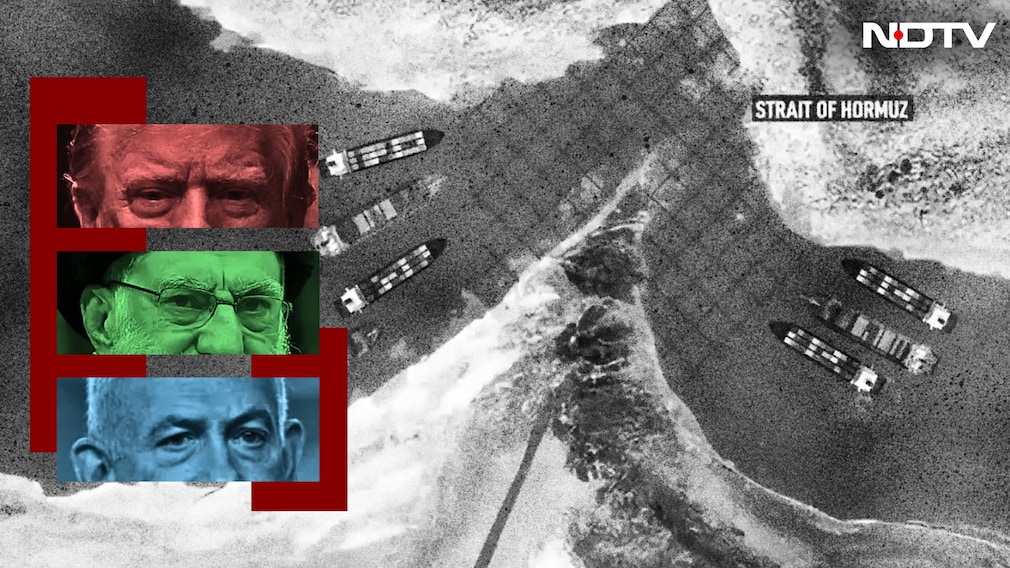
Hours after Operation Epic Fury began on February 28, war risk underwriters started cancelling policies for transits of the Strait of Hormuz. Seven members of the International Group of Protection and Indemnity Clubs issued 72-hour cancellation notices on March 1. All twelve followed. The International Group covers approximately 90% of the world's ocean-going tonnage. These clubs cover the full suite of liabilities, including cargo damage, crew injury, and environmental pollution. Without their backing, a vessel becomes an economic pariah. Ports refuse entry, cargoes go unloaded, banks withhold financing, charters evaporate. By March 3, maritime tracking platforms recorded zero active tanker transits inside the strait. Not because of Iranian mines. Not because the Fifth Fleet had sealed the approaches. Because the underwriter had hung up.
The numbers are worth stating plainly. The Strait of Hormuz handles roughly 20 million barrels of crude and petroleum products daily, a fifth of global demand forced through a tectonic bottleneck 21 miles wide between Iran and Oman. As much as 20% of all seaborne LNG passes through the same narrows. Baseline war-risk premiums before hostilities stood at 0.25 per cent of hull value, approximately USD 250,000 per voyage. Within 48 hours of the first strikes, rates had risen to 1% (a million dollars per transit), and for tankers with American or Israeli connections, no rate was available at any price. QatarEnergy halted LNG production at its facilities at Ras Laffan and Mesaieed after Iranian strikes. European benchmark gas prices rose nearly 50%. Asian LNG spot prices jumped 39%. As many as 150 vessels lay at anchor in open waters off Iraq, Saudi Arabia, and Qatar, waiting for orders that did not come.
A Complex Web Of Insurers
The mechanism deserves examination, shorn of jargon. The International Group is not a free market. It is a tightly coordinated oligopoly. Twelve mutual clubs, administered from a London secretariat, whose pooling agreement shares liabilities above USD 10 million across the membership. Behind them sits a reinsurance layer, and behind that a retrocession market of roughly USD 41 billion that explicitly excludes war risks, it covers earthquakes and storms, not missiles and drones. When seven clubs cancelled simultaneously, no backstop existed to replace them. European insurance regulation (Solvency II) actively incentivised withdrawal, as geopolitical uncertainty rises, so do capital adequacy requirements, making it rational for firms to cancel rather than hold exposure while slowly raising reserves. The Red Sea disruption since late 2023 had already drained global war-risk buffers by the time Hormuz became a question.
The Tanker War of the 1980s is instructive by contrast. Between 1984 and 1988, roughly 500 merchant vessels were attacked in the Persian Gulf. Insurance premiums spiked. Flags changed. Yet trade continued, because war risk insurance itself did not withdraw entirely from the market. What changed in March 2026 is that the retrocession layer (the reinsurers' reinsurers) declined to carry the exposure at any price. As Skuld, one of the twelve clubs, put it in its notice: "reinsurers' appetite for war risk exposure is tightening, and in practical terms, it will result in reinsurers withdrawing capacity at short notice." The market ceased to exist. Operation Praying Mantis crippled Iran's operational naval capacity in eight hours on April 18, 1988. The International Group's clubs needed less than seventy-two hours in 2026 to close the same strait without firing a single shot.
The Economics Of Shipowners
To this, one further institutional layer must be added. The International Transport Workers' Federation and the Joint Negotiating Group designated the Arabian Gulf, the Gulf of Oman, and the Strait of Hormuz a formal high-risk warlike operations area - triggering a bonus equal to basic wages for every day a seafarer spends in the zone, double compensation for death or disability, and a right to refuse sailing with repatriation at the company's expense. When the crews themselves acquire a legal right to refuse passage, the economics for shipowners shift entirely. No captain needed an IRGC warning to know the calculus had changed.
Donald Trump's response has been interesting. On March 4, he announced that the United States Development Finance Corporation (whose statutory mandate is to mobilise private capital in support of American foreign policy) would backstop political risk insurance for all maritime trade through the Gulf, at what he described as a very reasonable price. He also offered US Navy escorts. The move confirmed what the episode had already demonstrated: insurance today is a strategic instrument. The state that controls the underwriting controls the passage. Iran figured out something the Pentagon had not. You do not need to mine a strait. You need only make it uninsurable.
Why India Should Be Very, Very Worried
India should be paying close attention. In the entire International Group of Protection and Indemnity Clubs, not one member is domiciled in India. The Russian crude episode after 2022 made this vulnerability plain. When the Price Cap Coalition (comprising Australia, Canada, the EU, France, Germany, Italy, Japan, the United Kingdom, and the United States) instructed P&I clubs to deny cover for cargoes traded above USD 60 a barrel, Indian shipowners and charterers associated with those clubs found themselves squeezed between their commercial interest and their insurer's compliance obligations. In 2023, the Finance Minister acknowledged the gap publicly, calling for a full-fledged, India-owned, India-based P&I entity. The acknowledgement has not yet become an institution.
No Seat At The Table
India's energy security is contingent on decisions made in 12 mutual clubs coordinated from a London secretariat, none of which carries an Indian flag, and all of which (as the Russia episode established) follow Western foreign policy directives when instructed.
India is the world's third-largest oil importer. It has a coastline of 7,516 kilometres. It has one of the larger merchant fleets in Asia by deadweight tonnage. It has no seat at the table that counts.
The argument for an Indian P&I entity is sometimes framed narrowly, as a defensive response to sanctions pressure. It is more than that. It is a question of whether a country of India's weight can afford to have its maritime lifeline administered by institutions it does not govern. The DFC backstop Trump announced is available to all shipping lines, he said. But the DFC is an instrument of American foreign policy, and its purpose is explicitly to advance US national security interests. A facility that opens for one crisis can be configured differently for the next.
Hugo Grotius argued in Mare Liberum in 1609 that the seas must remain free for navigation by all nations. He was writing against Portuguese claims of monopoly over the Indian Ocean trade routes. The modern version of that monopoly is not a flag or a fleet. It is a cancellation notice issued from a London office on a Saturday afternoon.
The cannon has its uses. The underwriter's telephone has others.
(The author was with the Economic Advisory Council to the Prime Minister)
Disclaimer: These are the personal opinions of the author
-
Khamenei Falls, World Reels: Iran's War Sucks In NATO, Arabs In 72 Hours

Iran's Supreme Leader Ayatollah Ali Khamenei tracked for months in an elaborate espionage operation died Saturday afternoon after a missile struck his compound in the city centre.
-
Opinion | Iranian Ship Sinks: How A 2016 Deal With US Could Spell Trouble For India
Touted as the first major naval casualty in the Indian Ocean since the Second World War, the attack by the US on IRIS Dena brings the Iran crisis eerily close to home. And a 2016 deal with the US isn't helping.
-
Why India Has Never Bought American Fighter Jets
Almost every US fighter aircraft flying missions over Iran, at some point in the last 20 years, had been offered to India
-
Iraq, Iran, And United States-Led Regime Change
Regime change is a key target for the US-Israel war on Iran and the first step killing Supreme Leader Ayatollah Ali Khamenei is complete, but Iran is vastly different kettle of fish.
-
Opinion | Gasping In 4 Days? How Iran Humbled US-Israel's Million-Dollar War Inventory
In the ongoing war, in just four days of battle, there are fears that the US and Israel's inventory of Patriot and Tomahawk missiles may run out soon.
-
Opinion | The Eerily Familiar Game Behind China's Silence On Iran
What looks like a setback for Beijing in West Asia might actually be more leverage - a chance to build long-term capital without firing a single shot.
-
Satellite Pics Show Extent Of Damage By Iran Drones At Saudi Aramco Refinery
Iran Supreme Leader Ayatollah Ali Khamenei was killed on Day 1 of the US-Israel attacks and his death has further complicated an already tense geopolitical situation.
-
Blog | How Did Indians Become So Central To Dubai's Rise? It Goes Deeper Than Oil
The ease with which Indians have made the UAE, particularly Dubai, their home is a familiarity the two nations shared even before the oil boom of the 1970s, or the real estate boom later.
-
Opinion | How America Is Quietly Profiting Off The Oil Chaos In Gulf
In 2008, the high oil prices had helped kickstart the shale oil industry in the US. Something similar may be happening now.