Opinion | Iran May Be Far More Prepared For A 'Ground Invasion' Than Trump Thinks
The Iranians may have reserved some of their best military equipment and missiles for this stage of the conflict.
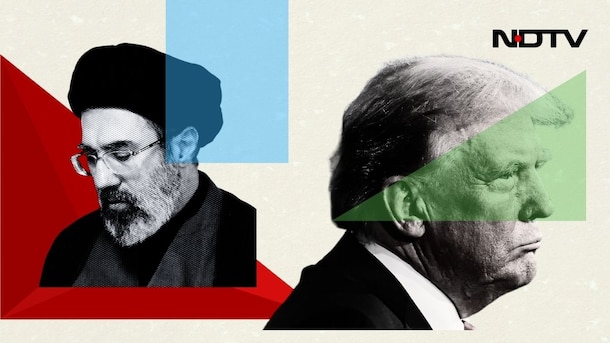
The past week has not gone well for Donald Trump. He was forced to back down from his threat to attack Iran's power plants if the Strait of Hormuz was not reopened within 48 hours. Tehran firmly rejected his plan to end the war and denied Trump's claims that the two sides were engaging in negotiations. Trump's approval ratings dropped to their lowest level since he returned to the White House. Additionally, Democrats gained two legislative seats in Florida, including one in Palm Beach County, which covers Trump's Mar-a-Lago resort.
As the Iran war approaches its second month, Trump has insisted that talks are ongoing and that Iran was "begging for a deal" while US troops continue to build up in the Gulf. Some messages have been exchanged between the two sides, but there is no evidence that any bilateral discussions have taken place. Iran has not only rejected the 15-point US plan, which mostly favoured Israel and the US, but also put forward its own alternative plan.
Iran's counterproposal outlined five "conditions for ending the war": the acts of "aggression" coming to an end, ensuring the war will not recur, payment of war damages and reparations, the ending of the war across all fronts, and Iranian sovereignty over the Strait of Hormuz. Previously, it also demanded an end to all US bases in the Gulf.
Trust Deficit
The maximalist demands from both sides indicate that there is little genuine effort to reach a negotiated settlement to end the conflict. Iran doesn't trust the Trump administration, which has attacked it twice in less than a year while negotiations were ongoing. There is no doubt that the war has not gone according to Trump's wishes, and he seems desperate to end it by any means.
Iran believes that Trump is using the pretext of negotiations to buy time to prepare for a ground invasion. "Iran's enemies, with the support of a country in the region, are preparing an operation to occupy one of Iran's islands," warned Mohammad Bagher Ghalibaf, the speaker of Iran's parliament, in a post on X on Wednesday. Therefore, instead of entering into negotiations, Iran has decided to prepare to defend its territory against the suspected US plan.
Fear In The Gulf
Interestingly, the Gulf countries, which have previously been involved in negotiations, have not shown any interest in the US peace plan despite suffering the most from Iran's retaliatory attacks. Oman, which mediated earlier and even reported progress in the talks on the eve of the US and Israeli attack, has been quiet. Qatar has even distanced itself from Trump's claims of negotiations with Iran.
"Qatar was not involved in any mediation efforts," said government spokesperson Majed al-Ansari at a briefing on Tuesday, before making a startling addition: "If they exist." Saudi officials are reported to be in favour of continuing the war. Trump has even claimed that Crown Prince Mohammed bin Salman (MBS) "is fighting with us". That may not be true, but some Gulf States, such as Saudi Arabia, the UAE and Bahrain, would not like Iran's current hardline Islamic regime to survive, which could pose them an even bigger threat in the future.
The Build-Up Of Troops
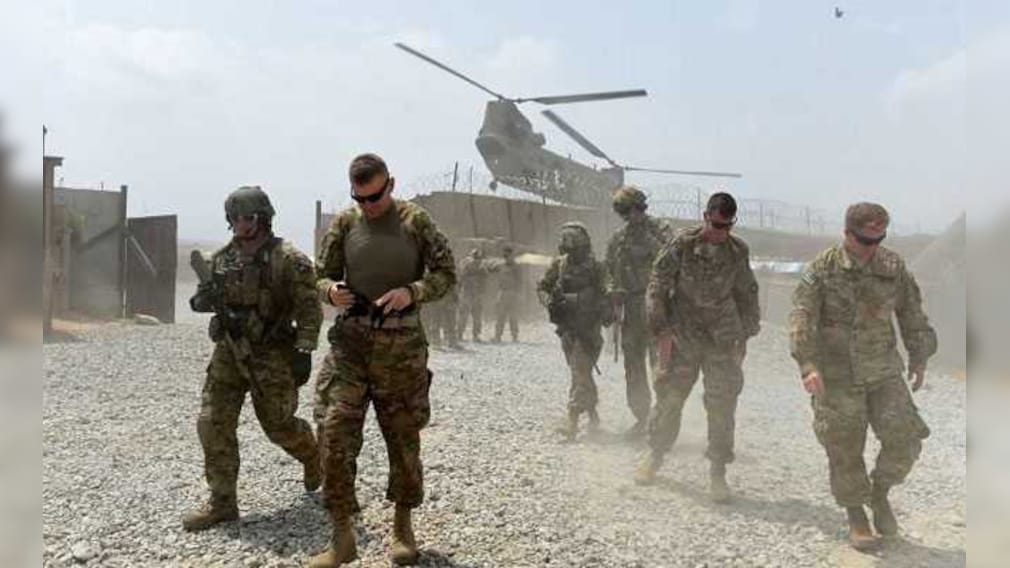
It's unclear whether Trump has approved a ground operation in Iran, but there are signs he is considering it, which would significantly escalate the conflict. Thousands of American troops are being deployed to the region. Around 2,000 soldiers from the 82nd Airborne Division have already departed for the Gulf. These paratroopers can be deployed worldwide within 24 hours of notification and conduct parachute assaults, including against a "defended airfield", to prepare for further ground operations.
The 82nd Division has been deployed in almost all conflicts involving the United States since the Second World War. Its troops will be joined by the Japan-based amphibious assault ship USS Tripoli and the amphibious landing dock USS New Orleans. The deployment means nearly 7,000 additional US soldiers in the Gulf.
These troops provide Trump with several options, such as invading or blockading Kharg Island, Iran's main oil export hub, and invading Qeshm Island, believed to be an "underground missile city", where Tehran has collected vast quantities of weapons, including anti-ship munitions. Another target could be Larak, an island that helps Iran consolidate its control of the Strait of Hormuz. This outpost is thought to host Iranian bunkers, attack craft capable of damaging cargo ships, and radars that monitor movement in the strait.
There are some reports that the 82nd Division paratroopers might be deployed deep inside Iran to seize uranium, thought to weigh about 454 kg, hidden in facilities at Isfahan. But that would be the most dangerous mission for any US or Israeli military unit. Last June, Trump claimed to have destroyed Iran's capability to produce enriched uranium, which can be used to make nuclear weapons. But Iran is reported to have rebuilt new facilities to enrich it.
How Will Iran Respond?
Iran has been preparing for such a scenario for decades. Its military has thoroughly studied US operations in Vietnam, Iraq, and Afghanistan, and has also received advice and training from China and Russia. The Iranians may have reserved some of their best military equipment and missiles for this stage of the conflict. Before the war began, China agreed to supply Iran with advanced anti-ship missiles that could sink aircraft carriers. If those missiles were delivered, they could pose a significant threat to US ships deploying troops for a ground assault.
Iran's regular military and Revolutionary Guards Corps have been strengthening their defences and laying traps for US troops with anti-personnel and anti-armour mines around Khadg Island, which is most likely to be the first target if a US ground invasion does occur. They have also placed similar traps on other islands.
A major challenge for US troops is that even if they manage to land on one of the islands, it will be hard for them to survive for long without additional supplies, which the Iranians will do everything possible to block. US and Israeli forces have destroyed airstrips and roads on these islands, which will not be easy to rebuild quickly against a well-prepared enemy.
Iran's Revolutionary Guards are experienced fighters, many of whom have fought for years alongside Hezbollah in Lebanon and with Bashar al-Assad's forces in Syria against the US and Arab-backed militias. The US should anticipate guerrilla attacks from them. They are also young and religiously motivated to confront the Americans and the Israelis. Consequently, the US could receive a significant number of casualties and potentially a hostage situation.
Americans Uneasy
Trump's decision to join Israel in this war has never been popular with most Americans, but now more are turning against it. The latest opinion poll by Reuters shows the number has increased to 61%. In the first week of the war, a CNN poll found that 41% supported the war. A poll by the AP news agency this week shows that although 63% of Republicans support US strikes against military targets in Iran, only 20% would back sending ground troops to the Islamic Republic.
Republican lawmakers, such as Nancy Mace, have openly started voicing their concerns. "Just walked out of a House Armed Services briefing on Iran. Let me repeat: I will not support troops on the ground in Iran, even more so after this briefing," Mace posted on X on Wednesday. Ryan Mackenzie, a vulnerable incumbent Republican up for re-election in November, said he's wary of ground troops.
The House Armed Services Committee's chair, Mike Rogers, who has supported Trump's decision, is also growing nervous and has complained that officials are not providing details of the military plans. He told reporters that members warned Pentagon officials that troop movements in the region should be "thoughtful and deliberate."
Mounting Costs
Rising petrol prices in the US could also pose a challenge for Trump. The cost of oil and gas has increased significantly since the Iran conflict began. The AP poll found that nearly half of the respondents said they were "extremely" or "very" concerned about affording petrol in the next few months - up from 30% in December. The latest OECD forecast released on Thursday warns that US inflation will reach 4.2% this year, the highest among the group of industrialised nations.
In the latest Reuters poll, only 25 per cent of respondents approve of Trump's handling of the cost of living, which is expected to be a key issue in this year's mid-term elections, and 29% approve of his economic stewardship - the worst rating he has ever received, and lower than any approval rating of Joe Biden's.
Iran's retaliatory attacks in the Gulf countries are also likely to affect Trump's economic plans. These nations have already lost billions in oil and gas revenue and their infrastructure has been severely damaged. Trump's trip to the region a year ago resulted in more than $2 trillion in investment agreements. The war has jeopardised that. If the conflict escalates through a ground invasion, the US economy will suffer a massive blow, along with the rest of the world.
But this appears to be Iran's strategy. Tehran's closure of the Strait of Hormuz to most shipping and retaliatory strikes on Gulf countries aim to create a divide between the US and its Gulf allies. These nations will, sooner or later, question the necessity of US bases on their soil, as they have failed to ensure their security. Conversely, the bases are the reason why these nations face Iranian attacks. Trump seems to have been trapped in a big hole of his own making.
(Naresh Kaushik is a former editor at the BBC News and Associated Press. He is based in London)
Disclaimer: These are the personal opinions of the author
-
Opinion | Have US And Iran Already Gone Past The Point Of 'Negotation'?

Hardliners are now in power in Tehran. Iran can legitimately ask itself about the value and durability of any agreement with the US.
-
Where Your Rs 2,000 Spent On Petrol Goes: Taxes, Iran And Oil Companies
Every litre of petrol or diesel you buy in India is a mix of crude oil cost, central and state taxes, and dealer margin, and geopolitical risk, particularly after the Iran war sent crude prices soaring.
-
The Iran-Contra Affair: How A Secret Deal With Tehran Shook Washington's Core
On November 25 In 1986, addressing a packed White House press conference, President Ronald Reagan acknowledged something that would soon become the most serious political scandal since Watergate.
-
Is The Dreaded 'Dahiya Doctrine' Guiding Israeli Actions In Iran, Gaza, Lebanon?
Why do civilian areas and infrastructure repeatedly become part of Israeli action? An 'unofficial' but well-used military approach may be the reason.
-
Opinion | Not China, Not Russia: Why Is Pak Suddenly Everywhere In US-Iran 'Talks'?
A number of countries, including Turkey and Egypt, not to mention Russia, have been pressing Washington to end the war. But none is keen to get directly involved. Why Pakistan?
-
Trump's Iran Ceasefire Gamble Ignites Netanyahu's Strike Fury
Israel fears a premature ceasefire announced by Trump could derail its goal to dismantle Iran's nuclear missile programmes, prompting Netanyahu to order a 48-hr strike surge.
-
Why Mohammad Ghalibaf Could Be A Critical Cog In Trump's Iran Project
Born to Kurdish-Persian parents in 1961 near Mashhad, a Shiite pilgrim hub in Iran's northeast, Ghalibaf is an expert in human and political geography, who married Zahra Sadat Moshir in 1982 - their wedding officiated by Khomenei - and has three children.
-
Opinion | Inside Iran's 'Leader-Proof' War Machine, Designed To Absorb Every Blow
In Iran, key actors have long performed a 'bridging role', whether by design or by chance, in determining Tehran's domestic and foreign policies
-
Opinion | What Iran Might Really Demand From Trump Before It Backs Down
The proposed framework, if it indeed mandates the physical removal of enriched uranium, possibly with external facilitation, marks a significant escalation in demands compared to earlier nuclear agreements.