Opinion | The Eerily Familiar Game Behind China's Silence On Iran
What looks like a setback for Beijing in West Asia might actually be more leverage - a chance to build long-term capital without firing a single shot.
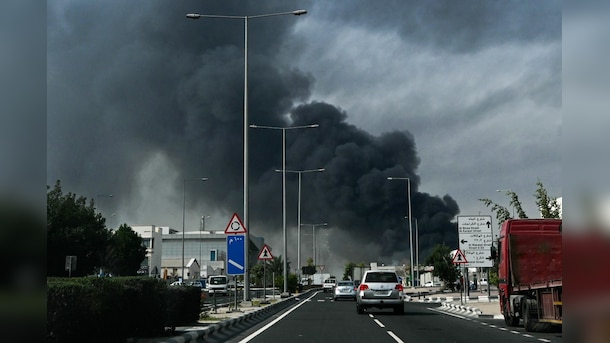
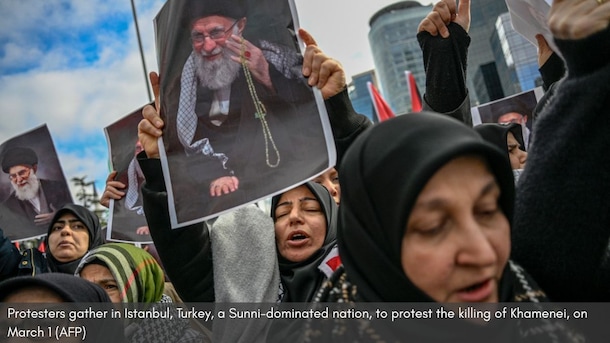
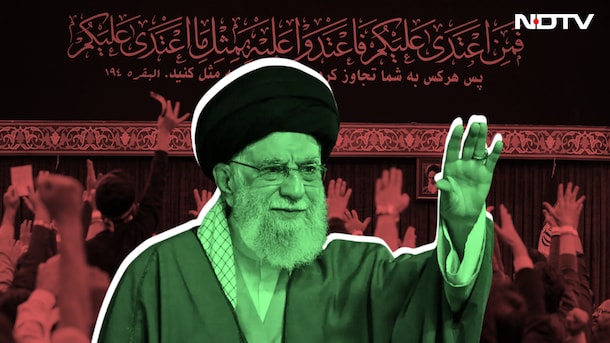
The present crisis in Iran - set in motion by the joint US-Israeli strikes of February 28 that killed Supreme Leader Ali Khamenei and decapitated key nodes of Iran's leadership - marks yet another inflexion point in the churn of West Asian geopolitics. For China, this is undeniably a setback. But it is neither terminal nor transformative in the way some might prematurely suggest. Rather, it is a reminder of the structural limits of Beijing's ambitions in a region still profoundly shaped by American hard power.
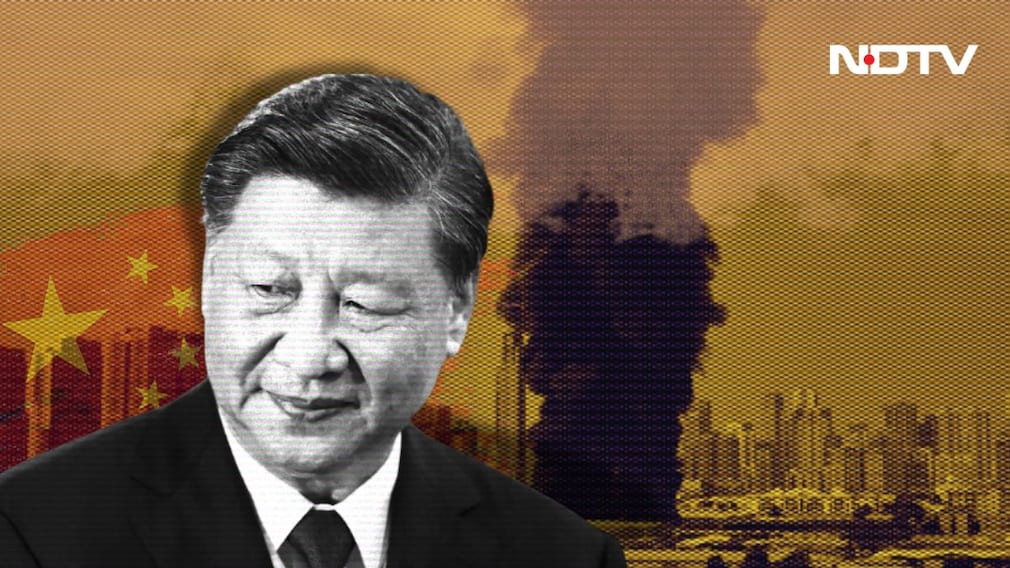
Beijing's reaction has been swift, if predictable. Denouncing the strikes as "unacceptable" and violative of international law and the UN Charter, Chinese Foreign Minister Wang Yi, in conversation with Russia's Sergei Lavrov, called for an immediate ceasefire and de-escalation. The official line - amplified through state media - has framed the episode as brazen aggression and power politics. Yet, beneath the rhetorical indignation lies a familiar Chinese instinct: avoid entanglement, preserve flexibility, and wait out the storm.
Why Iran Is Important To China
Iran has long been a useful, if not indispensable, partner for Beijing. Discounted oil - accounting for a significant share of China's seaborne crude imports - has helped cushion its energy security. Tehran's willingness to transact in yuan and circumvent dollar-dominated financial systems aligned neatly with China's de-dollarisation ambitions. Within multilateral forums such as BRICS and the Shanghai Cooperation Organisation (SCO), Iran functioned as a willing partner in articulating a post-Western, multipolar discourse. It also formed a key node in the connective tissue of the Belt and Road Initiative, including transport corridors like the International North-South Transport Corridor (INSTC).
The US push toward regime change, therefore, strikes at more than just a bilateral relationship. It exposes the fragility of Beijing's broader strategy of cultivating strategic partnerships with anti-Western regimes while avoiding direct security commitments. The erosion of Iran's ideological alignment weakens the so-called Axis of Resistance - encompassing actors such as Hezbollah - which, however indirectly, served to absorb American bandwidth away from the Indo-Pacific. More importantly, China's inability - or unwillingness - to deter decisive Western military action underlines a credibility gap. For all its talk of a Global Security Initiative and a multipolar order, Beijing remains reluctant to project force in defence of its partners when confronted by US resolve.
The Logic Behind China's Position
Economically, the crisis compounds strategic discomfort. Disruptions to Iranian oil flows and potential instability around the Strait of Hormuz elevate costs for China's import-dependent economy. Even with diversified sourcing - from Russia to Gulf producers - and substantial strategic reserves, the loss of heavily discounted, sanction-evasive crude creates pressure points, particularly for smaller refiners. At a moment of domestic economic sensitivity, such volatility would be hardly welcome.
China's much-publicised mediation of Saudi-Iran normalisation in 2023 had burnished its credentials as a responsible stakeholder capable of delivering dialogue where Washington could not. Today, events are once again driven by American military leverage and Israeli security calculations. Beijing's response - condemnation, evacuation advisories, and appeals for restraint - highlights the limits of its influence in high-intensity security crises.
Yet, it would be analytically lazy to construe this as a strategic catastrophe for China. Beijing has scrupulously avoided military involvement, thereby safeguarding its core priorities - Taiwan, the South China Sea, and domestic stability. Its long-cultivated ties with Gulf monarchies, its energy diversification strategy, and its financial buffers provide resilience. Moreover, in large swathes of the Global South, China's emphasis on sovereignty and non-interference may resonate more deeply than Washington's resort to force.
An Opportunity In Disguise
Indeed, adversity can generate opportunities. A weakened or economically desperate Iran may, paradoxically, become more reliant on Chinese capital for reconstruction. Gulf states, unsettled by renewed volatility, may accelerate their hedging strategies, deepening economic engagement with Beijing as insurance against American unpredictability. China's approach, characteristically patient, will be to convert short-term turbulence into long-term leverage - through reconstruction contracts, oil diplomacy, and calibrated mediation.
The crisis in Iran underscores the enduring centrality of American hard power in shaping Middle Eastern outcomes. It reveals the practical constraints on China's great-power aspirations and disrupts a valuable strategic and energy channel at a delicate economic juncture. But it does not derail Beijing's long game. If anything, it reinforces a pattern: China advances incrementally through economic statecraft and diplomatic positioning, even as it avoids the burdens of security provision. Whether this tactical setback evolves into a strategic recalibration will depend less on the ongoing military action and more on how deftly Beijing navigates the post-crisis landscape.
(Harsh V Pant is Vice President for Studies at Observer Research Foundation, New Delhi.)
Disclaimer: These are the personal opinions of the author
-
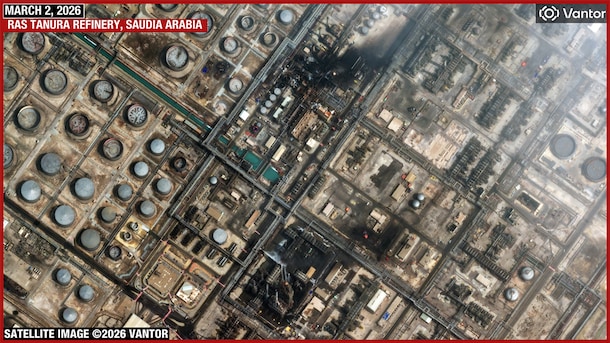
Satellite Pics Show Extent Of Damage By Iran Drones At Saudi Aramco Refinery

Iran Supreme Leader Ayatollah Ali Khamenei was killed on Day 1 of the US-Israel attacks and his death has further complicated an already tense geopolitical situation.
-
Blog | How Did Indians Become So Central To Dubai's Rise? It Goes Deeper Than Oil
The ease with which Indians have made the UAE, particularly Dubai, their home is a familiarity the two nations shared even before the oil boom of the 1970s, or the real estate boom later.
-
Opinion | How America Is Quietly Profiting Off The Oil Chaos In Gulf
In 2008, the high oil prices had helped kickstart the shale oil industry in the US. Something similar may be happening now.
-
From Aircraft To Lives: Why "Friendly Fire" Can Be Such A Big Enemy
There is not even a millimetre of room for error in judgment - and this is one of the biggest contributors to friendly fire incidents
-
Opinion | Gulf Confronts An Ugly Truth About Aligning With America
That Iran is attacking bases and other sites in the UAE, Qatar, Bahrain, Saudi Arabia - even Oman - has caused disillusionment in these countries, which thought that they were protected by the US. They are now learning they're not.
-
Cheap Drones, Claude AI, Cyberattacks: Behind US-Israel's 'New' War On Iran
Cyber warfare, Claude, cheap drones - as the US and Israel jointly pound Iran, and Tehran hits back by dragging West Asia into a regional war, are these the backbone of a new kind of military conflict?
-
Opinion | How Khamenei's Killing Is Doing Exactly The Opposite Of What US-Israel Wanted
What Israel and the US have done is make Khamenei, who was running a country dealing with extreme economic hardships, protests and internal strife, a martyr. His killing has united Shias and Sunnis across the globe in anger.
-
NDTV Explainer: How Is A Supreme Leader Chosen, Who Will Succeed Khamenei
Khamenei, who ruled for 36 years, built Iran into a powerful anti-United States force, projecting military influence across the Middle East while suppressing repeated domestic unrest with force.