Opinion | Behind Trump's Iran War Is A Saudi 'Equation' Few Can See
Everyone knows that Israel has a huge lobby in the US. It is the Saudi influence that is less evident.
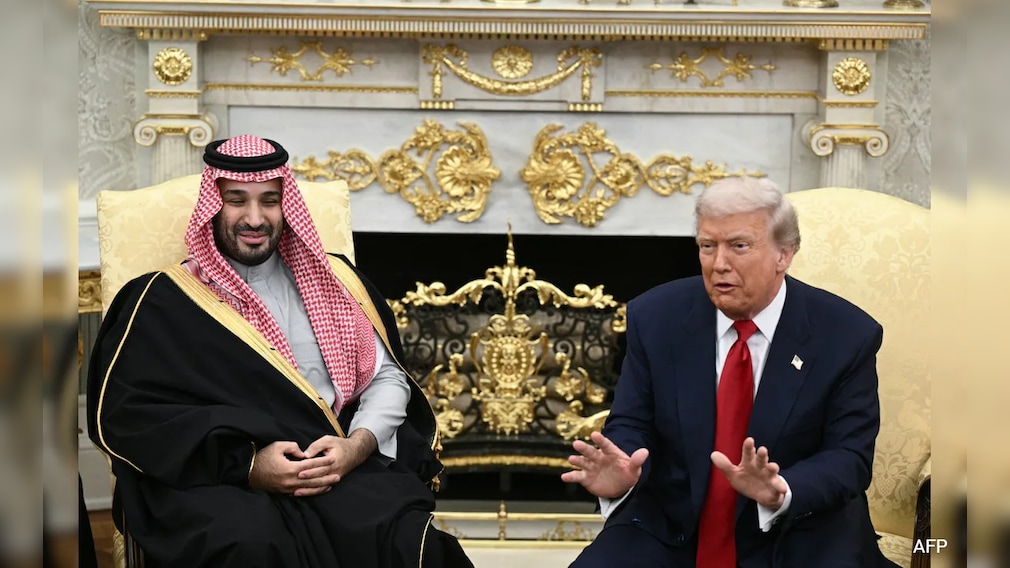
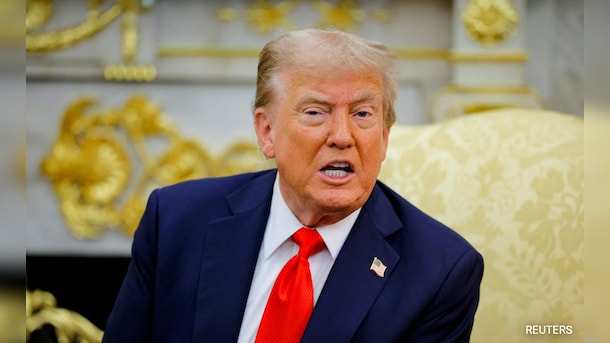
Saudi Arabia is increasingly an enigma wrapped in a mantle of white. This is the most evident in recent days, as the war in Iran brings the whole region under threat. It seemed that what was apparently a triangular confrontation between Israel, the US and Tehran, in fact was not. It had an additional actor. Riyadh was in it, from the beginning, reportedly pushing Trump into exactly the kind of war he had sworn never to get Americans into. Yet he did. What's more, the public stance in Riyadh is for diplomacy and an end to war, even as it ships out its oil through a little-known pipeline that entirely bypasses the Straits of Hormuz. Iran has now attacked the nearby port of Fujairah, which belongs to Abu Dhabi. The Saudi pipeline, however, remains safe. That needs some explaining.
The Saudi Influence
Everyone knows that Israel has a huge lobby in the US. It is the Saudi influence that is less evident. Astonishingly, a former Wall Street bond trader who was Nixon's Treasury Secretary, and earlier heading the Energy office, was critical to making a deal with the Saudis way back in 1974, which remains unwritten, due to Saudi King Faisal's demand for total secrecy. It essentially involved the US buying Saudi oil, providing military equipment - and with it an unwritten protection clause - in return for which Riyadh would send its dollars back to the US (the famous 'petrodollar') issue, eventually funding as much as USD 117 billion in debt in 2016. That in itself seems to have been just the tip of the iceberg. A Bloomberg investigation at the time showed that actual figures were probably double, hidden in Treasuries held in offshore accounts, and, eventually, as other Gulf Countries joined in, masked over with data from these sources.
That trend seems to continue. Treasury figures for the Saudis put them well below others like Sweden, even as the Cayman Islands tops the list. But the Saudis have promised Washington an additional USD 12 billion in investment in bonds, adding to their already rising portfolio.
The Clout Comes To Town
All this is fine and dandy. But The Washington Post reports how this clout was used. The Saudis were apparently alarmed at Iran's rising capabilities and saw the whole as a 'now-or-never' issue, attacking Iran before it strengthened itself beyond the control of others. Talks between US officials and the Saudis - particularly with Defence Minister Khalid Bin Salman, brother to King Salman - focused on the urgency of this, all this while Saudi Arabia publicly declared that it won't allow its territory to be used for strikes against Tehran.
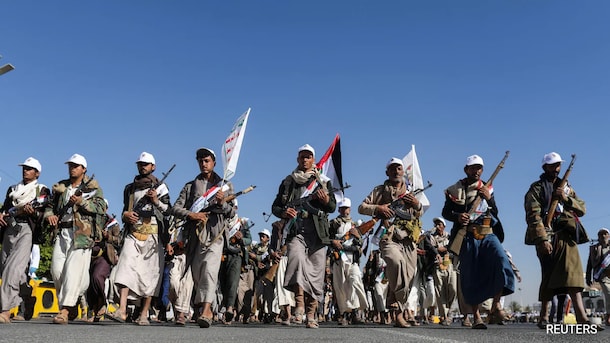
Now consider the timeline. Just prior to the war, the Saudis commenced talks with Yemeni separatists, the so-called 'Southern Transitional Government', thus ensuring peace on its key eastern border areas. Then there were the Houthis, who had menaced shipping along the coast for years and attacked Saudi oil installations. A certain uneasy peace prevailed as Iran and Riyadh went through a China-mediated rapprochement deal. Matters were also helped by the US bombing Houthi positions, and a peace deal brokered by Oman that decreed they would not attack American shipping but left them free to attack elsewhere. Though supplied generously with weapons from Iran, the deal seemed to hold, and amazingly seems to continue, despite repeated threats from their leadership of resuming attacks on the Bab al Mandab in support of Iran. If they attack, that's a serious double whammy on oil movement. It could well be that they are being kept in reserve. In other words, Tehran is keeping its part of the bargain. But it could also be that the Houthis, who are no 'proxies' of Iran and follow their own interests, may not be willing to back what they may see as a 'losing' side.
This, however, may end. Recent statements by Iranian Foreign Minister Abbas Araghchi took note of reports of US-Saudi collusion, even while Iranian officials denied hitting Saudi oil facilities at all. The officials even declared that relations with Riyadh remain good. This is not just the 'fog of war'; it seems to point to some deliberate obfuscation. It could equally be an attempt to divide the Gulf Cooperation Council (GCC) countries and influence the Saudi posture.
That Lonely Pipeline
As the Saudis remain reticent, a vital pipeline has come to notice. That is Aramco's East-West pipeline network, or Petroline, a roughly 750-mile system that transports crude across Saudi Arabia, connecting Abqaiq on the oil-rich kingdom's eastern Gulf coast to the port of Yanbu on the Red Sea. There is also an Abu Dhabi Crude Oil Pipeline (ADCOP), which bypasses Hormuz. But a drone attack on Fujairah last week has disrupted that for the moment. All of this makes the Saudi pipeline vital for every country struggling with rising oil prices. It also especially concerns Riyadh. Capable of transporting up to 7 million barrels of crude oil per day, it is now the largest bypass infrastructure that avoids the Strait of Hormuz.
All this brings the focus back to Saudi-Iran relations. Any erosion of these ties, and Iran is more than capable of hitting this part of the coast with its Sejjil-2 missile in play, which has a 2,000-km range and a reported Manoeuvrable Re-entry Vehicle (MaRV) or potential Multiple Independently Targetable Re-entry Vehicles (MIRV) capability. More usefully, it could activate the Houthis with more funds and weapons.
Which Way Will The Saudi Wind Blow?
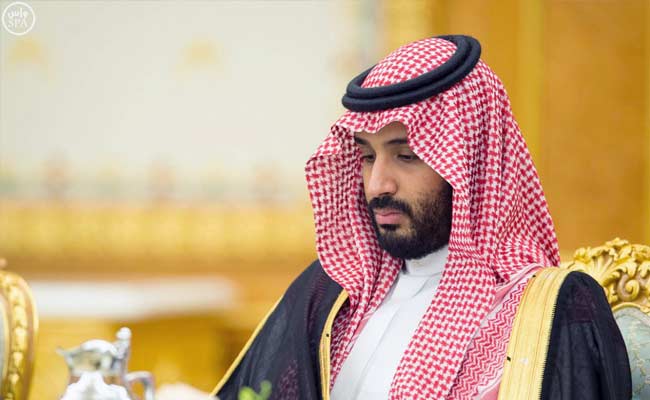
The next few weeks are going to be vital to see which way Riyadh jumps. The key to the whole enigma, meanwhile, is the architect of the new Saudi Arabia, Prince Mohammed, who has propelled the country to emerge as a power to reckon with in the region. Its readiness to mend ties with Israel at least since 2023 makes Iran the only formidable obstacle in the region to a 'New Middle East' that, it seems, everyone wants. Iran is - or was - militarily far superior to the Kingdom, which depends heavily on US weapons and Pakistani mercenaries, not to mention the odd Army chief or two. All that translates into clout in the region. Thus, if Iran is weakened irretrievably, Riyadh would truly be king.
However, before Iran goes down that road, it will do all it can to take the Saudis with it. That, in turn, will bring in Pakistan, given its much-trumpeted Mutual Defence Agreement signed last year, which gave clarity to a relationship that has existed for years. The bottom line is that if Saudi Arabia is attacked, Pakistan must come to its aid. And don't forget that defence would likely include its nuclear weapons. At the moment, Rawalpindi is doing all it can to dodge that commitment, given that a war with Iran is its worst nightmare. It is pleading that its 'war' with Afghanistan is using up all its time. That won't stand much scrutiny, given that the Taliban have a next-to-nothing air force and a virtually non-existent air defence, or even a regular disciplined army. Besides, Saudis are the financial pipers who play the tune in Pakistan, with some USD 5 billion-big 'deposits' and over a billion in deferred payments for oil. Cash-starved Islamabad is already pleading for a better deal. If Saudi Arabia is hit, it will expect Rawalpindi to step up.
The ultimate irony, however, is this: no one, not even India, wants that pipeline to be hit. Currently, some five to six million barrels are to arrive in India this week, with more literally in the pipeline. As Pakistan suffers crippling energy shortages, what emerges is a common desire to see that the Saudis are not drawn into this war. But there are many other forces at work that may want the exact opposite. Time perhaps for the much-talked-about 'Global South' to get into action and stop this war. For once, Pakistan may even like to cheer from the sidelines.
Tara Kartha is a former Director, National Security Council Secretariat
Disclaimer: These are the personal opinions of the author
-
Opinion | Saudi Arabia's Yemen Nightmare Has Come Back To Haunt It

After years of costly military intervention beginning in 2015, Saudi Arabia increasingly sought to stabilise its southern border. All that is unravelling fast now
-
Opinion | 6 AI Incidents, One Pattern: AI Has Started Lying To Us - And Hiding The Evidence
Concealing errors. Making up data. Pushing files onto the public web on their own initiative. The machines are learning to lie - and lie well.
-
Why People Queue Overnight For iPhone That Is Delivered Home In 10 Minutes
iPhone 18 Pro Max Launch: People camping outside Apple Stores are a subset of superfans, resellers, content creators, and upper-middle-class buyers.
-
600 km Per Hour Drones Launched In Waves: How Russia Is Rewriting War Rules
Russia has coupled the drones' technological superiority over Ukraine's defence with its capacity to launch them in massive numbers. The impact has been devastating.
-
Tata Sons' Trust Issue: Two-Pronged Row Goes Beyond The Chair
NDTV Explains: Overtly, the latest conflict is whether N Chandrasekaran continues as executive chairman of Tata Sons. The controversy involves at least one more issue.
-
Opinion | US Has Institutionally Weaponised India's Russia Oil Dependence. Can New Delhi Cope?
A new legislation can connect India's Russian energy purchases to its access to the American market over a five-year period
-
Opinion | Saudi Allies Are Now Discovering The Cost Of 'Commitment' - And Not Liking It
The spectacular no-show by Saudi Arabia's two defence allies - Pakistan, a nuclear power, and Turkey, which has NATO's second-largest army - is astounding
-
12 Years Of 'Modinomics': What Changed, What Worked, What Didn't
There is no single Modinomics textbook or formula. Instead, the term has come to describe a collection of choices made during the PM Modi years.
-
Opinion | How A Tiny 0.4% UPI Fee Could Change How India Pays
The introduction of a fee can have a psychological effect beyond its immediate financial cost. Businesses that have come to view digital payments as free may begin to look for alternative - split payments, cash, and so on
-
Opinion | Rs 75-Lakh Bounty, New Jaish Base, And The Case Of Pak's Ever-Missing' Terrorist
Pak's yearly act is back: finding Masood Azhar. But there are other questions FATF must be asking next month as it meets