Opinion | Suresh Kalmadi: The Man Behind The Legendary 5-Star Dinner That Unnerved Even Sonia Gandhi
Kalmadi proved that in Indian politics, the man who controls the guest list often has more power than those whose names appear on it.
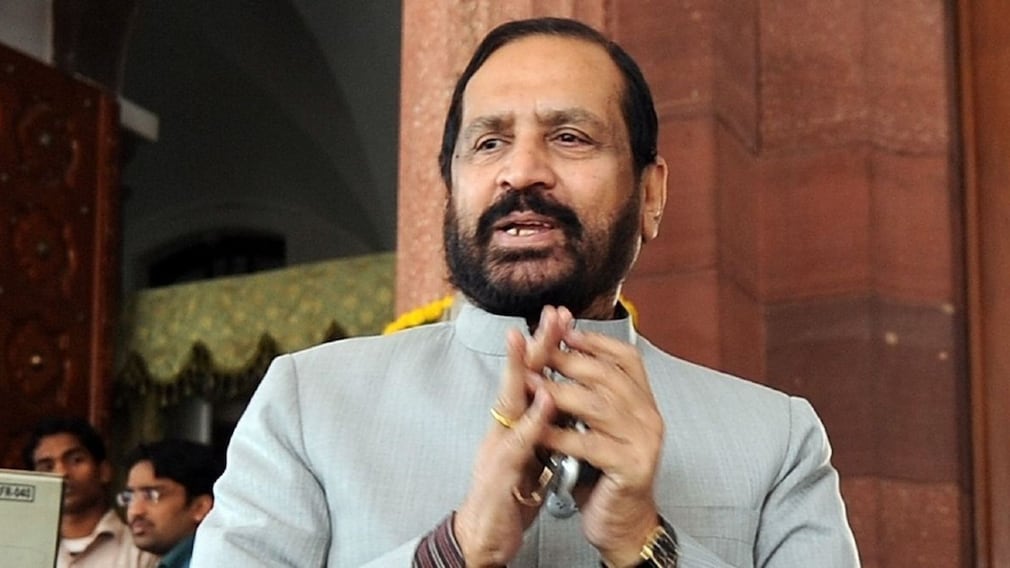
Suresh Kalmadi treated loyalty not just as a virtue, but as a business model. He died as he had lived: complicated, controversial, and utterly irreplaceable.
In over four decades of political journalism, few figures have generated as much fascination as Kalmadi. Here was a man who wore several hats: sports organiser, event manager, party animal, media baron, and politician - sometimes, in the same evening.
We can't talk about Kalmadi without talking about Sharad Pawar. Their relationship is perfectly captured in a joke Pawar once told at a Pune rally, "What happened when Suresh Kalmadi tried to hang himself from the ceiling? The ceiling came down!" Even when they were feuding, there was an undeniable fondness between them - the kind reserved for family, who know too much about each other to ever truly part ways.
A Lot Happened Over Coffee
Their story began at the Pune Coffee House in 1974. Kalmadi, fresh from his stint as an Indian Air Force pilot, had bought a stake in the establishment and would man the cash counter. It was amidst the aroma of filter coffee and the chatter of Pune's emerging elite that he first encountered Pawar, then rising as Yashwantrao Chavan's heir apparent in western Maharashtra.
What followed was a masterclass in political symbiosis. When Pawar helped appoint Kalmadi as Pune's Youth Congress president in 1977, it was the beginning of a partnership that would reshape Delhi's treacherous corridors of power.
Kalmadi understood something that many regional politicians didn't: Delhi required a different skill set. "Kalmadi spoke English fluently, had good social networking skills and, above all, was a smart lobbyist," the Bharatiya Janata Party's (BJP) Prakash Javadekar once observed. But it was after Rajiv Gandhi's assassination in 1991 that Kalmadi truly came into his own. As the Congress scrambled to find a new leader among PV Narasimha Rao, Sharad Pawar, Arjun Singh, and Shankar Dayal Sharma, Kalmadi took it upon himself to "manage Delhi" for his Maratha strongman.
Delhi witnessed the transformation of Maharashtra Sadan into Pawar's campaign headquarters, with Kalmadi orchestrating operations with military precision. He ordered food from the nearby Taj Mansingh, ensuring a steady supply of grilled chicken and paneer tikka even at odd hours. The proximity to Pandara Road market meant those preferring 'liquid embellishments' were thoroughly entertained whereas Intelligence Bureau officials trying to update their masters wrote rather exaggerated notes while braving the heat and their hunger.
When Narasimha Rao Kept The Guest List
The centrepiece was a legendary dinner at a five-star hotel. Kalmadi invited 64 newly-elected Congress MPs and Rajya Sabha members, offering them the best wine and food money could buy. The event sent shockwaves through the party, even unnerving Sonia Gandhi at 10, Janpath. Narasimha Rao was so shaken that for the rest of his tenure, he kept a copy of the guest list just to ensure that none of them got any position of influence.
Kalmadi's relationship with Rajiv Gandhi was equally telling. Rajiv, always in a hurry and constantly scouting for talent, appreciated Kalmadi's out-of-the-box thinking. When Kalmadi suggested a Pune Marathon to create awareness for sports way back in 1982, Rajiv was impressed enough to induct him into the Rajya Sabha.
The irony of Kalmadi's career was that managing relationships was both his greatest strength and his greatest weakness. His relationship with Pawar embodied this complexity perfectly. In 2001, when Sonia Gandhi decided to inaugurate Ganesh Utsav celebrations in Pune - a move orchestrated by Kalmadi and Govindrao Adik to snub Pawar on his home turf - it was political theatre. Yet, by 2009, Pawar was doing six-day campaigns for Kalmadi's Pune Lok Sabha bid, making emotional appeals to his supporters.
The CWG Saga
The Commonwealth Games saga revealed another facet of Kalmadi's character. As corruption allegations mounted, Pawar maintained a safe distance. But even in those dark days, there was something oddly admirable about Kalmadi's resilience and optimism. When sports minister Margaret Alva wondered why she got constant bad press while Kalmadi didn't, an official replied that it was due to "high spirits", capturing Kalmadi's approach to both life and politics.
The recent image of an ailing Kalmadi in a Pune hospital being visited by Pawar was both poignant and fitting. Two old warriors, who had travelled impossible distances together, fell apart, reconciled, and ultimately understood that some bonds transcend political convenience.
In an era where political relationships are increasingly transactional, Kalmadi represented a bygone world where personal chemistry mattered as much as ideology. He proved that in Indian politics, the man who controls the guest list often controls more than those whose names appear on it.
Suresh Kalmadi didn't just manage Delhi. He understood it. And in understanding it, he helped others navigate its labyrinthine ways. That, perhaps, is the most fitting epitaph for a man who made a career out of making things possible for others.
(Rasheed Kidwai is an author, columnist and conversation curator)
Disclaimer: These are the personal opinions of the author
-
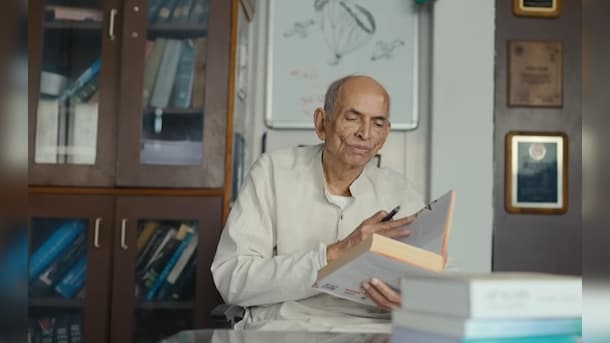
Blog | Madhav Gadgil: The 'Durable Optimist' Who Believed Science, Too, Has Obligations

Gadgil, despite decades of frustration and bureaucratic sidelining, believed that people could organise, that knowledge could travel, and that democracy, however delayed, could still correct its course.
-
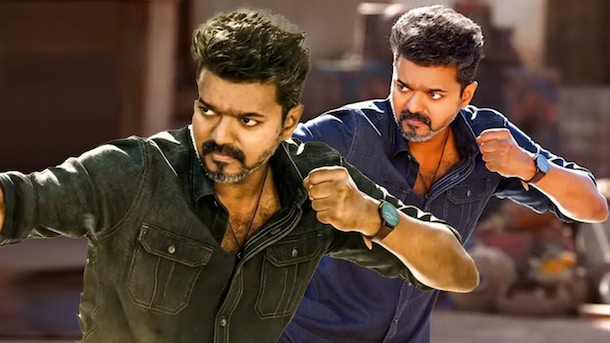
Blog | What's Stopping Vijay's Film? 6 'Conspiracy Theories' About Jana Nayagan
In Tamil Nadu, it turns out you don't need a release date for the promise of a blockbuster. Sometimes, just a missing censor certificate is enough.
-
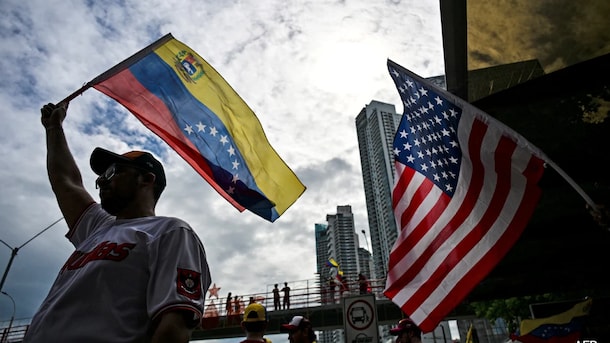
Opinion | The $700-Billion-Big China Problem Behind Trump's Venezuela Blitz
Venezuela is only part of the story. China has assembled a formidable economic footprint across Latin America. Trade between China and the region crossed $518 billion in 2024, making Beijing the largest trading partner for much of South America.
-
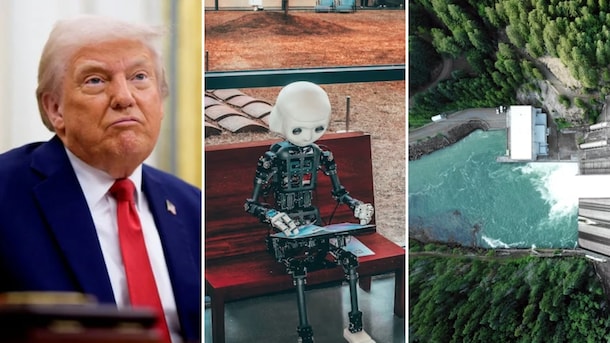
From Trump And AI To Russia And Water: The 'Top Risks' Of 2026
Ian Bremmer's Eurasia Group, one of the world's top risk research and consulting firms, has released its 'Top Risks 2026' report.
-
Europe's Different Yardsticks To Judge Events In Venezuela And Ukraine
Russia has called the US strike on Venezuela and the subsequent capture of Nicolas Maduro an act of armed aggression
-
Opinion | How Venezuela's China-Made Weapons Failed To Keep The US Away
Unlike post-Operation Sindoor, when Beijing hailed Pakistan's air-defence operations against India as a success of Islamabad's "Made in China" military force, there is an eerie silence within Beijing this time.
-
Opinion | Donald Trump Has A New Project: 'Make Venezuela Great Again'
Trump's presidency, much like of those before him, reveals the structural constraints that limit any US leader's ability to disengage from global conflicts.
-
A History Of US-Led Regime Changes And Their Disastrous Consequences
There is a familiar theme to American power when it decides to reorder the world. It is against that historical backdrop that Donald Trump's latest foreign intervention must be understood.
-
Blog: In Manipur, The More Things Change, The More They Stay The Same
As 2026 arrives, where do things stand today for Manipur, a border state that faces a situation so unique that modern India has never seen or found the correct words to define it adequately
-
Opinion | Bangladesh To Pak, An Embattled India Steps Into 2026 - By Shashi Tharoor
The events in our backyard offer a reminder that being a "Global South" leader is a hollow title if one's own immediate periphery is on fire.