Opinion | Suresh Kalmadi: The Man Behind The Legendary 5-Star Dinner That Unnerved Even Sonia Gandhi
Kalmadi proved that in Indian politics, the man who controls the guest list often has more power than those whose names appear on it.
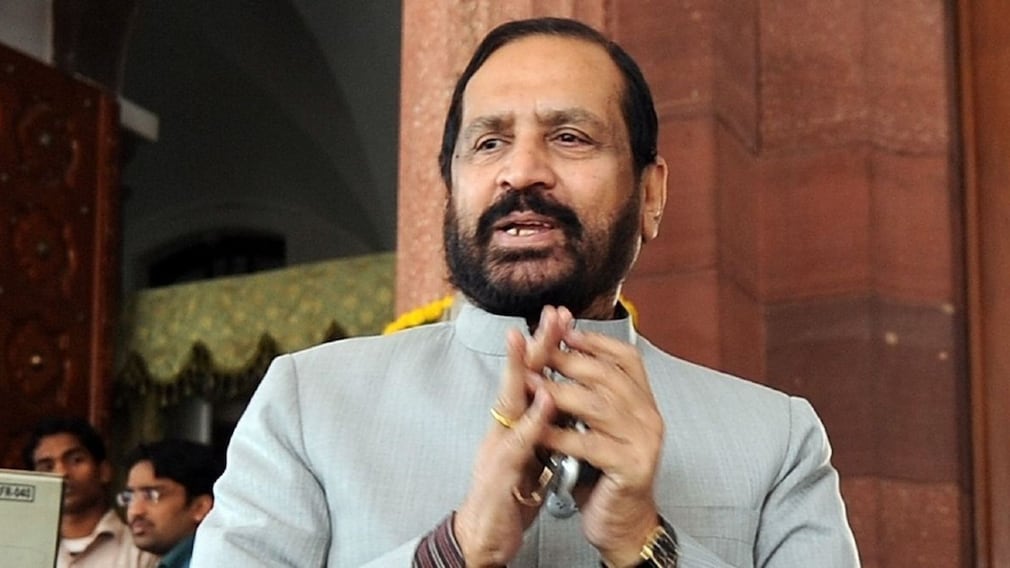
Suresh Kalmadi treated loyalty not just as a virtue, but as a business model. He died as he had lived: complicated, controversial, and utterly irreplaceable.
In over four decades of political journalism, few figures have generated as much fascination as Kalmadi. Here was a man who wore several hats: sports organiser, event manager, party animal, media baron, and politician - sometimes, in the same evening.
We can't talk about Kalmadi without talking about Sharad Pawar. Their relationship is perfectly captured in a joke Pawar once told at a Pune rally, "What happened when Suresh Kalmadi tried to hang himself from the ceiling? The ceiling came down!" Even when they were feuding, there was an undeniable fondness between them - the kind reserved for family, who know too much about each other to ever truly part ways.
A Lot Happened Over Coffee
Their story began at the Pune Coffee House in 1974. Kalmadi, fresh from his stint as an Indian Air Force pilot, had bought a stake in the establishment and would man the cash counter. It was amidst the aroma of filter coffee and the chatter of Pune's emerging elite that he first encountered Pawar, then rising as Yashwantrao Chavan's heir apparent in western Maharashtra.
What followed was a masterclass in political symbiosis. When Pawar helped appoint Kalmadi as Pune's Youth Congress president in 1977, it was the beginning of a partnership that would reshape Delhi's treacherous corridors of power.
Kalmadi understood something that many regional politicians didn't: Delhi required a different skill set. "Kalmadi spoke English fluently, had good social networking skills and, above all, was a smart lobbyist," the Bharatiya Janata Party's (BJP) Prakash Javadekar once observed. But it was after Rajiv Gandhi's assassination in 1991 that Kalmadi truly came into his own. As the Congress scrambled to find a new leader among PV Narasimha Rao, Sharad Pawar, Arjun Singh, and Shankar Dayal Sharma, Kalmadi took it upon himself to "manage Delhi" for his Maratha strongman.
Delhi witnessed the transformation of Maharashtra Sadan into Pawar's campaign headquarters, with Kalmadi orchestrating operations with military precision. He ordered food from the nearby Taj Mansingh, ensuring a steady supply of grilled chicken and paneer tikka even at odd hours. The proximity to Pandara Road market meant those preferring 'liquid embellishments' were thoroughly entertained whereas Intelligence Bureau officials trying to update their masters wrote rather exaggerated notes while braving the heat and their hunger.
When Narasimha Rao Kept The Guest List
The centrepiece was a legendary dinner at a five-star hotel. Kalmadi invited 64 newly-elected Congress MPs and Rajya Sabha members, offering them the best wine and food money could buy. The event sent shockwaves through the party, even unnerving Sonia Gandhi at 10, Janpath. Narasimha Rao was so shaken that for the rest of his tenure, he kept a copy of the guest list just to ensure that none of them got any position of influence.
Kalmadi's relationship with Rajiv Gandhi was equally telling. Rajiv, always in a hurry and constantly scouting for talent, appreciated Kalmadi's out-of-the-box thinking. When Kalmadi suggested a Pune Marathon to create awareness for sports way back in 1982, Rajiv was impressed enough to induct him into the Rajya Sabha.
The irony of Kalmadi's career was that managing relationships was both his greatest strength and his greatest weakness. His relationship with Pawar embodied this complexity perfectly. In 2001, when Sonia Gandhi decided to inaugurate Ganesh Utsav celebrations in Pune - a move orchestrated by Kalmadi and Govindrao Adik to snub Pawar on his home turf - it was political theatre. Yet, by 2009, Pawar was doing six-day campaigns for Kalmadi's Pune Lok Sabha bid, making emotional appeals to his supporters.
The CWG Saga
The Commonwealth Games saga revealed another facet of Kalmadi's character. As corruption allegations mounted, Pawar maintained a safe distance. But even in those dark days, there was something oddly admirable about Kalmadi's resilience and optimism. When sports minister Margaret Alva wondered why she got constant bad press while Kalmadi didn't, an official replied that it was due to "high spirits", capturing Kalmadi's approach to both life and politics.
The recent image of an ailing Kalmadi in a Pune hospital being visited by Pawar was both poignant and fitting. Two old warriors, who had travelled impossible distances together, fell apart, reconciled, and ultimately understood that some bonds transcend political convenience.
In an era where political relationships are increasingly transactional, Kalmadi represented a bygone world where personal chemistry mattered as much as ideology. He proved that in Indian politics, the man who controls the guest list often controls more than those whose names appear on it.
Suresh Kalmadi didn't just manage Delhi. He understood it. And in understanding it, he helped others navigate its labyrinthine ways. That, perhaps, is the most fitting epitaph for a man who made a career out of making things possible for others.
(Rasheed Kidwai is an author, columnist and conversation curator)
Disclaimer: These are the personal opinions of the author
-
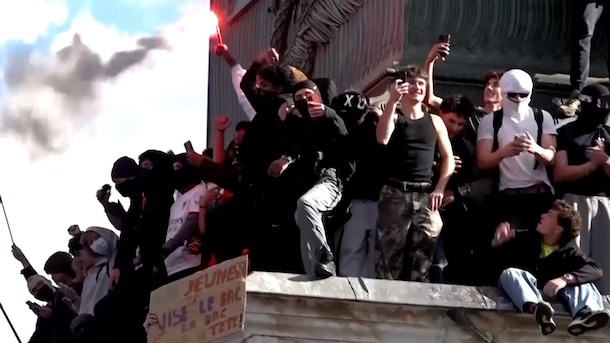
The Real Story Of France's Unrest Is Getting Lost In A Storm Of Online Lies

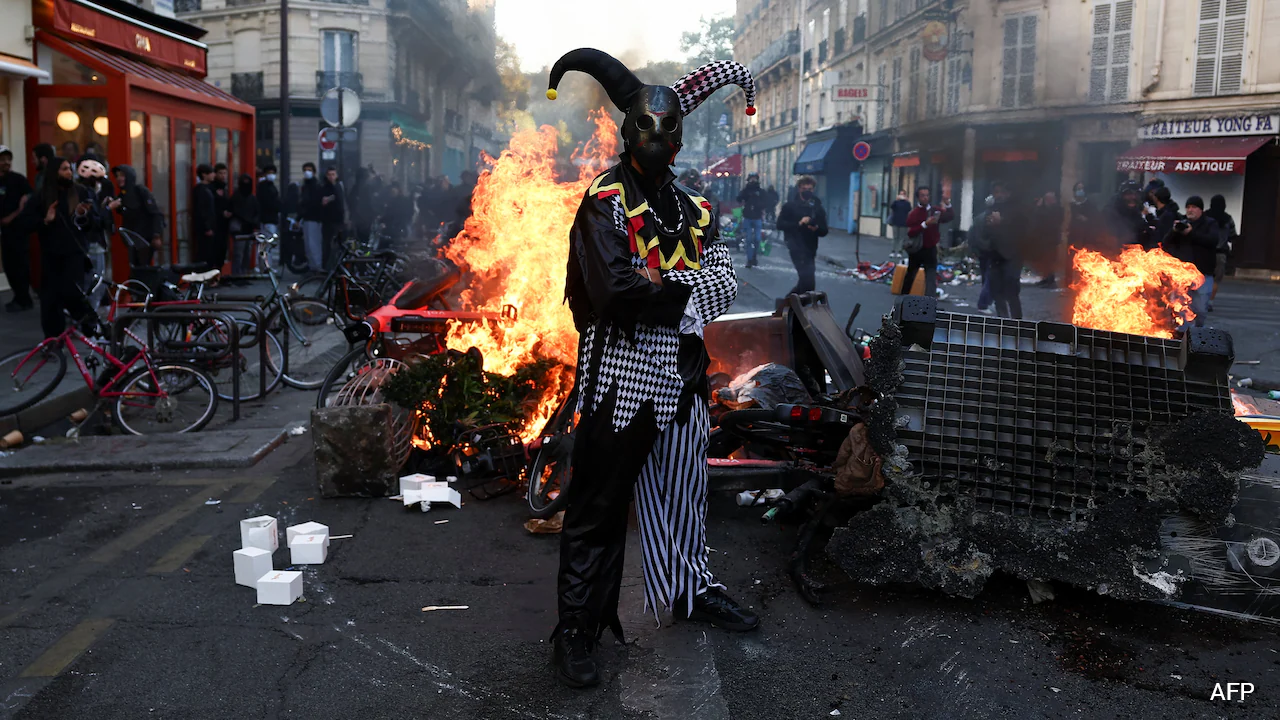
A man cosplaying Napoleon on the streets, looting at luxury fashion stores like Dior, France is currently confronting one of its most serious episodes of civil unrest in years.
-
Opinion | The Last Bet? What Trump's 'Mother Of All Bombs' Could Actually Do To Iran
Can an MOAB deliver a decisive blow to Iran that may force it to surrender immediately, as Japan did after Hiroshima and Nagasaki in World War 2?
-
Hit Songs, Empty Pockets: The Hidden Math Behind India's Viral Music Boom
Over 80,000 brands and five lakh creators in India make branded content. The opportunity is worth around Rs 1,500 crore.
-
Opinion | Great 'Exceptions': How The Oil India Was Attacked For Is The Oil Trump Now Seeks
A law written to punish the buyers of Russian oil was suspended by the US to protect a purchase of Russian oil. India spent fourteen months being lectured for less.
-
Opinion | Louis Vuitton Loot, Torched Cars: France Protests Have An Unlikely Beneficiary
It's an unbelievable moment. Crowds looting the most exclusive stores in Paris, including the famed Luis Vuitton. But what's behind this meltdown?
-
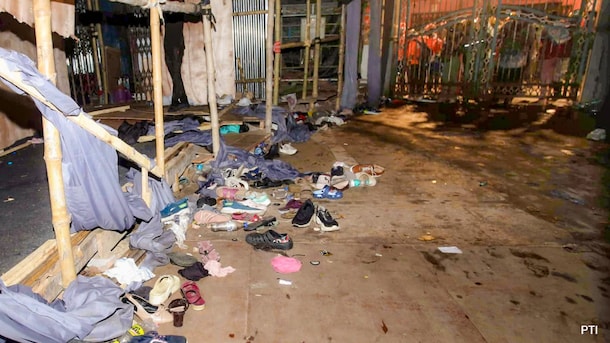
Blog: Kolkata Didn't Learn From 2015. Eleven Years Later, It Proved To Be Fatal
The City of Joy isn't a stranger to crowd control. Be it during Pujo or Christmas at Park Street, Eden Gardens cricket matches, or Derbies between Mohun Bagan and East Bengal. But during Pujo, the entire city is on alert.
-
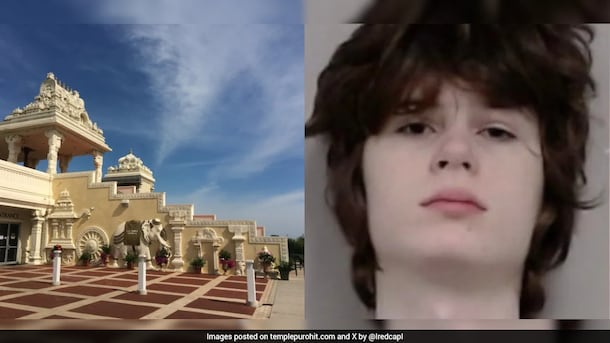
Opinion | Slurs, Threats, Now A Temple Attack Plot: When Did America Become So Hostile To Indians?
The rising tide of anti-India, anti-Hindu, and racist attacks serves as a stark reminder that economic prosperity does not automatically guarantee social immunity from bigotry.
-
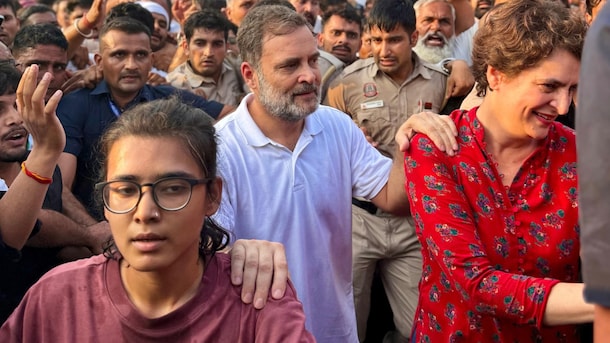
A Step Behind Neha Bora: What Rahul Gandhi's Gesture Says About Congress' Gen-Z Pitch
At INDIA bloc's march to Supreme Court, Rahul Gandhi placed himself a step behind two women, hands resting on their shoulders. One was his sister Priyanka. The one on his right was Neha Bora. Here's what the image means for the protest wave now, and for Rahul's politics in general.
-
Opinion | Imran Khan, And The Perils Of Having An 'Opinion' In Bollywood
The reality of the industry is quite grimy. More often than not, its inhabitants have been fairweather friends, happy to sing the praises of whoever is in a position of authority.
-
Exclusive: India's Food Safety Problem Goes Beyond Just Dirty Kitchens - By Tukaram Mundhe
On World Food Day, Maharashtra's Commissioner of Food Safety explains why instead of taking stopgap measures, the entire supply chain in India needs to be held accountable and made transparent.