Opinion | Inside Pak-Bangladesh-ICC Standoff: How 2 Nations Played The Entire System
Pakistan knew full well that they were not going to get anything out of its tantrums. But there were crucial political points to be won - and they were.
If you were on tenterhooks about whether the India vs Pakistan match in the ongoing T20 World Cup would happen or not, let the final outcome of a 10-day (forced) impasse serve as a lesson - nothing barring a genuine act of God (including wars) can derail "the mother of all cricket battles". There is just too much at stake. Period. This match was never in any serious danger of being called off. There is just too much riding on it - for all the stakeholders of the international cricket ecosystem. As former ICC CFO Faisal Hasnain said, an India-Pakistan match is "not just another game of cricket; it is one of the commercial backbones of an ICC event".
It was just a matter of who was willing to compromise, and how much.
Why Pak Did What It Did
What then were the real motivations behind Pakistan's stance to boycott the match against India, despite it being played at a neutral venue (Colombo)? And also, who are the real winners and losers at the end of a period of drama that unfortunately distracted all of us from the on-field action at the World Cup, which is dishing out quite a few exciting contests, thanks largely to the minnows playing some exceptional cricket. The thing is, no one either won or lost fully. To understand this, one must first keep two things in mind.
The first - just how lucrative an India vs Pakistan cricket match at an ICC event is. A single ICC game between the two neighbours generates anywhere between Rs 2,200 and Rs 4,500 crore in total, including broadcast, sponsorship, ticketing, etc., in-stadia ads, corporate boxes, merchandise, among other things. In other words, if the match doesn't happen, the key stakeholders could end up losing a mind-boggling amount of money. If an ICC match is cancelled before it begins, the face value of the ticket purchased is refunded, as per ICC policy. According to reports, Indian host broadcaster JioStar could have lost up to Rs 250 crore in advertisement revenue. Just 10-second prime time ad slots for this clash can be as expensive as USD 50,000.
The second factor is this: after the ouster of Sheikh Hasina from Bangladesh and the once strong ties between India and Bangladesh becoming strained, Pakistan had extra motivation to back Bangladesh politically, and cricket became a pawn in this game.
How Bangladesh Benefited
I had written earlier about how the "money-spinning" superpower of an India-Pakistan ICC tournament match is what Pakistan is trying to hold hostage and use as leverage to back Bangladesh, at a time when it is politically perfectly suitable for them to forge an alliance. One wouldn't be surprised if it was on Pakistan's insistence that Bangladesh demanded that all their matches be shifted from India to Sri Lanka. At the January 21 ICC virtual Board meeting, the cricket boards of the two countries were the only two bodies that voted in favour of Bangladesh playing their games in Sri Lanka. Which is why when the ICC adopted a hardline stance against the Bangladesh Cricket Board (BCB), first refusing to give in to their demand (for which there was no legitimate reason, as more than one security assessment showed) and second expelling them from the World Cup and replacing them with Scotland, Bangladesh were suddenly the big losers in all of this. They were not going to get their participation fees, nor any prize money, had risked a $2 million ICC fine as per the member participation agreement (MPA) and were in danger of losing their share of the ICC's annual revenue share, not to mention having jeopardised all future bilateral cricket with India and even possible legal action by the ICC for breach of contract (as per the Members Participation Agreement, or MPA). The BCB and their government, who were backing their cricket board, found themselves in a precarious situation, and Pakistan, having publicly shown that they were in the BCB's corner, had to help (the Bangladesh government has now claimed that the decision to not play their matches in India was taken by the players and their Board and not by them). So, they decided to play the one card they knew would get the ICC and the whole cricket world's attention: threaten to not play against India and risk millions and millions in revenue, which would, in turn, create multiple ripple effects across the entire cricketing ecosystem.
This was a dangerous gamble because Pakistan had much to lose. However, it also created a very interesting scenario. The Pakistan Cricket Board (PCB) and the ICC realised that both parties would have to give in to the other's demands to a certain extent to get what they really wanted. And that also meant the world realising that they were not calling all the shots.
The Great Negotiation
Bangladesh not playing the World Cup was not a big loss from the ICC's perspective. Why did the council not hesitate before taking action against the country and removing it from the World Cup? According to reports, the BCB had proposed a group swap with Ireland in a meeting with an ICC delegation on January 17, which, according to a BCB release, could have meant resolving the issue with "minimum logistical adjustments". But that proposal was rejected. This issue wasn't important enough to give in to some of Bangladesh's demands.
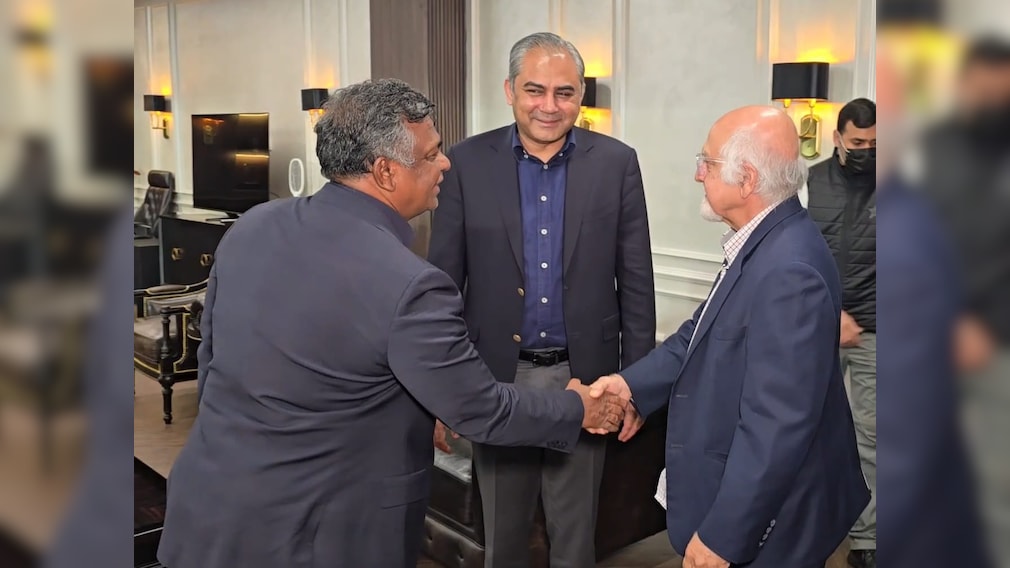
But not having the India-Pakistan match could potentially prove to be catastrophic. And as things stood, the global governing body of cricket was not capable of resolving this without some kind of a climbdown from their earlier uncompromising stance. Pakistan knew they had leverage. Think about it: why were there back-channel talks in Lahore, between PCB Chairman Mohsin Naqvi, ICC Deputy Chairman and lead mediator Imran Khwaja, ICC Director Mubashir Usmani, BCB President Aminul Islam, and others, to "resolve" this issue? That too after the ICC had cautioned the PCB categorically about possible legal and financial ramifications of a boycott? Simply because losing the India-Pakistan match was not an option. A middle ground had to be found, no matter what. Once the talks began, everyone knew there were going to be demands from the PCB. As we also know now, according to reports, there were five demands from the PCB to end this stand-off. Three of them were on behalf of Bangladesh, and two for themselves. It wasn't a surprise to see that the ICC summarily dismissed the last two demands - those of a bilateral series against India and a tri-series featuring India, Pakistan and Bangladesh. They also rejected a demand for an India tour of Bangladesh, because the ICC can't guarantee bilateral commitments (India are scheduled to tour Bangladesh in September 2026, but there is now a big question mark on that tour). But the ICC did have to accept two key demands, which were made on behalf of Bangladesh: that the BCB would not face any "financial, sporting or administrative" penalty for refusing to play their World Cup matches in India, and more significantly, the BCB would be granted hosting rights for an additional ICC tournament in the 2028-2031 cycle. That is critical in terms of a potential economic boost. According to an ICC statement issued in April 2025, the 2024 men's T20 World Cup, which was played in the US and the Caribbean across nine host cities, generated a combined economic impact of USD 1.66 billion.
What Does 'Additional' Mean?
This cycle (2028-2031) already has six World Cups (ODI and T20is across the men's and women's games) scheduled, along with two Champions Trophy events and two World Test Championship Finals. The only three existing ICC events in this cycle which don't have official hosts yet are the 2029 ODI World Cup (bidding cycle is on), the 2030 T20 World Cup and the 2031 T20 Champions Trophy. By "additional", does the ICC mean they will add another event in this cycle, which Bangladesh will host? Bangladesh already have co-hosting rights (with India) for the 2031 ODI World Cup. In other words, the Bangladeshi cricketers might have lost out on a great opportunity to play in a World Cup, along with any and all prize money, participation fees, etc., that they were entitled to, but their Board have had quite the windfall. So, a cricket board that refused to play matches they were supposed to play as per contract, without any valid reason, has been rewarded, in turn strengthening the ties between Bangladesh and Pakistan. The statement issued by the BCB quoted their President as saying, "We are deeply moved by Pakistan's efforts to go above and beyond in supporting Bangladesh during this period. Long may our brotherhood flourish.'' Meanwhile, the ICC's Achilles heel has been exposed, and it's clear that when their biggest money-generator is threatened, they will be willing to negotiate. There is just too much at stake that cannot be lost. The other boards are no doubt watching. How much will this damage ICC's authority in global cricket governance?
The PCB, meanwhile, knew full well that they were not going to get anything out of this rigmarole for themselves, but there were crucial political points to be won, and they did win them. But they had to engineer some face-saving optics before making their U-Turn, lest they come across as the party that had to bow down the most. It wasn't a surprise to see a statement from BCB's Aminul Islam just shortly before we received confirmation that the issue had been resolved: "Following my short visit to Pakistan yesterday and given the forthcoming outcomes of our discussions, I request Pakistan to play the ICC T20 World Cup game on February 15 against India for the benefit of the entire cricket ecosystem." On the same day, Pakistan Prime Minister Shehbaz Sharif had a 30-minute phone call with Sri Lankan President Anura Kumara Dissanayake. According to reports in the Lankan media, the country had earlier urged Pakistan, via written communication, to reconsider their stand because, as hosts of the India-Pakistan match, the Lankans stood to lose a lot, too, including "loss of anticipated tourism inflow". The statement issued by the government of Pakistan made sure it alluded to both what they managed to get for Bangladesh, which for them is a win, and also a diplomatic way to say that they have decided to make a U-turn, which was inevitable given how much they stood to lose and what they were jeopardising. That included their entire share of the ICC's annual revenue and possible global cricket isolation ("In view of the outcomes achieved in multilateral discussions, as well as the request of friendly countries, the Government of Pakistan hereby directs the Pakistan National Cricket Team to take the field on February 15, 2026, for its scheduled fixture in the ICC Men's T20 World Cup").
Ultimately, no one came out of this unscathed. But at least the focus will return to on-field cricket now, where the spotlight firmly belongs.
(The author is a former sports editor and primetime sports news anchor. He is currently a columnist, features writer and stage actor.)
Disclaimer: These are the personal opinions of the author
-
Opinion | Old Mistakes: Why Congress 'Bosses' Keep Silencing Their Strongest Leaders

There's a recurring flaw in the Congress's political culture. Leaders with regional charisma are treated as assets when convenient and as liabilities when they develop a voice and following of their own.
-
Opinion | Bangladesh Polls: How Yunus' Fate Will Also Decide The Country's Fate
Yunus sees himself as the prime candidate for the post of President. Yet, on the streets of Bangladesh, he is unpopular and much reviled.
-
Opinion | Lamborghini Crash To Dying In Pits, Many Ways To Cheapen Life In India
Systemic indifference in India is no longer an abstract concern; it is a lived reality inscribed on urban landscapes and, increasingly, on citizens' bodies.
-
Opinion | Trump's Claims vs Numbers: Can India Really Replace 87 Million Tonnes Of Russian Oil?
US and Venezuelan exports, even when taken together, fail to match the huge volume of crude India has been getting from Russia.
-
Analysis: Generative AI And Incel Ideology - Dangerous Mix And Security Threat
Most people have used Generative AI tools like ChatGPT, Gemini and Perplexity for brainstorming, sometimes even seeking answers during an emotional crisis. But what happens when resentment, revenge, sexism and misogyny intersect with AI?
-
No START To Check US-Russia Nuclear Arms Race. What It Means For India
With New START expiring and uncapping US-Russia nuclear arsenals, India is seen as facing heightened risks, sandwiched between China's 600-warhead surge and Pakistan's buildup while North Korea watches.
-
Opinion | There Are Two Big Problems Trump May Run Into If He Actually Attacks Iran
It is impossible to predict with certainty if the US will take the military option, but if they do, it will be from a position of discomfort.
-
The Washington Post 'Bloodbath': $100 Million Losses And Trump 2.0 Shadow
The Washington Post - which made history by exposing President Richard Nixon in the Watergate scandal - has announced "substantial" cuts to its estimated 1,000-strong journalism roster.
-
Blog | The Descent Of Man (And MP) - By Shashi Tharoor
"Having spent decades navigating the slippery slopes of policy and the treacherous inclines of debate, it was, quite ironically, a simple marble step that proved to be my undoing."