Opinion | IndiGo Crisis Is What Happens When Market Power Becomes Market Arrogance
IndiGo now is a de-facto monopoly in India's skies. And what comes with monopolies is conceit and extortion.
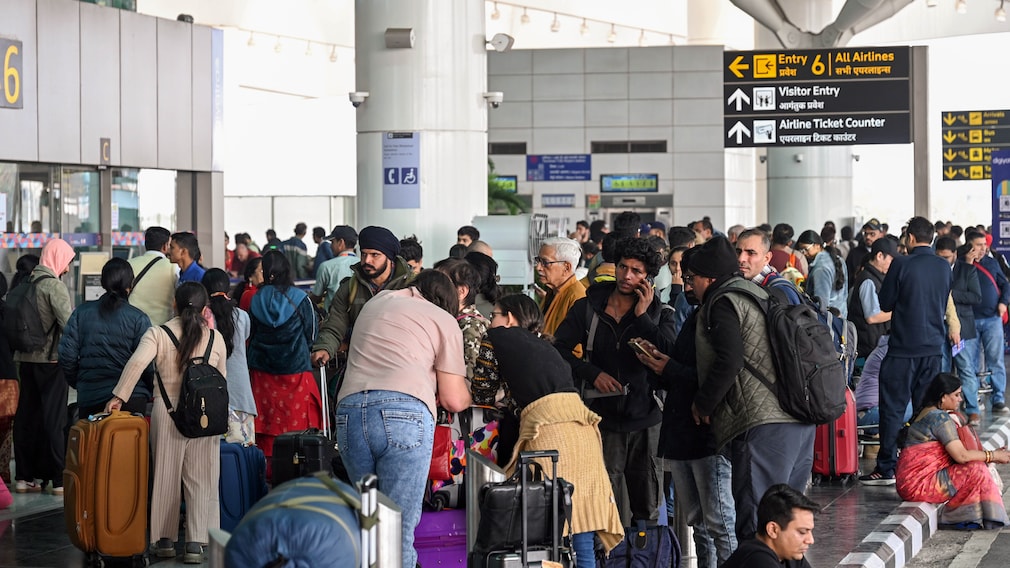
Three days ago, I received a call late at night from an old friend, saying that he was in a crisis and needed urgent help. He was in Kolkata. His Indigo flight early next morning to Bangalore was cancelled, and he was stranded along with his wife and daughter at the airport. His daughter was to get married the next day. No one from the airline had a clue when the next flight would be available.
Seeing his desperation and imagining the plight of his daughter, I immediately called someone in the senior management at IndiGo, who had served in Air Deccan years ago. I requested him to try to put the distraught girl on any flight along with her parents. The IndiGo official admitted there was an unmanageable crisis in the rostering of pilots due to the new policy on Flight Duty Time Limitations - 'FDTL' in aviation parlance - imposed by the Directorate-General of Civil Aviation (DGCA), which restricted many pilots from undertaking flying as it would exceed the prescribed limit. He said the crisis had snowballed and it was difficult to predict which flight would operate or get cancelled. Still, he assured me he would help. The girl was lucky: after a slew of cancellations, she made it to Bangalore just a few hours before the ceremony.
That made me recall an incident some decades ago from my Army days. My regiment was at a high altitude on the Chinese border. Due to heavy snowfall and landslides, a jawan from my regiment travelling to his village in Uttar Pradesh for his wedding could not reach Siliguri in time and missed his train. The parents of the bride and groom were told by the priest that it would be inauspicious to postpone the wedding ceremony, and thus, the marriage rites were performed with the jawan's photograph.
I narrate the foregoing because in the deluge of statistics, we don't realise the gravity of human suffering and anxiety when travel plans are upended. While the avalanche was an act of nature or God that prevented the armyman from being present at his wedding, the IndiGo crisis, going by reports and Aviation Ministry circulars, including the press note by the airline, is self-made.
An Unprecedented, Embarrassing Meltdown
A tsunami hit IndiGo on December 2 and reached gargantuan proportions over the next three days, leaving thousands of passengers across the nation in lurch as nearly 1,300 flights were cancelled. On January 5 alone, more than a thousand IndiGo flights were cancelled, with a staggering two lakh passengers stressed and stranded, and a nation left hostage to a single aviation company. The disruption and distress was unprecedented in the history of aviation in the world and caught the nation unawares. It was also an acute embarrassment given it coincided with the state visit of Russian President Vladimir Putin.
Just to clear the fog, the FDTL, or maximum flight duty period (FDP), is a set of regulatory rules that define the maximum time pilots and cabin crew are allowed to work, fly and be on duty. Aimed at preventing fatigue and maintaining flight safety, the rules, for example, may specify that a pilot can fly 900 hours in a year but not more than 100 hours in 28 days. Or, not exceed eight hours at a stretch with two pilots, or 13-16 hrs with three to four pilots on a single day, with not more than five to six stopovers, and fewer landings at nights. Duty time starts when a pilot reports an hour before flight time, till the aircraft comes to a complete stop at the destination.
How The FDTL Came Into Being
The International Civil Aviation Organisation (ICAO) is an apex body that defines global standards, which are then adapted by member countries. The world's two main regulatory bodies, the US Federal Aviation Administration (FAA) and European Union Aviation Safety Agency (EASA), which together operate the largest number of airliners in the world, follow ICAO guidelines. They strictly comply when new rules and regulations are introduced, something that has been happening over the years.
However, India's DGCA did not follow FDTL guidelines in complete consonance with the ICAO, or the FAA and the EASA. For a few years, there had been pressure from the Indian Pilots Association to bring the FDTL on par with ICAO guidelines. They were unhappy that airline managements were exploitative, forcing pilots to fly flouting international norms, making their jobs unsafe and stressful.
Thereafter, the DGCA held wide-ranging consultations with airlines' managements, pilot bodies and other stakeholders, and considering safety paramount, notified the new FDTL rules in May 2024. The implementation was in two stages: July 1 was when the first phase came into effect, and the second phase was completed on November 1. Which implies that airlines and pilots had nearly 20 months in total to comply with the new regulations. Clearly, IndiGo did not care.
IndiGo, Interrupted
First a tribute to the devil where it's due. IndiGo has grown to a colossal size, with its fleet size having grown to 420 aircraft in the 19 years since its inception, an unmatched track record of efficient and near flawless execution, on-time operations, young and sparkling aeroplanes, well turned-out cabin crew, zero fatal accidents, incredible growth in revenue and profitability, and a meteoric rise in market capitalisation reaching about USD 22 billio. It is a global airline in size and reputation. No mean achievement.
But along the way, it metamorphosed into a monstrous and arrogant behemoth. With eyes on the stock market, it lost empathy for passengers. Kingfisher's collapse, Jet Airways and GoAir going bankrupt in quick succession, the exit of some 300 planes, the shrinking of SpiceJet from 100 to some 20-odd aircraft, and the decrepit Air India floundering even after the Tatas bought it and merged their two other loss making airlines, AirAsia and Vistara with it, led everyone to flock to IndiGo. One expected that with the Tatas stepping in, Air India would be able to give a robust competition to Indigo. However, given its never-ending travails, recurring unsavoury incidents, frequent flight disruptions and the ghastly Ahmedabad to London crash, IndiGo now is a de-facto monopoly. And what comes with monopolies is conceit and extortion through high fares.
Airlines in India face a daunting twin challenge, one seemingly irreconcilable: safety and profit. With less flying, too many aircraft stuck in hangars for maintenance and extra aircrafts kept as back up for flight cancellations, an airline would go belly up. Airlines need to sweat all assets to the hilt - including people and all resources - and fly the maximum hours in a day to make profits. But if you are greedy, reckless, cut corners and compromise with safety, the product simply ceases to exist. You go bankrupt.
Time Wasted
IndiGo, like other airlines, had 20 whole months to prepare for compliance with the new regulations. This required recruitment of more co-pilots, captains and cabin crew. Induction of new pilots requires having foresight and thorough planning. IndiGo reportedly was already facing a huge shortfall of pilots, and with new FDTL policy kicking in, it surely couldn't have expected itself to keep up. Moreover, while full-service carriers like Air India need 11 pilots per plane as they fly fewer hours, low-cost airlines that fly more hours require 13-14 pilots a plane under the new guidelines. It is widely believed that IndiGo's senior management thought that it would be able to convince the Civil Aviation ministry, by dint of their sheer market size, to postpone the enforcement of the new FDTL rules. Fewer pilots flying more hours meant higher profits and a boost to stock.
The management at IndiGo should have listened to flight operations and rostering departments, as well as line pilots, and conducted a town hall. Good leaders encourage feedback without reprisals. While Air India, Akasa Air and SpiceJet diligently recruited, trained and absorbed pilots, Indigo, by all indications seemed impervious to its own pilots' demands.Pilot recruitment and induction takes time and diligence, as does updating crew rostering software and data integration of flight times of 5,000-6000 pilots and calculating route flying hours. This is outsourced to global companies like Sabre-CAE and airlines software supplier AIMS. With increased winter schedules, technical glitches and what IndiGo's statement termed "multitude of other unforeseen operational challenges" with the new restrictions, the system collapsed. Separately, IndiGo's aggressive expansion, with wet leasing of wide-bodied Boeing 787 Dreamliners and Boeing 777s, ordering Airbus 350s, and launching new international routes, may also have distracted its management from looking into these rather 'boring' nitty-gritties.
Blame Where Due
The IndiGo Board must now introspect as the buck stops at its door. It must take responsibility for its lapses, and heads must roll.
The mayhem also holds a lesson for the government. The DGCA issued a new notification yesterday relaxing some restrictions on FDTL for two months in consideration of the trauma of passengers and fear of more cancellations in the offing. The pilot bodies have already protested. Was this a prudent move by the government? Won't it be setting a wrong precedent and demoralising the airlines that complied? This also lays the government open to charges of succumbing to pressure from bullying by a dominant airline.
A country cannot grow robustly and vibrantly with duopolies, or rapacious monopolies, however efficient, in any sector. We inherited some part of this from the Jawaharlal Nehru years - when we had only Ambassador cars, or Bajaj Scooters or the Air India of JRD Tatas, an iconic airline that was ultimately nationalised and became a moribund monopoly.
Let's not turn the clock back now.
(The author is an entrepreneur, founder of Air Deccan, and a retired captain of the Indian Army)
Disclaimer: These are the personal opinions of the author
-
Opinion | The Last Bet? What Trump's 'Mother Of All Bombs' Could Actually Do To Iran

Can an MOAB deliver a decisive blow to Iran that may force it to surrender immediately, as Japan did after Hiroshima and Nagasaki in World War 2?
-
Hit Songs, Empty Pockets: The Hidden Math Behind India's Viral Music Boom
Over 80,000 brands and five lakh creators in India make branded content. The opportunity is worth around Rs 1,500 crore.
-
Opinion | Great 'Exceptions': How The Oil India Was Attacked For Is The Oil Trump Now Seeks
A law written to punish the buyers of Russian oil was suspended by the US to protect a purchase of Russian oil. India spent fourteen months being lectured for less.
-
Opinion | Louis Vuitton Loot, Torched Cars: France Protests Have An Unlikely Beneficiary
It's an unbelievable moment. Crowds looting the most exclusive stores in Paris, including the famed Luis Vuitton. But what's behind this meltdown?
-
Blog: Kolkata Didn't Learn From 2015. Eleven Years Later, It Proved To Be Fatal
The City of Joy isn't a stranger to crowd control. Be it during Pujo or Christmas at Park Street, Eden Gardens cricket matches, or Derbies between Mohun Bagan and East Bengal. But during Pujo, the entire city is on alert.
-
Opinion | Slurs, Threats, Now A Temple Attack Plot: When Did America Become So Hostile To Indians?
The rising tide of anti-India, anti-Hindu, and racist attacks serves as a stark reminder that economic prosperity does not automatically guarantee social immunity from bigotry.
-
A Step Behind Neha Bora: What Rahul Gandhi's Gesture Says About Congress' Gen-Z Pitch
At INDIA bloc's march to Supreme Court, Rahul Gandhi placed himself a step behind two women, hands resting on their shoulders. One was his sister Priyanka. The one on his right was Neha Bora. Here's what the image means for the protest wave now, and for Rahul's politics in general.
-
Opinion | Imran Khan, And The Perils Of Having An 'Opinion' In Bollywood
The reality of the industry is quite grimy. More often than not, its inhabitants have been fairweather friends, happy to sing the praises of whoever is in a position of authority.
-
Exclusive: India's Food Safety Problem Goes Beyond Just Dirty Kitchens - By Tukaram Mundhe
On World Food Day, Maharashtra's Commissioner of Food Safety explains why instead of taking stopgap measures, the entire supply chain in India needs to be held accountable and made transparent.
-
Opinion | India Has Enough Coal. So Why Are Power Plants Running Short? A 76 Million 'Crunch'
As of October 5, as many as 82 of the 191 thermal plants monitored by the Central Electricity Authority were in the 'critical' category