Opinion | A BAFTA Award, Straight From The Ashes Of Manipur's Moreh
The shooting for 'Boong' in Moreh wrapped up barely a week before violence engulfed the township. Many who stood behind and before the camera are today internally displaced.
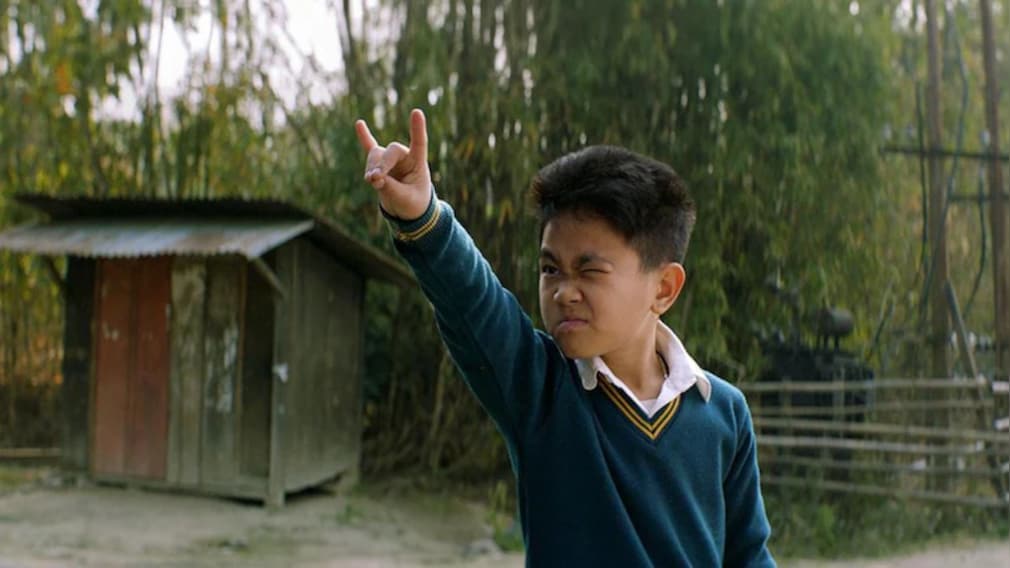
For once, Manipur is in the national and global gaze for the right reason. The Manipuri-language film Boong has won the British Academy of Film & Television Arts (BAFTA) award in the Children and Family category, the first time an Indian film has claimed that honour. At the grand stage of BAFTA, a small film from a troubled corner of the Northeast rang a bell that could be heard across continents.
Let us also be honest: for nearly three years, Manipur has occupied the national consciousness for all the wrong reasons - ethnic violence, displacement, and the painful reality of buffer zones dividing neighbour from neighbour since May 2023. Highways have fallen silent. Townships have burned. Trust has thinned like old paper.
The Town That Once Was
Written and directed by Lakshmipriya Devi, or 'LP', as she is fondly called by her associates, the film tells the story of a boy searching for his missing father, hoping to reignite happiness for his mother. The child protagonist, played by Gugun Kipgen - a Kuki boy portraying a Meitei character - journeys towards Moreh, the border town that later erupted in flames. The irony is sharp: the shooting in Moreh wrapped up barely a week before violence engulfed the township. Many who stood behind and before the camera are today internally displaced. The Moreh preserved in Boong may well be the last visual memory of the town that was.

(In photo: A file picture of the border town of Moreh, which saw violent clashes during the ethnic conflict of 2023-24. Today, many who stood behind and before the camera during the making of Boong in the town are internally displaced.)
Both communities that now stand estranged participated in the making of this "small film with a big heart". In that sense, Boong is a reminder that Manipur's social fabric, though frayed, was once interwoven in everyday collaboration. LP's camera caught what politics failed to protect.
But while the symbolism is powerful, one must not romanticise the achievement without acknowledging the labour behind it. Credit must go squarely to the director and producers who chose to back a regional-language story in an era obsessed with crime and spectacle. Supporting Manipuri content is not a commercially safe bet. It demands conviction - in story, in language, in people.
Those Who Paved The Way For Boong
This moment should also be seen from a historical perspective. Long before Boong, Manipuri cinema had already stamped its artistic depth. In 1981, Imagi Ningthem, directed by the doyen Aribam Syam Sharma and based on a story by Maharaj Kumari Binodini Devi and shot and produced by Kongbrailatpam Ibohal Sharma, won the Grand Prix at the Festival des 3 Continents in Nantes - the first Indian film to do so. A decade later, Ishanou, again a collaboration between Binodini Devi and Aribam, was officially selected in the Un Certain Regard section of the Cannes Film Festival. Its digitally restored version returned triumphantly in 2023 to the Cannes Classics section, reaffirming that Manipuri cinema had already carved a space in the world cinematic landscape.
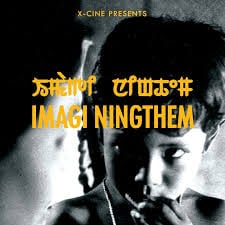
A still from Aribam Syam Sharma's 1981 classic Imagi Ningthem
However, there are hard truths: Manipur lacks the institutional and structural ecosystem that talents deserve. For decades, filmmakers here have worked with shoestring budgets and stubborn willpower. In the early 2000s, when insurgency and economic blockade choked theatrical exhibition, Manipur led the country in producing low-budget video features - sometimes 50 to 60 films annually. It was, by necessity, a parallel film economy driven by passion rather than profit. Today, the industry has transitioned into digital production, averaging around 20 to 25 certified features annually. This is no small feat for a state of its size.
Importantly, it was through persistent advocacy by Film Forum Manipur that video films were eventually made eligible for entry into the National Film Awards - a structural change that acknowledged the reality of regional production practices. That insistence altered policy. It democratised recognition.
Even within constraints, institutional stirrings have begun. The Manipur State Film Development Society (MSFDS), despite limited funds, has pushed forward with incubation labs, documentary mentorships, and screenwriting project workshops. Collaborations such as the' Imphal Documentor', in partnership with the Documentary Resource Initiative, Kolkata, have nurtured documentary projects that are now drawing national and international attention.
Thokchom Borun's anti-war documentary Battlefield has been hailed by critics as among the most outstanding works of its genre. Meena Longjam's Andro Dreams, chronicling an all-women football club, has travelled to global platforms. In fiction, projects like Night & Day, incubated in MSFDS's Screenwriters' Lab, have reached Film Bazaar pitching forums and attracted institutional interest.

A still from Thokchom Borun's Battlefield, which revisits the devastating impact of WWII on Manipur
As film curator and writer Somi Roy aptly observes, authenticity finds its audience. Lakshmipriya Devi not only directed Boong but also wrote its story and screenplay, rooting it deeply in Manipuri ethos. Local language. Local landscape. Local emotion. That is not provincialism, but artistic strength. Around the world - from Iran to South Korea - state-supported ecosystems have nurtured small industries that now command global respect.
Manipur stands at a similar crossroads. Human resource or talent is not the question. This is a state that has produced Olympians, world champions, scholars, and artists disproportionate to its population. The same discipline and creative instinct course through its filmmakers. What is lacking is sustained infrastructure: film schools with stable funding, production grants, post-production facilities, distribution networks, archival preservation, and policy continuity.
To be blunt, talent alone is not enough. Without an enabling ecosystem, brilliance exhausts itself. If the state sees cinema merely as entertainment, it will miss the point. In a land fractured by competing narratives of history and belonging, storytelling is not a luxury but a necessity. Films like Boong do what official statements can't: restore human faces to headlines. They preserve memory before it is erased.
Boong Is A Call
This BAFTA is not a trophy to be garlanded and forgotten. It is a call - a call to the government to invest seriously in institutional frameworks. A call to private stakeholders to recognise that regional cinema is not charity but cultural capital. A call to filmmakers themselves to hone craft relentlessly - to risk failure, to fall and rise again. There is no shame in falling. The only shame lies in never being given the ground to stand on.
Boong has opened a window. Through it, the world has glimpsed a Manipur beyond violence - a Manipur of tenderness, collaboration, and quiet resilience. Whether that window remains open depends not on the bell that rang in London, but on decisions taken closer to home - in Imphal, and in Delhi, to nurture storytelling in motion.
(Sunzu Bachaspatimayum is an award-winning filmmaker, journalist, writer, and media consultant based in Imphal. He also serves as Secretary of the Manipur State Film Development Society)
Disclaimer: These are the personal opinions of the author
-
Opinion | Congress's 'Jamaat' Experiment In Kerala Can Backfire Badly. But Does It Care?

The Jamaat has always been sort of a political pariah in the state. Why, then, is the Congress warming up to it?
-
Inside Mumbai's Worsening Air Pollution Crisis
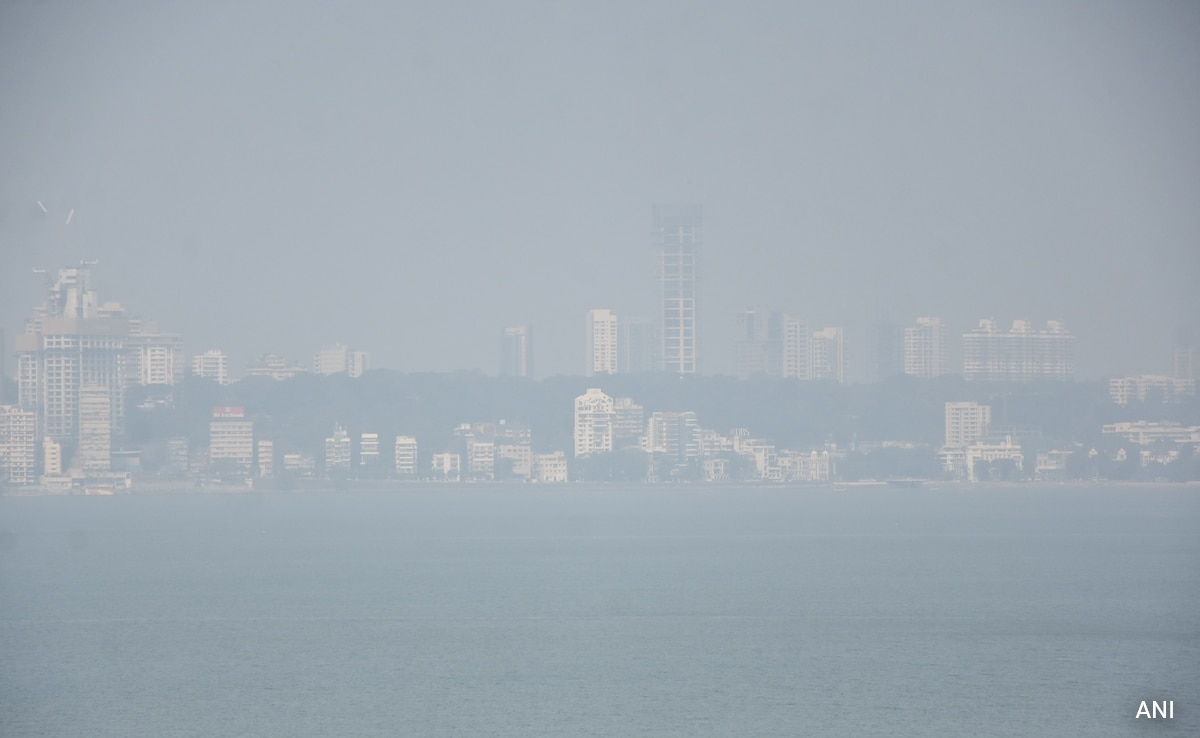
Mumbai Air Pollution: Mumbai 's overall Air Quality Index (AQI) on February 25 remained in the poor to unhealthy range.
-
Opinion | What's In An 'M'? The Empty Performance of Renaming Kerala
The 'm' at the end of Keralam will not stop the sea from encroaching, it will not fill the coffers of the state treasury, and it will not provide a bed in a super-specialty hospital.
-
6,800 km From Epstein Island, His Paris Lair Surfaces With Disturbing Details
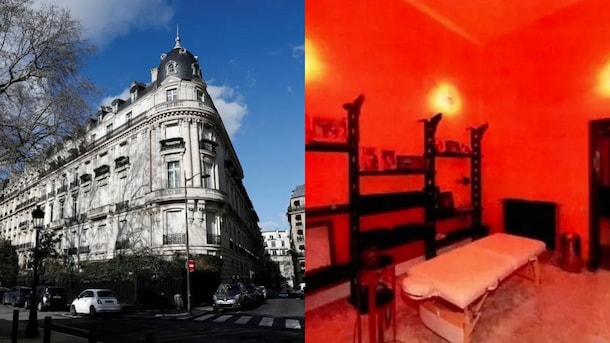
The photographs show an 18-room residence saturated in red, orange and pink tones. Walls are covered with framed images of naked or semi-naked young women.
-
Opinion | How Israel Once Defied Its Biggest Ally To Secretly Help India Against Pakistan
During the 1971 India-Pakistan war, Israel secretly supplied India with critical military equipment despite the absence of formal diplomatic ties. Then came an 'offer' against Pakistan in the 1980s.
-
Opinion | If You Don't Care About Taj Mahal's Architect, Why Cry Over Lutyens?
The parallel, if one has to be drawn, is not with Shah Jahan and the Taj. It is with the architect of the Taj, and most of us don't know his name either. Why, then, should we bother too much with a British architect?
-
Opinion | Inside Trump's Dirty Games With South Korea And Japan - And Why India Must Care
The US President's dealings with his two allies have become cautionary tales highlighting the difficulty of negotiating with Trump's America.
-
From "Jai Shree Ram" To "Jai Maa Kali": BJP's Cultural Rebranding In Bengal
The BJP's strategy seems to be to acknowledge that the intricate dance of politics, pre-Independence history and culture, when done with sincerity and respect, can unite rather than divide
-
Opinion | In Bangladesh, A Story Of Many Wins
The rain is over, and the clouds are clearing. Now, the hard work of rebuilding a nation begins, and India must be standing right there alongside as a friend.