Opinion | India's Aviation Model Is Cracking Under Its Own Weight
When airlines strain against duty hour limits, when safety oversight suffers from understaffing, when passenger protection exists only on paper, the aviation system functions dangerously, accumulating risks that eventually manifest as crises.
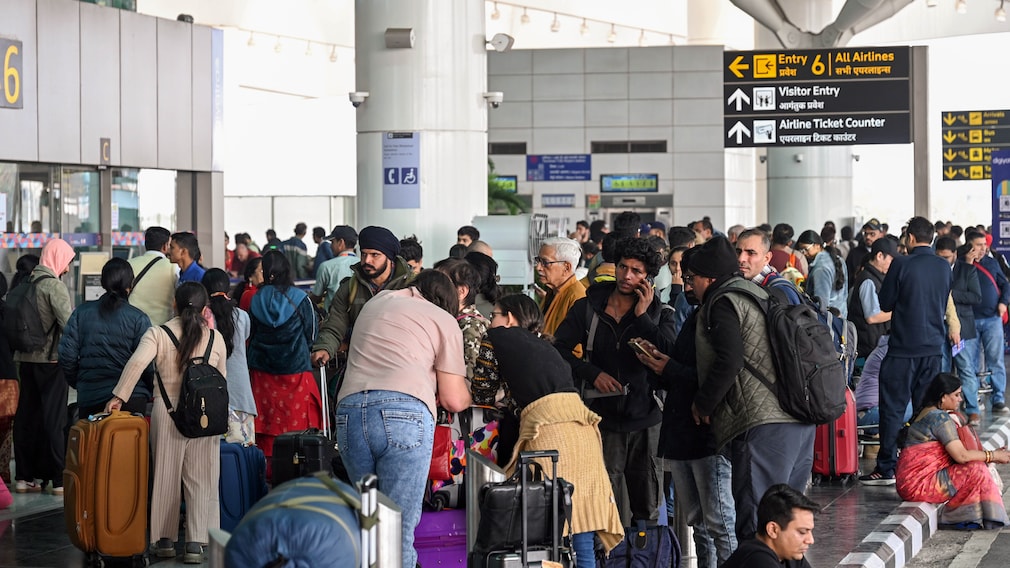
When Indian airlines placed orders for over 1,350 new aircraft in 2023 and 2024 alone, the numbers captured both promise and peril. India is now the world's third-largest domestic-only aviation market (globally it ranks fifth when including all passenger traffic), handling approximately 161 million domestic passengers in 2024 and accounting for 4.2% of global air traffic. Yet, public confidence in air travel has never been more fragile.
The Air India Flight 171 crash on June 12 this year, which killed 241 of the 242 people on board (230 passengers and 12 crew) and 19 people on the ground, and the cascading IndiGo flight cancellations in December are not isolated mishaps. They are stress signals from a system stretched to its limits. The crash marked the first fatal accident involving a Boeing 787 Dreamliner since the aircraft entered commercial service in 2011, a fact that underscores the gravity of the incident for global aviation safety. The two incidents reflect different failure modes, one under accident investigation, the other an operational-planning breakdown. But both expose how growth is outrunning institutional capacity.
The immediate response to such events often focuses on individual fault, like pilots, crew, or airline management. But that framing obscures the deeper structural challenge. India's aviation ecosystem has expanded faster than its regulatory, infrastructural, and human-capital foundations.
The Regulatory Architecture
The Directorate General of Civil Aviation's (DGCA) Flight Duty Time Limitations (FDTL) mandate precise constraints on pilot duty hours to combat fatigue-related safety risks. Announced in January 2024 and implemented in two phases, these regulations represent India's alignment with international norms.
When the FAA implemented its regulations in 2014, American carriers adjusted proactively. Delta Air Lines began planning well in advance, conducted comprehensive modelling of crew utilisation patterns, and expanded its pilot workforce. American Airlines faced a scheduling crisis in December 2017 when a computer glitch granted vacation to thousands of pilots simultaneously, potentially leaving over 15,000 flights without crews between December 17 and 31. But the management implemented 150% premium pay incentives and engaged in union negotiations regarding compensation and scheduling compliance. Within 72 hours, the airline secured crew coverage for substantially all affected flights.
European airlines faced similar challenges when an EASA regulation took full effect in February 2016. The Lufthansa Group established a dedicated transition team comprising operations planners, crew scheduling specialists, pilot union representatives, and legal compliance officers. Ryanair, too, despite its low-cost model emphasising maximum aircraft utilisation, increased pilot staffing and made modest schedule adjustments.
Gulf carriers operating under similarly stringent duty time regulations maintain substantially higher pilot-to-aircraft ratios specifically to absorb FDTL restrictions. Emirates, with its all-widebody fleet of approximately 261 aircraft and nearly 4,600 pilots, operates with flexibility to cover extensive crew rest requirements for long-haul operations, absorb disruptions, and maintain service during peak demand periods. Singapore Airlines operates ultra-long-haul flights exceeding 19 hours, utilising an augmented flight crew and enabling in-flight rest rotations in dedicated crew rest compartments.
Making Of An Avoidable Crisis
Against this, IndiGo's December 2025 operational collapse reveals a series of strategic failures extending over multiple years. Its ratio of approximately 14 pilots per aircraft represented only 70% of typical full-service carrier staffing and fell below even other low-cost carriers. From fiscal 2022 through fiscal 2024, IndiGo matched pilot growth almost exactly to aircraft acquisition, increasing pilots by 33% while expanding its fleet by 33%. This kind of expansion maintained the lean ratio without building any buffer for the known FDTL Phase 2 implementation. In stark contrast, Air India more than doubled its pilot complement. This means that there was a 127% increase, vastly exceeding its 32% fleet growth, thereby reflecting Tata Group's strategic preparation for FDTL compliance.
Internal analysis suggested that FDTL Phase 2 compliance would require IndiGo to increase its pilot workforce by approximately 20-25% to maintain the existing schedule capacity. With 5,038 pilots as of fiscal 2024, this implies a need for roughly 1,000 to 1,250 additional pilots by November 2025. Yet, IndiGo's actual hiring remained insufficient. Even more problematically, IndiGo increased its winter 2025-2026 schedule by approximately 6% despite knowing it faced crew shortfalls estimated at 10-15% under Phase 2 rules. The airline also faced additional pressure from approximately 50 aircraft grounded due to Pratt & Whitney PW1000G engine issues, a separate supply-chain constraint that compounded operational challenges.
The Crisis Materialises
IndiGo's crew rostering systems struggled to adapt to Phase 2 complexity. According to DGCA data, IndiGo cancelled 1,232 flights in November 2025, with 755 cancellations (61%) directly attributed to crew and FDTL constraints. On-time performance deteriorated sharply: on December 3, IndiGo recorded just 19.7% OTP at six key airports - Delhi, Mumbai, Chennai, Kolkata, Bengaluru, and Hyderabad - compared to Air India's 67.2%, Air India Express's 79.5%, SpiceJet's 82.5%, and Akasa Air's 73.2%.
Winter fog affecting North Indian airports caused initial delays. Under normal circumstances, these weather delays would cause modest disruption. Under IndiGo's strained crew situation, the delays triggered cascading failures. Delayed flights meant pilots accumulated duty hours waiting for departure clearances. As delays extended, pilots systematically hit Phase 2 duty hour limits before completing planned flights. With no reserve crews available, flights were cancelled. The tightly coupled network collapsed as the airline lost the ability to maintain schedule integrity.
Regulatory Intervention
The DGCA granted IndiGo a temporary exemption from specific Phase 2 FDTL provisions valid until February 10, 2026. However, regulators simultaneously issued a show-cause notice to IndiGo CEO Pieter Elbers on December 6, 2025, ordered a detailed compliance roadmap within 30 days, and explicitly reserved the right to revoke the exemption if safety was compromised.
On December 9, the DGCA mandated that IndiGo reduce its schedule by 10% through March 28, 2026. Civil Aviation Minister K. Rammohan Naidu publicly blamed IndiGo for "mismanagement regarding their crew", noting that other airlines had prepared adequately for the changes. IndiGo Chairman Vikram Singh Mehta issued a public apology, rejecting allegations that the crisis was engineered to pressure the government into relaxing flight rules.
The Federation of Indian Pilots and Airline Pilots' Association of India publicly opposed the exemption, arguing it rewarded non-compliance and created a dangerous precedent. The Federation stated that IndiGo had "inexplicably adopted a hiring freeze, entered non-poaching arrangements, maintained a pilot pay freeze through cartel-like behaviour, and demonstrated other short-sighted planning practices" despite a two-year preparatory window.
The DGCA Crisis
The deeper regulatory crisis lies in DGCA capacity, however. According to government data presented to Parliament in July 2025, the regulator operates with 823 vacant positions out of 1,644 sanctioned posts, representing a 50% vacancy rate. Among technical positions specifically, 540 out of 1,063 sanctioned posts remain unfilled. A parliamentary committee report in August 2025 described this staffing shortage as an existential threat to aviation safety, noting that oversight is severely compromised when the regulator itself cannot adequately monitor compliance or follow up on safety reporting.
Passenger Protection
During IndiGo's December 2025 disruptions affecting over one million passengers, India's regulatory framework provided minimal automatic protections. The DGCA's Civil Aviation Requirements mandate that airlines should provide refreshments after two-hour delays and lodging for overnight delays, but enforcement is sporadic and penalties minimal. The Consumer Protection Act, 2019, allows affected passengers to pursue claims through consumer forums, but this requires individual initiative and extended timelines. During the IndiGo crisis, the Ministry established a 24-hour control room and arranged special trains, but these were reactive emergency measures. Passengers had no automatic right to compensation for cancelled flights, missed connections, or incidental expenses. Meanwhile, other airlines increased fares dramatically. Reports indicated Delhi-Mumbai routes reaching ₹36,000 and Delhi-Chennai reaching ₹69,000 during peak disruption.
Regional Aviation Infrastructure
India's aviation expansion has concentrated primarily on metro-to-metro routes, while regional connectivity remains underdeveloped.
International experience demonstrates that regional airports catalyse local economic development through time savings for business travellers, tourism development, improved access to specialised services, and enhanced logistical connectivity. The UDAN scheme, launched in October 2016 with its first flight on April 27, 2017, has enabled the launch of over 600 regional routes connecting previously unserved airports. The number of operational airports has doubled from 74 in 2014 to 157 in 2024, with over 1.4 crore passengers benefiting from more than 2.8 lakh flights. However, implementation challenges persist. Many UDAN routes remain commercially fragile, with airlines withdrawing after viability gap funding expires. Inadequate airport infrastructure at smaller cities limits operational reliability, and thin demand creates persistent profitability challenges. The government has disbursed ₹4,300 crore in Viability Gap Funding to support route sustainability. The government aims to have 350-400 operational airports by 2047, more than doubling the current count.
The Path Forward
The Air India crash and the IndiGo meltdown demand comprehensive reform across multiple dimensions.
- Fill DGCA vacancies: Address the 823 vacant positions, including 540 technical posts. This requires granting DGCA direct hiring authority independent of multi-year central recruitment processes and creating fast-track mechanisms for hiring experienced aviation professionals.
- Establish compliance timelines: Set clear deadlines for IndiGo achieving sustainable full compliance, conduct monthly audits, impose escalating financial penalties for non-compliance, and implement enhanced FDTL oversight across all carriers, including quarterly audits of crew scheduling systems.
- Complete the AI Flight 171 investigation: The final investigation remains ongoing and must be completed to establish definitive causes and prevent future occurrences.
Parliament, too, should enact comprehensive passenger protection legislation establishing enforceable standards. Such legislation should mandate:
- Specific care obligations that come into force automatically when delays reach defined thresholds
- Standardised monetary compensation calibrated to Indian cost structures
- Absolute refund rights for cancelled flights
- Tarmac delay limits with meaningful penalties
- Transparent communication requirements
- Accessible complaints mechanisms with mandated response timelines
IndiGo's 64% domestic market share concentration also creates systemic vulnerabilities requiring consideration of whether such dominance requires special oversight, reviewing slot allocation policies to ensure new entrants can access constrained airport capacity, monitoring for anti-competitive practices, and encouraging market diversification.
At the same time, the UDAN scheme should be strengthened with longer-term viability gap funding commitments, performance-based incentives rewarding traffic growth and reliability, infrastructure development grants, integrated multimodal planning, and transparent evaluation.
Crisis to Consolidation
India's aviation sector stands at an inflexion point, where an extraordinary growth trajectory confronts institutional capacity limits. IndiGo's crisis reflected strategic choices prioritising short-term cost minimisation over sustainable operational resilience.
The sector needs to shift from celebrating growth metrics towards consolidating institutional capacity supporting sustainable expansion. Sure, fleet growth towards a projected 2,000-plus aircraft within a decade is laudable. But expansion unsupported by regulatory capacity, operational resilience, passenger protections, and infrastructure is unsustainable.
When airlines strain against duty hour limits, when safety oversight suffers from understaffing, when passenger protection exists only on paper, the aviation system functions dangerously, accumulating risks that eventually manifest as crises. India's skies are crowded with aircraft and ambition. But global experience has shown how ambition, if handled well, can translate into safe, reliable, passenger-focused aviation.
(Sasmit Patra is a Rajya Sabha MP and Supreme Court advocate; Arijit Bansal is a second-year BA LLB student at National Law University, Delhi)
Disclaimer: These are the personal opinions of the author
-
'SIR' In America Too? India Cue In Trump's Mass Citizenship Check For Voters

Having got the nod from the US Supreme Court, Donald Trump's push for a voter roll "cleanup" puts citizenship at its centre. Arguments for India's Special Intensive Revision (SIR) have also centred on "illegal immigrants". Data remains scarce. Let's map the similarities and the nuance.
-
Opinion | Gyanesh Kumar Row May Be Doing Something Unthinkable For India's 'Lost' Opposition
There seems to be a greater willingness within the Opposition to accept Rahul Gandhi's leadership, at least on the SIR controversy. But the INDIA bloc itself seems to be undergoing a strange renewal.
-
Opinion | flydubai Hijack, And How Syria's Descent Into 'Jihadism' Has Now Become Everyone's Problem
Al Hammimi, the Omani pilot who tried to crash a plane with 175 passengers on September 30, is a symptom of Syria's long-raging sectarian and extremist fire that has now reached far beyond Syria's borders.
-
"Feel Deeply Abandoned By World": Tales Of Loss And Separation From Gaza
For Gazans, who have lived through the horrors of the last three years, life means a continuing encounter with impermanence and the repeated discovery that a home, a friendship, a livelihood, a familiar life and even one's former self can become things that exist only in memory.
-
Opinion | Gurugram Techie Suicide: Why Does A Woman Asking For Alimony Enrage Us So?
Social media, with its spectacular disregard for facts, turns one man's tragedy into an indictment of all women. The recent death of 28-year-old techie has become precisely that.
-
Bus Key Dash To 'Detain Me Please': How Protesters Outfoxed Delhi Cops
Videos capture the energy, nerve, camaraderie and creativity of protesters who have found ways to turn even moments of confrontation with the police into scenes of defiance
-
The New Global Power Map: 7 Political Movements Gaining Ground And What They Want
In the last one year, more than 100 protests have erupted across 57 countries. Though they look different, there's a common thread that binds these movements.
-
Edge Of Space, Mach 2.4: Flying India's Most Secret Jet Over Pakistan
The MiG-25 wasn't just any jet. Alongside the American SR-71 Blackbird, it was one of only two jet aircraft to fly operationally at close to Mach 3, three times the speed of sound.
-
Opinion | India's $18.3 Billion Forex Reserve Shock Is A Warning, Not Just A Number
The reported USD 18.34 billion decline in India's foreign exchange reserves in a single week has attracted attention for more than its size