Opinion | Indians Are Growing Sick Of Customs Harassment - But Who Cares?
You would think that the Wintrack experience would serve as an example to customs officials and make them more careful and professional when dealing with citizens. In fact, the opposite is true.
At no time in our recent history has there been so much anger over harassment and corruption by government officials, bureaucrats and police/ customs/enforcement officers. There has been public outrage over political corruption before: it's why the UPA lost the 2014 elections. And, to the credit of Narendra Modi, there is little doubt that corruption among ministers has come down significantly.
But this achievement has been balanced out by a spectacular growth in corruption among babus and cops. The Inspector Raj is not only alive and well, it is one of India's fastest growing industries with revenues that multiply every month.
Each week we hear new stories: about municipal officials whose ill-gotten wealth reaches hundreds of crores; about formerly lauded IAS officers who are revealed to be crooks and about dishonest policemen.
Yes, corruption is not a new phenomenon. But rarely has it reached these levels. A few days ago, the Central Bureau of Investigation (CBI) arrested a Deputy Inspector-General (DIG) in the Punjab police who it caught demanding and accepting a bribe of Rs 8 lakh. When it raided his premises, it turned out that the DIG was so rich that Rs 8 lakh was small change for him. The CBI recovered cash amounting to Rs 7.5 crore, over 2.5 kilos of gold , 26 expensive watches and papers relating to ownership of 50 properties.
So, why was he asking for relatively small bribes?
No Bribe Is Too Small
Because greed is in the nature of corrupt officers. They never have enough and no bribe is too small - that's how they amass multi-crore fortunes, by charging everyone for every single thing, no matter how big or small. It has got to a stage where every interaction the citizen has with any arm of the government is a painful experience: harassment and corruption are standard procedure.
I know that the government has tried to reduce opportunities for corruption by using technology to minimise the discretionary powers of officials. But, in a country like India, this is impossible to do beyond a point. And once the rot sets in, it is hard for citizens to complain: the officials harass and intimidate you, and they know that even if you dare to complain, nothing will come of your grievance. That's why they are so brazen and arrogant; that's why they treat ordinary citizens with contempt.
I don't need to remind you of the harassment a company called Wintrack faced from Chennai Customs. When its owners found that they could not take it any longer, they posted on social media that they were closing down. The response from other citizens who were sick of harassment from Customs was immediate, and the post went viral. The Finance Ministry did act: an enquiry was ordered and officials were transferred.
What Did Wintrack Teach Babus? Nothing
You would think that the Wintrack experience would serve as an example to other customs officials and make them more careful and professional when dealing with citizens. In fact, the opposite is true.
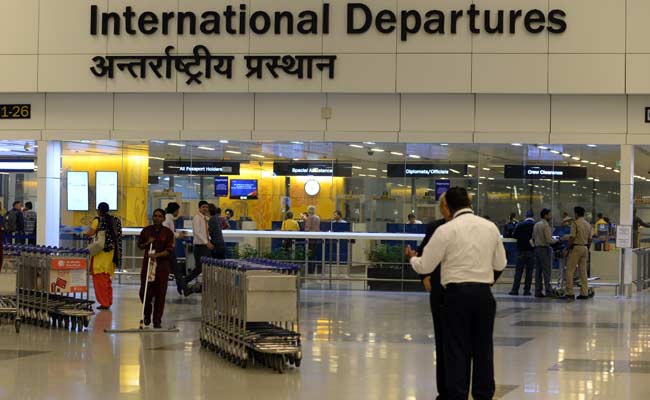
Let's take the example of Customs at Delhi Airport, which has usually been far better than Customs at any other Indian airport. I travel through Delhi at least once a month and its uniformed officers are polite and courteous to most passengers.
That may still be true of uniformed officers, but many Indian airports have the strange phenomenon of plaincloth customs officers who suddenly accost you, offer no identification, never give their names and push passengers around.
I imagine they are part of some intelligence wing and act on information about smugglers, which is fair enough because smuggling can be a problem. But now, there are so many of them that they have taken to harassing families and ordinary passengers.
My Experience At Delhi Airport
At most global airports where there is a Green Channel, the routine is simple. Because people may lie, uniformed or clearly identified officers will stop people they regard as suspicious and engage them in conversation (“how long was your trip”; “what is your profession?”, etc). If the answers raise doubts, they may ask to check the bags. This has happened to me at Delhi airport, and because the officials have been polite and professional, I have respected them for doing their jobs.
No longer.
Let me give you my latest experience. I arrived in Delhi at three in the morning on Sunday, October 19, the day before Diwali. As my wife and I were exiting the green channel, one of these plaincloths guys stopped us and without any of the usual conversation, rudely demanded we put our bags on the X Ray.
This made no real difference to me. There was nothing in our bags and I was fortunate to have signed up for Delhi Airport's arrival service, so we had a loader who joined the queue to put our bags through the X Ray.
A Harrowing Exchange
I could possibly have ended the process by telling him that I was a journalist, but I chose deliberately not to reveal this. Instead, I asked the guy if he wanted to ask me any questions since he had stopped me. He did not. Then, two other plaincloth guys materialised and rudely demanded to see our passports. This served no purpose because the first guy had already seen them. So, I guess the idea was to make the passenger feel nervous as he was surrounded by officials examining his documents with an air of suspicion.
My bags were clean, to their obvious disappointment, so they fell back on telling my wife that they had spotted a phone in her bag (yes, they asked to check her handbag too). Was this a new phone purchased abroad? My wife said it was several years old and bought in India.
With very bad grace, they abandoned this line of enquiry. I asked the first officer what made him suspicious about us and why they needed to be rude and intimidating. Surely, after the Wintrack affair, Customs needed to learn a few lessons about dealing with passengers?
He would not reply but seemed a little nonplussed that not only had they found nothing but that I was not in the least intimidated. At this, a fourth plainclothes guy came up to me and rudely asked me to leave.
Priorities, Priorities
All things considered, the incident was not a huge ordeal. Most passengers go through much worse at the hands of these plainclothes guys. Yes, it delayed me, but because I had nothing to hide and held my ground, they were unable to scare or intimidate me. But four officers came to deal with us - a family that was returning peacefully from a trip - so, where was the time for them to even look for smugglers, which I assume is what they are paid to do? And if I had not held my ground, what would have happened next? Should Customs officials be so arrogant, rude and hostile to passengers and treat everyone like a smuggler?
Surely, in today's India, all citizens are entitled to some basic courtesy and professionalism?
I posted about the incident on social media and such is the public anger with customs that the responses came flooding in, even on Diwali: 60,000 views, 900 likes and 245 retweets. Customs sent me a form response asking me to ‘DM' my complaint, to which I responded that I would write about it and send them the article.
The anger and the attitude of the officers to passengers have been an eye-opener to me. Even after the Finance Ministry got involved post-Wintrack, nothing has changed. At Delhi airport, it has actually got worse.
Is it any wonder that citizens are so fed up and angry? The government needs to rein in the arrogance of officials and act to prevent harassment. Because inevitably, the harassment leads to the next step: a demand for bribes.
(Vir Sanghvi is a print and television journalist and talk show host. He tweets @virsanghvi)
Disclaimer: These are the personal opinions of the author
-
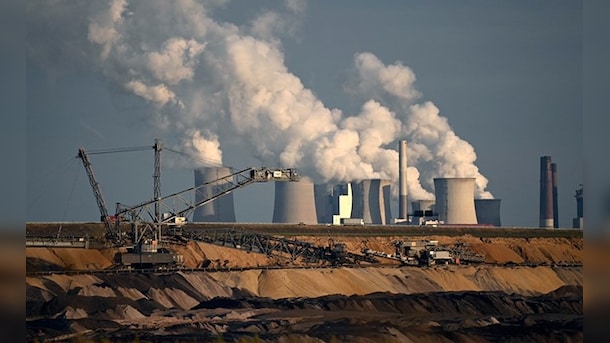
Opinion | India Has Enough Coal. So Why Are Power Plants Running Short? A 76 Million 'Crunch'

As of October 5, as many as 82 of the 191 thermal plants monitored by the Central Electricity Authority were in the 'critical' category
-
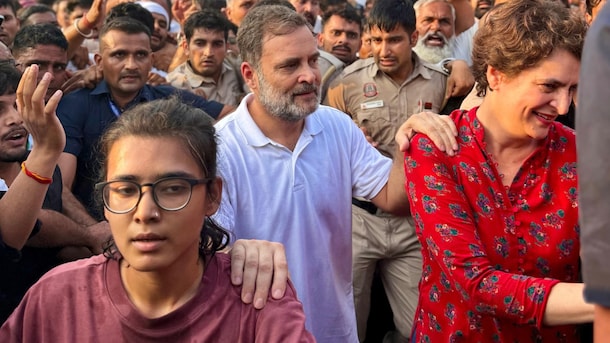
A Step Behind Neha Bora: What Rahul Gandhi's Gesture Says About Congress' Gen-Z Pitch
At INDIA bloc's march to Supreme Court, Rahul Gandhi placed himself a step behind two women, hands resting on their shoulders. One was his sister Priyanka. The one on his right was Neha Bora. Here's what the image means for the protest wave now, and for Rahul's politics in general.
-
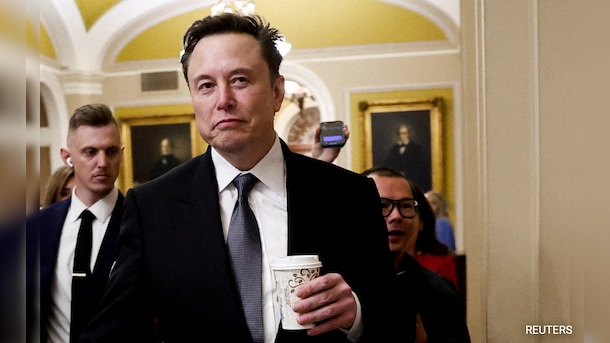
Opinion | Starlink, India, And Why Elon Musk Must Know His Billionaire Tantrums Won't Work
India should neither be intimidated by Musk's global influence nor distracted by his theatrics.
-
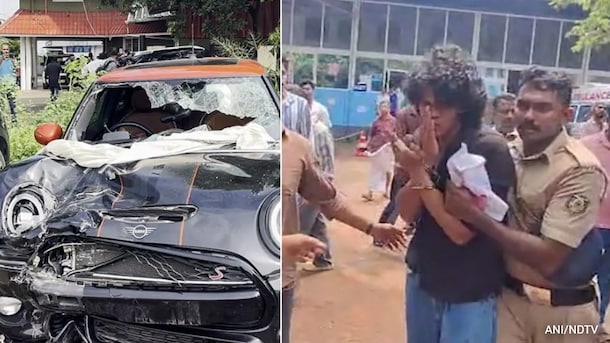
Blog | 'Baap Da Brat': Kerala Mini Cooper Crash, And Why 'Daddy' Can't Keep Saving You
There are three things you should never underestimate in India: the power of 'jugaad', the elasticity of the law, and the confidence of a 'Baap da Brat' who believes his Papa Posh can fix absolutely anything.
-
Opinion | 'Say Our Name': Why A Tiny Island Nation Wants The World To Get Its Name Right
Standing before the UN hall of nations, Naoero President David Adeang asked the world to unlearn its comfortable habits and speak a restored truth.
-
TVS Succession Row Explained: Why Venu Srinivasan's Family Is Divided Over Wealth
TVS Family Dispute: TVS Holdings is a key entity because it owns a controlling stake in TVS Motor Company. It owns 50.26% of TVS Motor.
-
Opinion | The US Is Showing India Just How Cheap Its 'Friendship' Is
Can local talent fully replace Indian contribution? Why is the US leading in setting up Global Capability Centres in India - over 60% - and pocketing the IP?
-
Jantar Mantar Tells Time. The Clock Just Stopped On Its Time As An Iconic Protest Site
On Monday, October 12, 2026, Delhi Police denotified Jantar Mantar Road as a designated site for demonstrations. The Supreme Court had given it a nudge. Here's how history met politics on that street for decades.
-
Opinion | Saudi Airport Attack, And Why Pakistan Keeps Biting Off More Than It Can Chew
For all those who were envious of Pakistan's 'new status' as "mediator extraordinaire", here is a reality check
-
Opinion | Visa Shocks To Racist Attacks, When Did America Come To Hate Indians So?
Sometimes it is about H-1B visas. Sometimes it is jobs. Sometimes it is "foreigners." Sometimes it is about temples. The language of the attack varies, but the message is consistent