Opinion | Indian Firms Are Making Record Profits. Why Are Foreign Investors Still Leaving?
In the July to September quarter of 2026-27, the 50 companies in the Nifty 50 increased profit after tax by 27% over the same quarter of the previous year - the highest growth in 17 quarters.
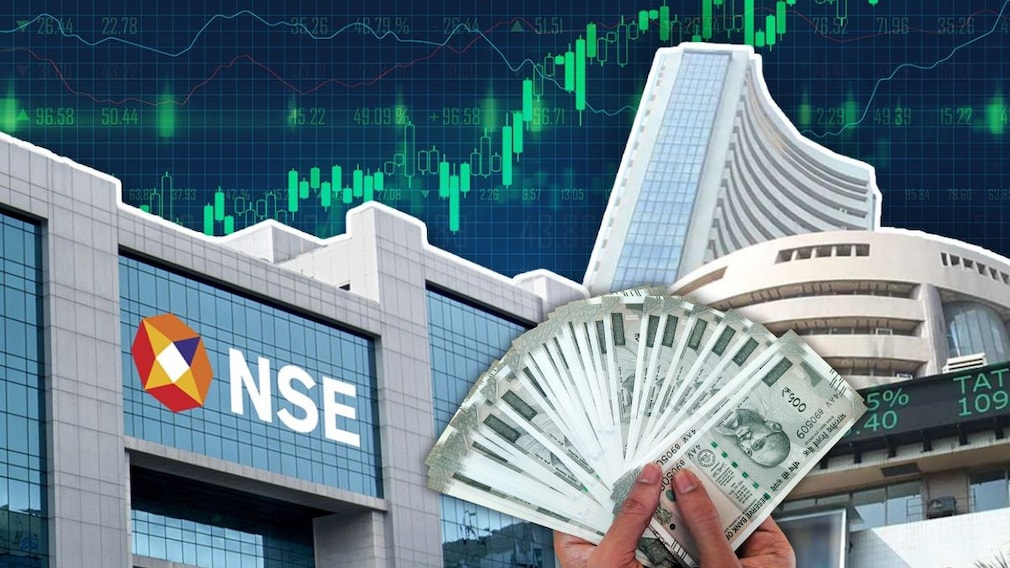
In the July to September quarter of 2026-27, the 50 companies in the Nifty 50 increased profit after tax (PAT) by 27% over the same quarter of the previous year. Motilal Oswal Financial Services records this as the highest growth in 17 quarters. For its wider universe of 398 companies, PAT grew 32%, against an estimate of 21%. Estimates of Nifty earnings per share (EPS) have been revised up, to Rs 1,243 for 2026-27 and Rs 1,427 for 2027-28. Yet, according to the National Stock Exchange (NSE) India Ownership Tracker, foreign portfolio investors (FPIs) held 14.7% of NSE-listed companies in September 2026, the lowest share in 21 years. The two facts have to be explained together.
Start with composition. Five companies (Reliance Industries, Oil and Natural Gas Corporation, Tata Motors Passenger Vehicles, JSW Steel, and State Bank of India) contributed 46% of the incremental profit. In the wider universe, PAT in metals grew 78% and in oil and gas 55%. Much of this came from prices, not volumes. And prices revert. Nor is 27% exceptional in the world. FactSet's blended figure for the S&P 500 in the same quarter is 31.4%, the third successive quarter above 25%. UBS expects Korean EPS to grow 81.1% in 2026. India has had a good quarter in a year of good quarters.
What does growth imply? First, profits are a larger share of the economy than they have ever been. By Motilal Oswal's count, profits of Nifty 500 companies were 5.2% of gross domestic product (GDP) in 2025-26, a record, against 4.9% a year earlier. Those profits grew 15.6% in a year when nominal GDP grew 8.9%. Second, the multiple has compressed. By Bajaj Asset Management's count, the Nifty traded at 24.8 times 12-month forward earnings in September 2024. At the close of 25,144 on 13 November, it trades at 20.2 times Motilal Oswal's EPS estimate for 2026-27 and 17.6 times its estimate for 2027-28. Third, profits finance investment. Gross fixed capital formation grew 11.9% in real terms in April to June 2026, against 5.8% a year earlier. Retained earnings are the cheapest capital a company has. Fourth, the pace will not hold. Motilal Oswal expects Nifty earnings to grow 18% in the second half of the year, against 22% in the first. Its EPS estimates imply 14.8% in 2027-28. That is respectable. It is not 27.
What makes India enticing to a foreign fund? One, growth. Real GDP grew 7.8% in April to June 2026, and nominal GDP 10.3%. Two, external balance. The Reserve Bank of India reports a current account deficit of 0.5% of GDP for that quarter. Three, India is not the artificial intelligence (AI) trade. UBS computes that the top five stocks are 34% of the MSCI Emerging Markets Index, and that Taiwan and Korea together are about half of it. A fund that fears this concentration has few large places to go. Daily prices since January 2023 bear this out. On the worst tenth of days for semiconductor shares, Korea's sensitivity to the fall is 0.78, and Taiwan's is 0.54. India's is 0.03, statistically no different from zero. Between 6 and 30 October, semiconductor shares fell 19.1%, and the Nifty gained 1.2%. Four, the exit door. Individuals, directly and through mutual funds, own a record 19.5% NSE-listed companies. National Securities Depository Limited data show net FPI sales of about Rs 2.1 lakh crore in 2026, and the market still cleared. A market one can leave is a market one can enter. Five, positioning. At 14.7%, there is little left to sell. FPIs bought Rs 84,290 crore in the first fortnight of November. That buying followed the rout in AI shares abroad. It did not follow the earnings.
Is this shelter a stable proposition? It is not, for four reasons. First, the money came because AI shares fell, not because India changed. Since the chip trough of November 5, semiconductor shares have recovered 12.6% and Nifty 2.5%. Money that arrives on a rout can leave on a recovery. Second, entries move prices more than exits. From October 29 to November 12, about 8.9 billion dollars of foreign buying lifted the Nifty 10.3%, a little over one percentage point for every billion. In the ten months before, close to 30 billion dollars left, and the Nifty fell 12.2%, or 0.4 of a point per billion. Domestic funds absorb foreign exits. Nobody stands on the other side of foreign entries. Prices that rise on thin supply can fall the same way. The rally is also narrow. Banks rose 12% and the Nifty IT index 0.9%. Third, the shelter holds only when the fall is contained. Across the 17 sessions since 2023 when the broad American market also fell by more than 1%, the Nifty fell 0.46% on average. Fourth, the shelter is six months old. Before May 2026, the Nifty moved with the previous night's chip shares. A coefficient that changed sign in one year can change back in another.
That said, a quarter's earnings do not repair an economy's structure. Consider five problems.
First, the cost of capital. Even on 2027-28 earnings, a multiple of 17.6 is an earnings yield of 5.7%. The 10-year government bond yielded 7.31% on November 13. The domestic saver, investing through a monthly systematic investment plan, does not do this subtraction. The foreigner does. He then subtracts expected rupee depreciation, and a capital gains tax.
Second, oil. Dependence on imported crude was a record 88.7% in 2025-26, up from 85.5% in 2021-22. High crude lifts Oil and Natural Gas Corporation's profit. It also widens the merchandise trade deficit, which was 86.1 billion dollars in April to June against 68.9 billion a year earlier. A gain in one company's profit and loss account is a loss in the country's balance of payments.
Third, manufacturing. The government informed the Lok Sabha in August 2026 that manufacturing was 14.8% of gross value added in 2025-26. It was 14.7% in 2022-23. Three years have moved the share by one-tenth of a percentage point.
Fourth, the index itself. India's listed profits come from banks, oil, metals and cars. Few come from technology sold to the world. India spent 0.84% of GDP on research and development in 2023-24. That is one of the reasons why India's weight in the MSCI Emerging Markets Index fell from roughly 20% in mid-2024 to nearly 11% by May 2026, while Taiwan and Korea gained.
Fifth, numbers. Profits cannot grow at nearly twice the pace of nominal GDP indefinitely. A ratio at a record has less room above it.
The companies have done their part this quarter, with some help from the price of oil. But a foreign investor does not buy a quarter. He buys an economy. At 14.7%, he is telling us which of the two he has priced. The CEA is right when he said that India is going through the 1991 moment. It is an opportune time to push for more reforms. Most of this would be at the state level.
(The author was with the Economic Advisory Council to the Prime Minister)
Disclaimer: These are the personal opinions of the author
-
Battle Of Two Babas: What's Behind Ramdev Versus Dhirendra Shastri?

Why Ramdev chose to publicly criticise Shastri soon after attending his much-publicised and well-attended Ram Katha in Uttar Pradesh for an earlier comment remains an interesting question.
-
Opinion | There Are 5 Reasons Iran Won't Drop A Dirty Bomb On The US - And One Reason It Might
Iran is entirely capable of building a dirty bomb - as are other modern states with access to industrial radioactive materials. But how far will it really go?
-
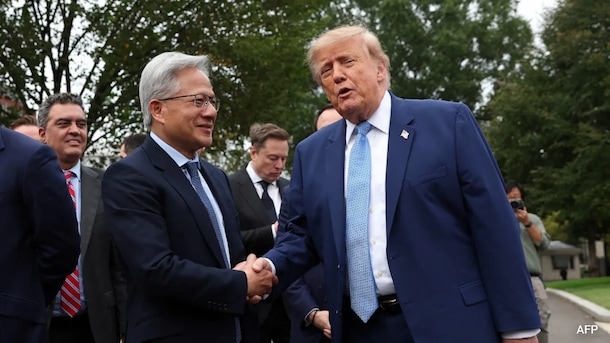
Opinion | Too Big To Fail, Too Connected To Fall: Why Trump Needed Jensen Huang
Rumours are that Trump's own business stakes in Nvidia have helped him rake in millions of dollars as the company's shares zoomed back up after the plunge that followed Huang's exit. But that's just one part of the story.
-
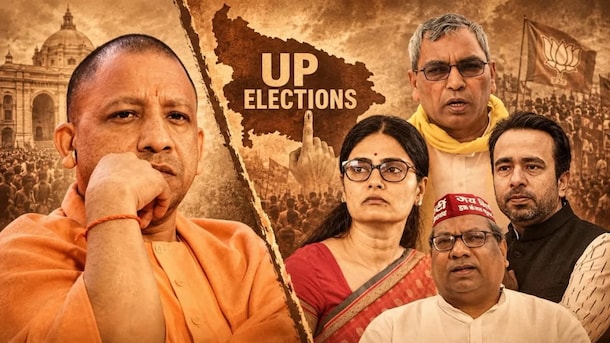
BJP's UP Seat-Sharing Test: Four Allies, Many Ambitions And A 50-Seat Puzzle
This time, the BJP has to accommodate all four partners, each with its own electoral ambitions and areas of influence across western and eastern Uttar Pradesh.
-
From 'Spy Affair' To 'Nothing Wrong' In 11 Days: What Brought Jensen Huang Back As Nvidia Boss
Nvidia's Jensen Huang admitted to an extramarital affair with Alice Huang, a woman who worked at his company's Hong Kong-based customer firm and is alleged to be a Chinese spy. That brought with it many investigations. But he seems to have weathered most of it for now, within days.
-
Between Nehru And Netanyahu, Rahul Gandhi Faces An Uncomfortable Question
The divergence has come to the fore after Rahul Gandhi endorsed maintaining strong ties with Israel, citing India's defence requirements and national interests.
-
Kunda's King And His Thakur Court: Raja Bhaiya's Big Power Play Before UP Polls
UP Elections 2027: The Ram Katha may have been about Lord Ram, but the political story unfolding in Kunda was about Raja Bhaiya.
-
The Hidden 'Water Cost' Of Agriculture: Comparing India With Major Economies
Traditional flood irrigation, which remains common across Indian farms, is a major reason. It has a water-use efficiency of just 35-40 per cent.
-
Blog | DPS MMS To Instagram: The Cost Of Irresponsible Men
On International Men's Day, it is worth having a conversation that isn't always comfortable for men.