Opinion | The 'Quiet Panic' That Led To Trump Blinking On Anti-India Tariffs
Experts estimate that this year, core goods inflation in the United States may reach levels comparable to the 2008 financial crisis. And Trump's tariffs aren't helping.
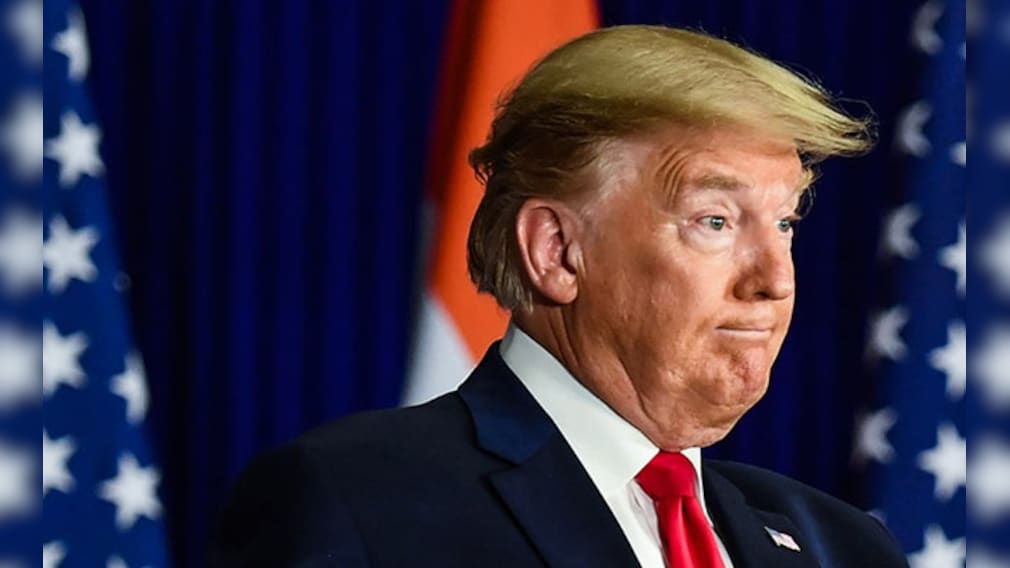
In recent years, India has concluded several bilateral trade agreements, including with the UK, Oman, and the EU. Another notable development is the announcement of an interim trade agreement between India and the United States. Although early discussions centred on a comprehensive, multi-sector agreement focused on market access and reducing trade barriers, the decision to settle for an interim deal appears influenced by broader factors. Rising inflation in the US, particularly following tariffs in sectors such as household durable goods, food and beverages and textiles, may have prompted a recalibration of trade relations.
US Inflation Was Rising
India has become an increasingly important supplier within the United States' import structure. In 2024-25, Indian exports to the US totalled approximately USD 86.51 billion, representing around 2.6% of total US imports. This role is particularly evident in several sectors, with India supplying approximately 9.2% of US textile and apparel imports, roughly 3.2% of housing-related consumer durables, and nearly 5% of food and beverage imports during that period. These figures indicate India's growing integration into key segments of the US consumption market.

(The link between tariffs and inflation has prompted the US to deploy compensatory measures)
At the same time, the United States has implemented a series of tariff increases affecting a broad range of Indian exports. Inflation within the sectors under consideration, as measured by the Consumer Price Index (CPI), remained positive throughout this period. Specifically, for January 2025-26, CPI inflation was approximately 2.9% for food and beverages, 1.7% for textiles and apparel, and 3.9% for housing-related consumer durables. Notably, larger movements in inflation were observed following the tariff notifications issued in August 2025. While multiple factors likely contributed, the timing suggests that recent trade measures may have played a role alongside other domestic and global influences in shaping observed price trends.
Americans Felt The Pinch
Recent inflation forecasts highlight concerns regarding tariff pass-through for domestic policymakers. According to RBC Economics, core goods inflation in the United States is expected to increase this year, peaking at approximately 3%. These figures are comparable to levels observed during the 2008 financial crisis in the United States.
Empirical research increasingly supports the link between tariffs and price pressures. Research from Federal Reserve organisations, including the Federal Reserve Bank of St. Louis, has provided evidence that the recent increase in tariffs indeed contributed significantly to the growth in consumer prices.
This observed link between tariffs and inflation has prompted the US to deploy compensatory measures. One example has been the expansion of federal support packages for American farmers as agricultural producers were among the most visible casualties of retaliatory tariffs, prompting administrations to authorise significant amounts in relief and subsidy programmes. These transfers acknowledge that trade restrictions can generate domestic economic stress requiring fiscal mitigation.

(India supplies approximately 9.2% of the US' total textile and apparel imports)
Federal Reserve data indicate that overall consumer goods production increased modestly in 2025, with output rising by approximately 0.7% in December 2025 compared to earlier months. Food and beverage manufacturing, a non-durable good, recorded mild gains consistent with short-term adjustments in domestic supply. Production of household durable goods, including appliances and furniture, also edged upward, reaching an industrial production index of approximately 81.9 in December 2025, slightly higher than levels earlier in the year. In contrast, textiles and apparel production remained subdued, with available data indicating stagnation or decline through 2024-25, reflecting longer-term structural constraints within the sector. Overall, the data suggest that while certain industries experienced short-run increases in domestic production, these gains were modest and uneven, and do not indicate a broad-based or sustained expansion in US manufacturing capacity.
There's More To The Tariff Rollback Than Diplomacy
Against this backdrop, the newly announced US-India trade adjustments assume increased economic significance. The reduction of tariffs on exports from India - including textiles, engineering goods, and industrial components - should not be understood solely in the context of Indo-US bilateral relations. Rather, this adjustment aligns closely with established anti-inflationary economic principles, aiming to eliminate artificial cost escalations that contribute to underlying price increases.
This reading does not eliminate the geopolitical or strategic aspects of the Indo-American relationship. Indeed, the diversification of supply chains, Indo-Pacific alliances, and technological partnerships continue to drive significant forces. Nevertheless, the economic environment within which this tariff rollback occurs should not be overlooked. Policy shifts in trading relations seldom occur in economic isolation, especially with inflation dominating the economic policy debate. After all, trade agreements are intended to increase consumer choice and reduce inflation.
(The authors are research consultants at Chintan Research Foundation)
Disclaimer: These are the personal opinions of the author
-
Opinion | India's $18.3 Billion Forex Reserve Shock Is A Warning, Not Just A Number

The reported USD 18.34 billion decline in India's foreign exchange reserves in a single week has attracted attention for more than its size
-
Congress Falls Back On A Fullback: Where Pargat Singh Fits In The Punjab Poll Play
Vijay Inder Singla, a Hindu face, was reportedly the frontrunner before the Congress replaced one Jat Sikh with another as its Punjab unit chief. How far does such arithmetic work in the state's politics? Pargat's appointment holds some of the answers.
-
Why Doesn't Congress Boycott If Polls Are "Fixed"? Answer Lies Beyond Rahul Gandhi's "Distraction" Quip
The starkest demand for a boycott has come from outside the political Opposition, from the Cockroach Janta Party. But does a boycott help? Here's what research, examples, and expert analysis tell us.
-
'Sully' To Gimli, Sioux To Patna: When Pilots Got It Unbelievably Right
Captain Smit Machchhar fought off his co-pilot after being stabbed and opened the cockpit door, saving 174 people.
-
Opinion | Are Saudi Arabia And UAE Reuniting Again After 10 Years?
On Tuesday, the UAE's Vice President, Deputy Prime Minister and Chairman of the Presidential Court, Mansour bin Zayed, met Saudi Crown Prince Mohammed bin Salman.
-
Opinion | 'Lies, Damned Lies, Statistics': On The Controversy Around India's GDP Growth Figures
The debate is less about a single figure than about a decade-long erosion of trust in official statistics.
-
Opinion | Why India Cannot Keep 'Overestimating' Its Value To Washington
Some of India's value to Washington came from the tension between the US and China. That is changing now.
-
Opinion | India Has A 'Lobbying' Problem In Washington, And It Has Come Back To Haunt It
While the EU, Japan, the UK and South Korea secured quick deals, India's efforts were getting drained in prolonged negotiations and the wrong kind of lobbying.