India Sits Atop 500 Million Tons Of Gold Ore. Why Isn't It Being Mined? - By Shashi Tharoor
We mine a pittance - barely one and a half tons a year - while draining our foreign exchange reserves to import hundreds of tons annually from mines in Australia, Ghana, and Peru.
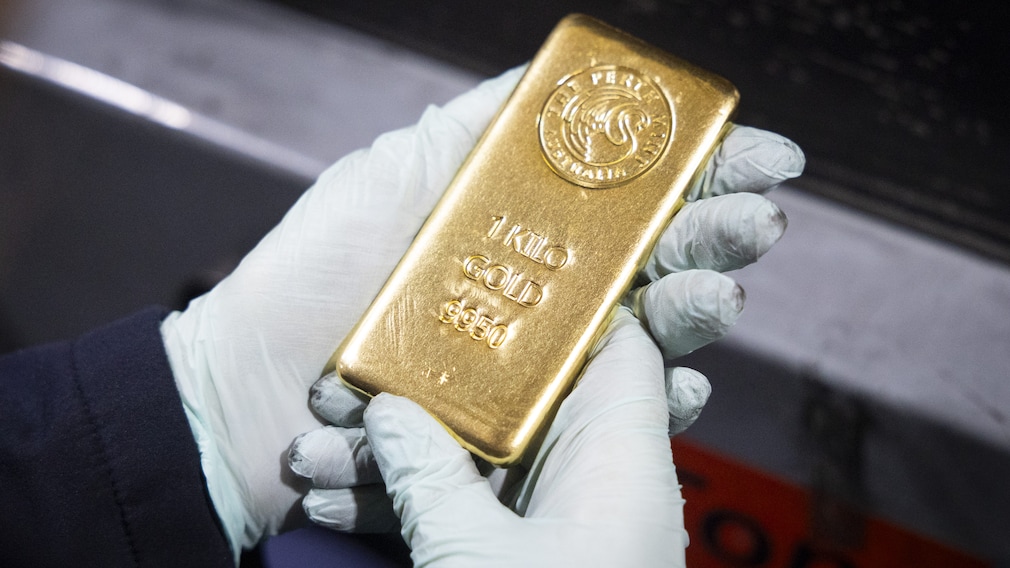
We are a nation obsessed with gold, a civilisation that treats the yellow metal as both a spiritual necessity and the ultimate firewall against the vagaries of fortune. Yet, while we sit atop an estimated 500 million tons of unmined gold ore, our domestic production remains a rounding error on the global ledger. We mine a pittance - barely one and a half tons a year - while draining our foreign exchange reserves to import hundreds of tons annually from mines in Australia, Ghana, and Peru. This state of affairs is more than an irony; it is a self-inflicted wound that undermines our economic sovereignty at a time when the world order is fracturing.
Look Beyond Scarcity, Suspicion
The glittering paradox that sits at the heart of the Indian economy is not merely a curiosity for geologists; it is a profound indictment of national policy. For decades, the Indian state has approached gold mining with a mindset of scarcity and suspicion rather than one of strategic abundance. The regulatory labyrinth that a prospective miner must navigate is so dense and archaic that it effectively functions as a prohibition. From the initial reconnaissance permit to the final mining lease, the process is a gauntlet of overlapping jurisdictions, opaque environmental clearances, and a tax regime that punishes the very risk-taking it should be courting. While other nations have streamlined their mining codes to attract the billions in capital required for deep-shaft exploration, India has remained trapped in a colonial-era bureaucratic inertia that treats every mineral deposit as a potential scandal rather than a national asset.
The cost of this inertia is staggering. In a world defined by geopolitical volatility and the weaponisation of currencies, gold has reaffirmed its status as the indispensable hedge. Central banks across the globe are hoarding bullion as a safeguard against a fraying dollar-dominated system. India, by continuing to import the vast majority of its gold, is essentially exporting its wealth to secure its safety. We are paying a premium to foreign mining conglomerates to extract abroad a resource we possess in abundance beneath our own feet. This unnecessary drain on our foreign exchange reserves weakens the rupee and limits our ability to invest in other critical sectors like infrastructure and technology.
A Tedious Process
A drastic change of policy is no longer a matter of choice; it is a strategic imperative. We must begin by ruthlessly streamlining the laws that govern the subsoil. The current multi-layered approval process must be replaced with a single-window clearance system that offers regulatory certainty over a twenty-year horizon. Capital-intensive mining is not a business for the faint of heart or the short-sighted. It requires decades of investment before a single gram of gold is recovered. No rational investor, domestic or foreign, will commit the necessary billions if the rules of the game can be changed mid-stream by a local bureaucrat or a shift in provincial politics. We need a legal framework that honours the sanctity of contracts and provides a clear, expedited path from discovery to extraction.
Furthermore, we must address the fiscal hostility that has historically characterised the Indian mining sector. Our royalty rates and tax structures are among the highest in the world, often making the extraction of lower-grade ores, which make up the bulk of our 500 million tons, economically unviable. If we want to transform India into a global gold-mining hub, we must provide aggressive tax incentives for long-term capital investments. This is not about corporate handouts; it is about recognising the unique risk profile of the industry. Tax holidays for the initial years of production and credits for exploration expenditures would signal to the global markets that India is finally open for business.
Finding A Middle Ground
The environmental and social concerns that often dog the mining industry are real, but they are not insurmountable. The choice is not between a pristine environment and a hole in the ground; it is between a chaotic, unregulated illegal mining sector and a modern, world-class industry that adheres to the highest global standards of sustainability. By inviting major global players through a transparent bidding process, we bring in the advanced technology and responsible practices that minimise the ecological footprint of extraction. Modern gold mining, when done correctly, can be an engine of rural development, providing high-skilled jobs and infrastructure in some of the country's most underdeveloped regions.
Critics will argue that gold is a "dead asset" and that we should focus our industrial energy on electronics or green energy. This misses the point of the current global moment. Gold is the ultimate liquidity. It is the only asset that is not someone else's liability. By developing our domestic mining capacity, we create a strategic reserve that bolsters our national balance sheet without the need for external borrowing. We transform a dormant geological fact into a dynamic economic force. We turn the dormant, “dead” asset under our soil into a living shield for our economy.
Change The Mindset
The psychological shift required is perhaps greater than the legislative one. We must stop viewing our mineral wealth as something to be guarded or hoarded in the ground and start seeing it as a tool for national greatness. The 500 million tons of ore represent more than just metal; they represent schools, roads, and a more stable currency. They represent the difference between a nation that is a passive consumer of global commodities and one that is a master of its own resources.
The window of opportunity provided by current gold prices and the global shift toward "friend-shoring" of critical resources will not stay open forever. Other nations are already moving to secure their supply chains. If India continues to dither, trapped in a web of its own making, we will remain the world's most enthusiastic buyer and importer of what we already own. It is time to abolish the red tape, incentivise the bold, and finally begin the work of bringing our hidden wealth to the surface.
Our soil is rich; it is only our policy that is impoverished. We must mine our way to the economic sovereignty we deserve, turning the silent gold beneath us into the loud engine of our future prosperity.
(Shashi Tharoor has been a Member of Parliament from Thiruvananthapuram, Kerala, since 2009. He is a published author and a former diplomat)
Disclaimer: These are the personal opinions of the author
-
Opinion | The Real Reason China Stayed 'Quiet' About Its US-Iran Ceasefire Role

Beijing may have opted for a very quiet entry into the mediation, with Pakistan apparently fronting the whole exercise.
-
Opinion | How Iran Ceasefire Helps Pakistan Fix A 10-Year-Old 'Mess' With Saudi
In more ways than one, Pakistan has redeemed itself from a fallout it had with its Gulf patrons exactly a decade ago.
-
Why Lebanon Was Excluded From Ceasefire Plan
Created by the IRGC during the Lebanese Civil War, the Hezbollah, a Shiite Muslim movement, gained its moniker - 'the Resistance' - by fighting Israeli troops occupying southern Lebanon till 2000.
-
Opinion | The 'Munir Doctrine' That Drove Pak's US-Iran Brokering Project
The spate of calls, social media messaging, and diplomatic efforts from Pakistan in recent weeks, especially involving PM Shehbaz Sharif and Field Marshal Asim Munir, raises many questions.
-
Opinion | War Ally To Mere Bystander: Is This The Loneliest Day For Netanyahu?
Israel, the US's closest partner in the region and which lured Trump to take on Iran, was ultimately a mere spectator to the ceasefire agreement.
-
Opinion | Iran Scorecard: A List Of Winners, Losers, And Those Who Rigged The Game
Iran is the clearest winner. America absorbed a lasting blow. Trump got what he wanted. Netanyahu is exposed. The Gulf is vulnerable. All these realities are true, and that is the paradox of this war 'of choice'.
-
Opinion | America Will Still Recover From The Iran Humiliation. And That's The Tragedy
While Trump goes on making social media threats to annihilate the entire civilisation of Iran, former Democratic presidents, Bill Clinton and Barack Obama, cannot muster anything other than sports tweets. The only thing the country is united in is tone-deafness.
-
Opinion | Has Pinarayi Vijayan Been Left All Alone?
The carefully constructed image of Vijayan as a leader in full control now lies shattered - in no small measure due to his own actions.
-
Ceasefire Announced, But It's Not A Full Stop To War: What Happens Next
The immediate test for this ceasefire is the next 24 hours; if Iran, the US, and Israel can control their trigger fingers, the Islamabad talks (or whenever the first round takes place) will begin on a positive note.