Opinion | Invoked When Needed, Ignored When Not: How A New US Doctrine Sees India
Under the latest US National Security Strategy, India could become a convenience partner, invoked when useful and ignored when inconvenient. It can't accept that role.
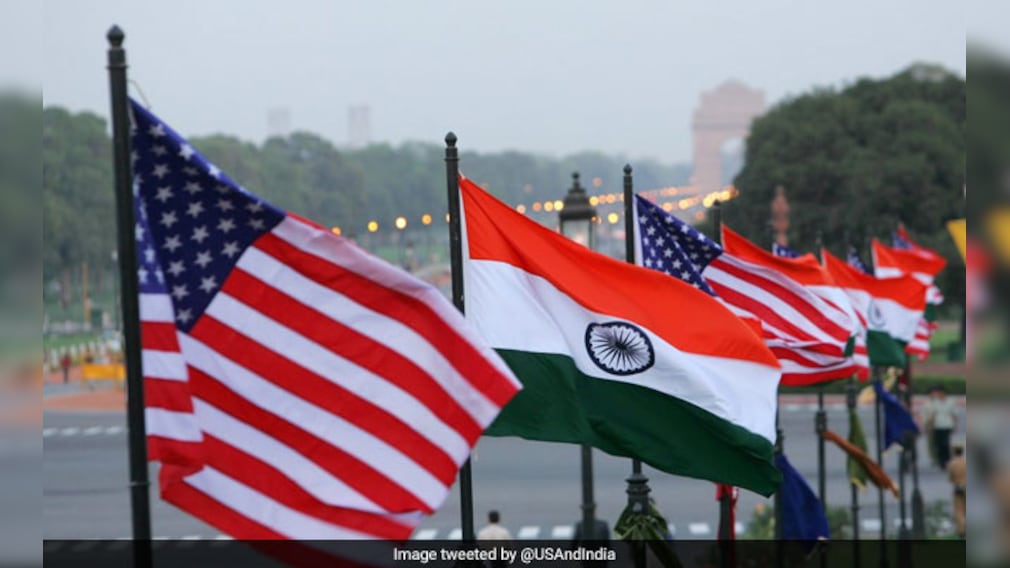
The 2025 US National Security Strategy (NSS) was released just as Russian President Vladimir Putin concluded his first visit to India since the war in Ukraine began. While Delhi and Moscow were seeking to expand their strategic canvas, Washington was unveiling its own strategic calculus. It involves narrowing the US's own global map, elevating geoeconomics as the main tool of statecraft, hardening its economic rivalry with China, and viewing partnerships as instruments to preserve American primacy in that contest. This is not just an update. It is a redrawing, and India should take notice.
The 33-page document declares that the United States will no longer pretend to be equally responsible for every problem, everywhere. It puts the Western Hemisphere first and sketches a “Trump corollary”, a 21st-century extension of the Monroe Doctrine: a hemisphere that Washington intends to secure, while it manages only select risks beyond.
The 2022 NSS welded values and interests into its strategic story, emphasising democracy, climate, and public health as part of the global agenda. The new version disdains that framing. Instead, it speaks the transactional language of leverage: reciprocal tariffs, technology standards, supply chain control, critical mineral alliances and migration enforcement.
'India-Pakistan', Again
India features only selectively, and differently from the 2022 version. It appears first in the introduction, alongside Pakistan, as part of President Trump's self-described peacemaking efforts. Then, as a functional node in a system designed to outcompete China: a Quad security contributor, a partner in critical-minerals and infrastructure coalitions, including in Africa, and a sea-lane partner from the Indian Ocean to the South China Sea.
On China, at first glance there is convergence. The NSS describes it as a coercive, revisionist power that distorts markets, steals intellectual property and uses control over minerals and manufacturing for leverage. These concerns mirror India's own de-risking and diversification strategies. On maritime security and sea-lane resilience, interests clearly align.
Alignment, however, is not equivalence. The NSS is focused on Taiwan and the First Island Chain. India's China challenge remains primarily continental, from the unresolved Line of Actual Control (LAC) and salami slicing in the Himalayas to growing Chinese influence in South Asia and the Indian Ocean. Delhi has no interest in being drawn into Taiwan-related contingencies or entangled in East Asian war-gaming scenarios.
Another shift is cartographic. South Asia barely registers as a distinct theatre. Unlike the 2017 NSS, which discussed Pakistan-based militancy and the Indo-Pak nuclear risk, the 2025 document recasts India as purely an Indo-Pacific actor. US activity in the subcontinent or the Indian Ocean will be driven by its competition with China, not by a broader concern for regional balance.
The Recalibration With Europe
Across other regions, the pattern is similar. Europe is cast as a standards and supply-chain partner. Russia is effectively regionalised and treated as a danger in Europe to be managed through sanctions and strategic stability talks, with Europe expected to bear the main burden, including the long grind over Ukraine.
Africa is viewed as a source of critical minerals, the Middle East as an energy corridor to be stabilised at minimum cost, and Latin America through the lens of migration and narcotics control. The old global policeman is being replaced by a hemispheric custodian with carefully chosen external commitments.
For India, this American minimalism offers both opportunity and risk. It creates space to shape outcomes in its own neighbourhood in South Asia, the Gulf, ASEAN, and parts of Africa. These rising, resource-rich and strategically fluid regions are areas where India's partnerships can grow.
But it also signals a world where Washington engages selectively, uses partners instrumentally and may expect alignment without offering proportional political capital. India could become a convenience partner, invoked when useful and ignored when inconvenient. The India-US partnership could become a negotiation over deliverables: maritime presence, standards alignment, export-control coordination and defence interoperability. The risk is that US expectations may rise faster than Washington's willingness to respect Indian red lines on China, Russia or the wider Global South.
How India Should Respond
India's partnership with the United States is too consequential to ignore this recalibration. Hoping that language will not translate into practice is not a sustainable approach. The question then is how India should respond to this American strategy.
First, while the NSS is already drawing heat in Europe, India has no reason to panic, but every reason to study it closely. It could treat the NSS as a menu of convergences, not a blueprint for behaviour. Cooperation could focus on the global commons: maritime domain awareness, Indian Ocean security, humanitarian assistance, anti-piracy and illegal fishing. These are areas of high alignment and low entanglement, where India's support is natural and visible.
Second, India must elevate the economic terms of engagement. If the United States wants to use commercial ties to elicit strategic cooperation, India could insist on concrete outcomes: co-development and co-production in defence, predictable technology flows, serious investment in Indian manufacturing and digital ecosystems, and reliable access to American and allied markets.
Don't Fight Other's Wars
Third, India must enforce theatre separability. Deterrence on the Line of Actual Control is not a bargaining chip for Taiwan contingencies. Taiwan is not India's war. This must be communicated quietly to Washington. India must be clear: alignment is not obligation.
Fourth, India must shape the coalitions it joins, especially in Africa and the wider Global South. It must not act as a subcontractor in a US-led resource race. Any minilateral platform must reflect Indian priorities, such as local value addition, debt sustainability and respect for national agency.
Fifth, India must sharpen and widen its partnerships with Europe, Japan, Australia, Canada, seeking multiple technology channels and diplomatic avenues, while continuing its engagement with Russia. The objective is that no single relationship reaches a level of dependency that constrains sovereign choices.
Clarity of national purpose need not be confrontational. The NSS makes no apology for American interests and India does not see that posture as hostile. In a world of shifting coalitions and selective commitments, the United States is playing the new game with clarity. India must play it too - on its own terms, and unapologetically. That means engaging Washington, managing Beijing, courting Brussels, and keeping Moscow in the conversation, even as India steps forward as a leadership voice in the Global South.
(The writer was a Permanent Representative of India to the UN and now serves as Dean, Kautilya School of Public Policy)
Disclaimer: These are the personal opinions of the author
-
Opinion | Sydney Sweeney And The Obsession With Asking Sportswomen To 'Take The Clothes Off'

There is a world of difference between an athlete choosing to be sexy and an advertiser deciding that sex is the most interesting thing about her
-
Opinion | The 'AIPC' Was Once Congress' Boldest Idea. What Happened To It?
Tharoor, to Chakravarti, to Yaskhi now, the fate of a Congress 'experiment' that started in 2017 will tell you a lot
-
Woman Biker Hit, Air Force Veteran Attacked: The Lawlessness In Gurugram
What gives confidence to some elements in Gurugram to break the law again and again in full public view and on camera?
-
Opinion | When The Feed Braves The Flood
NDTV drops the 24x7 and stakes its next chapter on presence as it inaugurates a new identity
-
The Politics Of Blue: Why Akhilesh Yadav-vs-Mayawati Over A Colour Is Just One Shade Of History
A movie starring Rajinikanth tells us how colours can carry meaning beyond what meets the eye. The latest row over Akhilesh Yadav's party adopting blue, and Mayawati objecting, can be a starting point for understanding the many shades of history.
-
2 Indians Survived 9/11, Then American Justice System Became Their Nightmare
Pulled off a Texas train hours after 9/11, two Indian men were plunged into America's largest terror manhunt.
-
Opinion | Building BRICS In New Delhi
For India as the host nation, chairing the summit tests the core tenet of its modern foreign policy: strategic autonomy.
-
Can India 'Mediate' Between Iran And UAE At BRICS? Gulf Envoy Suggested It Once
At the very start of the Israel-US war on Iran, it was a UAE diplomat who had suggested as much.