In Bangladesh, A Story Of Many Wins
The rain is over, and the clouds are clearing. Now, the hard work of rebuilding a nation begins, and India must be standing right there alongside as a friend.
As a member of the Indian Parliament, I have watched the unfolding events in Dhaka with a mix of cautious optimism and profound respect for the democratic resilience of our neighbour. The 2026 general election in Bangladesh, which saw the Bangladesh Nationalist Party (BNP) return to power with a sweeping mandate, is not merely a change in government; it is a seismic shift in the political landscape of South Asia.
I find myself in complete agreement with the recent reflections of my dear friend Mahfuz Anam, a veteran Bangladeshi editor, who characterises this election as the moment that has truly "saved" his country. From my vantage point in New Delhi, I believe it is essential for us Indians to understand and respect the core arguments he has made: that this transition represents a triumph of public will over authoritarianism, a rejection of regressive extremism, and a unique opportunity for India to reset its relationship with a democratic and stable Bangladesh.
The Civic Engagement Must Be Applauded
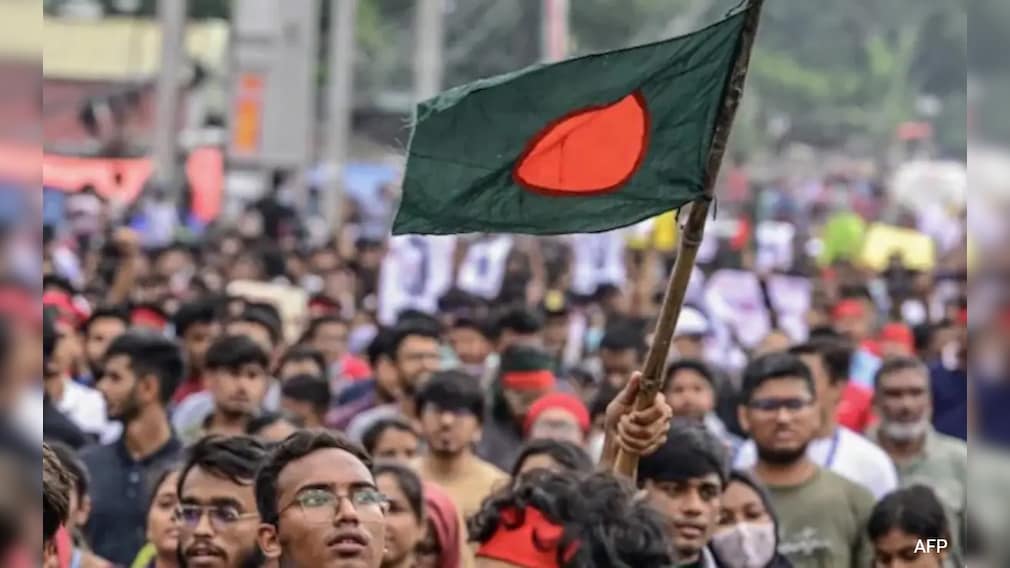
The foundation of this new era was laid long before the first ballot was cast. The transition began with the extraordinary student-led uprising in 2024 (the "Monsoon Revolution"), which dismantled an autocratic regime that many believed was immovable. As an Indian lawmaker, I am struck by the sheer scale of civic engagement that has followed.
The 2026 polls recorded a turnout of 60%, a sharp and healthy rise from the 42% seen in the previous, widely boycotted electoral cycle. This is the clearest evidence that the people of Bangladesh have reclaimed their stake in the state. For years, the narrative in the region was one of "democratic backsliding", but Dhaka has proven that when institutions are pushed to the brink, the collective will of the general populace, led by the youth, can forge a path back to legitimacy.
The youth didn't gain politically from their own revolt. Instead, the BNP, led by Tarique Rahman, triumphed after twenty years in the political wilderness, in a comeback of historic proportions. Critics often pointed to the party's past baggage, but this campaign was markedly different. Under Rahman's leadership, the BNP positioned itself as the guardian of the "July National Charter", a package of sweeping constitutional and institutional reforms designed to prevent the return of one-party rule. It disavowed some of its previous transgressions and promised to govern from the centre.
A Reassurance For India
By securing a two-thirds majority (212 seats), the BNP has been given the mandate it needs to govern effectively. However, the most significant takeaway for us in India is the party's conscious pivot toward inclusivity. In his maiden address as Prime Minister, Tarique Rahman vowed to make Bangladesh a safe haven for "all faiths - Muslims, Hindus, Buddhists, and Christians." For those of us in India (including the Parliamentary Standing Committee on External Affairs) who have raised concerns about the safety of minorities in Bangladesh, these words are a welcome and necessary assurance.
The Jamaat Snub
One of the most insightful points made by Bangladeshi observers like Mahfuz Anam relates to the rejection the voters delivered to the more regressive elements of the political spectrum. While the Jamaat-e-Islami saw an increase in its seat share, the electorate ultimately placed them in the opposition. The voters, particularly women and the youth, demonstrated a sophisticated discernment. They supported the call for reform but rejected the regressive rhetoric concerning women's rights and religious conservatism that surfaced in the Jamaat's statements during the campaign.
This "Jamaat Snub" is vital for those watching in India and anxious for stability. It signals that the new Bangladesh is moving toward a centre-right, nationalist, yet pluralistic identity, rather than an Islamist one. This distinction is crucial for India's security interests, as a stable, moderate neighbour is the best bulwark against radicalisation across our shared borders. Knowing that Pakistan is all too ready to fish in troubled waters, an outsized Jamaat influence on government could have opened the door to meddling next door against our vital interests.
A Break From The Past
Perhaps the most urgent point for us in New Delhi to grasp is the opportunity for a reset. For too long, Indian foreign policy was perceived as being tethered to a single political entity in Dhaka. The fall of the previous regime and the subsequent rise of the Jamaat and the students initially caused jitters in our governing circles. However, the swift move by Prime Minister Narendra Modi to congratulate Tarique Rahman on his and the BNP's decisive win signalled that for India, pragmatic diplomacy in the subcontinent comes ahead of political rhetoric targeting voters in West Bengal and Assam.
A new Indian High Commissioner will be appointed, untainted by association with the troubled recent past relationship, to take this process forward. The likely nominee is an outstanding officer with whom I have worked closely, and I am confident that his warm, engaging and mature approach will contribute positively to strengthening our relations.
India must now move beyond the Hasina-centrism of the previous era. She has been a loyal friend, attentive to our security interests, and she certainly must not be sent back to face execution in Bangladesh. But at the same time, we must recognise that the BNP of 2026 is a party that understands the economic and strategic necessity of a strong partnership with India. Bangladesh remains the world's second-largest garment exporter, but its economic health beyond textiles is intrinsically linked to regional connectivity. We should support their return to democracy and assist, as and when required, in the institutional reforms they are undertaking.
The Biggest Challenge For Tarique Rahman
While we celebrate this bright new future, we cannot ignore the shadows. The interim period under Dr. Muhammad Yunus was marred by instances of mob violence and communal attacks. The reported 522 communal incidents in 2025, mostly against minority Hindus, are a stain that the new government must wash away with decisive action.
The true test for Tarique Rahman will be his ability to restore the rule of law. As an Indian, I believe our role should be that of a supportive partner, not a meddling neighbour. We should offer cooperation in judicial training, law enforcement modernisation, and economic corridors that benefit both the people of West Bengal and the northeastern states, as well as the people of Bangladesh. Generosity with visas and cultural exchanges will be most helpful.
Thoughtful Bangladeshis like Mahfuz Anam see this transitional election as having saved the country from the terminal decay of a one-party state and from the chaos of a power vacuum. It has produced a government with a clear mandate to reform and a leader who has returned from 19 years of exile with an avowed vision for a cleaner politics and a willingness to engage with India.
A Glimmer Of Hope
For New Delhi, the message is clear: a democratic Bangladesh is potentially our strongest ally, but if we mismanage this relationship, this intimate neighbour, encased within our territory, could become India's vulnerable "soft underbelly". We must embrace Bangladesh's transition with open arms and a clear mind, setting aside the prejudices of the past, to build a future based on mutual respect, shared prosperity, and a commitment to the pluralistic values that define both our nations.
Let us start by urgently repairing the strained cricket relationship. We could invite the Bangladeshi team, unjustly deprived of their World Cup slot, on a tour of India. Inviting a Bangladeshi team to participate in the Duleep Trophy annually would give them an opportunity to improve their game against the best of their Indian counterparts. It is time for India to help nurture the game next door. And yes, welcome Bangladeshi cricketers like Mustafizur Rahman back into the IPL!
The "Monsoon Revolution" has finally reached its logical, democratic conclusion. The rain is over, and the clouds are clearing. Now, the hard work of rebuilding a nation begins, and India must be standing right there alongside as a friend, umbrella in hand, ready to cast our raincoat over the puddles, so that our neighbour and friend can walk ahead afresh.
(Shashi Tharoor has been a Member of Parliament from Thiruvananthapuram, Kerala, since 2009. He is a published author and a former diplomat.)
Disclaimer: These are the personal opinions of the author
-
Opinion | Delhi Scorpio Tragedy: Why These Four States Top The Hit-And-Run List

The share of hit-and-run cases in total road fatalities has expanded from roughly 13-14% to nearly 18%, indicating that fleeing the scene has become a pattern in a growing proportion of fatal crashes.
-
Opinion | Will Iran Actually Use Its Catastrophic 'Strait Of Hormuz' Card Against US?
Should the US launch any attacks on Iran - and every indication is that it means to very soon - it will be to implement a regime change. In which case, Iran could be forced to adopt extraordinary measures.
-
The Hormuz Threat: Iran's Most Powerful Card Against The US
In Tehran, Iran's Supreme Leader Ayatollah Ali Khamenei has responded with rhetoric that leaves little room for ambiguity. American power, he said, would not succeed in destroying the Islamic Republic.
-
Opinion | India's Northeast Has A New Problem - 'Jamaat' Surge Along Bangladesh Border
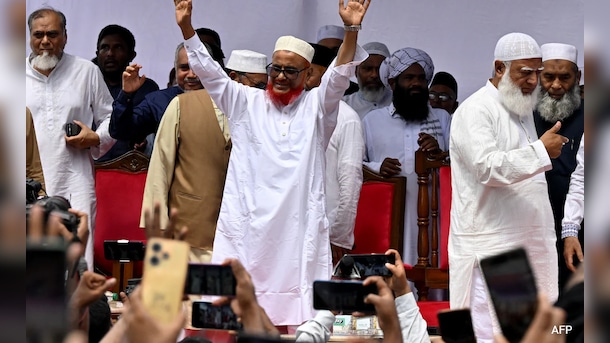
Most of Jamaat's victories have come from the north-west and south-west regions adjoining Indian states such as West Bengal, Assam and Meghalaya.
-
Opinion | 'AI-Enabled' Soldiers? What An India-China-Pak Crisis May Soon Look Like
AI compresses the decision-action loop, turning hours of analytical deliberation into seconds of machine-assisted judgment. In warfare, that compression is the difference between survival and defeat.
-
Opinion | Pak 'Impostors' To Jamaat Trolls, The Sea Of Misinformation Around Bangladesh Polls
The largest single spends on social media were from DailyNews24, which masquerades as a news organisation but is, in reality, a Jamaat organ. The second and fourth spenders are also Jamaat sites.
-
4 States, 4 Elections, 4 Potential Crises For Congress Hoping For Poll Wins
Four states - Kerala, Bengal, Tamil Nadu, and Assam - are scheduled to hold Assembly elections in April/May, with the Congress seen as strong contenders in the former.
-
Opinion | What ChatGPT Is Now Doing With Your Darkest 'Secrets'
For over three years now, millions across the world have treated ChatGPT like a confidante. And one company - OpenAI - holds the keys to this vast digital locker.
-
Opinion | 'Team Rahul' And 'Team Priyanka': Inside Congress' Plans For Kerala And Assam
The two siblings don't function at cross-purposes or differ on key ideological issues. However, in practice, they are often seen following slightly different 'chaal, chalan, chehra', as they say, from each other.
-
Opinion | Sonia-Rahul To Maken, Why Mani Shankar Aiyar Keeps Ditching His Verbal 'Filter'
The former Rajya Sabha parliamentarian used to joke that in the time of Rajiv Gandhi, he was on "arsh" (cloud nine), while in the UPA regime under Sonia Gandhi, he was brought down to "farsh" (ground).