Opinion | If You Don't Care About Taj Mahal's Architect, Why Cry Over Lutyens?
The parallel, if one has to be drawn, is not with Shah Jahan and the Taj. It is with the architect of the Taj, and most of us don't know his name either. Why, then, should we bother too much with a British architect?
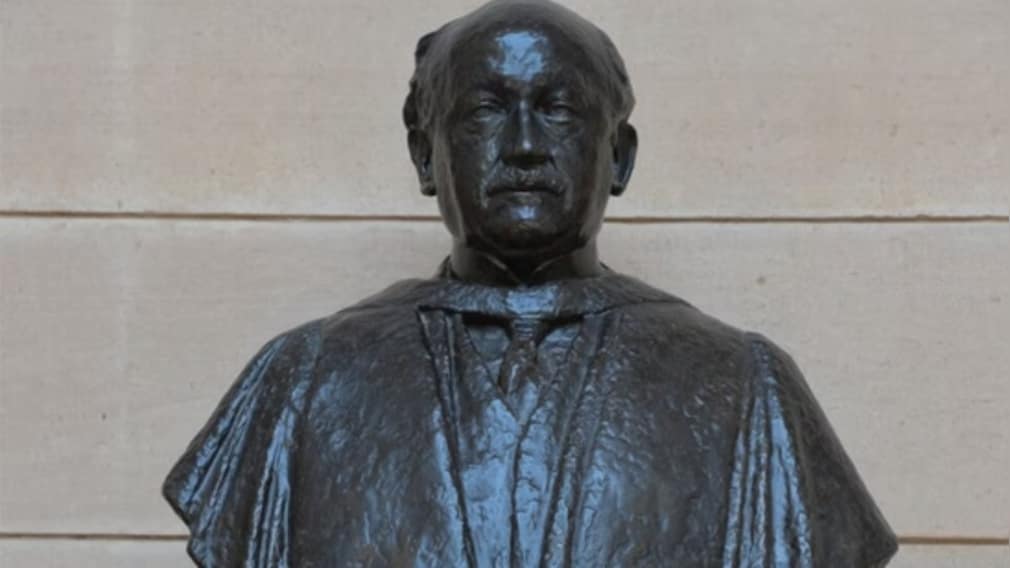
Did you know that there was a bust of the architect Edwin Lutyens outside Rashtrapati Bhavan? I certainly did not.
I knew that Lutyens had designed the building as a palace for the British Viceroy and that it had been inaugurated by the Raj in 1931 with celebrations that had not been attended by most freedom-fighting Indian leaders. In fact, they had been described by Jawaharlal Nehru as being marked by "vulgar, ostentation and wasteful extravagance".
But that they had decided to keep a bust of the architect on display was news to me, as I imagine it was to most Indians. Lutyens is better known in England than he is here, and most Indians can't even pronounce his name (it's nearer "Luchens" than "Lootyens"). If he is ever mentioned in India, then it is in the context of the city of New Delhi, where he designed the buildings in which Prime Minister Modi and his ministers have resided for over a decade. Curiously, the term "Lootyens elite" is used not to describe the elite who actually live in those buildings but as a general abuse for English-language speaking Indians.
So I don't think it matters much to us in India whether a bust whose existence we were unaware of is removed or not. But there has, nevertheless, been some measure of debate over the decision to replace it with a bust of C Rajagopalachari, the first Governor-General of independent India.
Will Every Building Have A Bust?
The argument against its removal runs like this: it's all very well to remove reminders of Raj oppressors such as Viceroys, Generals and Governors, but why extend this principle to architects? Lutyens did no harm to Indians. He only designed buildings.
It's not an entirely unreasonable argument, but it embodies the principle that anyone who designs a grand building should have a statue of himself installed in it. This is a strange position to take. Are we going to erect a statue of Bimal Patel in the new part of governmental Delhi? Why should Lutyens's supporters insist that he has the right to a bust in Rashtrapati Bhavan? It may well be a magnificent building, and nobody is denying him the credit for building it. But a bust? Doesn't it make more sense to install busts of the important historical figures who lived in that building rather than the fellow who designed it?
What's worse is the tendency of some Brits to compare the Raj to the Mughals. 'What about the Taj Mahal then?', somebody tweeted. Wasn't that a colonial building too?
What About The Mughals?
This should be obnoxious, but actually, it just sounds silly. The Mughals, for better or worse, became an Indian dynasty. They were not like the British colonialists who came to India to rob it blind, who crippled our economic development to keep the factories of Manchester and other places in business, and who never ever saw themselves as Indians. Honestly, when I hear this kind of nonsense, I feel like bopping the people who spout this rubbish over their heads with a hardcover edition of Shashi Tharoor's An Era of Darkness: The British in India.
And in any case, aren't Lutyens's Brit fans overstating his importance? The parallel is not with Shah Jahan and the Taj. It is with the architect of the Taj, and most of us don't know his name either. Why, then, should we bother too much with a British architect, sent here as a servant of the Crown to build a palace for his King's Viceroy?
It may not make much difference to me whether the bust stays or goes. But it does annoy me that so many Brits think we are obliged to keep the bust because independent India should remember the architect who served His Majesty's Viceroy.
The more I hear the Brits outrage about the removal of the bust, much in the manner of Germans of a certain generation singing the praises of Albert Speer, the more I start to think that perhaps we should have got rid of the damn thing in 1947 itself.
(Vir Sanghvi is a print and television journalist and talk show host. He tweets @virsanghvi)
Disclaimer: These are the personal opinions of the author
-
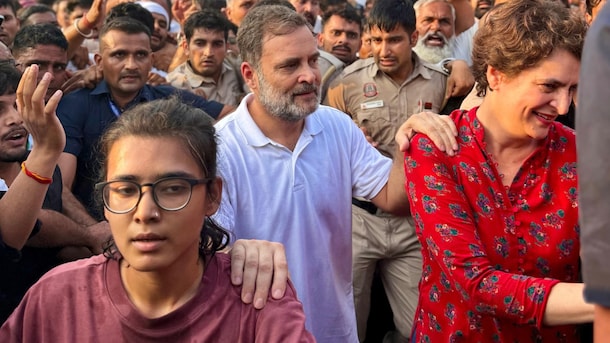
A Step Behind Neha Bora: What Rahul Gandhi's Gesture Says About Congress' Gen-Z Pitch

At INDIA bloc's march to Supreme Court, Rahul Gandhi placed himself a step behind two women, hands resting on their shoulders. One was his sister Priyanka. The one on his right was Neha Bora. Here's what the image means for the protest wave now, and for Rahul's politics in general.
-
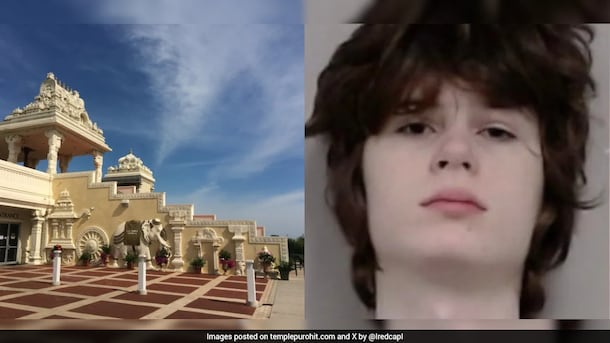
Opinion | Slurs, Threats, Now A Temple Attack Plot: When Did America Become So Hostile Indians?
The rising tide of anti-India, anti-Hindu, and racist attacks serves as a stark reminder that economic prosperity does not automatically guarantee social immunity from bigotry.
-
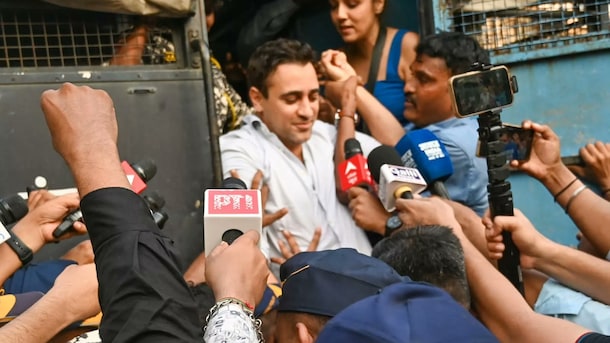
Opinion | Imran Khan, And The Perils Of Having An 'Opinion' In Bollywood
The reality of the industry is quite grimy. More often than not, its inhabitants have been fairweather friends, happy to sing the praises of whoever is in a position of authority.
-
Exclusive: India's Food Safety Problem Goes Beyond Just Dirty Kitchens - By Tukaram Mundhe
On World Food Day, Maharashtra's Commissioner of Food Safety explains why instead of taking stopgap measures, the entire supply chain in India needs to be held accountable and made transparent.
-
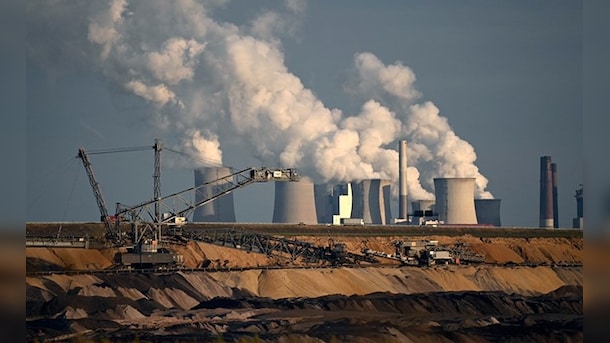
Opinion | India Has Enough Coal. So Why Are Power Plants Running Short? A 76 Million 'Crunch'
As of October 5, as many as 82 of the 191 thermal plants monitored by the Central Electricity Authority were in the 'critical' category
-
Opinion | Starlink, India, And Why Elon Musk Must Know His Billionaire Tantrums Won't Work
India should neither be intimidated by Musk's global influence nor distracted by his theatrics.
-
Blog | 'Baap Da Brat': Kerala Mini Cooper Crash, And Why 'Daddy' Can't Keep Saving You
There are three things you should never underestimate in India: the power of 'jugaad', the elasticity of the law, and the confidence of a 'Baap da Brat' who believes his Papa Posh can fix absolutely anything.
-
Opinion | 'Say Our Name': Why A Tiny Island Nation Wants The World To Get Its Name Right
Standing before the UN hall of nations, Naoero President David Adeang asked the world to unlearn its comfortable habits and speak a restored truth.
-
TVS Succession Row Explained: Why Venu Srinivasan's Family Is Divided Over Wealth
TVS Family Dispute: TVS Holdings is a key entity because it owns a controlling stake in TVS Motor Company. It owns 50.26% of TVS Motor.
-
Opinion | The US Is Showing India Just How Cheap Its 'Friendship' Is
Can local talent fully replace Indian contribution? Why is the US leading in setting up Global Capability Centres in India - over 60% - and pocketing the IP?