Opinion | If Political Parties Fear POSH, The Problem Really Is Something Else
If women in India cannot be safe within the organisations that send them to Parliament and assemblies, the promise of democracy becomes hollow.
Last week, the Foreign Minister of the Taliban-led Afghanistan was in India. His first press conference held at the Afghanistan embassy led to a huge uproar when women journalists were kept out of it. Rightfully, all sections spoke out in outrage, including women and male politicians, reminding the country that women were equal partners in India and that there could be no scope for discrimination in the constitutionally mandated rights for all. This led to the Afghanistan Embassy hosting one more press conference yesterday that included women journalists, who asked some tough questions of the minister. As I write this, there is also political slugfest over a heinous rape crime in Durgapur, West Bengal.
A 'Pandora's Box'
However, in the various narratives about women's rights and their safety that keep playing out in India, one that has totally been missed and ignored has been the Supreme Court's decision refusing to hear a petition that seeks to bring political parties under the Sexual Harassment of Women at Workplace (Prevention, Prohibition and Redressal) Act, 2013, or 'POSH'. The bench warned that doing so would open a “Pandora's box” and invite blackmail. The bench, led by Chief Justice BR Gavai, observed that joining a political party is not considered "employment" or a "job," and, therefore, it does not create a formal employer-employee dynamic as defined by the POSH Act.
What should outrage us as a nation collectively is that the real Pandora's box exists in the unchecked harassment and institutional impunity that such decisions facilitate for those women who wish to join the political mainstream. The Act cannot be limited to only a contractual ‘employer -employee' relationship but should apply to every place a woman chooses to contribute to.
Protection Can't Be Formality
India has six national parties, 67 state parties and 2,854 registered unrecognised political parties. Yet, even after over seven decades of independence, none of them are bound by any law that protects women at work.
What the state proclaims and what it practises stand miles apart. The government speaks of reserving one-third of seats in the Lok Sabha and state assemblies for women; yet, it refuses to ensure statutory protection within parties, the very entry points to political power. How can we ask women to step into political life - still so heavily male-dominated - when the path is hostile and the protections a mere formality? That this decision comes from the highest court of the land is double the letdown for women in politics who have been fighting the fight and speaking up for self-respect and dignity.
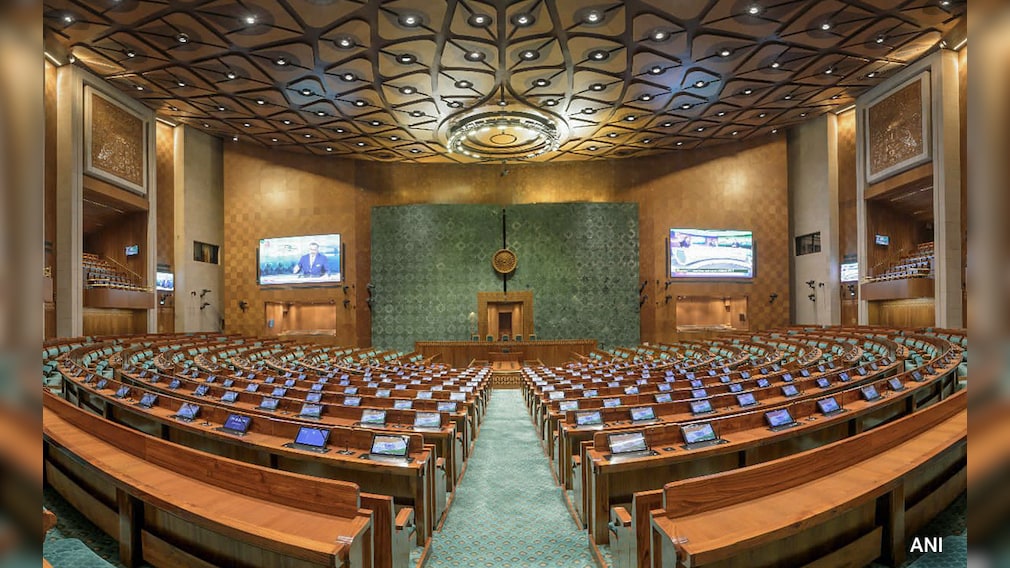
POSH was enacted to protect women's dignity, equality, and safety at work. Political life is work, and is often hazardous yet always public, and should not be treated as an exception. Parties are, inherently, institutions that select leaders, shape public policy, and steer power. If women in India cannot be safe within the organisations that send them to Parliament and assemblies, the promise of democracy becomes hollow.
The Punishing Process
This is not just an abstract concern; many women in politics have fought and continue to fight to be heard. And the story usually goes: complaints handled internally, not transparently, punishments softened, offenders returned to positions of influence. Most parties set up Internal Complaints Committees (ICCs) on paper; in practice, they lack independence and teeth. The result is a cycle of silence and shame that drives women, especially young aspirants, away.
There is also a broader democratic cost. When those who govern fail to protect members within their own ranks, the public's trust is eroded. Parties that claim allegiance to the Constitution and the citizens must be held to the same standards of safety and accountability that we demand at other workplaces.
In our living and breathing democracy, treating POSH as optional for political parties sends only one message: power stands above dignity.
Parties Are Accountable, Too
Parties must be recognised as institutions shaping public spheres. There is a need for parties to adopt truly independent complaint mechanisms, as was imagined through POSH, and for these to remain transparent about the processes and outcomes and protect complainants from retaliation. For a party to be recognised, it should be essential that it complies with the Act. And, the government or the Supreme Court (through its interpretations), should close this legal technicality so that political organisations don't lie beyond the reach of laws meant to protect working women.
The Act should serve as the bare minimum standard for safety, instead of being the exception. The law isn't about policing politics or curbing internal autonomy, but about enforcing the most basic standard of decency: that women who choose to serve the country should not be subjected to harassment for their service. The Supreme Court has absolved itself of the responsibility to correct an anomaly, the repercussions of which will be seen for a long time to come. Bringing political parties under POSH is not charity; it is a democratic duty and a measure of fidelity to people's trust.
(The author is a Rajya Sabha MP and Deputy Leader of the Shiv Sena-UBT)
Disclaimer: These are the personal opinions of the author
-
Opinion | Is Saudi Arabia Now Quietly Switching Sides In US-Iran War?

The Saudi presence at the Ayatollah's funeral as well as its refusal to join America's 'Project Freedom' points to a quiet shift away from its ally, the US.
-
Opinion | China Now Has 7 Of The World's 10 Biggest Banks, And That Should Worry India
Seven of the world's ten largest banks are now headquartered in China. Twenty-two Chinese banks figure in the top 100. No Indian bank comes anywhere close.
-
Delhi's New Policy Paves Way For High-Rises. Architects Flag One Big Risk
Without parallel investments in roads and urban design, higher density could simply place more pressure on already strained neighbourhoods.
-
Opinion | A Quiet Indo-Pacific Revolution Is Underway, And India Is At Its Centre
America's unpredictability has finally done what the China threat never could for the Indo-Pacific
-
Beyond Low Cost: Why Foreigners Choose India's Healthcare Over The West
India's medical tourism industry is estimated to be worth $12.32 billion in 2026. It is growing much faster than the country's overall tourism sector.
-
Opinion | Trump's Quiet Turkey 'U-Turn' Has Loud Consequences For India
In a stunning policy reversal, Trump has decided to sell America's F-35 jets to Turkey, a staunch Pakistan ally and its closest defence supplier
-
Rs 1,160 Crore Rice 'Scam' Widens: 56 Mills, 22 Ethanol Plants Under Scanner
Investigators are trying to establish how much of the nearly 5 lakh metric tonnes of government rice allocated for ethanol production was actually converted into ethanol, and how much may have been diverted through private mills before returning to government warehouses.
-
A Truck, A Rice Mill And A Rs 1,160 Crore Question In Madhya Pradesh
The suspicion is that the government rice was diverted to private rice mills and later found its way back into government warehouses as custom milled rice.
-
Opinion | Sharad Pawar Has An Old 'Two Plus Two' Bargain For Delhi
Sharad Pawar appears to be keeping two doors open, and the political cost could be huge for both opposition and the NDA.
-
Blog: Your SUV's Most-Used Feature Is Now The Brake Pedal
The growing menace of traffic begs a question: Is buying a car slowly becoming one of the worst financial decisions for people living in large cities?