Blog | I Lived In Satya Niketan. And I Was Too Young To See What It Did To Us
Sparking switches, falling ceilings, cardboard-partitioned rooms. Satya Niketan had been crumbling for years. I just didn't know when it would collapse.
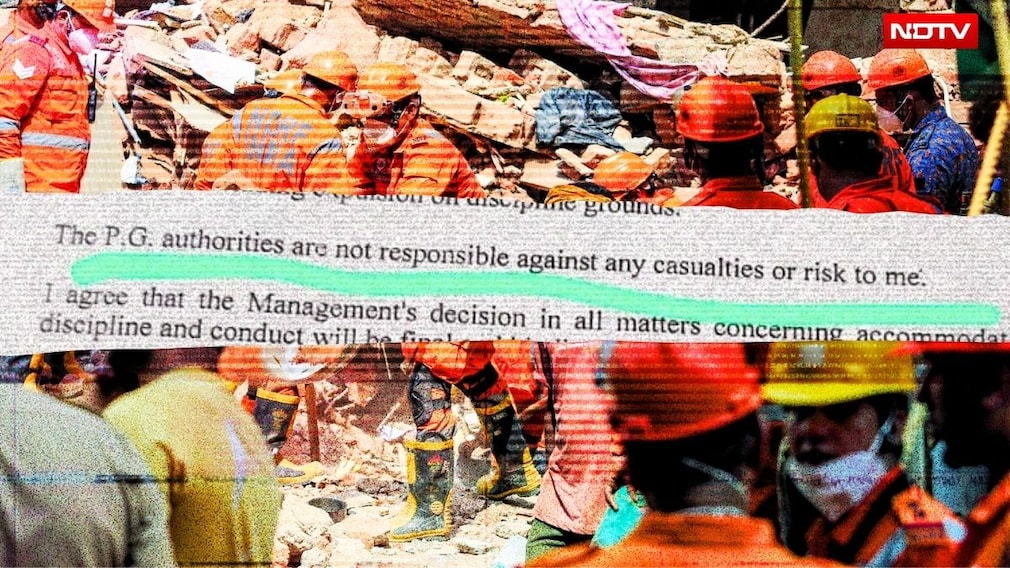
The year was 2013 when I first left a small town in Uttarakhand to study at what's deemed one of the most prestigious Indian institutions - the University of Delhi. Once the academic obligations were taken care of, the next step was to find a place that I could call home. After a long day of hunting and hopping, we finally landed in Satya Niketan. Yes, the same place making headlines today, and the place that, for three eventful years, I called home.
The recent tragedy of a building collapsing in Satya Niketan, unfortunately, did not come as a surprise to me. The collapse was new, but the cracks weren't. Some things, it turns out, never needed headlines to be true. I clearly remember the day when my parents came to drop me at Satya Niketan for the first time. A deep silence fell over them as they witnessed the gap between the Delhi they had imagined for their daughter and the Delhi that was actually going to house her. Me? I didn't feel much. At least not then.
Satya Niketan Meant Something Else To Us
There's something you need to understand about a sixteen, seventeen, or eighteen-year-old moving to a place like that - you don't see any of the warning signs. All you see is the charm of cafes that stay open late into the evening, the thrill of Sarojini Nagar being just a 10-minute auto ride away, and the freedom of sitting with your friends in a park until the light changes colour. All you feel is the giddy liberty of being away from all those watchful eyes at home, all those years. And that is exactly the kind of vulnerability that gets exploited. Let me explain how.
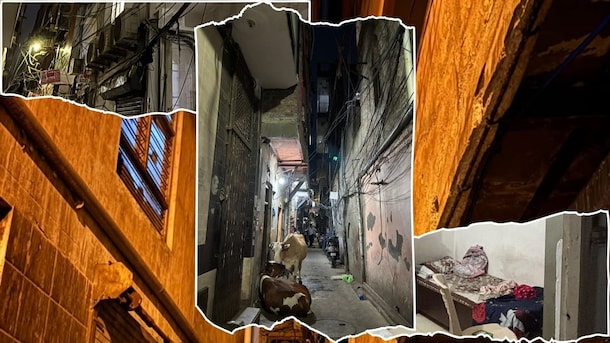
My PG at Satya Niketan was a four-storey building that seemed like it had seen a hundred winters. I shared a room with three other girls, and the one washroom on our floor served eight girls, who queued up outside in great rush every morning to make it to their 9:00 am classes. The wiring was old enough that the switches sparked. Mind you, this was over ten years ago. I still remember the time I returned early from the summer break, alone in an otherwise bustling PG, and heard a loud thud just beside me. A big chunk of decorative plasterwork had fallen off the ceiling, missing me by just a few inches. When I informed the caretaker, it was heard like most things are heard in a PG - with a nod, followed by total inaction.
A year later, after I had moved out of that place, I met a junior who told me that the rooms had been divvied up even further. Each room now had thin boards as partitions so the owner could rent it out to more girls. A space that was already tight with four people was now housing six to eight of them. The room hadn't grown bigger, but greed had.
And then there were the lanes. Ask any South Campus student what they remember most about Satya Niketan, and somewhere between the cafes and Sarojini runs, someone will surely bring up the waterlogging. I don't have a single memory of seeing those paths completely dry. The narrow lanes turn into swamps at the smallest excuse of rain. Why, you ask? Because infrastructure has never once been anyone's priority in South Campus's most happening spot.
'Grateful' Teenagers
If you think it's just the young kids being manipulated, think about their parents. When my parents were scouting various accommodation options for me, the safest bet was a PG. Getting a spot at the university hostel was a tedious fight I was never going to win. Living in a rented apartment came with security concerns, not to mention the high cost, and, most of all, no guardian, no supervision. PGs, on the other hand, came with a caretaker - and thus, some semblance of supervision - and a price one could pay without sweating. The word 'caretaker' did the quiet, unearned work of convincing families of their child's safety and well-being. The reality, however, couldn't be further from the truth. The caretaker locked the gate at 9:00 pm, keeping a keen eye on which guy was dropping you off. Nobody cared if the building was going to hold.
So, when I tell you that students' vulnerability and naivety get exploited here, I am not exaggerating. It's a neighbourhood where negligence is dressed up as affordability, where greed hides behind the veils of humble accommodations, and where teenagers are so grateful to be that they never even dare to ask if their building is safe enough to live in. Eventually, as time passes and you move out, the falling ceilings become something you discuss at reunions, the tiny rooms become someone else's problem. Before you know it, the travails of living in Satya Niketan are somewhat sweetened by nostalgia.
Negligence As Policy
Honestly, it's taken me more than a decade, a considerable distance, and recent headlines to look back and see the unfairness of it all. It's heartbreaking to think of the parents who sent their children off believing the system had their back, only to realise it didn't. It doesn't; it was never designed to.
Negligence with a paper trail this long isn't an accident. It's policy, unofficial but well understood by everyone except the people paying the rent. It's wild how Satya Niketan never changes. And I don't mean it in a nostalgic 'oh-it's-still-the-same-old-Satya' way. I mean, why are the lanes still drowning every monsoon? Why are the buildings still standing on borrowed time? Why are owners still given a free pass to add floors to their buildings when they know the whole structure is one bad move away from collapsing like a house of cards? Why does the government still neglect a place that houses so many young children? And why, after all this, are we so naive to think this won't happen again?
Because it will. Unless something actually, fundamentally, and intentionally changes, it will. The question is how many innocent lives will it take before we stop mistaking the absence of disaster for the presence of safety.
(Anjali is a freelance copywriter and QA with experience in website and travel content. She also creates short-form content on Instagram that makes literature and literary ideas accessible and engaging)
Disclaimer: These are the personal opinions of the author
-
Opinion | Building BRICS In New Delhi

For India as the host nation, chairing the summit tests the core tenet of its modern foreign policy: strategic autonomy.
-
Can India 'Mediate' Between Iran And UAE At BRICS? Gulf Envoy Suggested It Once
At the very start of the Israel-US war on Iran, it was a UAE diplomat who had suggested as much.
-
Opinion | When The Feed Braves The Flood
NDTV drops the 24x7 and stakes its next chapter on presence as it inaugurates a new identity
-
I Went Looking For A PG In Delhi's Kamla Nagar. Here's What I Found
In every PG visited by NDTV in Delhi's Kamla Nagar, the conversation began with amenities. Nothing in the sales pitch was about how secure the building was.
-
Opinion | How Trump Is Doing More For BRICS Than Its Critics Ever Could
By trying to bully BRICS countries into submission, Trump may be giving the grouping the very relevance he is trying to deny
-
Opinion | BRICS Has Grown Up. Now It Must Behave Like An Adult
The India-China accommodation will be a key driver of the grouping, but a 'non-Western' agenda will work well only if it focuses on ending global conflict as much as on stabilising the global economy
-
Opinion | 9/11, And The Price Of Fighting Terror For A Quarter Century
Twenty-five years later, 9/11 is more than just a lived memory for those who witnessed it in real time, as I did as a UN official
-
Opinion | US Can Threaten, Not Dictate: What India's Iran Message Really Means
If India's Bishkek message was a signal to the US, then Pezeshkian's arrival in New Delhi for BRICS will be a defining note: that India's strategic autonomy is not up for debate