9/11, And The Price Of Fighting Terror For A Quarter Century
Twenty-five years later, 9/11 is more than just a lived memory for those who witnessed it in real time, as I did as a UN official
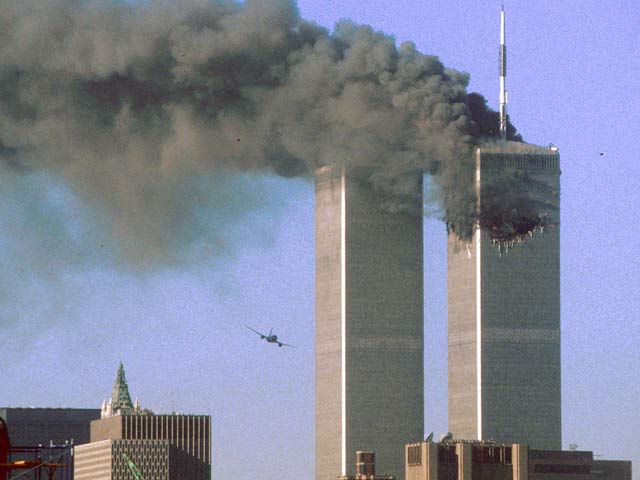
A quarter-century has elapsed since the bright, cloudless Tuesday morning of September 11, 2001, in New York, when the world stood still in collective horror at the television images broadcast from the Big Apple. The image of the Twin Towers collapsing into a mountain of ash and steel in Lower Manhattan remains permanently etched into the global consciousness, and "9/11" (in the American dating style) became the term for an era-defining day.
Twenty-five years later, 9/11 is no longer merely a lived memory for those who witnessed it in real time, as I did as a UN official. It has fully entered the realm of history; 9/11 marks a pivotal inflection point that irrevocably cleaved the post-Cold War era from the turbulent twenty-first century to follow. Looking back across two and a half decades provides a sobering vantage point. The catastrophic attacks carried out by al-Qaeda did not just claim nearly three thousand innocent lives and shatter the domestic invulnerability of the United States; they recalibrated the architecture of international security, reshaped the balance between individual liberty and state authority, fundamentally altered the trajectory of global politics, and left a profound psychological mark on societies worldwide.
An Era Of Anxiety
To understand the full magnitude of September 11, one must recall the geopolitical climate that preceded it. The 1990s were characterised by an overwhelming sense of Western optimism. Following the collapse of the Soviet Union, political theorists spoke of the "End of History" - a widespread belief that liberal democracy and market capitalism had permanently triumphed, promising a future defined by global economic integration and worldwide peace. The attacks of 2001 brutally shattered that illusion in a matter of hours. The threat was no longer a competing superpower operating under the logic of mutual assured destruction, nor a government anxious to expand the benefits of globalisation to its own populace; it was a decentralised, non-state terror network willing to weaponise civilian vulnerability to inflict maximum devastation. The era of effortless American hegemony gave way to a new age of existential anxiety, ushering in a security paradigm focused on asymmetric warfare, counterterrorism, and non-state violent actors.
The immediate American response to the attacks set in motion two decades of military campaigns under the umbrella of the "Global War on Terror". The invasions of Afghanistan in 2001 and Iraq in 2003 transformed the geopolitics of the Middle East and Central Asia with consequences that continue to echo today. While counterterrorism operations successfully dismantled al-Qaeda's core infrastructure and eventually brought Osama bin Laden to justice, the broader strategic costs were immense. The prolonged conflict in Afghanistan became the longest war in American history, concluding in 2021 with a traumatic withdrawal and the return of Taliban rule. Meanwhile, the war in Iraq destabilised the region, gave rise to sectarian violence, created the conditions for the emergence of ISIS, and reshaped regional dynamics in favour of adversaries of the West-led consensus, like Iran.
The quarter-century since 9/11 demonstrates that while military power can dismantle terrorist infrastructure, it cannot easily build stable polities or substitute for political reconciliation. Over twenty-five years, the human and financial toll of these conflicts-trillions of dollars spent and hundreds of thousands of lives lost, both military and civilian-fundamentally altered public attitudes toward foreign intervention across Western democracies. It bred a deep-seated wariness of grand nation-building projects and shifted national defence strategies away from Middle Eastern counterinsurgency and back toward power competition among major global states.
Emergency Responses To Permanent Policies
Domestically and internationally, 9/11 also redefined the basic social contract between citizens and the state. In the name of national security, governments around the world rapidly expanded their intelligence agencies and oversight apparatuses. Legislative measures, such as the USA PATRIOT Act, alongside the creation of institutions like the Department of Homeland Security and the Transportation Security Administration, permanently transformed daily life in America. Similar anti-terrorism legislation in many countries affected all of us, including in India. International air travel was restructured around rigorous, perpetual security protocols. More fundamentally, the rise of mass digital surveillance revealed that modern counterterrorism relied on monitoring global communications metadata on an unprecedented scale. Measures introduced as temporary emergency responses have become permanently institutionalised features of governance, ensuring that the tension between safeguarding civil liberties and ensuring national security remains one of the perpetual legal and moral debates of the digital age.
In the immediate aftermath of September 11, there was a brief, powerful wave of national unity and international solidarity. Messages of sympathy flooded in from every corner of the globe, famously exemplified by the headline in France's Le Monde: "We are all Americans now". However, as the years progressed, the psychological trauma of the attacks and the ongoing war on terror contributed to deeper domestic and international fractures. Muslim and Arab communities in Western nations faced heightened suspicion, discrimination, and hate crimes. Furthermore, fear-driven political rhetoric gradually eroded social cohesion, laying fertile ground for populist, anti-immigrant, and nationalist movements that gained significant momentum in subsequent decades, especially in the US but also across Europe.
A Changed World
Today, twenty-five years removed from that tragic morning, the global threat landscape has shifted significantly beyond the immediate concerns of 2001. While transnational terrorism remains a persistent security challenge, the primary focus of international relations has returned towards great-power rivalries, cyber-warfare, climate insecurity, and the ethical dilemmas posed by artificial intelligence and automated technology. Yet, the world we inhabit today was directly forged in the crucible of post-9/11 decisions. The financial strains, institutional trust deficits, and geopolitical realignments of the past quarter-century are directly linked to that fateful morning in Lower Manhattan.
As the anniversary is commemorated at Ground Zero, where two reflecting pools now sit in the footprints of the original towers, the occasion serves as a solemn tribute to those who perished, the first responders who ran towards danger, and the generations whose lives were altered in the aftermath. It stands as an enduring reminder of human vulnerability, but also of resilience, urging future leaders to meet security challenges with wisdom, restraint, and an unwavering commitment to human dignity.
(Shashi Tharoor has been a Member of Parliament from Thiruvananthapuram, Kerala, since 2009. He is a published author and a former diplomat)
Disclaimer: These are the personal opinions of the author
-
A Step Behind Neha Bora: What Rahul Gandhi's Gesture Says About Congress' Gen-Z Pitch

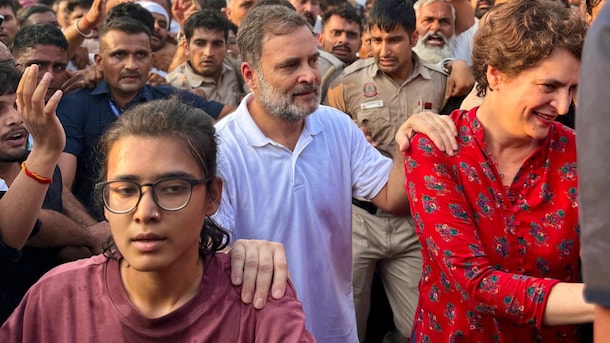
At INDIA bloc's march to Supreme Court, Rahul Gandhi placed himself a step behind two women, hands resting on their shoulders. One was his sister Priyanka. The one on his right was Neha Bora. Here's what the image means for the protest wave now, and for Rahul's politics in general.
-
Opinion | Starlink, India, And Why Elon Musk Must Know His Billionaire Tantrums Won't Work
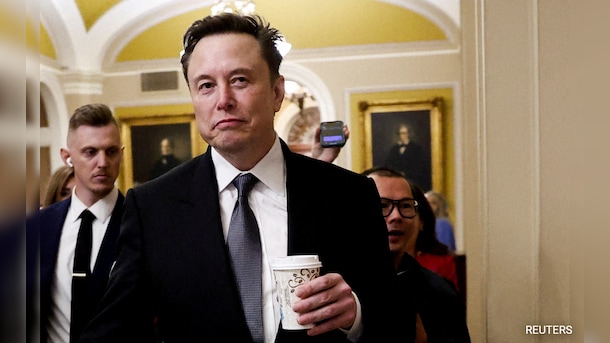
India should neither be intimidated by Musk's global influence nor distracted by his theatrics.
-
Blog | 'Baap Da Brat': Kerala Mini Cooper Crash, And Why 'Daddy' Can't Keep Saving You
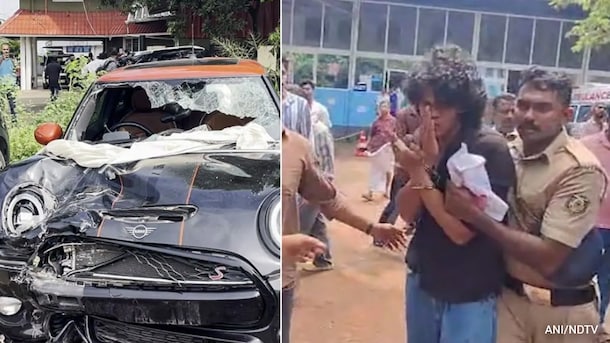
There are three things you should never underestimate in India: the power of 'jugaad', the elasticity of the law, and the confidence of a 'Baap da Brat' who believes his Papa Posh can fix absolutely anything.
-
Opinion | 'Say Our Name': Why A Tiny Island Nation Wants The World To Get Its Name Right
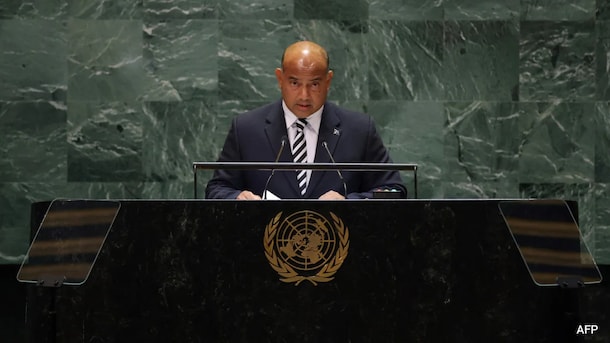
Standing before the UN hall of nations, Naoero President David Adeang asked the world to unlearn its comfortable habits and speak a restored truth.
-
TVS Succession Row Explained: Why Venu Srinivasan's Family Is Divided Over Wealth
TVS Family Dispute: TVS Holdings is a key entity because it owns a controlling stake in TVS Motor Company. It owns 50.26% of TVS Motor.
-
Opinion | The US Is Showing India Just How Cheap Its 'Friendship' Is
Can local talent fully replace Indian contribution? Why is the US leading in setting up Global Capability Centres in India - over 60% - and pocketing the IP?
-
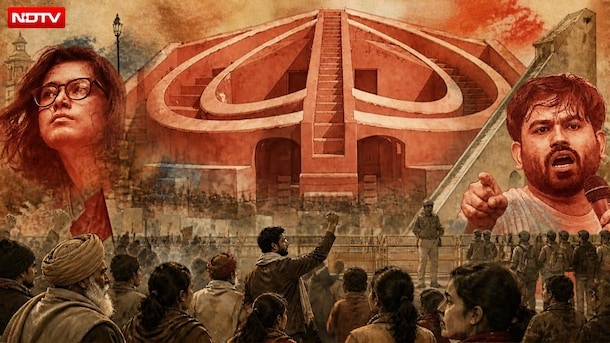
Jantar Mantar Tells Time. The Clock Just Stopped On Its Time As An Iconic Protest Site
On Monday, October 12, 2026, Delhi Police denotified Jantar Mantar Road as a designated site for demonstrations. The Supreme Court had given it a nudge. Here's how history met politics on that street for decades.
-
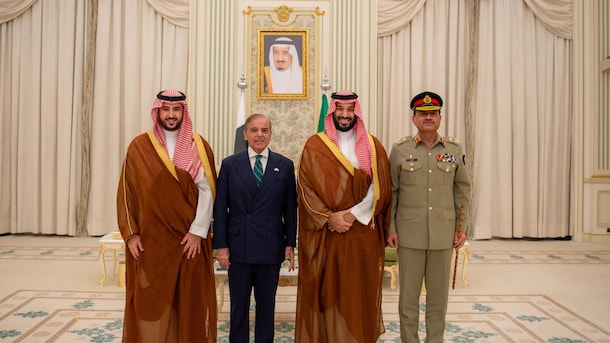
Opinion | Saudi Airport Attack, And Why Pakistan Keeps Biting Off More Than It Can Chew
For all those who were envious of Pakistan's 'new status' as "mediator extraordinaire", here is a reality check
-
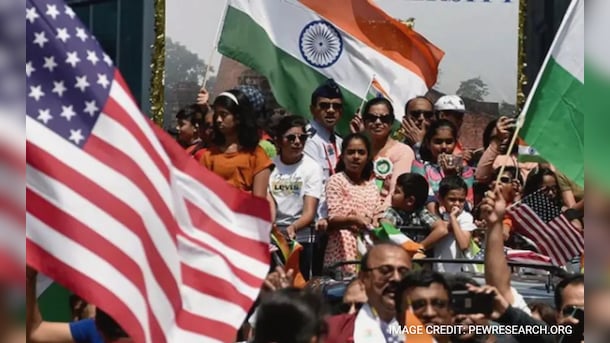
Opinion | Visa Shocks To Racist Attacks, When Did America Come To Hate Indians So?
Sometimes it is about H-1B visas. Sometimes it is jobs. Sometimes it is "foreigners." Sometimes it is about temples. The language of the attack varies, but the message is consistent