Opinion | How Venezuela's China-Made Weapons Failed To Keep The US Away
Unlike post-Operation Sindoor, when Beijing hailed Pakistan's air-defence operations against India as a success of Islamabad's "Made in China" military force, there is an eerie silence within Beijing this time.
The United States' military intervention in Venezuela on the evening of January 3, 2026, has kicked the new year off with great uncertainty for the Western Hemisphere. In hindsight, it seems that while the air strikes and the arrest of Venezuelan President Nicolas Maduro and his wife may have been unprecedented, military tensions between the US and Venezuela were likely to manifest one way or another. The November 2025 National Security Strategy (NSS) released by US President Donald Trump clarified that the 'Monroe Doctrine' was back in action and that the US was putting in place plans to carve an undisputed 'sphere of influence' in the Western Hemisphere.
In particular, the NSS highlighted that the US National Security Council will build an interagency task force supported by the Intelligence Community's analytical arm, to "identify strategic points and resources in the Western Hemisphere with a view to their protection and joint development with regional partners". Further, the goal is to keep "Non-Hemispheric competitors" out of the region, so that they do not "harm [the US] strategically in the future". These odes, combined with the buildup in tensions between the US and Venezuela over illicit narcotic trade and sustained American sanctions on Venezuelan oil traders, now constitute the metaphorical writing on the wall.
China As A Competitor
It is clear that China is one such 'Non-Hemispheric Competitor' in the US's conception. Maduro's regime was Beijing-friendly, and the economic and military ties between Venezuela and China run deep. Naturally, with Maduro set to face "the full wrath of American justice on American soil", in US Attorney General Pam Bondi's words, and Trump wanting Washington to "run Venezuela", China's interests and stakes in the country and the region are in jeopardy. But what are these interests and stakes? What is China likely to be concerned about now?
For starters, if one looks at the statement released by the Chinese Foreign Affairs Ministry a few hours after the US's strikes, there is harsh condemnation of America's actions on the account that it is a violation of Venezuela's sovereignty, international law, and principles of the UN Charter. Beijing also opposed the actions on the grounds that they fundamentally "threaten peace and security" in Latin America. As much as China is an aggressor in its own region, in narrative, it has often used international law and UN-centred norms as ideals that each great power must uphold. In that regard, in Beijing's view, the US's actions are a display of raw power, even if the indictments issued by New York courts act as some casus belli for Washington's intervention.
But beyond the rhetoric, China would ideally be seriously concerned about two main issues - the failure of some of its military equipment used by the Venezuelan Armed Forces, and the future of its oil and economic ties with both Caracas in specific and Latin America (LatAm) in general.
The Silence Within China
Venezuela's National Guard deployed over a hundred Chinese-origin Armoured Utility Vehicles of the VN4 class, its Marines deployed approximately 10 each of the Chinese-origin, VN-1 and VN-18 class Infantry Fighting Vehicles, and its Air Force operated over 20 K-8 'Karakorum' light attack fighter aircraft developed by China's Hongdu Aviation Industry Corporation. Most importantly, the Caracas fielded the China Electronics Technology Group Corporation (CETC)-made JY-27 counter-stealth radar, which the Chinese claimed in May 2025 could capture and locate "extremely stealthy targets". As is evident from the US's successful campaign, which used both F-22s and F-35s in operations, Venezuela's air defence systems failed to respond to, if not detect, threats. This also implicitly means China's AUVs/ IFVs, with the JY-27s on board, were either overwhelmed, decimated, or managed inefficiently in the first place.
Post Operation Sindoor, Beijing hailed Pakistan's air-defence operations against India as a success of Islamabad's "Made in China" military force. After the Caracas ops, Chinese military commentators are barely speaking about the efficacy of Chinese weapons in Venezuela. Instead, discussions are geared towards understanding what made the US's smooth ops possible. Specifically, commentators are focused on two aspects - the first is that initial air strikes and possible electronic warfare attacks disabled the Venezuelan air force. This allowed US helicopters carrying Delta Force units to conduct airborne operations and enter Maduro's residence. The second is that the US efficiently brought into action the CIA to gather intelligence, making it easy for units to seize Maduro. In this regard, commentators are also hinting that the US may have "bought over" military commanders or officials in Venezuela. Some on Chinese social media are also attributing the success of US ops to the "money-burning" nature and the "unlimited budget" of the elite Delta Force.
But any substantive discussion on Chinese equipment is missing, which likely indicates that Beijing would have concerns about its quality and ability to succeed against its main peer competitor: the US. Moreover, it may also worry importers of Chinese export-variant weapons systems globally, possibly even disrupting China's arms export markets.
China's Billion-Dollar Bet
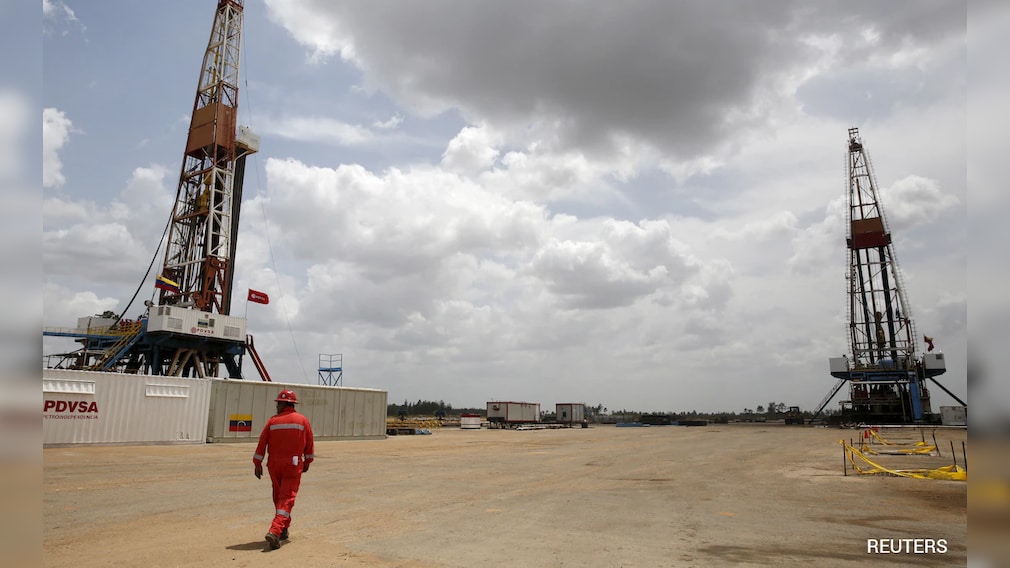
Most importantly, there is the jeopardised oil and economic component to China's engagements with Venezuela. Not only is China the largest single-country importer of Venezuelan oil, forming almost 55-90% of the Caracas' oil-exporting basket in 2025, but the China Development Bank (CDB) has also invested around $50-60 billion in "loans-for-oil" deals with Venezuela since 2007. For policymakers in Zhongnanhai, the key economic implication of the intervention is the endangering of over two decades of strategic investment, placing tens of billions of dollars in outstanding loans and critical energy assets at risk of nullification. Most loan-for-oil contracts have also been long-term and set at predetermined prices, which means that for China, finding affordable alternatives quickly is a bleak possibility.
Beijing lacks effective leverage to contest this repudiation. Unlike in Sri Lanka or Pakistan, where China holds physical collateral (ports or infrastructure, for example), its assets in Venezuela are energy resources now under the physical control of the US military. This scenario presents a total write-off risk for the CDB, potentially becoming the largest single loss in the history of Xi Jinping's flagship Belt and Road Initiative.
On January 2, the Chinese Special Representative for Latin American Affairs, Qiu Xiaoqi, was reportedly in Venezuela to discuss expanding economic cooperation and a joint front against the US's unilateral coercion. It is a small part of the enhancing diplomatic, military and economic relations between China and Latin America in the past few decades. Arguably, for Washington, these relations, among other issues, may have constituted a developing China hurdle in its quest to secure its interests in the Western Hemisphere. Subsequently, to a great degree, the US's January 3 intervention and its rare sanctioning of Hong Kong- and mainland-based oil traders doing business with Caracas before that signal to Beijing that the US's regional predominance is indeed real.
For Beijing, Washington's actions set a dangerous precedent. They provide both an impetus for China to rethink its LatAm strategy and its far-off military capabilities, while also providing it with specific narrative tools to appeal to the 'Global South' against American hegemony. It is debatable that China perceives US impunity as a sign to escalate tensions into a conflict in its own region. But what is certain is that China will draw lessons from the events of and leading up to January 3, whether in terms of American special ops capabilities and motivations or Chinese military and economic standing vis-à-vis the US.
(Anushka Saxena is a China Studies Research Analyst with the Takshashila Institution's Indo-Pacific Studies Programme)
Disclaimer: These are the personal opinions of the author
-
Blog | 'Baap Da Brat': Kerala Mini Cooper Crash, And Why 'Daddy' Can't Keep Saving You

There are three things you should never underestimate in India: the power of 'jugaad', the elasticity of the law, and the confidence of a 'Baap da Brat' who believes his Papa Posh can fix absolutely anything.
-
Opinion | 'Say Our Name': Why A Tiny Island Nation Wants The World To Get Its Name Right
Standing before the UN hall of nations, Naoero President David Adeang asked the world to unlearn its comfortable habits and speak a restored truth.
-
TVS Succession Row Explained: Why Venu Srinivasan's Family Is Divided Over Wealth
TVS Family Dispute: TVS Holdings is a key entity because it owns a controlling stake in TVS Motor Company. It owns 50.26% of TVS Motor.
-
Opinion | The US Is Showing India Just How Cheap Its 'Friendship' Is
Can local talent fully replace Indian contribution? Why is the US leading in setting up Global Capability Centres in India - over 60% - and pocketing the IP?
-
Jantar Mantar Tells Time. The Clock Just Stopped On Its Time As An Iconic Protest Site
On Monday, October 12, 2026, Delhi Police denotified Jantar Mantar Road as a designated site for demonstrations. The Supreme Court had given it a nudge. Here's how history met politics on that street for decades.
-
Opinion | Saudi Airport Attack, And Why Pakistan Keeps Biting Off More Than It Can Chew
For all those who were envious of Pakistan's 'new status' as "mediator extraordinaire", here is a reality check
-
Opinion | Visa Shocks To Racist Attacks, When Did America Come To Hate Indians So?
Sometimes it is about H-1B visas. Sometimes it is jobs. Sometimes it is "foreigners." Sometimes it is about temples. The language of the attack varies, but the message is consistent
-
How El Nino And Warming Oceans Could Shape Earth's Climate In 2027
From changing ocean currents to extreme weather, scientists are watching a combination of climate signals that could influence temperatures, rainfall and ecosystems in the months ahead.
-
Blog | Nana Patekar, And The Sharp, Lasting Sting Of His 'Plain-Speak'
"Subah ghar se niklo, bheed ka hissa bano..." Nana Patekar's characters often spoke with the bluntness of men who had little patience for pretence. Just like Nana himself.