

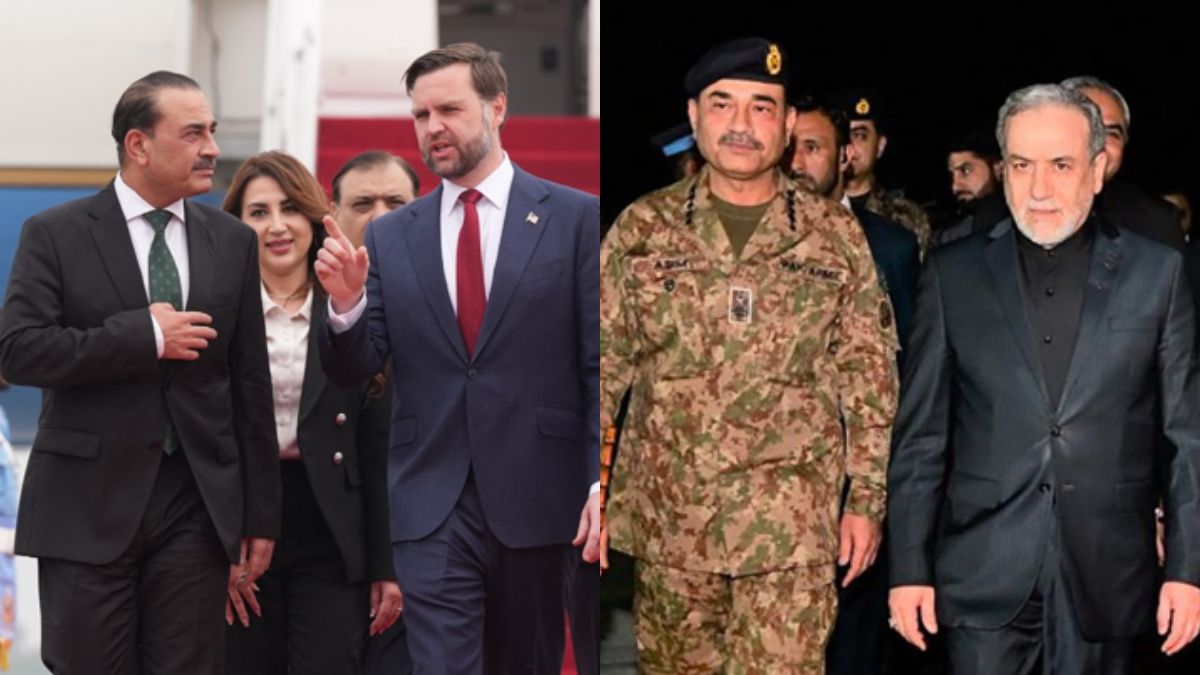





On April 11 and 12, delegations from the United States and Iran held talks in Islamabad to discuss mutually acceptable terms amidst a two-week ceasefire. Late on April 12, US Vice President JD Vance, who led the US delegation, asserted that the talks had failed to yield an outcome, and US President Trump announced that the US Navy would "blockade" the Strait of Hormuz. Amidst uncertainty, two fundamental characteristics of the ceasefire still remain - neither Tehran nor Washington have ruled out further talks, and Iran is yet to resume missile/drone attacks at US bases in the Gulf (which keeps the US-Iran ceasefire technically intact). A third, more crucial, characteristic also remains intact: that Israel (which was not in the room in Islamabad) continues to significantly influence, if not upend, American diplomacy with Iran. Regardless of the substance, the Iranian delegation (led by Parliament Speaker Mohammed Bagher Ghalibaf) meeting JD Vance represented the highest level of direct US-Iran contact in 47 years.
However, it became evident that while talks began on a positive trajectory, with technical teams, written exchanges, and structured discussions, the Iranians maintain that a call by Israeli Prime Minister Benjamin Netanyahu to VP Vance turned the US position more untenable in subsequent negotiations, which lasted for 21 hours overall.
An Old Show
Israeli influence over US decision-making is old, as is its impact on broader US foreign policy. However, two elements are new: the first is the degree to which Israel has influenced Trump, and the second is the fresh challenges that this influence is facing.
Since 1985, the last five US Presidents prior to Donald Trump have overseen considerable consistency in American financial assistance to Israel, through a combination of economic and military aid. From Ronald Reagan to Barack Obama, this aid has remained between approximately $2.8 billion and $3.5 billion annually. By 2008, towards the end of George Bush's second term, American financial assistance to Israel became almost exclusively military. By 2012, under President Barack Obama, the US Congress legislated that it was US policy "to help the Government of Israel preserve its qualitative military edge". Functionally, this meant that no defence deal that the US would conclude with other states in the region could threaten Israel's QME. A prominent example of this policy is that Israel is the only country that operates the F-35s with specific customisations, while other Arab states continue to fail in their efforts to procure the world's most potent fighter jet. The cornerstone of this historically lopsided relationship has been the influence of the 'Israel Lobby', a diffuse but coherent political action group that has historically succeeded in directing US policy towards pro-Israel positions, even when not in the US national interest, as John Mearsheimer and Stephen Walt note in their 2007 book of the same name.
Palestine As An Outlier
However, neither domestic compulsions nor the institutional sustenance of US deference to Israel's security needs could prevent multiple US Presidents from keeping US policy on Palestine in line with international law, at least nominally, and account for the Arab interest. Among other things, this meant officially viewing Israeli settlements in the West Bank (and Gaza before 2005) as illegal, recognising Tel Aviv as Israel's capital (and not Jerusalem, as Israel had maintained since 1980), and not recognising Israel's rights over the Golan Heights in Syria, which the former had been occupying since the 1967 war. More importantly, successive US Presidents have not hesitated to criticise Israel. Ronald Reagan famously characterised Israel's massive - at the time unprecedented - bombardment of Beirut in 1982 as a "holocaust", forcing then Israeli PM Menachim Begin to change course (even as Israel continued its larger invasion of Lebanon). George Bush actively encouraged Ariel Sharon to withdraw Israeli military forces as well as illegal settlements from the Gaza Strip in 2005. And the Obama Presidency saw the most significant public rifts between Washington and Tel Aviv, especially as the former progressed with the Joint Comprehensive Plan of Action with Iran.
Trump's First Term - And His 'Mega Donors'
By the time Donald Trump took office in 2017, however, the Middle East was in significant transition. After decades of instability (due to the Arab Spring, the rise of ISIS, the Arab war in Yemen, and significant Arab-Iran tensions), Gulf leaders such as UAE President Mohammad bin Zayed and Saudi Crown Prince Mohammad bin Salman were focusing significantly on conflict cessation and pushing for conciliation-driven regional stability. Hence, as a candidate who received significant support from pro-Israel "mega donors" such as Miriam and Sheldon Anderson, Donald Trump arguably found greater space than ever before to fulfil long-rebuffed Israeli demands. In a single term, President Trump recognised Jerusalem as Israel's capital (even as East Jerusalem remained illegally occupied territory under international law) and Israel's claim to the occupied Golan Heights, moved the US Embassy from Tel Aviv to Jerusalem, and reversed decades of US policy deeming Israeli settlements in the occupied West Bank illegal. Trump was vindicated by several Arab states (led by the UAE) acquiescing to these changes and sidelining their own 2002 Arab Peace Initiative, by acceding to the Abraham Accords by 2020. Most importantly for Israel, Trump was quick to withdraw from the 2015-era Joint Comprehensive Plan of Action (JCPOA) with Iran. Naturally, Trump was (in Netanyahu's words), Israel's "best friend in the White House".
Fundamentally, however, Trump's deal-making approach remained. This would have to include both peace in Palestine as well as a deal with Iran - as long as it was better than Obama's. From Israel's perspective, such attempts would be tolerable if worked out under an overly pro-Israel President. However, Trump's election loss scuttled both his plans for a grand peace in Palestine (with little to no concessions to Palestinian sovereignty/self-determination) as well as a new deal with Iran, which could also eliminate Iran's missile programme along with its nuclear enrichment capabilities - a core Israeli demand.
The First Fissures
By Trump's second term, the Middle East had transitioned again. Israel's tactical military successes across the region had dealt severe blows to Iran's Axis of Resistance and its regional heft. Notwithstanding growing global criticism of Israel's actions in Gaza - characterised as a genocide by an independent UN commission in September, 2025 - Netanyahu was arguably determined to press these advantages home by driving Washington towards war with Iran.
As it became evident that Trump was seeking a deal with Tehran, Israel both encouraged the US President to take maximalist positions as well as acted on its own to create a new fait accompli. This was especially evident in June 2025, when Israel directly struck Iranian nuclear sites unilaterally - in the middle of US-Iran talks - while convincing the US President that it bettered Washington's bargaining posture. That Israel's means and ends were both different from those of the United States was especially evident in how both these states prosecuted their military action - Israel kept up two weeks of bombardment while the US conducted a single bombing raid on Iranian enrichment facilities with bunker-busting munitions and declared a ceasefire. When Israel sought to test Trump's ceasefire commitments by attempting to continue bombardment, the US President's public tirade against Israel was a microcosm of a larger fact - that Washington could not afford to tow Israel's means even if Tel Aviv presented them as optimal for the ends that Trump was seeking.
2 Things That Emboldened Trump
By January 2026, two key developments shifted Trump's posture again: the stunning success of the US operation to capture Venezuelan President Nicholas Maduro and large-scale anti-government demonstrations in Iran by December 2025-January 2026. The former unarguably increased Trump's confidence to replicate the operation elsewhere (especially Iran), while the latter gave the impression of domestic Iranian support for US military action. Both were ultimately proven wrong. However, by February, Benjamin Netanyahu was personally involved in convincing the US President that an intense bombing campaign could foster an Iranian opposition-led overthrow of the Islamic Republic. As a New York Times report detailed later in April, the Israeli Prime Minister made a detailed presentation to this end, in the White House Situation Room. By April 8, after the Islamic Republic proved its resilience as well as its ability to decisively choke the Strait of Hormuz, it became largely clear that the Israeli PM's rationale for encouraging US military action was ill-founded.
On April 8, as the US negotiated a ceasefire with Iran, sans Israel, Tel Aviv found a new opportunity to keep the US engaged in the war, due to Iran's demand that a ceasefire include the cessation of Israel's military action in Lebanon. Having rejected Iran's demand - despite its earlier, private, acceptance by President Trump - Tel Aviv intensified its bombing of Lebanon on the same day to test or undermine Iran's commitment to Beirut/Hezbollah and make it harder for it to uphold the ceasefire (which, if broken by Iran, would warrant a resumption of US attacks). At the same time, Washington agreeing to send the Vice-President himself to negotiate was a categorical concession to Iran's need for new negotiators, since Iran deems Steve Witkoff and Jared Kushner to be pro-Israel actors.
That Damned Call
Crucially, Iran's response to Israel's continuing bombardment of Lebanon - as well as Iran's belief that Netanyahu's call to Vance derailed efforts that were close to drafting an "Islamabad Memorandum" - did not lead to immediate Iranian attacks on US bases but rather a continued closure of the Strait of Hormuz. While a resumption of US-Israeli military action remains both possible and probable, it is unlikely that a viable military approach exists to mitigate the Iranian threat to the Strait. The costs of Washington's war are increasing, with oil threatening to touch $150 a barrel. Key US partners, such as the UK and France, are actively encouraging a ceasefire in Lebanon, even as Trump goes ahead with a naval blockade - on top of the Iranian blockade - in the Strait of Hormuz. The operational logic here remains unclear.
However, Israel's character as an Albatross around Trump's neck is proven. Tel Aviv continues to hold significant influence over the Trump White House, but it is also clear that Iran's retaliatory action thus far has emerged as the most visible and foremost challenge to Israel's credibility and agency in driving White House decision-making.
(Bashir Ali Abbas is a Senior Research Associate at the Council for Strategic and Defence Research, New Delhi. Views are strictly personal.)
Disclaimer: These are the personal opinions of the author


