Opinion | Guns To Rallies, How 'Drug Money' Is Fuelling Khalistani Extremism In Canada
Since 2007, more than 200 gang-related homicides in British Columbia alone have been linked to rival Punjabi-Canadian gangs fighting for control of the lucrative cross-border drug trade
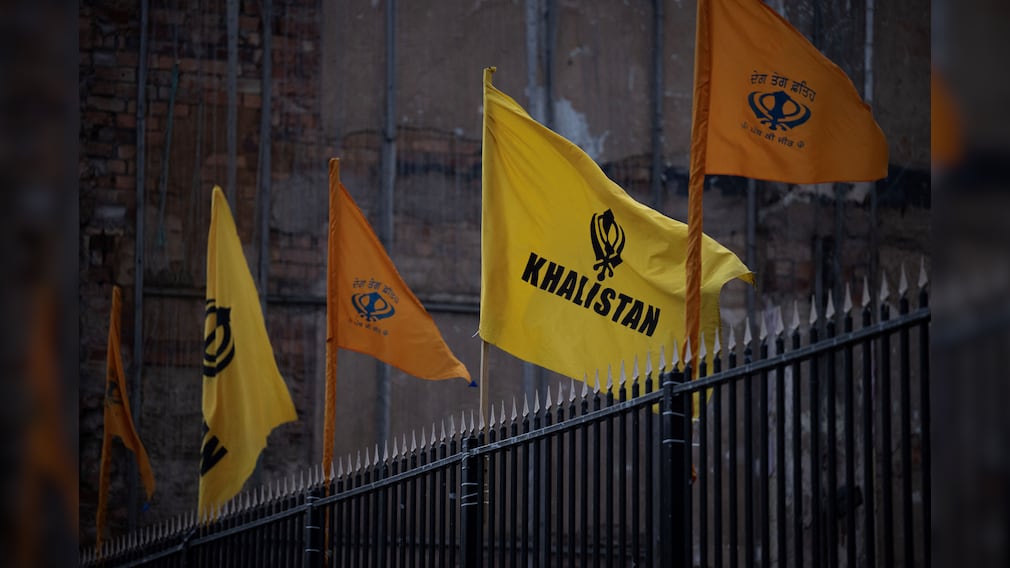
Canada is home to one of the world's largest Sikh diasporas - nearly 8 lakh strong. The overwhelming majority are law-abiding citizens who have enriched the country through trucking, farming, construction and small business. Yet, a small, violent fringe within the Punjabi-Canadian community has, over the past two decades, become deeply entangled with transnational organised crime. The profits from cocaine, methamphetamine and fentanyl trafficking are not only buying guns and luxury cars; mounting evidence suggests they are also bankrolling pro-Khalistan rallies, referendums and legal defence funds for extremists.
This toxic nexus is no secret to Canadian police. Since 2007, more than 200 gang-related homicides in British Columbia alone have been linked to rival Punjabi-Canadian gangs fighting for control of the lucrative cross-border drug trade. The victims and perpetrators are overwhelmingly young men of South Asian origin. The Combined Forces Special Enforcement Unit of British Columbia (CFSEU-BC) has repeatedly described the conflict as one of the province's most serious public-safety threats.
A String Of Seizures In Recent Years
- February 2025: The Peel regional police seized 479 kg of cocaine - the largest haul in the region's history - hidden in truck trailers entering from the United States. Six of the nine individuals charged were Indo-Canadian men from Brampton and Mississauga
- 2024: A super-lab capable of producing $500 million worth of synthetic drugs was dismantled in Falkland, BC
- 2022: A joint Canada-US operation seized drugs worth $25 million; three of the five men charged were Punjabi-Canadians using trucking firms as cover
These are not isolated incidents. Law-enforcement sources in both countries say a significant portion of the cocaine and fentanyl entering Western Canada now moves through networks dominated by a subset of Punjabi-Canadian organised crime groups.
The more disturbing allegation - raised by Indian diplomats and echoed in some Canadian police circles - is that part of this criminal revenue is diverted to finance Khalistan separatist activities in the diaspora. While no Canadian agency has publicly confirmed a direct, systematic pipeline, several documented cases raise serious questions:
High-profile "Khalistan referendums" organised by Sikhs for Justice (SFJ) in 2021-2024 in Brampton, Surrey and Calgary cost hundreds of thousands of dollars each (buses, stages, advertising, printed ballots, school-ground rentals). Indian investigators claim portions were funded by individuals later charged in major drug cases.
In 2023, financial intelligence reportedly traced approximately $80,000 from a raided drug house in Ontario to a registered Canadian charity that supports pro-Khalistan causes.
Gurdwaras that host fiery anti-India speeches have, in some instances, received large donations from trucking companies subsequently investigated for narcotics smuggling.
The Nijjar Saga
Perhaps the clearest illustration came with the June 2023 assassination of Hardeep Singh Nijjar, a prominent Khalistan Tiger Force leader, outside a Surrey temple. Canadian police charged four Indian nationals with the murder in May 2024. Court documents and reporting by CBC and The Globe and Mail reveal that at least two of the accused had prior ties to criminal networks involved in drugs and firearms. Indian officials insist the killing was a gangland hit linked to turf wars over drug routes; the Trudeau government alleges Indian state involvement. Whatever the ultimate truth, the fact that a designated terrorist figure's orbit overlapped with organised crime underscores how blurred the lines have become.
This is not a new phenomenon. In the 1980s and 1990s, Babbar Khalsa and other militant groups used extortion, smuggling and donations from the diaspora to fund their campaign - a campaign that culminated in the 1985 bombing of Air India Flight 182, still Canada's worst terror attack. Thirty years later, the methods have modernised, but the pattern - crime funding extremist politics - bears uncomfortable echoes.
Most Canadian Sikhs reject both violence and separatism. Prominent community leaders, including former BC premier Ujjal Dosanjh and the World Sikh Organization of Canada, have repeatedly condemned the exploitation of gurdwaras for political extremism and called for stronger action against gang recruitment of Sikh youth. But the problem persists, in part because political parties in vote-rich ridings such as Brampton and Surrey have been reluctant to confront it head-on.
Canada now faces a clear choice. It can continue treating Khalistani extremism and Punjabi-Canadian gang violence as separate issues, or it can follow the money and acknowledge they are increasingly two sides of the same coin. Stronger border enforcement, financial-intelligence sharing with trusted partners, and zero tolerance for the laundering of drug proceeds through political or charitable fronts would be practical first steps.
For the vast majority of Canadian Sikhs who simply want to work, raise their families and pray in peace, dismantling this criminal-extremist nexus is not just a law-enforcement priority - it is the only way to remove the stain that a tiny minority has placed on an entire community.
(Vikram Zutshi is a cultural critic, author and filmmaker who divides his time between the US, Latin America and Asia.)
Disclaimer: These are the personal opinions of the author
-
Opinion | Building BRICS In New Delhi

For India as the host nation, chairing the summit tests the core tenet of its modern foreign policy: strategic autonomy.
-
Can India 'Mediate' Between Iran And UAE At BRICS? Gulf Envoy Suggested It Once
At the very start of the Israel-US war on Iran, it was a UAE diplomat who had suggested as much.
-
Opinion | When The Feed Braves The Flood
NDTV drops the 24x7 and stakes its next chapter on presence as it inaugurates a new identity
-
I Went Looking For A PG In Delhi's Kamla Nagar. Here's What I Found
In every PG visited by NDTV in Delhi's Kamla Nagar, the conversation began with amenities. Nothing in the sales pitch was about how secure the building was.
-
Opinion | How Trump Is Doing More For BRICS Than Its Critics Ever Could
By trying to bully BRICS countries into submission, Trump may be giving the grouping the very relevance he is trying to deny
-
Opinion | BRICS Has Grown Up. Now It Must Behave Like An Adult
The India-China accommodation will be a key driver of the grouping, but a 'non-Western' agenda will work well only if it focuses on ending global conflict as much as on stabilising the global economy
-
Opinion | 9/11, And The Price Of Fighting Terror For A Quarter Century
Twenty-five years later, 9/11 is more than just a lived memory for those who witnessed it in real time, as I did as a UN official
-
Opinion | US Can Threaten, Not Dictate: What India's Iran Message Really Means
If India's Bishkek message was a signal to the US, then Pezeshkian's arrival in New Delhi for BRICS will be a defining note: that India's strategic autonomy is not up for debate