Opinion | 'It'll Divide Society': Why Congress Buried The Mandal Report For Years
Indira Gandhi was vetoed four times by her cabinet colleagues from implementing the Mandal Commission report, something that could have been a game-changer for the Congress.
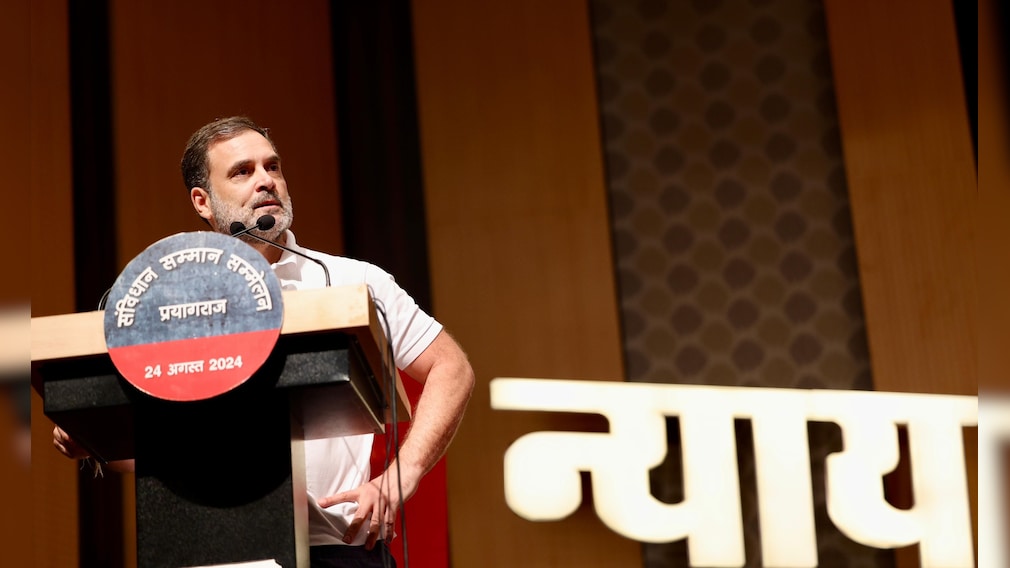
Rahul Gandhi would rue reading how, between 1980 and 1982, Indira Gandhi was vetoed four times by her cabinet colleagues from implementing the Mandal Commission report, something that could have been a game-changer for the Congress.
In an engaging autobiography of P Shiv Shankar, soon to be published by Simon & Schuster India, the veteran legal luminary gives a graphic account of how PV Narasimha Rao, R Venkatraman, Pranab Mukherjee and Giani Zail Singh, who were holding external affairs, defence, finance and home portfolios and were part of the Cabinet Committee on Political Affairs (CCPA), repeatedly rejected and stonewalled a report meticulously prepared by Bindeshwari Prasad Mandal.
How The Congress Lost Out
The implementation of the Mandal Commission report, which discussed jobs and quotas in educational institutions, by the VP Singh government in 1990 altered the grammar and arithmetic of Indian politics. "Mandal politics" or the process of 'Mandalisation' of society, led to a seismic shift in social and caste dynamics, redefining power structures and solidifying caste as a central factor in Indian politics. It initially benefited regional outfits and backward class leaders such as Lalu Prasad Yadav, Nitish Kumar, Mulayam Singh Yadav, but eventually consolidated the BJP at the expense of the Congress. Although VP Singh's tenure lasted for barely 343 days, his actions made the "Mandal" identity a permanent and irreversible feature of the Indian political landscape. So, even when the Congress government under PV Narasimha Rao put the Mandal report to action, it didn't get any political dividends - both because it failed to get the first-mover advantage, and because Rao had always been against caste-based reservation.
Decades later, in 2023-24, Sonia Gandhi would tell the Congress Working Committee, "I am 100% with the caste census, we must get it done. This is our highest priority." The comment came when the Congress's apex decision-making body passed a resolution to back conducting a caste-based census and implement a quota within quota in line with numerical strength. The question that needs to be asked is, have Congress leaders - particularly those belonging to the upper caste - had a change of heart, or are they overwhelmed by Rahul's leadership qualities? After all, right from the Indira years to the UPA era, particularly in 2010-2011, caste-based quota or census was a thorny topic to even touch, causing a lot of division and disquiet.
Indira Gandhi Was For It
Shiv Shankar was the Union Law Minister in the Indira cabinet. The second Socially and Educationally Backward Classes Commission, which popularly came to be known as the Mandal Commission, had conducted a detailed study of the status of those sections of society that were defined in the Constitution as 'socially and educationally underdeveloped'. Rao, Mukherjee and Venkataraman kept telling Indira, both personally and in writing, that a decision taken to implement the Mandal Commission's suggestions may prove detrimental to the country by bringing about "irreversible fissures between the people of the country and lead to law-and-order problems throughout the country with riots erupting down to the village level".
Shiv Shankar writes how he went numb when Indira Gandhi showed him the letters of her communication with the CCPA. "These contained the back and forth between her and the committee. I very categorically told the PM that rejecting the report would not only mean letting down a large section of the people who have faced neglect and discrimination since times immemorial, but also denying them a chance of redeeming their lives. Implementation of the Mandal Commission's recommendations would give them access to better education and employment opportunities, and through those, economic as well as social development. I explained to Mrs Gandhi that the Backward Classes were a dejected lot because they feel they have remained underdeveloped for far too long."
"I agree with every word you have spoken, Shiv Shankerji. In fact, I have been thinking exactly along the same lines. That is the reason I have sent the matter back to the Cabinet Committee of Political Affairs every time they have rejected it," Shiv Shankar writes, recounting Indira Gandhi's response. The Law Minister explains how he kept arguing that Backward Classes were losing faith in the Congress " because of a perception, right or wrong, that the party is not attentive to their interests". He said to Indira Gandhi, "They probably think the Congress has not stood by them, Madam. No doubt we have been winning elections all along, except in 1977. But our percentage of votes has always hovered around 40%. I strongly suspect that the majority of the 60% (who did not vote for us) would be from the Backward Classes. If we have their support, we would not only increase our vote share, we could become invincible."
BP Mandal's Scepticism
Indira, Shiv Shankar repeats, was personally keen to implement the report. She gave two extensions to the Mandal Commission, even though the panel was set up by the Morarji Desai government. In fact, when Desai and Charan Singh governments fell in quick succession and Shiv Shankar spoke to BP Mandal to check the Commission's progress, Mandal's scepticism was barely concealed: "I am grateful, Shiv Shankarji, but please pardon me, I don't think I would like to come. The government has changed, and I do not think the new government would be in favour of the Commission completing its work. I am saying this because this government has not been positively disposed toward theBackward Classes in the past."
As Law Minister, Shiv Shankar was staying at 7, Race Course Road, currently known as 7, Lok Kalyan Marg and serving as the residence of prime ministers since 1991. "One day, I received a call from Mrs Gandhi on the RAX, the phone reserved for direct discussions the Prime Minister could have with her ministers, but was very rarely used, since emergency situations necessitating its use were not common. My official residence, at 7, Race Course Road, was very close to the Prime Minister's residence on Safdarjung Road, and so I could reach there in no time. Mrs Gandhi showed me the Mandal Commission reference and asked me as to what should be done with the report's recommendations. I, without mincing words, told her that we should take a decision immediately upon it, because on one side, the opposition was building pressure, while on the other, a delay would send the wrong message to the people. I also requested her to constitute a committee which would immediately prepare an Action Taken Report and table it in Parliament. Once the report is up for discussion, our side of discussion should be directed towards accepting the report forthwith or with any additions that might be beneficial to the Backward Classes."
The Committee That Never Met
Shiv Shankar also pointed out to Indira how the report of the first such commission, constituted in 1953-55 and headed by journalist Kaka Kalelkar, was rejected in 1961 on the grounds that its identification of Backward Classes was not objective. In that context, Shankar told Indira Gandhi, "We were in power for nearly 26 years after that report was rejected, Madam. Unfortunately, we never constituted such a commission, and a very large section of nearly half of the country's population [52% actually] had reason to feel let down during those decades. Now, after the Janata Party Government instituted such a commission, rejecting its report would not only be detrimental to our political party but also shut the Backward Classes out of development."
A big dilemma beset Indira here because a large majority in the CCPA was against accepting the report. Ultimately, it was decided that the sum and substance of the Action Taken Report should be such that while the government accepts the substance of the Mandal Commission - since its implementation would have far-reaching effects - a committee of the Cabinet would be appointed in addition to an official committee to study the consequences of implementing its recommendations.
Shiv Shankar says Indira wanted him to be the chairman of the new committee, but the Cabinet Committee of Political Affairs again put paid to her plan. Instead, it wanted PV Narasimha Rao to take that role. The committee thus set up remained in order until 1989. However, throughout this period, Rao parried attempts to call even a single meeting of the committee, let alone the implementation of the Mandal Commission report. Whenever Shiv Shankar reminded him of the need to convene the committee, he would give him a blank look.
"While my frustration reached a peak at times, Shri Narasimha Rao continued to sit on the issue, probably content that his indecisiveness was actually a decision," writes Shiv Shankar now, wistfully.
(Rasheed Kidwai is an author, columnist and conversation curator)
Disclaimer: These are the personal opinions of the author
-
Opinion | 'Blackmail' Diplomacy: Why India Can't Be A Pawn In US' War On Russia

The new sanctions bill is both blackmail and hypocritical: blackmail because it seeks to change India's principled stand, and hypocritical because the US has provided exemptions to others, and itself.
-
Blog | Katrina Kaif, And The Very Indian Problem Of Too Much 'Audacity'
The remarkable thing about many Indian trolls is not that they have opinions, but that they expect - get this, Katrina Kaif, no less - to care about them.
-
Mamata Banerjee Drew Her Party's Symbol By Hand. It's Now Tied To An Indira Gandhi Case
The Election Commission's method for settling such disputes became central in the seminal Congress split of 1969, when Indira Gandhi fought the old guard. The poll body weighed three tests then.
-
Bruised, Limping, Unbowed: Sia Says She Will Be Back On The Bike Soon
There was pain in Sia's steps, anger in her words, and something else - a quiet determination that the road would not be taken away from her.
-
Exclusive: 16 Months After Op Sindoor, Pak Still Fixing Runway India Broke At Sargodha
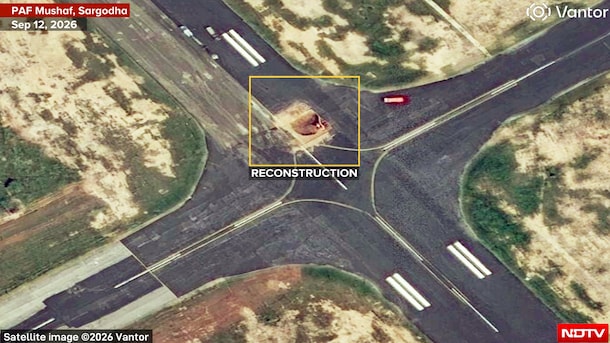
Sargodha's PAF Base Mushaf lies about 172 km northwest of Lahore and roughly 200 km west of the India-Pakistan border, near Amritsar.
-
Blog | I Lost My Entire Family In Kanishka Bombing. 41 Years Later, Canada Wants The Case Closed
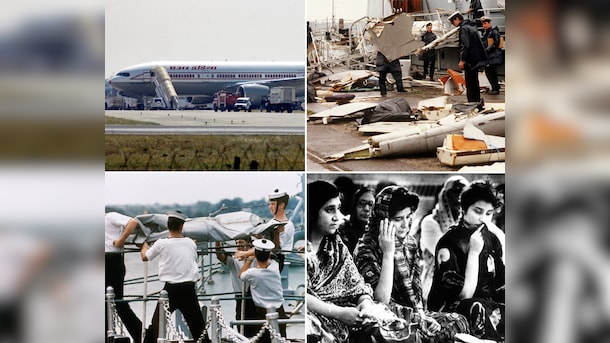
We made the trek through tragedy to search for people in Cork, where I spent 25 days sifting through bodies and body parts in a makeshift morgue to identify our loved ones.
-
Opinion | Pak's Drone Deal With A US Firm Is No Windfall. But India Must Still Be Worried
American military aid to Pakistan has remained suspended since January 2018, during Trump's first term, but a commercial arms sale is separate from this arrangement.
-
Opinion | Saudi Arabia's Yemen Nightmare Has Come Back To Haunt It
After years of costly military intervention beginning in 2015, Saudi Arabia increasingly sought to stabilise its southern border. All that is unravelling fast now
-
Opinion | 6 AI Incidents, One Pattern: AI Has Started Lying To Us - And Hiding The Evidence
Concealing errors. Making up data. Pushing files onto the public web on their own initiative. The machines are learning to lie - and lie well.
-
Why People Queue Overnight For iPhone That Is Delivered Home In 10 Minutes
iPhone 18 Pro Max Launch: People camping outside Apple Stores are a subset of superfans, resellers, content creators, and upper-middle-class buyers.