Opinion | PNS Hangor: Inside The $5 Billion Submarine Fleet Pakistan Is Buying From China
With the commissioning of PNS Hangor, what is no longer open to debate is the proposition that any future India-Pakistan conflict, in terms of force composition, will be a proxy engagement involving Chinese military technology.
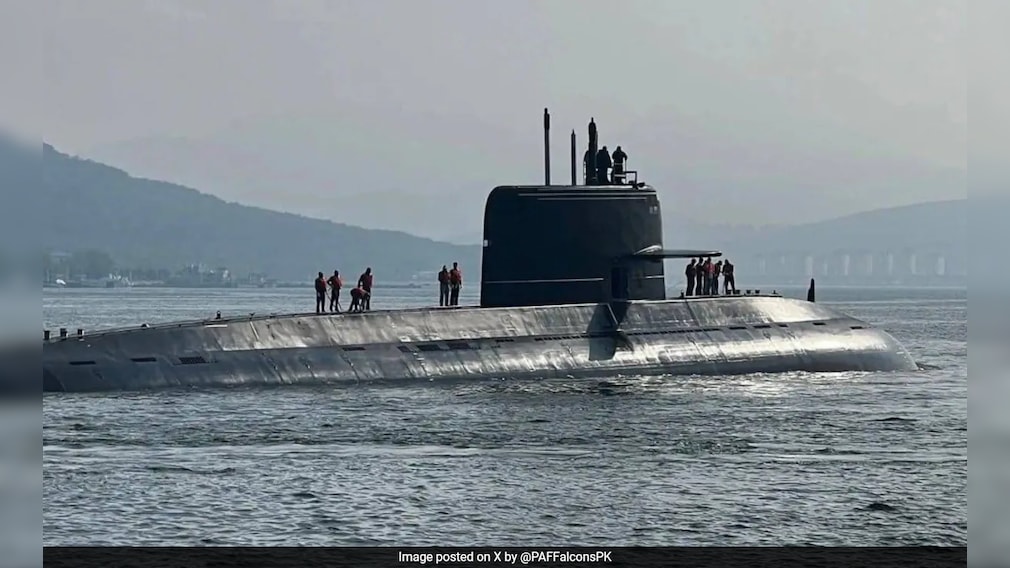
China and Pakistan have once again demonstrated the strength of their all-weather and cross-domain defence partnership. On April 30, 2026, a bay in China's Sanya city hosted Pakistan's President, Asaf Ali Zardari, and Chief of Naval Staff, Admiral Naveed Ashraf, where the two sides celebrated the commissioning of the first of four Chinese-built diesel-electric attack submarines to be transferred to the Pakistani Navy. It is part of an eight-unit set, of which the other four will be produced in Pakistan. And even though on May 9, Senior Colonel Jiang Bin of China's Ministry of National Defence called it a "normal equipment cooperation between China and Pakistan", the milestone essentially marks the beginning of sustained co-production of this Hangor-class of submarines for the Pakistani Navy, thereby embedding Chinese offerings in Pakistan's military and defence industry.
The Numbers Speak For Themselves
Between 2020 and 2024, China supplied 81% of Pakistan's arms imports, up from 74% in the previous five-year period, per SIPRI data. Similarly, Pakistan absorbed roughly 61% of all Chinese arms exports between 2021 and 2025, making it Beijing's largest defence customer by a vast margin, with Serbia and Thailand a distant second and third at under 7% each. The Hangor programme alone is valued at approximately USD 5 billion for eight units. Three other submarines have been launched between April 2024 and December 2025, while four more are at various stages of construction at the Wuchang Shipyard in Wuhan or in assembly at Karachi Shipyard and Engineering Works under a transfer-of-technology arrangement.
What is interesting about the Hangor model, which involves partial Chinese manufacturing and partial Pakistani assembly with a full technology transfer, is that it is built on the shoulders of deep lock-ins and interlinkages created by previous such programmes, such as the JF-17 Thunder. Its three Block variants are produced by the Pakistan Aeronautical Complex at Kamra, which holds a 58% workshare. Other examples of successful defence industrial cooperation between Islamabad and Beijing include the NORINCO VT-4 main battle tanks, which were initially imported, and the 'Haider' indigenous variant was subsequently built around Chinese IP, as well as the Wing Loong II UAVs, which are now being co-produced by PAC Kamra and the Chengdu Aircraft Corporation (CAIG).
A Very Close Relationship
To create operational validation environments for collaborative defence-industrial endeavours and to build a doctrinal layer, China and Pakistan regularly conduct the Shaheen joint exercise for air operations, the Sea Guardians exercise for naval operations, and the Warrior drills for ground counter-terrorism cooperation. Emerging also is an informational and technological dual-use backbone, enabled by an 820-km Huawei-built fibre-optic cable from the Chinese border to Rawalpindi, and the latter's military-grade access to BeiDou. Pakistan remains the only country outside China publicly confirmed to have it. Top-tier Chinese defence SOEs also help Islamabad gain technological advantages, for example, through the China Electronics Technology Corporation (CETC), helping it run a National Centre for Quantum Computing in Narowal.
As India-Pakistan hostilities of May 2025 recently marked their one-year anniversary, it is useful to remember how Chinese-origin systems were deployed at scale during Pakistan's Operational 'Bunyan Ul-Marsoos'. These included J-10CE fighters, PL-15E beyond-visual-range missiles, HQ-9 and HQ-16 air defence batteries, and Wing Loong drones. Chinese commentators were quick to amplify the hostilities as a contest between Pakistan-operated Chinese systems and India's mixed indigenous, French, Israeli and American hardware. With the commissioning of PNS Hangor, what is no longer open to debate is the proposition that any future India-Pakistan conflict, in terms of force composition, will be a proxy engagement involving Chinese military technology and tactics in both the air and naval domains.
For India, what is noteworthy is that the Hangor submarines, combined with four Chinese-adopted Tughril-class frigates and the China Overseas Port Holding Company's operational rights at Gwadar, give Pakistan, and, by extension, China, a sustained Arabian Sea presence that supplements Djibouti, the soft-basing at Ream and the Coco Islands, and the regular dual-nature civilian-scientific research-vessel excursions in waters near India. Further, confidence in the co-production model creates guardrails against sanctions, delivery delays and supply shocks, and it necessitates that India build comprehensive, layered defence-industrial alternatives of its own.
(Anushka Saxena is Staff Research Analyst with the Geostrategy Programme at the Takshashila Institution. Views expressed in this article do not represent those of the institution.)
Disclaimer: These are the personal opinions of the author
-
The Missile Is Dead. Long Live The Map: How Iran Invented 'Future Of War'

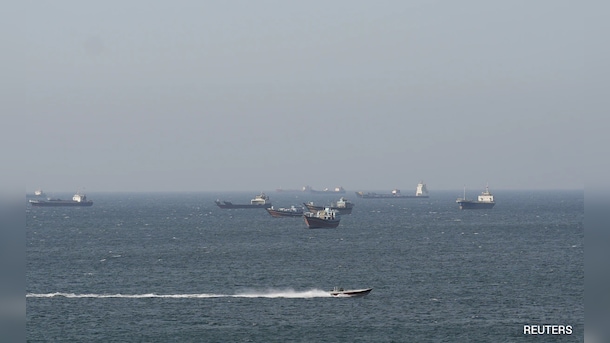
Iran's weaponisation of the Strait of Hormuz - squeezing energy flows and simultaneously threatening subsea cables - has re-introduced the world to structural leverage warfare and marked it as the future of conflict.
-
Opinion | The Beijing Spectacle: Two Weary Giants Carve Up Their Share Of The World
Rather than fighting to the death for absolute global hegemony, Washington and Beijing are learning to partition the global commons - with the rest of the world forced to watch from the periphery.
-
As Customers Seek New Experiences, Do Brand Loyalty Discounts Still Work?
Across hospitality, retail, fintech and travel, the message is the same: customer loyalty is shifting from transactions to relationships.
-
'Delhi Ab Door Nahi': How The 90-Minute Radius Is Rewriting NCR Growth
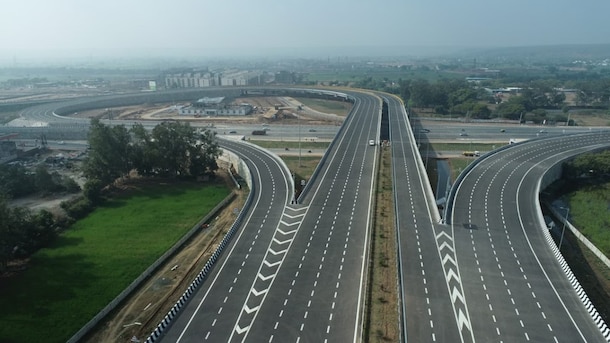
Thanks to a wave of new expressways, rapid transit projects and metro expansions, Delhi is no longer distant in mind or movement from its satellite towns.
-
Blog | Yahya Khan To Munir, The Curious Pak Factor In Every US-China Thaw
History suggests that whenever Washington looks toward Beijing during moments of global upheaval, Islamabad finds a way back into the game.
-
Opinion | PM Modi Lands In UAE Amidst A Saudi 'Complication'
The UAE is getting disenchanted with Pakistan. And its rivalry with Saudi Arabia has only brought these fissures to India's doorstep.
-
Oil Companies Losing Rs 1,600 Crore Daily. Will Rs 3 Petrol Hike Be Enough?
OMCs' production costs have "gone through the roof in the past month", Petroleum Minister Hardeep Singh Puri said last month after the governemnt cut central excise taxes to ease burdens.
-
NDTV Exclusive: A Catastrophe Captured By Satellites, Ignored By The World
In Darfur, the violence that once mobilised international outrage in the early years of the civil war, has returned in a form many here insist never truly disappeared.