Blog | Goodbye, South Block: From Child Visitor To Secretary, The Corridors That Made Me
It was 1951. My mother had just joined the Government of India as a mid-level officer, three years after independence. Decades later, I would serve in the South Block. Today, they are repositories of a 75-year-long history - personal and national.
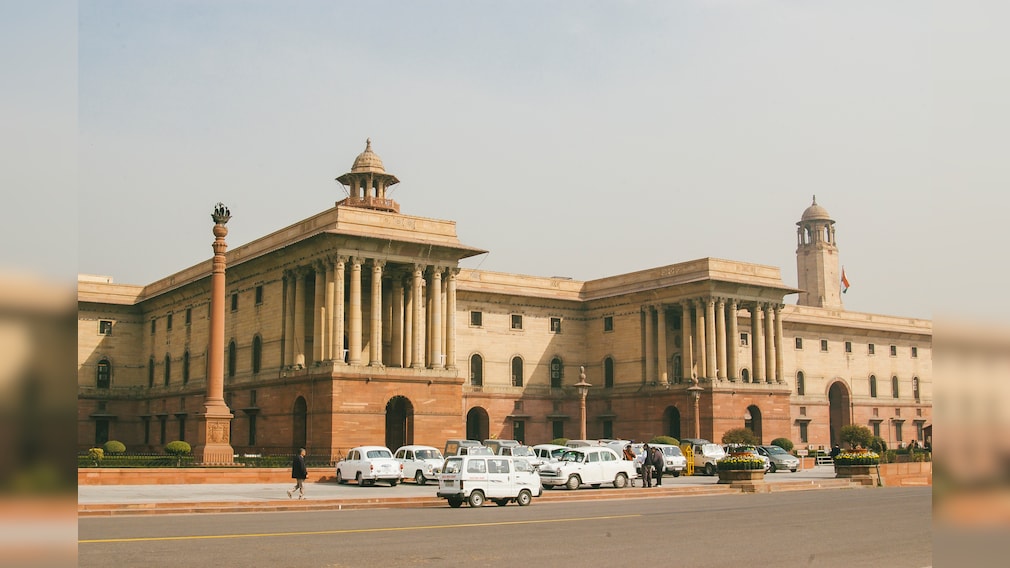
It was 1951. I was seven years old when I first climbed the sandstone steps of the North Block. My mother had just joined the Government of India as a mid-level officer, directly recruited three years after independence and posted in the Ministry of Home Affairs. I had joined my mother coming from a middle-class locality in Mumbai, and a Marathi education. That ascent, my small hand trailing against the cool pink, stone, head craned upward - was my first encounter with the architecture of authority. And to see her name, Lilla Wagle Dhume, in brass lettering outside her room on the first floor. Did my 'Ai' really work here?
Even at that age, I was struck by how regal it all looked - imposing without being ostentatious - solid, symmetrical, so certain of its place. Occasionally, I would visit my mother's room overlooking the then Rajpath and sit as quietly as possible, absorbing the movement of the turbaned peon carrying files, the low-hanging ceiling fan, and the murmur of officialdom.
A Story About My Mother, Too
This is not only a story about buildings; it is about my mother. I remember her Kanjivaram sarees, her flared woollen coat, and her high-heeled brown shoes - elegant, dignified and purposeful. For sixteen years, she worked in North Block. As I grew older, I began to understand that she had issued letters of appointment on behalf of the Government of India to the earliest batches of the Indian Administrative Service - a new steel frame for a new republic. In those years, the corridors still carried the cadence of the ICS era, but the files bore the urgency of a nation finding its administrative voice.
North Block and South Block had been built as part of the great imperial capital of New Delhi in the early decades of the twentieth century. But after Independence, their meanings quietly shifted. What had once symbolised imperial command had become the nerve centre of a democratic state. The same domes and colonnades now framed decisions taken in the name of "We, the People".
Years later, history completed its circle. I joined the Ministry of Defence as a Director. My room was in South Block, on the side facing the Ministry of External Affairs. Beyond lay the Prime Minister's Office and the Cabinet Secretariat.
If North Block had impressed me as a child, South Block took my breath away as an officer. The corridors were lined with red coir matting stretching endlessly from one end to the other. It took ten minutes to walk from my room at one end to that of the Defence Secretary - distance measured not only in steps but in hierarchy.
Those Power Corridors
I remember the wood-panelled walls of the Defence Secretary's office, where I was called in with fellow officers. I remember the inside of the offices of SM Ghosh and PK Kaul. I also remember the office of the Raksha Mantri, R Venkataraman, especially during Parliament sessions. We were expected to have every fact at our fingertips - not to brief the Minister directly, but through the Joint Secretary. My boss was Bhaskar Ghose, who never lost a moment puncturing pomposity by imitating the most powerful - behind their backs! Nonetheless, there was an unmistakable atmosphere inside those corridors - not pomp, not intimidation - but a consciousness that decisions taken in these rooms affected our armed forces and our soldiers stationed on icy frontiers and their families in distant cantonments. As a mere Director, I had to handle free rations to the armed forces in non-field stations, a decision already taken, but because my seniors were on tour, the Defence Secretary PK Kaul entrusted it to me as it came under the Adjutant General's branch, which was part of my area of civilian responsibility. We worked very late, putting the last vestiges to a decision already taken but still not announced, and it was I who carried the file to the Prime Minister's office.
Then there were the visits to the Cabinet Secretariat. Officers climbed another sandstone staircase - a smaller one - and waited to be called in, while looking out at the courtyard facing Rashtrapati Bhavan. Secretaries to the Government of India, called by the 'CS', as he was referred to, waited there, as did officers who had secured an audience with the Cabinet Secretary.
The Many Faces From PK Paul To TSR Subramanian
The CS's room itself was surprisingly modest - a small square chamber with no elaborate trappings. No theatrical display of authority. It was a quiet reminder that power does not need ornament; it simply exists. Over decades, I attended dozens of meetings there, as Joint Secretary, Additional Secretary, and eventually, Secretary. I saw many Cabinet Secretaries come and go.
There was PK Kaul, dignified even when crossing the road. TN Seshan, whose sharp eye once startled me by appearing to read a file I was carrying - upside down - though it had nothing to do with him. VC Pande, bachelor and blunt, known for remarks that startled as much as they amused. Another confirmed bachelor, Naresh Chandra, the doyen of the civil service and the most looked-up-to officer in our time. The dapper Prabhat Kumar. The voluble TSR Subramanian. Each left a distinct imprint of personality upon that small, unadorned room.
Through all my years in government, I never once entered the Prime Minister's Office itself. Yet, I was summoned several times by different Principal Secretaries to the Prime Minister - Satish Chandran, AN Verma and SK Misra. The room was rather cramped, but it signified the last word for government.
These were not glamorous spaces. They were cramped and austere. But they held memory, continuity, and the quiet weight of decision-making. In winter, the sandstone seemed to absorb the fleeting Delhi sun; in summer, the long corridors echoed faintly with footsteps and the distant ring of telephones - sounds that became the background score of governance.
A Gentle Ache
Today, as ministries prepare to move into newer, more efficient complexes, I feel a gentle ache. Progress is necessary; governments must evolve. Yet, for those of us who spent decades within those sandstone walls, the old buildings were not merely workplaces. They were repositories of history - personal and national.
From a seven-year-old girl gazing in wonder at North Block, to a senior officer attending meetings in the Cabinet Secretariat, my memories can be measured against the interiors of North and South blocks.
The sandstone may have given way to glass and steel. But for me, nothing can replace the quiet strength of the seat of government as I first saw it - and as I served both as a long-time visitor and as an inhabitant for nearly six decades.
Good wishes to the sewa that will hopefully follow in its spirit of Nishkama Karma! Duty for duty's sake.
(The writer is a former Chief Secretary, Delhi, and former Secretary, Ministry of Health)
Disclaimer: These are the personal opinions of the author
-
Blog | The Dantewada Massacre, And What India Needs To Do To Stay Maoist-Free

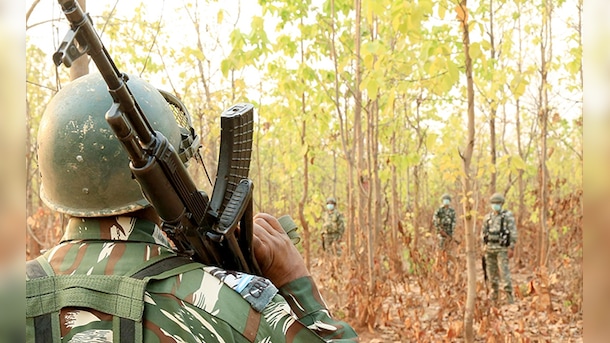
In 2010, I was Assistant Chief of the Air Staff controlling transport aircraft and helicopters, and on April 6 that year had to arrange An-32 aircraft to carry coffins of 75 CRPF jawans.
-
Opinion | How Iran Has Pierced The One 'Shield' That Protected America For 30 Years
In the past, US campaigns in Iraq, Afghanistan and Libya were conducted against relatively weak air defences. That has not turned out to be the case with Iran, puncturing the long-held myth of America's 'indomitable' air power.
-
Opinion | The Quiet 'Upheaval' Within US Military Over The Iran War
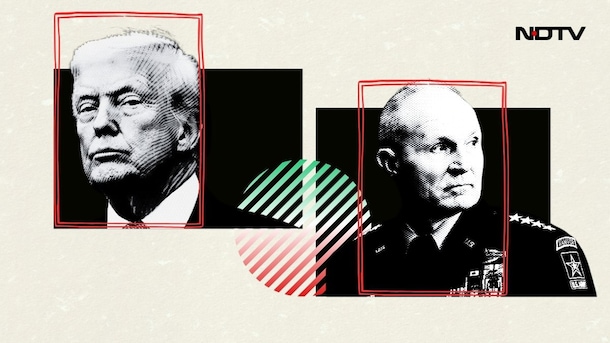
General Randy George's ouster carries echoes of a similar episode in 2003, in the run-up to the Iraq war. But much more is happening within the US military, courtesy Hegseth.
-
How Iran Sucker-Punched Trump Into 'Escalation Trap' 'Hellhole'
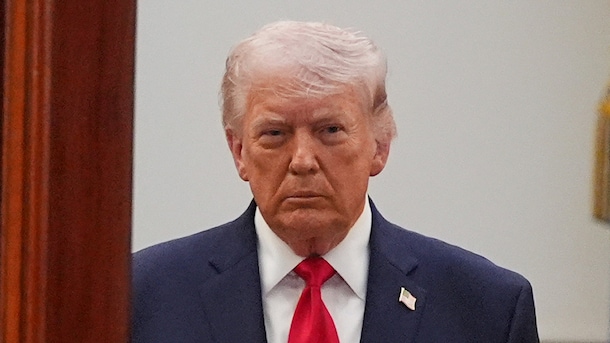
Trump is now under pressure, not just from allies but also within; the President's approval rating is the lowest it has ever been with mid-term elections in November.
-
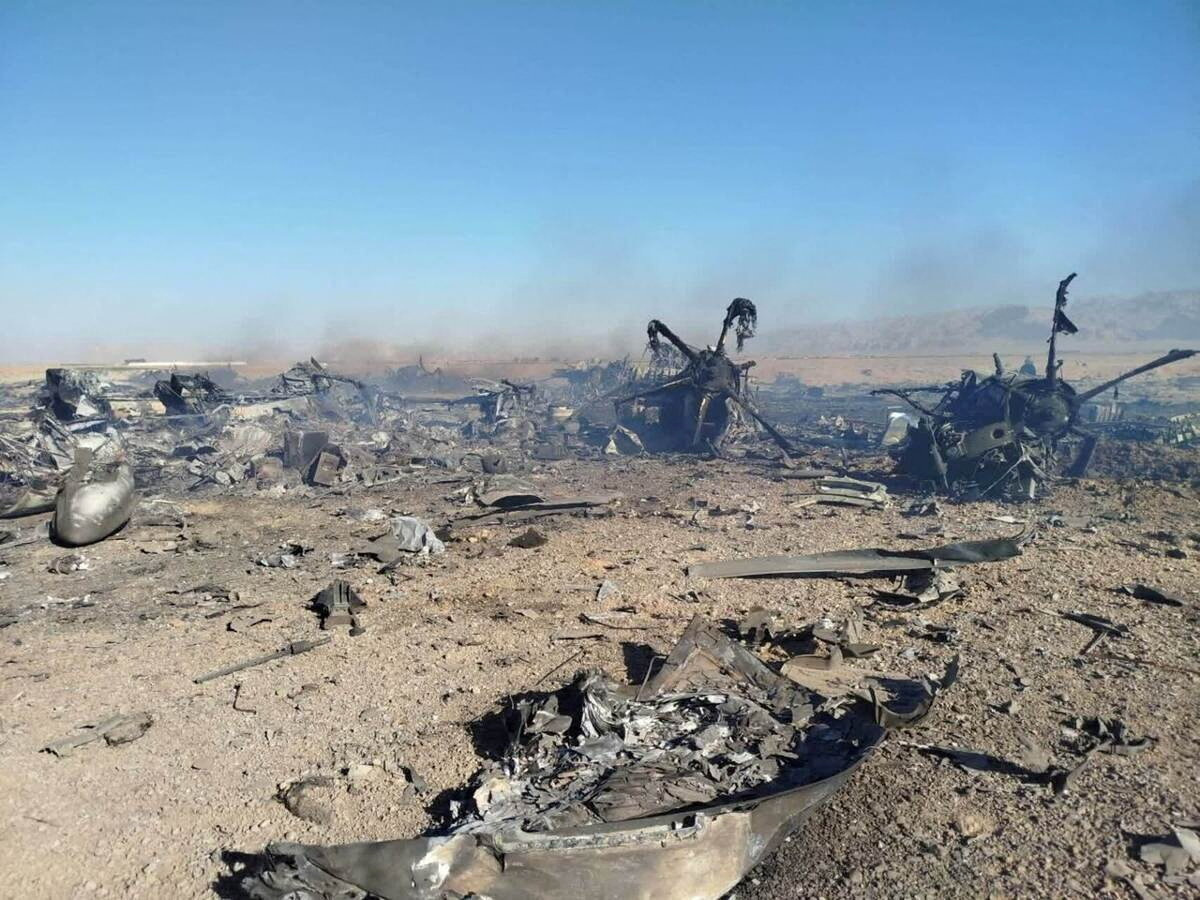
Eagle Down: How US Carried Out Precision Search And Rescue Op In Hostile Iran
How the United States transformed a tactical failure into a narrative of national resolve.
-
Opinion | 450 Missile, 2,000 Drone Attacks Later, Why Is UAE Still Not Fighting Iran?
The UAE is Iran's second-largest trading partner and also home to roughly half a million Iranians. Why, then, has it absorbed more fire than any other Gulf state?
-
In Numbers: How Has India Kept Fuel Prices Low Even As Europe Sees 70% Spikes?
India imports 88% of its crude. Why then is it not seeing massive price hikes for fuel and LPG? Inside the unique strategy it's following...
-
Opinion | India Just Decided To Let Chinese Capital In Again. But There's A Catch
In March 2026, India eased regulations that had restricted Chinese capital in local companies, in a development that marks New Delhi's cautious approach towards capital flows from Beijing.
-
Trump's Iran 'Knocked Out' Claim Blown Up By US Intel On Missiles, Drones
Donald Trump claimed this week the war would end in two to three weeks as he threatened to send Iran back to the Dark Ages. But based on these reports the fighting is far from over, even if US President wants to push a contrary narrative.
-
Opinion | Rs 30 Petrol Hike To Currency Crisis, What Oil At $150 Can Really Do To The World
At $125 per barrel, petrol and diesel retail prices will need to rise by Rs 8-14 per litre. At $150 - which experts think is now likely - these figures could touch Rs 26-30 per litre.