Opinion | 'Pasni' Offer Proves Pak Can Betray Anyone - Even China - For A Deal
China has consistently supported Pakistan - diplomatically, economically, and militarily - even during Islamabad's periods of isolation. Yet, despite this "iron brotherhood", Pakistan's recent moves show that loyalty in Islamabad is negotiable.
Pakistan's reported proposal to grant the United States a development and management role at Pasni Port, as revealed by the Financial Times, marks one of the most consequential geopolitical developments in recent years. Situated along the Arabian Sea, just 70 miles from China-operated Gwadar Port, 100 miles from Iran, and approximately 178 miles from India's Chabahar Port, Pasni's geostrategic position places it at the intersection of major regional rivalries involving China, India, Iran, the United States, and other key actors such as Saudi Arabia and Gulf investors. The port's location also has implications for Afghanistan, Central Asia, and broader maritime security in the Arabian Sea and Indian Ocean.
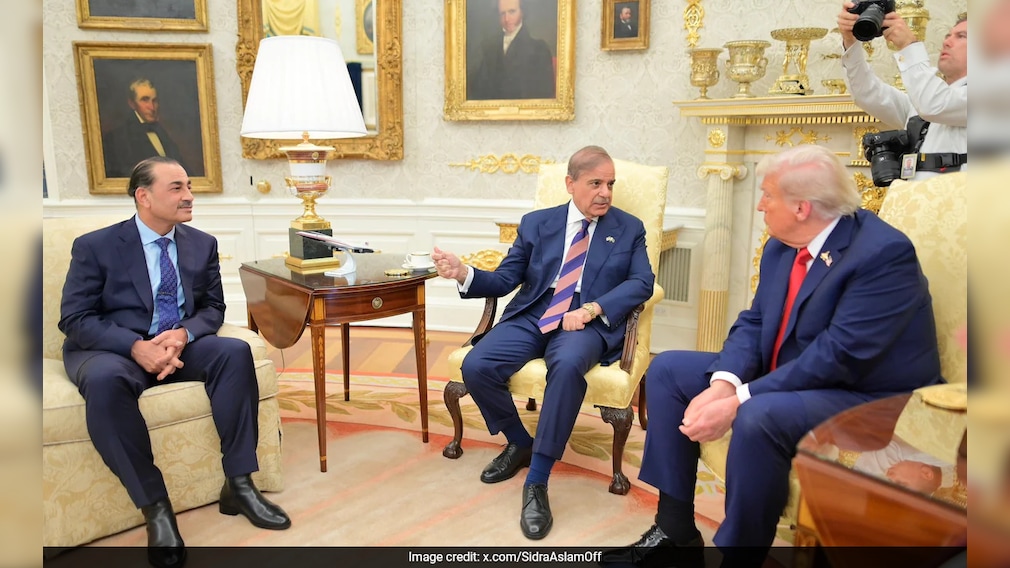
The development follows the meeting between Prime Minister Shehbaz Sharif, Army Chief General Asim Munir, and US President Donald Trump on September 25, 2025, signaling a potential new phase in US-Pakistan geostrategic engagement. The proposal, which had already been floated and discussed with US officials prior to the meeting, is part of Islamabad's broader attempt to diversify its foreign partnerships, move beyond exclusive dependence on Beijing, and attract US, Iranian, and Saudi investments amid its deepening economic challenges. While the plan is significant, it remains exploratory, with no formal agreement yet confirmed by either Pakistan or the US. However, if this proposal were to materialise, it would constitute a geopolitical earthquake, reshaping power dynamics in this region and carrying implications beyond it.
The New Strategic Pivot
The blueprint envisions transforming Pasni - currently a modest fishing town - into a strategic logistics and mineral export hub. The project will link the port to Balochistan's vast mineral reserves, including the Reko Diq copper and gold mines, through a new railway network. Estimated to cost $1.2 billion, the project is expected to be financed through a combination of Pakistani federal funds and US-backed development finance.
The US interest in Pasni is both economic and strategic. According to the Financial Times report, the port will serve as a gateway for exporting critical minerals such as copper, antimony, and neodymium - key inputs in battery technology, missile production, and advanced electronics. On September 8, 2025, Pakistan exported a small trial shipment of these minerals to Missouri-based US Strategic Metals (USSM), following the signing of a $500 million memorandum of understanding with Pakistan's Military Engineering Corps. The partnership, aimed at developing and refining Balochistan's critical mineral resources, marks a major step in expanding US-Pakistan economic engagement. USSM's commercial director, Mike Hollomon, described the collaboration as an effort to "rekindle a dormant friendship" between Washington and Islamabad.
Strategic Blow to China's CPEC Vision
For China, the Pasni development represents a strategic setback. The port's proximity to Gwadar - the flagship of Beijing's China-Pakistan Economic Corridor (CPEC) - directly undermines China's long-term strategic objectives in the Arabian Sea. The US presence in Pasni would not only counterbalance Gwadar but could also reduce Beijing's leverage over Pakistan's critical infrastructure and mineral supply chains. Over the years, China has invested over $60 billion in CPEC, deploying personnel, technology, and capital to secure a reliable trade and energy corridor to the Arabian Sea. Many Chinese workers have lost their lives in Balochistan to terrorist attacks while working on these projects. Pakistan's move to invite American strategic and commercial involvement so close to Gwadar amounts to a significant betrayal of Beijing's trust. Earlier, the US and Pakistan signed a mineral deal in Balochistan - a region where China already has substantial investments and stakes, including the Saindak Copper-Gold Mine and the Reko Diq copper and gold project. This demonstrates Islamabad's willingness to prioritise immediate financial incentives from Washington over long-term commitments to Beijing, particularly after China indicated it could not fund certain sections of CPEC, after which Pakistan turned to the Asian Development Bank (ADB) for funding.
The reality is stark: the United States and China remain geostrategic rivals in the region, and it is inherently unnatural for two competing powers to coexist within the same strategic space. By aligning with the US in Pasni, Pakistan not only undermines Chinese interests in Balochistan and the Arabian Sea but also signals a transactional approach to its alliances, leveraging dollars from Washington when Beijing cannot meet Islamabad's immediate needs. For China, this should be a moment of strategic reckoning: a reminder that Islamabad's loyalty is contingent, guided more by short-term economic gain than by enduring partnership.
Regional Implications
The implications of the Pasni deal extend far beyond Pakistan and China.
For India, this development could complicate strategic connectivity projects such as Chabahar Port in Iran, which lies just across the border from Pasni. Notably, the US recently revoked sanctions waivers for Chabahar, signalling waning American support for India's westward connectivity efforts and its broader strategic interests in the region. At the same time, a US presence at Pasni advances American interests in the Arabian Sea and indirectly strengthens Pakistan by providing Islamabad with enhanced strategic confidence and leverage. While India and the US are strategic partners in the Indo-Pacific, strategic cooperation between the US and Pakistan carries fundamentally different implications. A US foothold at Pasni may allow Washington to reassert its influence in the region, but it could also institutionalise US-Pakistan defence engagement and boost Pakistan's geopolitical confidence, strengthening its position vis-à-vis India.
Moreover, an American presence at such a strategic location at the mouth of the Arabian Sea - where India has vital maritime and energy interests - carries significant implications for regional power dynamics, simultaneously undermining India's connectivity initiatives while advancing US and Pakistani interests, thereby posing new challenges for New Delhi.
Pressure Builds On Iran
For Iran, the move is alarming. Pasni provides Washington with a potential maritime platform to monitor or pressure Tehran's coastal infrastructure and shipping lanes. The port's location would also enhance US operational flexibility in the event of any regional conflict involving Iran.
For Afghanistan, the development may herald a new era of US re-engagement. Reports suggesting that Washington is considering re-establishing access to the Bagram Air Base indicate a broader military recalibration. A US logistical node at Pasni would significantly improve its ability to project power across Afghanistan and the Persian Gulf - while using Pakistan's geography as a strategic launchpad.
Islamabad has framed its Pasni initiative as an exercise in "strategic diversification". However, it appears more as a calculated geopolitical gamble. Historically, Pakistan has aligned with whichever power offers the most financial or military benefits - from being a US Cold War ally to joining China's Belt and Road Initiative, and now seemingly swinging back toward Washington.
Whither The 'Iron Brotherhood'?
While such balancing may bring short-term rewards, it often results in long-term instability. China has consistently supported Pakistan - diplomatically, economically, and militarily - even during Islamabad's periods of isolation. Beijing provided critical aid, defended Pakistan at multilateral fora, and backed its security interests vis-à-vis India. Yet, despite this "iron brotherhood", Pakistan's recent moves show that geopolitical loyalty in Islamabad is negotiable.
The US entry into Pasni marks a decisive moment in Asia's geopolitics. It represents not just an economic collaboration but a strategic realignment with the potential to reshape power dynamics across the Arabian Sea, Central Asia, the Gulf, and beyond. For the US, Pasni offers a dual advantage - access to critical minerals and a strategic maritime presence near Iran, the Gulf, and Chinese infrastructure. For Pakistan, it provides short-term relief and renewed American attention. For China, however, it is a strategic nightmare - a symbol of betrayal that undermines years of investment and trust.
In the final analysis, the Pasni development underscores a fundamental truth of geopolitics: in an age of great-power rivalry, alliances built on interest rather than trust seldom endure.
(The author is an Associate Research Fellow at the International Centre for Peace Studies, Adjunct Fellow at the Peninsula Foundation, and Visiting Faculty at Nalanda University, Rajgir, Bihar.)
Disclaimer: These are the personal opinions of the author
-
Opinion | Slurs, Threats, Now A Temple Attack Plot: When Did America Become So Hostile To Indians?

The rising tide of anti-India, anti-Hindu, and racist attacks serves as a stark reminder that economic prosperity does not automatically guarantee social immunity from bigotry.
-
A Step Behind Neha Bora: What Rahul Gandhi's Gesture Says About Congress' Gen-Z Pitch
At INDIA bloc's march to Supreme Court, Rahul Gandhi placed himself a step behind two women, hands resting on their shoulders. One was his sister Priyanka. The one on his right was Neha Bora. Here's what the image means for the protest wave now, and for Rahul's politics in general.
-
Opinion | Imran Khan, And The Perils Of Having An 'Opinion' In Bollywood
The reality of the industry is quite grimy. More often than not, its inhabitants have been fairweather friends, happy to sing the praises of whoever is in a position of authority.
-
Exclusive: India's Food Safety Problem Goes Beyond Just Dirty Kitchens - By Tukaram Mundhe
On World Food Day, Maharashtra's Commissioner of Food Safety explains why instead of taking stopgap measures, the entire supply chain in India needs to be held accountable and made transparent.
-
Opinion | India Has Enough Coal. So Why Are Power Plants Running Short? A 76 Million 'Crunch'
As of October 5, as many as 82 of the 191 thermal plants monitored by the Central Electricity Authority were in the 'critical' category
-
Opinion | Starlink, India, And Why Elon Musk Must Know His Billionaire Tantrums Won't Work
India should neither be intimidated by Musk's global influence nor distracted by his theatrics.
-
Blog | 'Baap Da Brat': Kerala Mini Cooper Crash, And Why 'Daddy' Can't Keep Saving You
There are three things you should never underestimate in India: the power of 'jugaad', the elasticity of the law, and the confidence of a 'Baap da Brat' who believes his Papa Posh can fix absolutely anything.
-
Opinion | 'Say Our Name': Why A Tiny Island Nation Wants The World To Get Its Name Right
Standing before the UN hall of nations, Naoero President David Adeang asked the world to unlearn its comfortable habits and speak a restored truth.
-
TVS Succession Row Explained: Why Venu Srinivasan's Family Is Divided Over Wealth
TVS Family Dispute: TVS Holdings is a key entity because it owns a controlling stake in TVS Motor Company. It owns 50.26% of TVS Motor.
-
Opinion | The US Is Showing India Just How Cheap Its 'Friendship' Is
Can local talent fully replace Indian contribution? Why is the US leading in setting up Global Capability Centres in India - over 60% - and pocketing the IP?