Opinion | They Sniggered At Vijay In 2024. That Was DMK-AIADMK's Biggest Mistake
The mistake the DMK and AIADMK made vis-a-vis Vijay was to underestimate him. They did not realise what he quietly took away from them in two years.
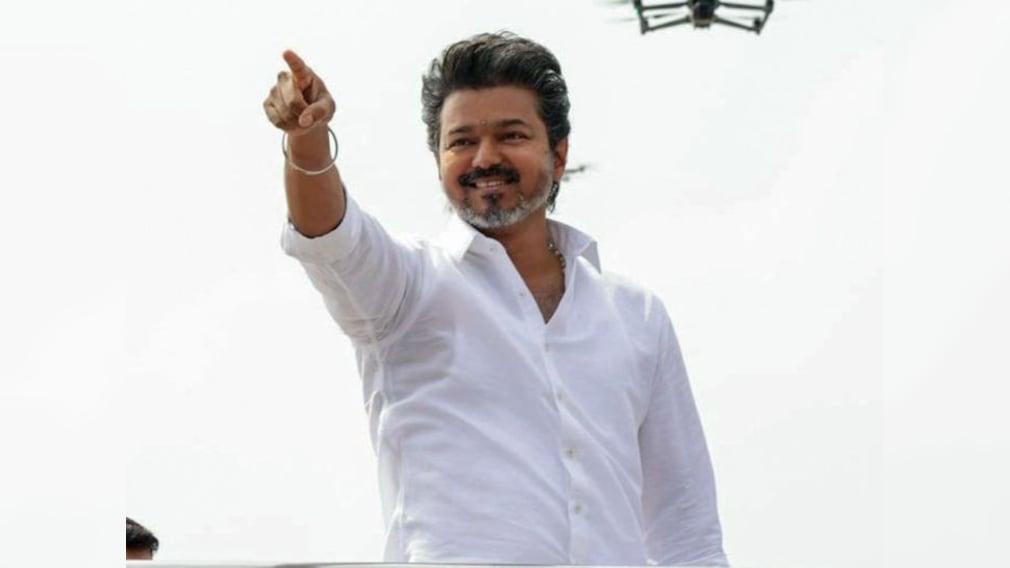
When Vijay decided to make his political foray in 2024, the DMK and AIADMK sniggered. He was dismissed as yet another actor with stars in his eyes. Not surprising because in the 2021 elections, cinema legend Kamal Haasan had flopped in a political role. As had thespian Sivaji Ganesan in the 1980s. Vijaykanth had failed to set the Cauvery on fire. Sarathkumar and Khushbu were just part of the Bharatiya Janata Party (BJP) line-up. Rajinikanth decided it was best to stay away.
Two years later, on May 4, the day 'Agni Natchatram' began - the hottest period in south India, when the sun blazes like a ring of fire - Vijay eclipsed the party of the rising sun. The two leaves wilted. 'Thalapathy' Vijay defeated 'Thalapathy' MK Stalin. The man, spoken of as the 'X' factor in the 2026 election, made Stalin an ex-chief minister.
To the untrained political eye and mind, it would be easy to dismiss the win as the vote of a starstruck electorate. Far from it. The victory of Tamilaga Vettri Kazhagam (TVK) marks the systematic dismantling of a Dravidian binary that has existed in Tamil Nadu's political space for over five decades. The verdict is proof that the state's electorate, particularly the youth, have blown the whistle on the Dravidian hegemony.
No More Waiting
In many of his movies, Vijay's punch line had been, '"I am waiting." For a state rotating between the two Dravidian behemoths, Vijay provided the alternative to NOTA. The voter, fed up with the TINA factor, now saw in Vijay a viable option, and perhaps decided to move him from the waitlist to a confirmed seat inside Fort St George in Chennai.
The mistake the DMK and AIADMK made vis-a-vis Vijay was to underestimate him. They did not realise that he quietly took away their icons - Periyar, CN Annadurai and MG Ramachandran - from them, making them part of his backdrop. Projecting himself as the protector of women and the saviour of the poor, Vijay successfully plugged into the MGR playbook, smartly updated for the Netflix and Instagram generation. The women constituency, which was the backbone of the AIADMK, migrated to the TVK. With women constituting more than half the voter population of the state, Vijay was already on his way towards an electoral blockbuster on debut.
Vijay did not stop there. He did not take on the AIADMK by criticising it. Instead, he fought the party by ignoring it completely. He pitched the 2026 battle as one between the ''theeya sakthi'' (evil force) DMK and ''thooya sakthi'' (pure force) TVK, mocking the chief minister as ''Stalin Uncle''. Edappadi Palaniswami, who should have otherwise reaped the entire anti-incumbency vote, struggled to even be part of the electoral discourse.
The DMK's Route
But where did DMK lose the election considering till two months back, everyone had put Stalin in pole position?
Fact is, the ruling party banked heavily on the money put in the pocket of the people through various government schemes. It believed that the split of the anti-incumbency vote between the National Democratic Alliance (NDA) and TVK would automatically benefit the DMK. It felt that the lack of a proper political structure would prove to be Vijay's Waterloo.
More importantly, the DMK leadership publicly decided not to challenge Vijay. Privately though, they allowed their social media supporters to defame him, sully his image, drag his private matters into the open, hoping all this would have an impact. The result was that the DMK cadre was confused. To attack or not to attack, was the question. The TVK, on the other hand, took advantage, focused on positioning itself as the challenger and capitalised on the mood for change.
The Lion Enters
Vijay also took his screen image into the political arena. As opposed to Stalin and Palaniswami stitching alliances with smaller partners, Vijay played the lion who entered the arena alone. That bravado paid rich dividends. The electorate gave him the benefit of doubt in the Karur tragedy, where 41 people died in a stampede during a rally. They noted how his farewell movie Jana Nayagan was not allowed to be released. The verdict is proof, 'yeh public hai, yeh sab jaanti hai'.
Moreover, the number of seats the DMK, in particular, gave to its partners provided the TVK a natural advantage as the seat-sharing had been messy and vote transfer became a casualty on April 23. If the TVK falls short, expect the DMK allies to desert Stalin and make a beeline for an audience with Vijay. It is already well known that Rahul Gandhi was not in favour of continuing the alliance with the DMK and favoured joining ranks with TVK. The verdict is a rude wake-up call for the Congress party leadership, led by Mallikarjun Kharge. It failed to smell the Chennai filter kaapi.
It's Chemistry, Silly
Both the Dravidian-led alliances banked on arithmetic. But what Vijay had in his favour was chemistry with the voter, which turned into political momentum for him. The DMK also failed to read the pulse of the young voter. It spoke of state autonomy and federalism, while Vijay spoke about setting up a ministry of Artificial Intelligence, collateral-free education loans, anti-drug enforcement and start-up seed capital. The Gen-Z, after all, had seen their parents' generation indulging in the freebie culture of free-mixer-grinder-fan, and did not want to repeat the mistake. They identified better with the TVK manifesto.
1977 was when MGR rode to power, becoming Chief Minister for the first time. Vijay - now spoken of as MGR 2.0 - is different because MGR was already a politician, having gained experience in the DMK ecosystem before he left the party. Vijay's triumph is actually akin to NT Rama Rao in Andhra Pradesh in 1983. A 'whistle podu' moment for the man who kept telling his supporters, ''confident aa irunga'', that is, remain confident.
(The author is a senior journalist)
Disclaimer: These are the personal opinions of the author
-
Mamata Banerjee Drew Her Party's Symbol By Hand. It's Now Tied To An Indira Gandhi Case

The Election Commission's method for settling such disputes became central in the seminal Congress split of 1969, when Indira Gandhi fought the old guard. The poll body weighed three tests then.
-
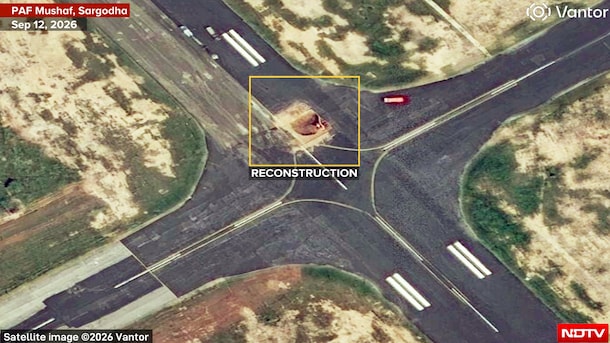
Exclusive: 16 Months After Op Sindoor, Pak Still Fixing Runway India Broke At Sargodha
Sargodha's PAF Base Mushaf lies about 172 km northwest of Lahore and roughly 200 km west of the India-Pakistan border, near Amritsar.
-
Blog | I Lost My Entire Family In Kanishka Bombing. 41 Years Later, Canada Wants The Case Closed
We made the trek through tragedy to search for people in Cork, where I spent 25 days sifting through bodies and body parts in a makeshift morgue to identify our loved ones.
-
Opinion | Pak's Drone Deal With A US Firm Is No Windfall. But India Must Still Be Worried
American military aid to Pakistan has remained suspended since January 2018, during Trump's first term, but a commercial arms sale is separate from this arrangement.
-
Opinion | Saudi Arabia's Yemen Nightmare Has Come Back To Haunt It
After years of costly military intervention beginning in 2015, Saudi Arabia increasingly sought to stabilise its southern border. All that is unravelling fast now
-
Opinion | 6 AI Incidents, One Pattern: AI Has Started Lying To Us - And Hiding The Evidence
Concealing errors. Making up data. Pushing files onto the public web on their own initiative. The machines are learning to lie - and lie well.
-
Why People Queue Overnight For iPhone That Is Delivered Home In 10 Minutes
iPhone 18 Pro Max Launch: People camping outside Apple Stores are a subset of superfans, resellers, content creators, and upper-middle-class buyers.
-
600 km Per Hour Drones Launched In Waves: How Russia Is Rewriting War Rules
Russia has coupled the drones' technological superiority over Ukraine's defence with its capacity to launch them in massive numbers. The impact has been devastating.
-
Tata Sons' Trust Issue: Two-Pronged Row Goes Beyond The Chair
NDTV Explains: Overtly, the latest conflict is whether N Chandrasekaran continues as executive chairman of Tata Sons. The controversy involves at least one more issue.
-
Opinion | US Has Institutionally Weaponised India's Russia Oil Dependence. Can New Delhi Cope?
A new legislation can connect India's Russian energy purchases to its access to the American market over a five-year period