FIFA Let Politics Win Over Football, Iran Paid The Price For Political Hypocrisy
Football's governing body has long sold itself as apolitical - like the IOC - an organisation above borders, above diplomacy, above conflict. But this World Cup has challenged that idea and changed perceptions about FIFA.
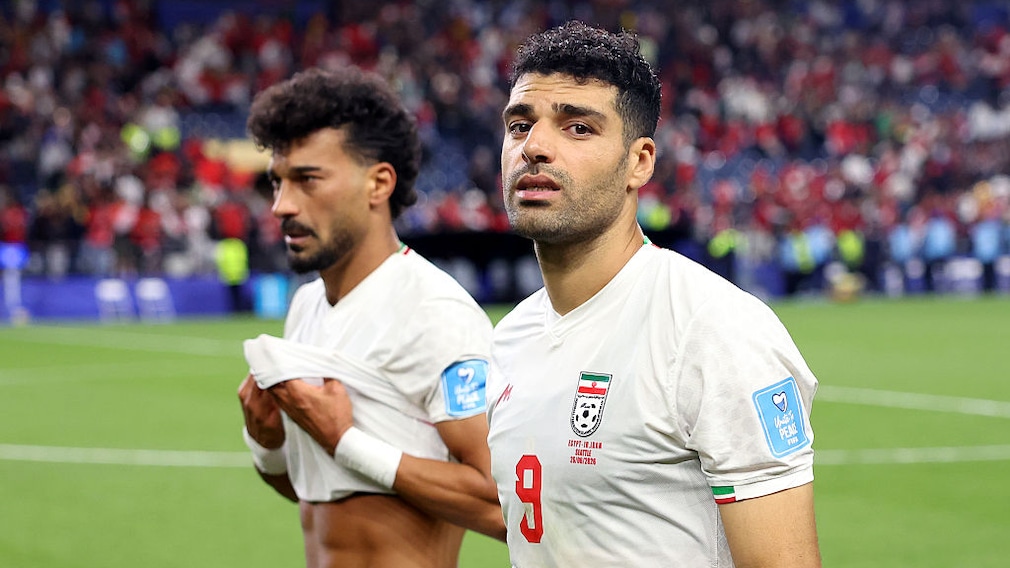
In Italian, a game in which both teams benefit from a particular result has a name in football: biscotto - literally, biscuit. Austria and Algeria knew exactly what was at stake in their final Group J game on Saturday. A draw would take both through. And that is exactly how it ended. Enough for both to survive. Enough for Iran to go home. But for Iran, the bitterness runs deeper than just scoreboard mathematics. Because this wasn't only about what happened on the pitch. It was also about everything around it. There is now growing noise in football circles over FIFA's apparent willingness to bend to U.S. hostility towards Iran - a tournament where Team Melli were never quite treated like every other nation.
"Whatever we say, it's nothing to do with politics. It's just the behavior shown toward us. We're only voicing this because we don't want such behavior to occur in the future for other teams," Iran coach Amir Ghalenoei had said ahead of his team's second group-stage game against Belgium.
This statement now feels a lot heavier. Because FIFA may have opened a Pandora's box here.
And the grievance is not limited to logistics or diplomacy. It stretches right back to the football itself.
The disallowed goal against Egypt - the goal that could have sent Iran through - is now being viewed by many as a defining injustice of this World Cup.
Former French international Thierry Henry summed up the feeling best:
"I genuinely feel sick for the Iranian players. They believed they had written one of the greatest moments in their country's football history, only for it to be ripped away in seconds. That's a pain no footballer should experience."
"You cannot ask players to give everything for ninety minutes and then allow a decision like this to define their World Cup. If VAR is overturning goals of this magnitude, it has to be absolutely flawless. There is no room for doubt."
"Look at the faces of the players, look at the supporters in the stands. Those weren't just tears over a goal-they were tears over a dream that disappeared in an instant. That's what makes this so heartbreaking."
"This isn't just about Iran anymore. Every nation at this World Cup should be worried because if a moment like this can happen on football's biggest stage, it can happen to anyone. That's a frightening thought."
And that is the tragedy of it. Iran are out of the World Cup without losing a single game.
They were unbeaten, had neutral goal difference, yet were eliminated. Football and sport in general can be merciless like that.
Against Egypt, they missed a penalty, squandered big chances, thought they had scored in stoppage time - only for VAR to intervene. Minutes later, they struck the crossbar.
But this story did not end there. Within five hours of their final game, Iran had left the U.S. for Tijuana - not by choice, but because of some strange visa restrictions.
That is where FIFA's politics is exposed.
Football's governing body has long sold itself as apolitical - like the IOC - an organisation above borders, above diplomacy, above conflict. But this World Cup has challenged that idea and changed perceptions about FIFA.
Back in 2017, Gianni Infantino was unequivocal:
"When it comes to FIFA competitions, any team, including the supporters and officials of that team, who qualify for a World Cup need to have access to the country, otherwise there is no World Cup. That is obvious."
Nine years later, that principle was abandoned in US.
On the eve of this tournament, Infantino struck a very different tone:
"We have to respect that we are not kings of the world, who can rule over governments and police forces. We are a sports organization that does as much as we can. It's important sometimes to chill, relax. We work on everything. Sometimes screaming and shouting does not find a solution."
That shift did not go unnoticed by the world of football.
Because for Iran, the sense is simple- FIFA didn't fight.
The U.S. government forced Team Melli to change their training base at the last minute, imposed restrictive movement conditions, and effectively placed obstacles no other team had to deal with.
"You cannot deny that our situation has (not) been the same as all the other teams," midfielder Saeid Ezatolahi said ahead of their second league game.
Iran are ranked No. 20 in the world. Their exit is not just surprising - it feels unnatural.
There may never be hard proof that the travel chaos and off-field disruption cost them a place in the knockouts. But in football, margins decide everything. And when those margins are shaped off the pitch, hard questions have to be asked.
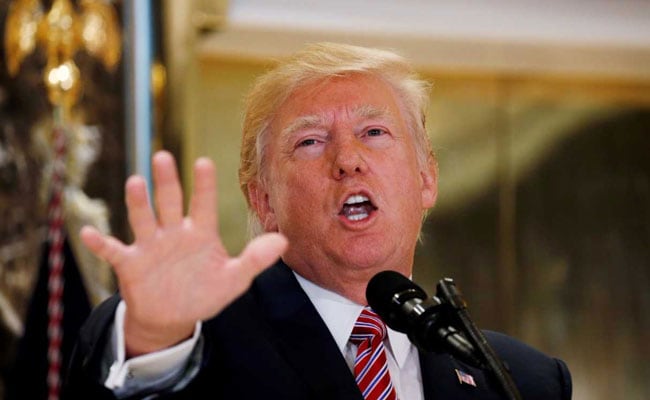
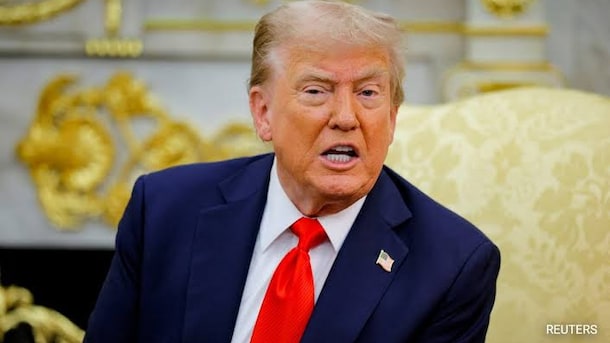
When Infantino handed FIFA's inaugural Peace Prize to Donald Trump in December 2025, many already felt the lines between football and politics had blurred.
FIFA got the grand American World Cup it wanted. But at what price?
"I just hope the world will achieve peace and the peace will be sustainable in the world," Ghalenoei said. "And I hope this kind of behavior does not become institutionalized in the World Cup."
The Iranians have left the World Cup with a warning. Today it is them, tomorrow it could be anyone- US, England, Brazil, Argentina, just anyone!
FIFA would claim the grand success of the World Cup and the quality of football in an extended tournament. However, there is a feeling that US and FIFA played a 'biscotto' at Iran's expense. We shall wait to hear about their treatment of Iran.
-
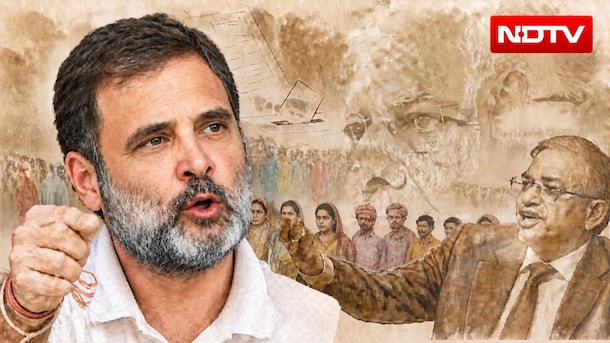
Why Doesn't Congress Boycott If Polls Are "Fixed"? Answer Lies Beyond Rahul Gandhi's "Distraction" Quip

The starkest demand for a boycott has come from outside the political Opposition, from the Cockroach Janta Party. But does a boycott help? Here's what research, examples, and expert analysis tell us.
-
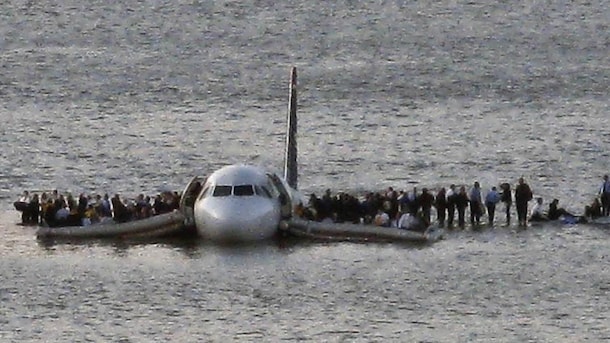
'Sully' To Gimli, Sioux To Patna: When Pilots Got It Unbelievably Right
Captain Smit Machchhar fought off his co-pilot after being stabbed and opened the cockpit door, saving 174 people.
-
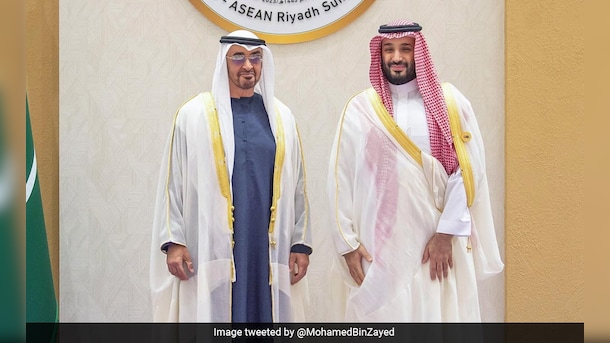
Opinion | Are Saudi Arabia And UAE Reuniting Again After 10 Years?
On Tuesday, the UAE's Vice President, Deputy Prime Minister and Chairman of the Presidential Court, Mansour bin Zayed, met Saudi Crown Prince Mohammed bin Salman.
-
Opinion | 'Lies, Damned Lies, Statistics': On The Controversy Around India's GDP Growth Figures
The debate is less about a single figure than about a decade-long erosion of trust in official statistics.
-
Opinion | Why India Cannot Keep 'Overestimating' Its Value To Washington
Some of India's value to Washington came from the tension between the US and China. That is changing now.
-
Opinion | India Has A 'Lobbying' Problem In Washington, And It Has Come Back To Haunt It
While the EU, Japan, the UK and South Korea secured quick deals, India's efforts were getting drained in prolonged negotiations and the wrong kind of lobbying.
-
India Is Getting Old Before Getting Rich, Will Turn 'Aged' In 16 Years: Moody's
Countries with the steepest fertility declines today will age the fastest in the coming decades. India's drop has been steep.
-
Opinion | Why Does Trump Want To Sell Arms To A US 'Adversary'? Inside His Strange Bargain
Trump's aides maintain that no such offer had been made. But the story points to a larger strategy
-
Opinion | The AI Boom Has Run Into A Big 'Debt' Trap Problem. Inside The 5% Danger Line
For most of the AI buildout's first two years, hyperscalers funded it the easy way: out of operating cash flow. That era is over.