Opinion | Dhurandhar, And The Enduring Ghosts Of Kashmir Valley
Dhurandhar is a story of the relentless war waged by Pakistan against India, not all of Pakistan but the terrorists it harbours, and the agenda it upholds.
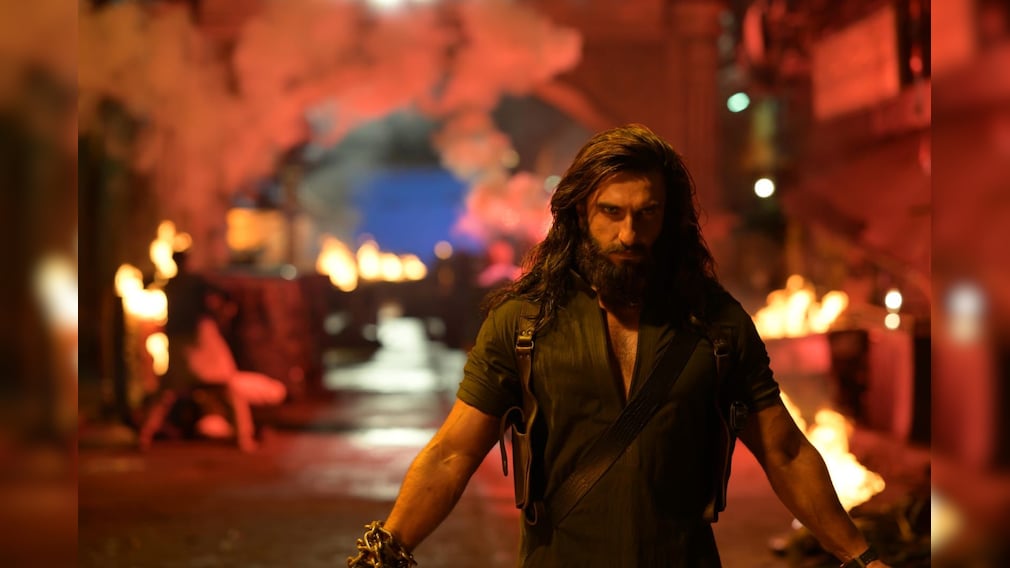
It is tempting to see Dhurandhar: The Revenge as Aditya Dhar's own story. That of a Kashmiri Pandit who loses everything when his family is turfed out of its homeland. He loses his home, his love for his country, and his belief that the state will stand up for him. That is the arc that Jaskirat Siingh Rangi's story follows in the prequel/sequel to the wildy popular Dhurandhar released last year. A boy whose father and grandfather were in the army and who wanted to follow suit until a land dispute causes a rival family in the village to torture his father, rape his sisters. The search for justice takes the family to every court in the country before Jaskirat decides to take matters into his own hands, and it leads to him becoming Hamza Ali Mazari, a killing machine let loose on Pakistan by the Indian intelligence system.
The land dispute may well be a metaphor for Kashmir, forever caught in a tussle between India and Pakistan.
And the end, without giving too much away, could well be what the homeland is to the Kashmiri Pandit now, a state he or she can dream of but never return to. The land has changed forever and so has the tiny community exiled from it. As much as Jaskirat is a stranger to his home in Pathankot now, so is the Pandit to the Valley where he once thrived.
The War That Never Ended
Yes, Dhurandhar: The Revenge is a paean to the Narendra Modi government and makes a hero of National Secturiy Advisor Ajit Doval, played by R Madhavan as Ajay Sanyal, but it is a deeply personal and deeply felt story of the thousand cuts that Pakistan has dealt to India, of which the exile of Kashmiri Pandit has been the most devastating consequence.
It is also a story of the relentless war waged by Pakistan against India, not all of Pakistan but the terrorists it harbours, and the agenda it upholds.
Where Dhurandhar, the first part was all about Hamza Ali Mazari's infiltration into the Baloch gang of Lyari, Karachi, the second part is the back story. What turned Jaskirat Singh Rangi into Hamza, a one man demolition squad who wipes out the fountainhead of terror in Pakistan. It is a fantasy India desprately needs at this point and who better than Aditya Dhar to give it to the people and more importantly to the state, battered as it is in the new world disorder, trying to find its place among countries that were its friends and trying to keep the new friends it thought it had made.
Nazr, Sabr
Hosla. Eendhan. Badla. Courage. Fuel. Revenge. That is the tagline that recurs throughout the movie, and it is one that carries forward the motto Sanyal gives to Hamza in the first part: Nazr and Sabr, vigilance and patience. Dhar gives a logical explanation for every act of the Modi government, from demonetisation in 2016 to the encounter that killed gangster Atiq Ahmed in 2023. The enemy here is clearly Pakistan, and the assets it harbours in India, with the chief architect of the strategy revealed to be Bade Saab, which frankly was not a surprise reveal. It is a man who has almost singlehandedly inflicted damage on India since 1992. The Pakistanis here are intent on administering violence on India, and in the provocative words of Major Iqbal, a particularly despicable character played by Arjun Rampal, doing much more: making the infidels accept the inevitability of another faith, and turning its women into sex slaves.
The 1971 war comes up repeatedly in Major Iqbal's conversations with his hateful father, in a stellar perofrmance by Suvinder Vicky, who is a stand-in for the horrors visited upon East Pakistan by the Pakistani army, especially on its people. It also has echoes of the slogans that accompanied the exodus of the Pandits from the Valley: Raliv, Galiv, ya Chaliv (Convert, Die or Leave).
A Fantasy, After All
Dhar's filmmaking is clever. One doesn't know whether he actually believes in the Doval doctrine of Nazr and Sabr, but he does a good job of interpreting it, destroying every enemy that has ever damaged India, from the IC814 hijack to the 26/11 attack to the 2012 Pune bombings and the 2013 Hyderabad blasts. Hamza cuts a swathe through the teror network in Pakistan which leaves us scratching our heads as to who was was responsible for the Pahalgam massacre.
But then, at the end of the day, Dhar is weaving a fantasy for us of a strong state, one that famously ghar main ghusega aur maarega bhi. In a telling confession from Hamza, he makes it clear that his war is not against Pakistan but the monsters who lead it into a war against India and its own people who are incovenient to them.
The film is long, and sometimes tests one's patience, especially in the excessive use of violence. I have yet to see a movie where so many so many heads and limbs are severed with such varied objects, from axes to shop shutters to meat hooks to oil barrels. The soundtrack as usual is very clever, stretching from Boney M's Rasputin to the Bombay Rockers' Ari Ari, which traces its roots to the Punjabi folk song Baari Barsi to Tirchi Topiwala from the 1989 film Tridev to Tamma tamma loge from another 1989 film, Thanedar, whose star Sanjay Dutt plays the watchful SP Aslam and who in real life, ironically, was arrested for his part in the 1992 Mumbai blasts.
Is love enough to counter this violence and hatred in Dhar's world? Unfortunately not, though there are some tender moments between Hamza and his wife, the very young but very talented Sara Arjun, who comes into her own in this prequel/sequel.
Among the many songs that are remixed for the soundtrack is this Nusrat Fateh Ali Khan classic that is sure to be used without context in dance floors across India and Pakistan: Dil pe zakhm khate hain, jaan se guzarte hain/Jurm sirf itna, unse pyaar karte hain. It sums up the elegiac philosophy behind Dhurandhar: The Revenge. We bear wounds on our heart/We sacrifice our lives/The only fault is this/That we love them. Neighbours who were once one and are now locked in a deadly embrace. This is a sorrow without end, a mourning that has no closure, a grief that knows no bounds
And it is as true of what divided the two communities in Kashmir as much as it explains the ghosts of Partition that continue to haunt India and Pakistan.
(The author is a journalist)
Disclaimer: These are the personal opinions of the author
-
Opinion | Visa Shocks To Racist Attacks, When Did America Come To Hate Indians So?

Sometimes it is about H-1B visas. Sometimes it is jobs. Sometimes it is "foreigners." Sometimes it is about temples. The language of the attack varies, but the message is consistent
-
How El Nino And Warming Oceans Could Shape Earth's Climate In 2027
From changing ocean currents to extreme weather, scientists are watching a combination of climate signals that could influence temperatures, rainfall and ecosystems in the months ahead.
-
Blog | Nana Patekar, And The Sharp, Lasting Sting Of His 'Plain-Speak'
"Subah ghar se niklo, bheed ka hissa bano..." Nana Patekar's characters often spoke with the bluntness of men who had little patience for pretence. Just like Nana himself.
-
Opinion | Pakistan's Saudi Pact Is Now Entering Dangerous Territory - As Expected
On October 5, the ministers of the pact's member states met in Riyadh for an emergency session and agreed to move to a 'practical implementation' of the defence commitments.
-
Hindu ka khoon-Musalman ka khoon? Nana Patekar's Krantiveer Questions Still Hang
Krantiveer was released in 1994, after the communal violence that had scarred Bombay and other parts of India. Nana's voice carried the pain of every riot, every broken home
-
'SIR' In America Too? India Cue In Trump's Mass Citizenship Check For Voters
Having got the nod from the US Supreme Court, Donald Trump's push for a voter roll "cleanup" puts citizenship at its centre. Arguments for India's Special Intensive Revision (SIR) have also centred on "illegal immigrants". Data remains scarce. Let's map the similarities and the nuance.
-
Opinion | Gyanesh Kumar Row May Be Doing Something Unthinkable For India's 'Lost' Opposition
There seems to be a greater willingness within the Opposition to accept Rahul Gandhi's leadership, at least on the SIR controversy. But the INDIA bloc itself seems to be undergoing a strange renewal.
-
Opinion | flydubai Hijack, And How Syria's Descent Into 'Jihadism' Has Now Become Everyone's Problem
Al Hammimi, the Omani pilot who tried to crash a plane with 175 passengers on September 30, is a symptom of Syria's long-raging sectarian and extremist fire that has now reached far beyond Syria's borders.
-
"Feel Deeply Abandoned By World": Tales Of Loss And Separation From Gaza
For Gazans, who have lived through the horrors of the last three years, life means a continuing encounter with impermanence and the repeated discovery that a home, a friendship, a livelihood, a familiar life and even one's former self can become things that exist only in memory.