Opinion | Dharmendra: The 'Pehelwan' Who Was A Poet
Dharmendra described himself as a 'mitti ka beta' (son of the soil). But some of his most memorable roles were those of a man of words, a teacher or a poet.
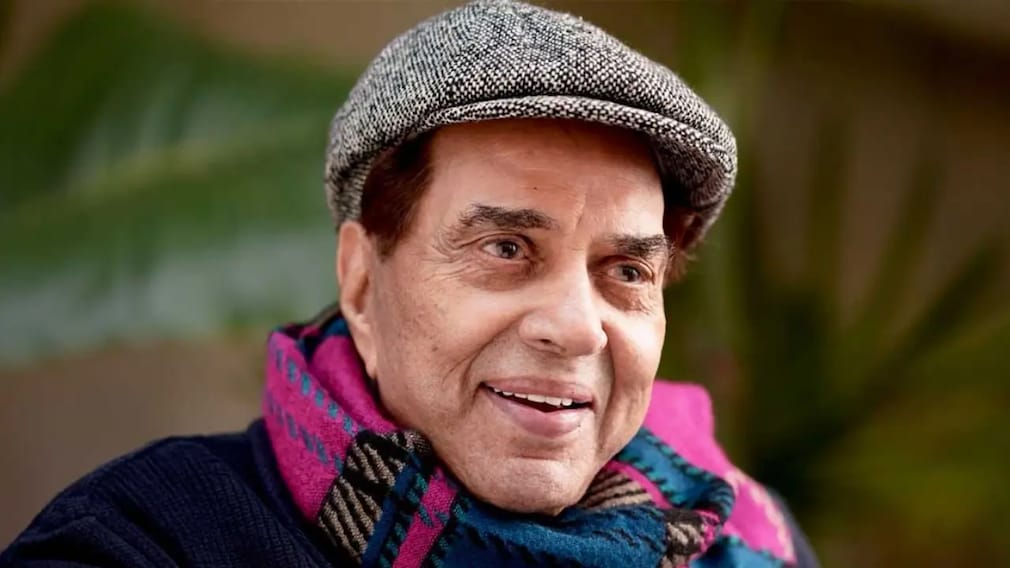
"Rupiya phenk ne se bekaar milte hai, sahityakar nahin (If you throw money, you will get an unemployed person, not a writer)", says Dharmendra to Pran in Pramod Chakravarty's Naya Zamana (1971). Pran plays a wealthy businessman who is woefully short of time and intellect and uses Dharmendra's services to make smart speeches - even going to the extent of stealing his novel to publish it as his own. It was one of several movies in which he, once described by actor Randhir Kapoor as an "uneducated peasant", played a man of learning.
Dharmendra described himself as a 'mitti ka beta' (son of the soil). But some of his most memorable roles were those of a man of words, a teacher or a poet. In Anupama (1966), he played Ashok, a poet, who persuades a shy and lonely Sharmila Tagore to leave her father's cruel home. When he is introduced as a writer of repute on the dining table, someone asks: "Par aap kaam kya karte hain (Yes, but what do you do?)'' Well said, responds Dharmendra with his trademark shy smile, no one can survive by writing alone in our country. It is his words, dedicated to Uma (Tagore) that begin the transformation in her, to the point where she feels emboldened enough to leave her father's home for good.
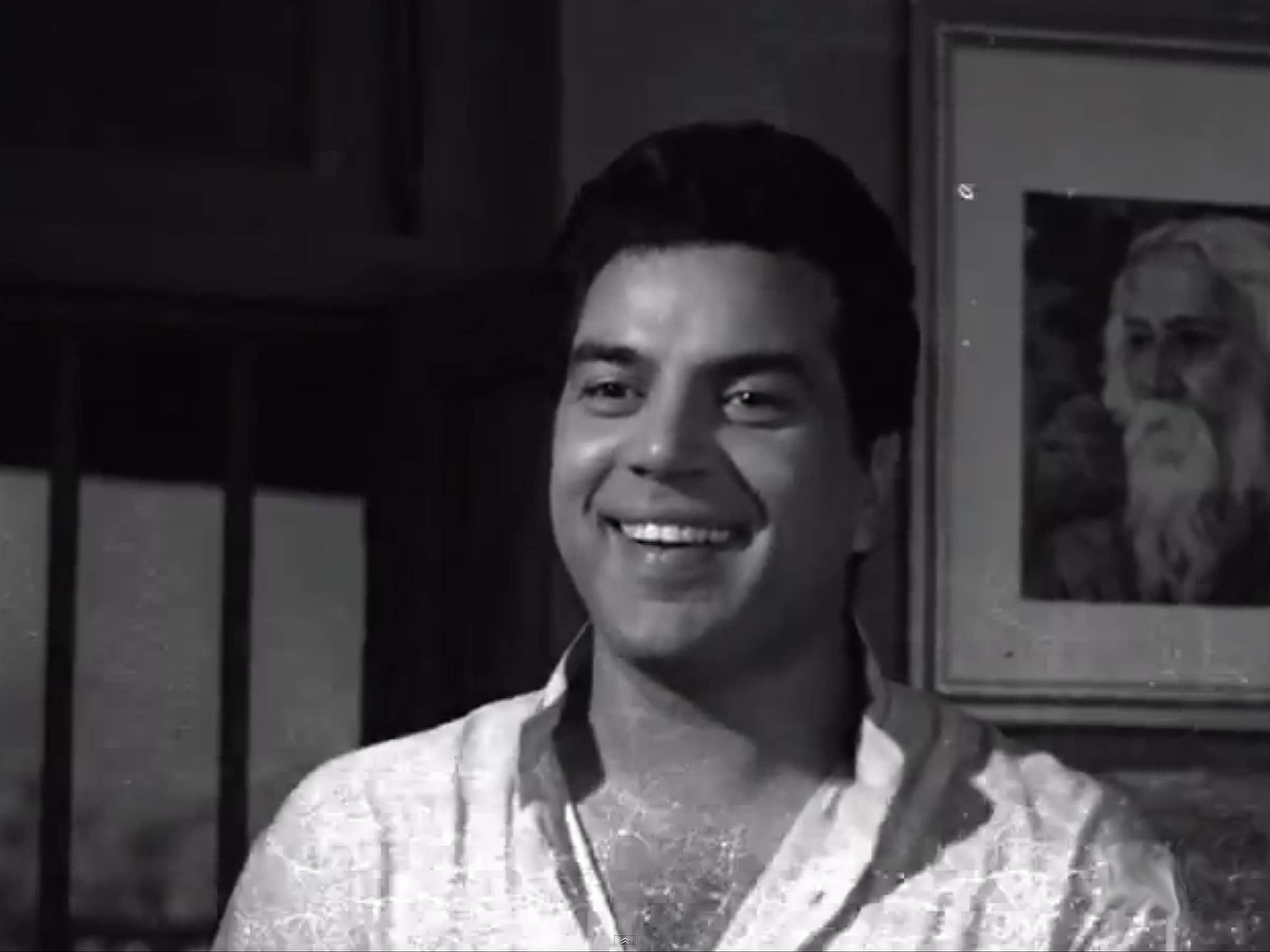
Dharmendra in Anupama (1966)
The truth was that Dharmendra was a closet poet, who, of late, had started declaiming in public. Most recently, a clip from Sriram Raghavan's Ikkis, his forthcoming film, underlines this hidden side to the actor, with a poem on his homecoming featured on him: 'Ajj bhi ji karda hai, pind apne nu jaanwa' (Even now I dream of going home, where the heart belongs). It is one of the urban legends in the Hindi film industry that Dharmendra picked up a lifelong love of poetry from Meena Kumari, with whom he first starred in the iconic Phool Aur Pathhar (1966). He played a criminal, 'Shaka', in it, but off-screen, his gleaming shirtless physicality was acquiring an Urdu polish that would remain a lifelong companion. It is the same vein that Karan Johar touched in Rocky Aur Rani ki Prem Kahanii (2023), where Dharmendra plays a man trapped in a loveless marriage who had a brief dalliance with a poetess, naturally a Bengali named Jamini (when Hindi movies want to portray intellectuals, they turn to Bengal), played by Shabana Azmi.
Man Of Words
The '60s and early '70s were great for Dharmendra's intellectual image. It was often played for laughs as well. Take the charming Dillagi (1978), where he is Professor Swarna Kamal, who teaches an all-girls classroom the poetry of Kalidas. Or Chupke Chupke (1975), where he is Parimal Tripathi, a botany professor pretending to be a Hindi professor, speaking in the kind of Hindi that would embarrass even an old Doordarshan newsreader. His tongue-twisting transalations of everyday English words into Hindi remain a personal favourite, from 'lohpatgamini' for train to 'doorbhash' for the telephone.
Dharmendra was largely seen as the romantic, idealistic hero who supported strong women characters, till Raj Khosla's Mera Gaon Mera Desh (1971) changed the direction of his career, casting him as the angry action hero. As his daughters recount in Khosla's biography, he wanted his hero in peak physical form, and every morning, the villagers of Cheerwa, four kilometres from Udaipur, woke up to "scenes of a strapping Dharmendra riding a horse, playing badminton, or cycling through the dirt roads".
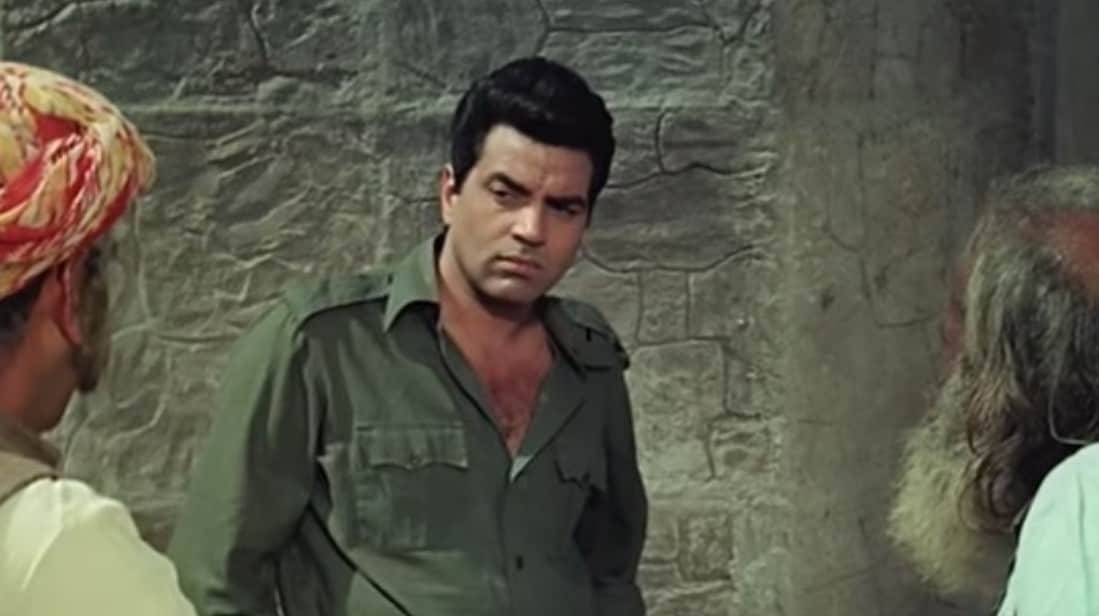
Dharmendra in Mera Gaon Mera Desh (1971)
That visual dominated his career, eclipsing the gentle wordsmith of earlier films, where he was almost the alter ego of his writer-directors. In Gulzar's Kinara (1977), Dharmendra has a cameo as Chandan Arya, a writer who dies in an accident, leaving behind a distraught Arti (Hema Malini). What is the difference between a letter and a poem, he asks Arti playfully, who says that one can be sung, and the other cannot. To this, Dharmendra replies by singing a love letter. In Ek Mahal Ho Sapno Ka (1975), he is a poet who takes to the bottle and worse when the love of his life leaves him, because although his words can give her wings, they cannot actually buy her a plane ticket.
A Romantic, Always
In one of his last impactful roles, Life in a...Metro (2007), Dharmendra plays a man who returns to India to look for the love of his life, carrying with him a diary written in Urdu (the script he was most comfortable in). "Talaash kabhi khatam nahin hoti, waqt khatam ho jata hai (The search never ends, time does)", he says, giving a life lesson to his late love's nieces. When it comes to the heart, one should never listen to the mind.
As did Dharmendra. He was a man of, by and from the heart, a lover refashioned as a fighter, a deeply romantic poet in the body of a pehelwan, a genteel house cat persuaded to be a tiger.
(The author is a journalist)
Disclaimer: These are the personal opinions of the author
-
Opinion | Trump's Iran War Is About To Become Someone Else's Problem Soon

Start alone, end alone - that may be the harshest lesson for Trump as he now tries to dash for the door in Iran.
-
What Happens If Iran War Actually Ends In 2 Weeks: The Challenges Ahead
Trump said the war could end in two weeks sans a deal to re-open the Hormuz. Analysts say it could take six to weight weeks more for oil flows to normalise, with each extra week of fighting adding seven to 14 days of recovery.
-
Opinion | Why 2 Gulf States Want Iran War To Continue - Even As They're Battered By It
If Trump withdraws from this war, the UAE, Saudi Arabia and other Gulf countries would be left to face the music alone, with an angrier, fiercer, and possibly more vengeful Iran.
-
Opinion | Why A 'Defeat' Is Now Essential For The Disoriented Left In Kerala
Power and arrogance have turned the Left in Kerala into what it once fought against. It now needs to lose its last bastion to cleanse itself of its maladies.
-
Opinion | On April Fools' Day, A Reality Check For US, Iran And The World
The paradox is this: Iran wins simply by surviving, while the US must achieve a far more overwhelmingly convincing result to claim success.
-
Opinion | Pakistan, And The One Big Difference Between 'Broker' And 'Mediator'
Neither Washington nor Tehran appears willing to invest Pakistan with the political capital required for mediation.
-
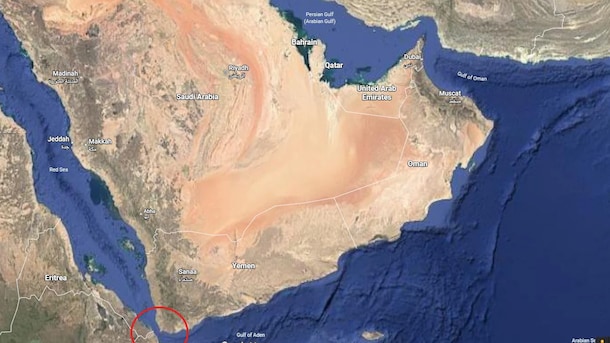
Houthis Threaten Strait No 2 As Iran War Expands. What It Means For India
Yemen's Houthi rebels have opened a second front in the Iran war, threatening Bab al-Mandab just as the Strait of Hormuz comes under pressure, and squeezing one of the world's most important oil corridors from both ends.
-
Europe Split Over Trump's Iran War, Spain Leads Defiance
Europe is sharply divided on how to view fighting in West Asia and subsequent pressure on the global energy trade, which has seen fuel and gas prices increases worldwide.
-
Opinion | Zagros To Dasht-e-Lut, Why Iran's Terrain Could Be A Challenge For US Ground Troops
Iran is often called a 'fortress' owing to its formidable mountain ranges, which virtually form a wall to its North, West and South.
-
More Fighting, Deaths, Oil Prices: 4 Worrying Points If US Invades Iran
In case of a ground invasion, US troops will likely be forced to fight on multiple fronts - Iran proxies Houthis in Yemen, Hezbollah in Lebanon, and Hamas in Gaza, as well as smaller Shiite militia in Iraq and Bahrain.