Opinion | Ceasefire Aside, Iran Won't Give Up On A Hormuz 'Toll'
Since February 28, when the United States and Israel struck Iran, the IRGC has been constructing its 'tollbooth' with methodical precision. This is what may happen to it now...
In 1429, King Eric of Pomerania began charging ships to pass through the Øresund, the narrow strait between what is today Denmark and Sweden. Every vessel bound for the Baltic, regardless of whether it was calling at a Danish port, had to stop at the castle of Helsingør and pay. Those who refused were persuaded by cannons on both shores. By the sixteenth and seventeenth centuries, the Sound Dues - the toll on the use of the Øresund - constituted up to two-thirds of the Danish crown's total revenue. In 1567, the toll was restructured into a 1-2% tax on declared cargo value, which tripled receipts. It ran, with minor interruptions, for 428 years. It took thirteen nations - Britain, France, Prussia, Russia, Sweden, and others - and a payment of 33.5 million rix-dollars, roughly twelve years of toll income, to abolish it under the Copenhagen Convention of 1857. History does not record whether King Eric's successors considered this a satisfactory outcome.
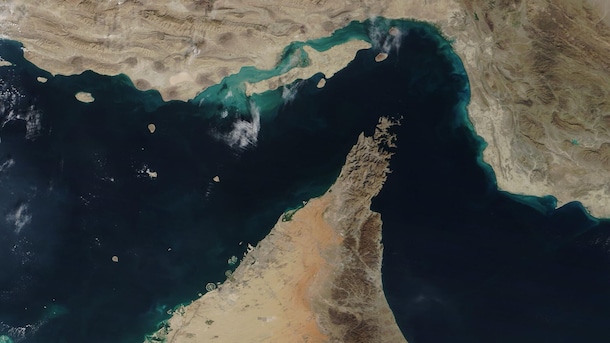
The Strait of Hormuz, in the spring of 2026, is improving on this history.
The Iranian Tollbooth
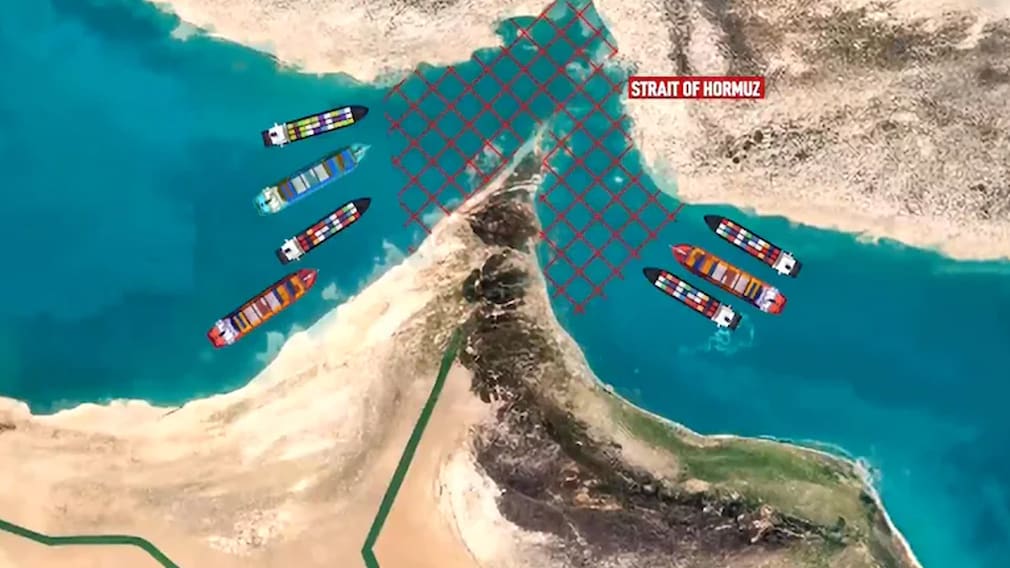
Since February 28, when the United States and Israel struck Iran, the Islamic Revolutionary Guard Corps has been constructing its tollbooth with methodical precision. Ships wishing to transit must approach an IRGC-linked intermediary and submit documentation: the vessel's International Maritime Organization number, crew list, cargo manifest, destination, and automated identification system data. The IRGC screens the file. Nations are ranked one to five based on perceived friendliness; India, Pakistan, China, and Iraq are, for now, on the right side of that ledger. If the vessel passes, a clearance code and routing instructions follow. As it approaches the narrow channel north of Larak Island, off Bandar Abbas, it broadcasts its code over VHF radio and is met by an IRGC patrol boat, which escorts it through what Lloyd's List Intelligence has taken to calling Tehran's tollbooth. The charge for an oil tanker starts at approximately one dollar per barrel of cargo. For a Very Large Crude Carrier loaded with two million barrels, that is USD 2 million per transit, payable in Chinese yuan or stablecoins. Iran's Parliament passed a bill recently to formalise the arrangement, with tolls denominated in rials.
One should also look at the traffic data. Before the war, roughly 135 commercial vessels transited the Strait of Hormuz each day, carrying approximately 20 million barrels of oil and liquefied natural gas, one-fifth of global daily supply. In the last week of March, 24 vessels made the crossing. That is a decline of 96%. Since March 13, all 57 recorded transits have used the Larak detour. The normal shipping lane saw zero traffic since March 16, until the ceasefire that was announced today.
What Iran Would've Got Pre-War
Now, let us have a closer look at the numbers. Pre-war traffic implied roughly ten VLCCs a day through the strait. At USD 2 million per vessel, that is USD 20 million a day from oil tankers alone. Include LNG shipments and the figure exceeds USD 800 million a month, comparable to what Egypt earns annually from the Suez Canal in a normal year (USD 700 to USD 800 million a month, though Suez revenues have halved due to Red Sea disruptions). GaveKal Research has estimated that a toll applied to all commercial vessels at pre-war traffic volumes would generate approximately USD 50 billion a year for the IRGC, effectively doubling its revenue from oil sales. An Iranian newspaper has proposed a 10% toll, yielding USD 73 billion annually - a theoretical ceiling, but one that reveals the scale of the ambition. Drewry Consultancy estimates that the formalised USD 2 million fee adds approximately two dollars to the price of a barrel of Gulf crude, on top of an oil price already hovering near USD 100, itself 60% above pre-war levels. The toll has a propensity to become a permanent structural premium on the world's energy bill.
Iran's Thin Legal Case
The legal position is clear and increasingly irrelevant. The United Nations Convention on the Law of the Sea (UNCLOS) (Articles 37 to 44) guarantees transit passage through international straits. It should be continuous, expeditious, unimpeded, and free of charge. Article 26 prohibits coastal states from levying fees by reason only of passage. Iran has not ratified UNCLOS, which gives it a narrow technical argument. But that argument is weaker than it looks. The International Court of Justice established free transit passage as customary international law in the Corfu Channel case of 1949, three decades before UNCLOS existed, and binding on all states regardless of treaty membership. Iranian parliamentarians have cited the Suez and Panama canals as precedents. However, both are man-made waterways, government-built and government-maintained, subject to specific treaty regimes that pre-authorise tolls. The Strait of Hormuz is a natural waterway with no infrastructure to maintain and no treaty authorising fees. In sum, Iran's own legal citations undermine its own legal case.
That said, international law is enforced by states with navies and political will, and both are in short supply. Secretary of State Marco Rubio, at a G7 meeting in France, described the toll as "not only illegal but unacceptable and dangerous to the world". The G7 communique stressed "the absolute necessity" of restoring safe and toll-free freedom of navigation. These are the correct positions. They were also, however, unenforceable. The United States had destroyed over 130 Iranian naval vessels and could not guarantee commercial shipping escorts. US Navy officials privately told the industry that military escorts were "not an immediate option". The European Union ruled out military intervention. China, which negotiated bilateral passage for two Cosco-linked container ships in late March, had no incentive to press for a multilateral toll-free regime; it already has a deal. India secured passage without payment through direct bilateral diplomacy, with Indian warships escorting the LPG tanker Pine Gas through the Larak corridor. Still, some Indian-flagged vessels remained stuck in the Gulf. India imports 45% of its crude, 90% of its LPG, over half its LNG, and roughly 40% of its fertilizer through this strait. India's crude oil basket has surged from approximately USD 63 to USD 146 a barrel. Goldman Sachs has cut India's 2026 GDP growth forecast to 5.9%. The rupee has touched record lows. External Affairs Minister Jaishankar had described India's approach as having no "blanket arrangement", "every ship movement is an individual happening". That was the correct approach at the time. It is not a policy for a permanent toll regime.
The Ceasefire, And Iran's Message
Then came April 8.
Shortly after midnight Eastern time, President Trump announced a two-week ceasefire, contingent on Iran immediately reopening the Strait of Hormuz. Iran's Foreign Minister Abbas Araghchi confirmed in a statement posted on X: "For a period of two weeks, safe passage through the Strait of Hormuz will be possible via coordination with Iran's Armed Forces and with due consideration of technical limitations." Iran's Supreme National Security Council was more explicit still. Its statement called for "the regulated passage through the Strait of Hormuz under the coordination of the Armed Forces of Iran, thereby conferring upon Iran a unique economic and geopolitical standing". Brent crude fell below USD 96 a barrel. Stock futures surged. The White House and President Trump reposted Araghchi's statement on social media.
Read that sequence carefully. Iran has not agreed to reopen the Strait, but to allow passage via coordination with its Armed Forces. The White House reposted this formulation without objection. The ceasefire is two weeks long, negotiations are to start Friday in Islamabad, and Iran has said it will walk away if its 10-point proposal, which includes continued control over ship traffic in the Strait, lifting of all sanctions, and withdrawal of US forces from the region, is not accepted within 15 days. Per mediators, it is not yet clear whether Iran would abandon charging ships or grant access to all vessels seeking to cross.
On April 6, Trump had asked reporters: "What about us charging tolls? I'd rather do that than let them have them. Why shouldn't we? We're the winner. We won." Forty-eight hours later, his administration reposted the Iranian Foreign Minister's statement describing the Iranian Armed Forces as the coordinators of the Hormuz passage. Both Iran and the United States have now, in different ways, accepted that the Strait is not a free and open international waterway. They disagree only on who should collect the rent.
What Iran Has Realised Now
The stakes extend well beyond the Persian Gulf. A 2023 study found that three-quarters of global maritime trade (USD 10 trillion in annual value) passes through thirteen key chokepoints. The Bab al-Mandab, the Strait of Malacca, the Bosphorus, and others. Iran's new Supreme Leader, Mojtaba Khamenei, in his first public address, said the leverage of blocking Hormuz "must continue to be used". The IRGC Navy has said the Strait "will never return to its former state". These are statements of institutional intent from an IRGC that has discovered that if a natural strait can be converted into a permanent, institutionalised tollbooth, the question for the other twelve chokepoints is not whether, but when.
In 1857, thirteen nations solved the Sound Dues problem by collectively calculating twelve years of Danish toll income and paying it out. The world had the institutional architecture for collective payment. What the recent negotiations will test - over 15 days, on Iran's stated deadline - is whether the world has anything equivalent for Hormuz. Iran's 10-point proposal reportedly values its position at up to USD 2 million per vessel in perpetuity, split with Oman, with proceeds for reconstruction. The arithmetic, at pre-war volumes, comes to roughly USD 9 billion a year. King Eric of Pomerania, who ran his own tollbooth for 428 years before being bought out, would have recognised the logic immediately.
The Copenhagen Convention of 1857 was the world agreeing, collectively, that a natural strait belonged to everyone. The current US-Iran talks, beginning Friday, will tell us whether that principle still holds, or whether the toll at Helsingør has simply moved east.
(The author was with the Economic Advisory Council to the Prime Minister)
Disclaimer: These are the personal opinions of the author
-
Opinion | Sharif Or Munir, Who Really Led Pak's 'Brokering' Project For US-Iran?

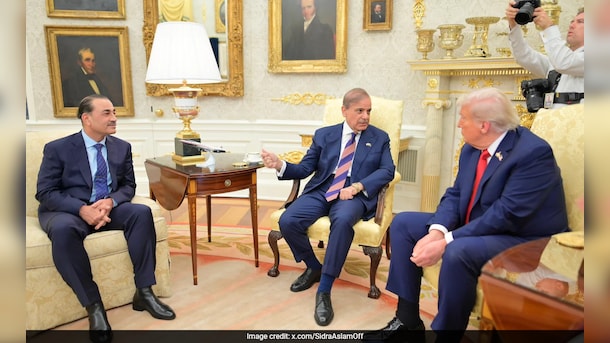
The spate of calls, social media messaging, and diplomatic efforts from Pakistan in recent weeks, especially involving PM Shehbaz Sharif and Field Marshal Asim Munir, raises many questions.
-
Opinion | War Ally To Mere Bystander: Is This The Loneliest Day For Netanyahu?
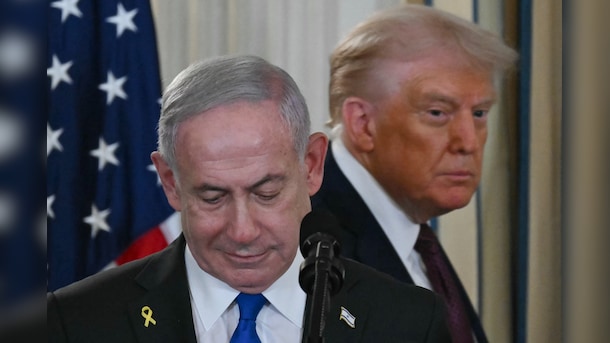
Israel, the US's closest partner in the region and which lured Trump to take on Iran, was ultimately a mere spectator to the ceasefire agreement.
-
Opinion | Iran Scorecard: A List Of Winners, Losers, And Those Who Rigged The Game
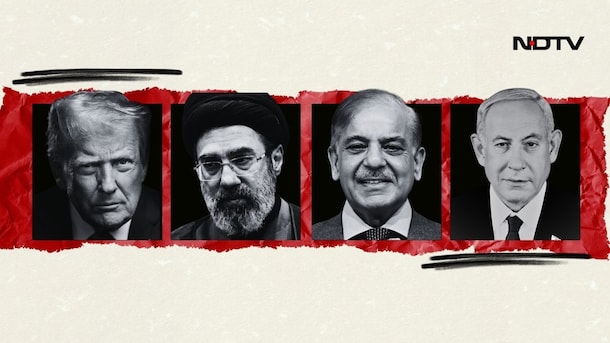
Iran is the clearest winner. America absorbed a lasting blow. Trump got what he wanted. Netanyahu is exposed. The Gulf is vulnerable. All these realities are true, and that is the paradox of this war 'of choice'.
-
Opinion | America Will Still Recover From The Iran Humiliation. And That's The Tragedy
While Trump goes on making social media threats to annihilate the entire civilisation of Iran, former Democratic presidents, Bill Clinton and Barack Obama, cannot muster anything other than sports tweets. The only thing the country is united in is tone-deafness.
-
Opinion | Has Pinarayi Vijayan Been Left All Alone?
The carefully constructed image of Vijayan as a leader in full control now lies shattered - in no small measure due to his own actions.
-
Ceasefire Announced, But It's Not A Full Stop To War: What Happens Next
The immediate test for this ceasefire is the next 24 hours; if Iran, the US, and Israel can control their trigger fingers, the Islamabad talks (or whenever the first round takes place) will begin on a positive note.
-
Pak's 'Global Power' Act Is Fooling No One - Least Of All Its Gulf 'Creditors'
Dubious oil claims to failed 'mediation' attempts and the UAE and Saudi now apparently asking for repayment of their loans, Pakistan's repeated attempts to project itself as a 'global player' must be taken with a grain of salt.
-
Opinion | 155 Aircraft For One Man - And Other Mysteries About US' Iran Rescue Op
When has it ever been the case that you need to deploy 155 aircraft on a Combat Search and Rescue (CSAR) Mission? Why were the two C-130s deployed when each has the capacity to carry up to 90 troops?
-
$4.5 Billion A Month Jackpot: Why Iran Wants World To Accept Hormuz 'Authority'
Reports from Iran indicate the country plans to use potential toll payment money to rebuild infrastructure destroyed by US-Israel strikes, and re-stock missile and drone arsenals.