Opinion | Dear Delhi Pollsters, Please Stop Writing Nitish Kumar Off Every Election
The JD(U)'s tally of more than 80 seats reaffirms what analysts often forget: Nitish's electoral machine, and the social coalitions it rests on, do not wither simply because poll pundits in Delhi want a new plotline.
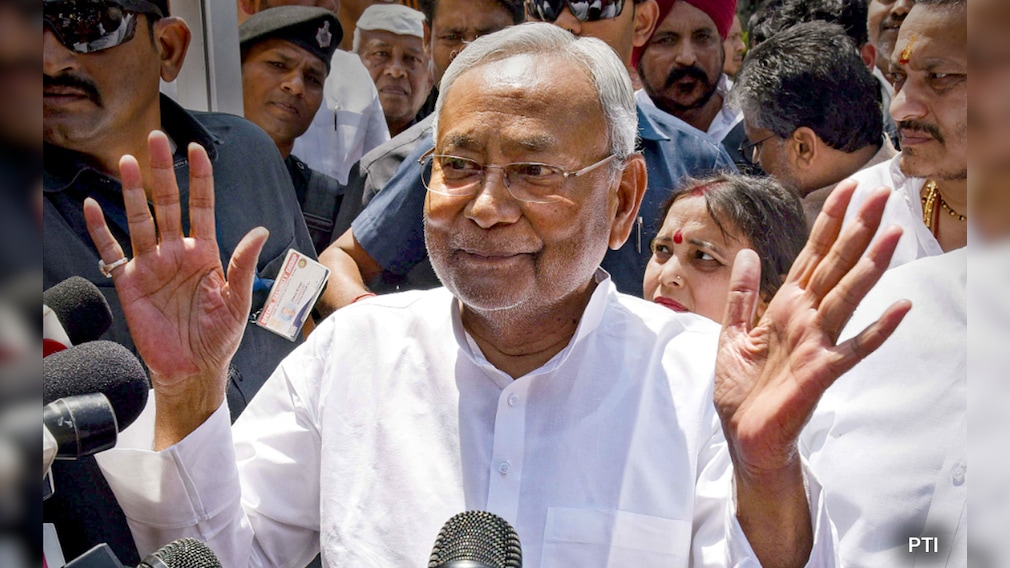
For a leader who has spent decades in power, Nitish Kumar remains a figure beyond calculations. Ahead of nearly every election, commentators predict his fall. They call him indecisive, fatigued, past his peak, or politically overextended. And yet, Bihar has repeatedly turned to him to anchor the state's politics for the last several elections. The 2025 election results have reinforced this pattern with striking clarity: Nitish Kumar remains Bihar's ultimate X-factor, and it's time we stop writing him off so easily.
A Vote Share That Makes Him Indispensable
What keeps Nitish Kumar at the heart of Bihar politics is plain numbers. Across cycles, he has consistently commanded a formidable 15-20% vote share on his own. In a fragmented state where no single party dominates across caste and regional divides, this is a mammoth share. It is why from 2005 to 2010, 2015, 2020, and the 2024 Lok Sabha election, political formations that have allied with him have usually ended up winning.
Nitish retains credibility among a broad social coalition: OBCs, EBCs, Mahadalits, non-Yadav OBCs, and a steady section of Muslim voters. He is one of the few leaders in Bihar capable of pulling support from communities with competing political interests.
A Centre of Gravity for Muslim Voters
One of the most understated aspects of Nitish's politics is the quiet trust he enjoys among Muslims. Under him, the JD(U) has positioned itself as a centrist, moderate counterweight to majoritarian politics. His presence keeps coalition politics balanced, ensuring that Bihar does not tilt ideologically like many other states have done. This brings him a sizable chunk of the Muslim vote.
Why Women Remain His Strongest Pillar
However, if there is a single constituency that has transformed Nitish Kumar's political fortunes, it is women - arguably the most influential electoral bloc in Bihar today. This support is not sentimental; it is the direct result of policies that touched everyday lives. For instance, the Mukhyamantri Balika Cycle Yojana launched by his government encouraged girls' schooling. Combined with free uniforms and scholarships, it created enormous goodwill for his government among women.
Then there was the Mukhyamantri Mahila Rozgar Yojana, which put ₹10,000 directly into the accounts of over a crore women. Add to that the long-running network of self-help groups under the Jivika Didi programme, where lakhs of women accessed credit, savings, and income-generating support.
The alcohol prohibition undertaken by his government also yielded clear political dividends for Nitish Kumar, especially among rural women. Less domestic violence, more savings in the household, and a quieter, more stable family environment made women support his government. For many, this positioned Nitish as a leader willing to take politically costly decisions in their favour.
These interventions collectively created perhaps the most dependable female vote bank in Indian politics.
The evidence is visible in turnout: in seats where women outvoted men, Nitish-led alliances historically performed significantly better. For instance, in 2020, women outvoted men in 119 out of 243 seats. The NDA ended up winning a whopping 72 of these seats - a 60% strike rate. In contrast, in seats where men voted more than women, the NDA's strike rate fell to a mere 40%.
Nitish Kumar's comeback ability is also something to consider. Here are two examples:
In 2020, despite an aggressive sabotage campaign led by the Lok Janshakti Party (LJP) - fielding candidates against the JD(U) in targeted seats - the JD(U) still managed to win 43 seats, enough for the NDA to form a government.
In the 2024 Lok Sabha polls, the JD(U) won 12 of a total of 16 seats, outperforming the BJP, a proof that his ground network remains sharp and underestimated.
The JD(U)'s current tally of more than 80 seats reaffirms what analysts often forget: Nitish's electoral machine, and the social coalitions it rests on, do not wither simply because the political conversation grows impatient with him. Being an X-factor, after all, is far, far bigger than being simply the flavour of the day. It's time we stopped writing Nitish Kumar off.
(Amitabh Tiwari is a political strategist and commentator. In his earlier avatar, he was a corporate and investment banker)
Disclaimer: These are the personal opinions of the author
-
Opinion | The US Is Showing India Just How Cheap Its 'Friendship' Is

Can local talent fully replace Indian contribution? Why is the US leading in setting up Global Capability Centres in India - over 60% - and pocketing the IP?
-
Jantar Mantar Tells Time. The Clock Just Stopped On Its Time As An Iconic Protest Site
On Monday, October 12, 2026, Delhi Police denotified Jantar Mantar Road as a designated site for demonstrations. The Supreme Court had given it a nudge. Here's how history met politics on that street for decades.
-
Opinion | Saudi Airport Attack, And Why Pakistan Keeps Biting Off More Than It Can Chew
For all those who were envious of Pakistan's 'new status' as "mediator extraordinaire", here is a reality check
-
Opinion | Visa Shocks To Racist Attacks, When Did America Come To Hate Indians So?
Sometimes it is about H-1B visas. Sometimes it is jobs. Sometimes it is "foreigners." Sometimes it is about temples. The language of the attack varies, but the message is consistent
-
How El Nino And Warming Oceans Could Shape Earth's Climate In 2027
From changing ocean currents to extreme weather, scientists are watching a combination of climate signals that could influence temperatures, rainfall and ecosystems in the months ahead.
-
Blog | Nana Patekar, And The Sharp, Lasting Sting Of His 'Plain-Speak'
"Subah ghar se niklo, bheed ka hissa bano..." Nana Patekar's characters often spoke with the bluntness of men who had little patience for pretence. Just like Nana himself.
-
Opinion | Pakistan's Saudi Pact Is Now Entering Dangerous Territory - As Expected
On October 5, the ministers of the pact's member states met in Riyadh for an emergency session and agreed to move to a 'practical implementation' of the defence commitments.
-
Hindu ka khoon-Musalman ka khoon? Nana Patekar's Krantiveer Questions Still Hang
Krantiveer was released in 1994, after the communal violence that had scarred Bombay and other parts of India. Nana's voice carried the pain of every riot, every broken home
-
'SIR' In America Too? India Cue In Trump's Mass Citizenship Check For Voters
Having got the nod from the US Supreme Court, Donald Trump's push for a voter roll "cleanup" puts citizenship at its centre. Arguments for India's Special Intensive Revision (SIR) have also centred on "illegal immigrants". Data remains scarce. Let's map the similarities and the nuance.