Opinion: How China Got Trapped In Its Own 'Export Miracle'
China is producing too much, selling too cheap, and is in danger of running out of buyers. Has its economic model reached its peak?
Last week, China reported the world's largest ever trade surplus for 2025, a year when Donald Trump's tariffs on more than 90 countries gave a jolt to the global economic order. The Chinese trade surplus reached a massive $1.19 trillion, despite Beijing reducing exports to the US by 20%. It simply sold much more to the rest of the world, including India.
The staggering $1.9 trillion trade surplus of China is just under half the size of India's GDP and close to the size of Saudi Arabia's, a G-20 member. Last year, China was the largest trading partner of Brazil - in America's backyard, of Central Asia - in Russia's backyard and the Gulf countries, where the US used to dominate. The US has already lost Africa to Beijing; if Trump continues with his disastrous tariff policies, even other regions could become China's number one trading partner, replacing the US.
China has not had a global trade deficit since 1993. It has come a long way from being one of the world's poorest countries in 1978, when its leader Deng Xiao Ping introduced economic reforms, to becoming the world's second largest economy and a superpower. But in the process, China has also transformed the global economy, making everyone else dependent on it, based on a model that has created problems even for its own people. But can this model survive?
The Making Of China's Economic Model
Beijing's exports-based economic model has roots in Deng's reforms, which paved the way for the country to become the world's manufacturing hub. Large plants and factories were set up across the country to produce cheaper products for the rest of the world. Gradually, millions of Western manufacturing jobs were outsourced to factories in China.
These state-subsidised plants forced many factories in other countries to close down because they could not compete with Chinese products. As early as 1994, silk farmers in India were complaining that the dumping of cheap Chinese synthetic silk in the country was driving them out of business. Beijing has often been accused of dumping its products in other countries. Such accusations have resurfaced after the publication of the latest record surplus figures.
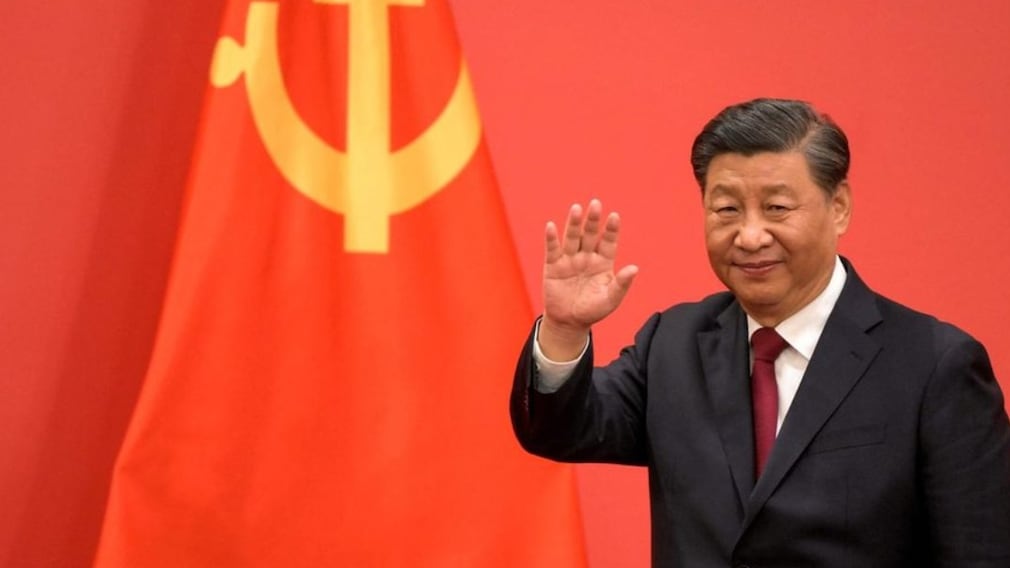
But China has continued to expand its production capacity, diversifying into many new fields. The current Chinese leader, Xi Jinping, has taken the country's economic model to a new level. After becoming the head of the Communist Party in 2013, he focused on high-quality development by investing in strategic emerging industries to become a dominant force that could not only challenge China's rivals but also control them.
Self-Reliance Or World Domination?
At the core of China's economic strategy is making itself self-reliant, according to the Chinese leaders. Xi's 10-year programme, known as Made in China, launched in 2015 to reduce dependence on the West, has achieved most goals. Beijing's unprecedented investment in green technologies has made it the undisputed world leader in renewables, electric vehicles and many other fields.
Over the weekend, China's state media reported that the country consumed 10.4 trillion kilowatt-hours of power in 2025, according to the National Energy Administration. This is more than double the use in the United States and exceeds the combined power consumption in India, Russia, Japan and the European Union. This suggests industrial plants and AI data centres in China are working harder than anywhere else.
Xi has also prepared China for a trade war with the United States and ordered his officials to work on choke points for its economy, which he successfully employed last year in response to Trump's tariffs. As early as 2019, Xi described rare earths and other critical minerals as an "important strategic resource." Beijing now has almost total control over the global supply of those minerals.
India may be a leading supplier of pharmaceuticals, but China is the world's dominant producer of the ingredients needed to make antibiotics and other pharmaceuticals. The same is the case in the solar power industry.
Global Domination But Domestic Repression
China's economic growth helped its government to lift tens of millions of people out of poverty and make many others in the country rich, especially in the early years of reform. But its model of increasing growth by selling cheaply to the world has had its implications. For years, Chinese families subsidised the country's rise through foregone returns while the rest of the world splurged on discounted Chinese goods.
While the rest of the world is fighting inflation, China is facing an acute problem of deflation, where prices continue to drop, discouraging customers from buying in the fear that goods would be even cheaper later. This is caused by overcapacity in factories and weak domestic demand. A persistent decline in consumption signals deeper economic trouble.
Last year, Chinese authorities promised new child-care subsidies, increased wages and better paid leaves to revive a slowing economy. But that has failed to have any meaningful impact. The collapse of the property market in recent years has also made Chinese consumers more risk-averse, leading them to cut back on spending.
Domestic consumption drives more than 80% of growth in the US and UK, and about 70% in India. China's share has typically ranged between 50% to 55% over the past decade. So Xi has a hard task to encourage his countrymen to spend more.
Falling Birth Rate
China is facing another problem that is threatening its economic model. A shrinking population of youngsters and an ever-growing number of elderly people. On Monday, the authorities announced that the birth rate has now fallen to the lowest level since 1949, when Mao Zedong came to power after leading the communist revolution. Last year, only 7.92 million new babies were born, a decline of 17% over 2024.
This means China will have fewer people to work in its factories to sustain its export-based economy. On top of that, young families now have to care for their elderly parents. The Social Security System in China is poor in comparison to other industrialised economies. The Chinese government has offered many incentives to encourage youngsters to have children and taxed contraceptives but young Chinese are not keen to produce babies.
Currency Manipulation
Western countries have often alleged that China's rise has been aided by the manipulation of the global system, using its state-owned or subsidised firms to buy depressed assets in other countries, and, above all, keeping its currency renminbi artificially low - which makes its products cheap.
Beijing, of course, has always denied these allegations. But it's a fact that China has not allowed its currency to strengthen. For a country that aims to challenge the United States and become an equal, if not a larger, superpower, China must allow its currency to strengthen.
In the past 15 years, China has encouraged other countries to accept its currency and now around 30% of its trade is settled in CNY - the basic unit of the renminbi. But other countries are unsure about the true value of the CNY as it accounts for less than 2% of global foreign exchange reserves.
An Opportunity For India?
It appears that China's economic model has peaked. For years, the Communist Party government used capital controls, artificially low deposit rates, and an undervalued currency to canalise household savings into industrial sectors. China is no doubt an economic giant and a major global power, but how much longer can its export-led model sustain when the social costs of financial repression continue to grow?
Chinese economic growth of 5% is now lower than that of India. We also don't have a falling birth problem. If China's economic model has reached its limits, this could be an opportunity for us to shift global supply chains from China. This will give a much-needed boost to India's manufacturing sector. But for that, India needs to take a lesson from China. Invest in innovation and high produce quality goods for home and abroad. That will be the real test of Modi's Make in India campaign.
(Naresh Kaushik is a former editor at the Associated Press and BBC News and is based in London)
Disclaimer: These are the personal opinions of the author
-
A Blue Sparrow Left Earth's Atmosphere, Returned As Khamenei Executioner

The 86-year-old supreme leader, who had spent much of the previous weeks sheltering deep underground amid fears of Israeli strikes, had surfaced to attend a high-level meeting. Within hours, he would be dead.
-
Opinion | How Pakistan Became World's Only Muslim Nuclear-Powered Nation - Secretly
Trump is bombing Iran now for allegedly building nuclear weapons. But America had once let Pakistan illegally develop an N-bomb right under its nose. This is the scandalous story of 'Project 706'...
-
Opinion | Will The Iran War Force Pakistan To Pick 'Sides'?
Given its economic dependence on Gulf countries and strategic leanings toward the US, Pakistan will aim to contain any overt anti-American positioning in public protest or state rhetoric.
-
'Did It My Way': Nitish Kumar Quits As Chief Minister After 20 Years Reshaping Bihar Politics
Nitish Kumar this week brought the curtains down on a two-decade journey as Chief Minister of Bihar ahead of a shift to the Rajya Sabha.
-
Why US Sinking Iran Warship Is A Major Wake-Up Call For India's Submarine Arm
Project 75-India, the programme meant to field six next-generation submarines with submerged endurance-boosting air independent propulsion (AIP) tech and land-attack missile capability, was conceived in the late 1990s.
-
Opinion | A Dark Truth: Why Iran, Ukraine Get Bombed, But Pak, Israel, N Korea Don't
With the Iran blitz, the message to smaller and military states is shaping up to be this: 'build the damn bomb - if not legally, then the way Pakistan did in the 1970s'.
-
Opinion | How 12 'Insurers' Sitting In London Paralysed Hormuz - All With A Phone Call
By March 3, there were zero active tanker transits inside the Hormuz Strait. Not because of Iran, or Trump. But simply because an 'underwriter' in London picked up the telephone.
-
Khamenei Falls, World Reels: Iran's War Sucks In NATO, Arabs In 72 Hours
Iran's Supreme Leader Ayatollah Ali Khamenei tracked for months in an elaborate espionage operation died Saturday afternoon after a missile struck his compound in the city centre.
-
Opinion | Iranian Ship Sinks: How A 2016 Deal With US Could Spell Trouble For India
Touted as the first major naval casualty in the Indian Ocean since the Second World War, the attack by the US on IRIS Dena brings the Iran crisis eerily close to home. And a 2016 deal with the US isn't helping.
-
Why India Has Never Bought American Fighter Jets
Almost every US fighter aircraft flying missions over Iran, at some point in the last 20 years, had been offered to India