Opinion | Can Tarique Rahman Really Undo The 'Yunus' Damage To India-Bangladesh Ties?
Will Tarique Rahman as Prime Minister be willing to take hard steps, even reverse some decisions of the Yunus regime, looking ahead to ensure peace and stability along the more than 4,000-kilometre-long border between India and Bangladesh?
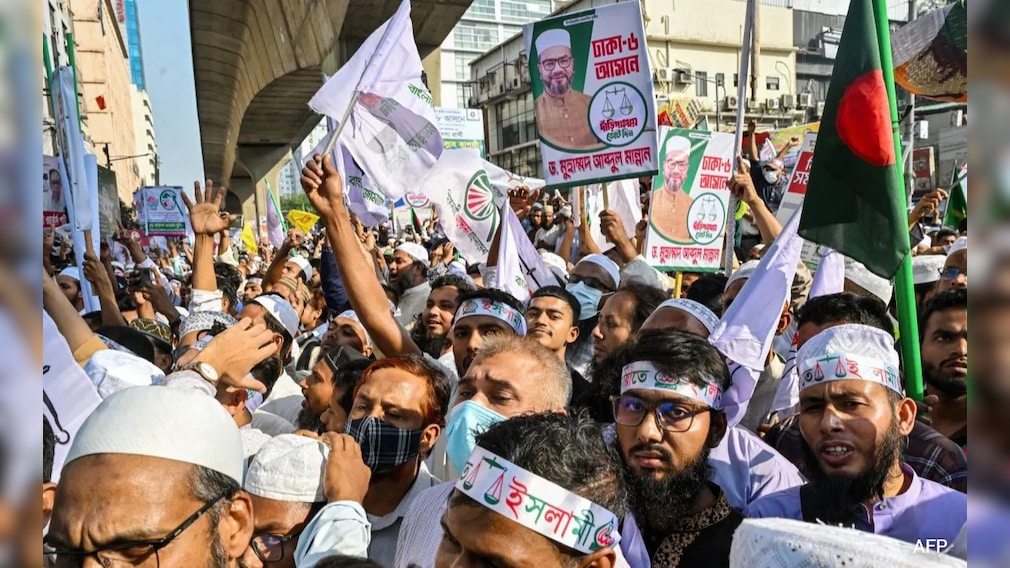
To appreciate the significance of the Bangladesh Nationalist Party's (BNP) resounding electoral victory, it is important to realise what the alternative was, and how this almost came through.
Bangladesh's 13th national parliamentary elections were not inclusive. The Awami League, the country's single largest party, was banned from participation. This was done at the behest of the Jamaat-e-Islami. After the regime-change operation that ousted former PM Sheikh Hasina (she left Dhaka on August 5, 2024), it is the Jamaat-e-Islami (JeI) that has been in full control in Bangladesh for the last 18 months, with Mohammed Yunus, as their spokesperson, implementing their decisions. This (absolute control by the JeI) was the core element of the "meticulously designed" regime-change operation, conducted through Pakistan, with the backing of the Western democracies (USA, UK, EU), and China in the know.
JeI's Creeping Presence
Over these 18 months, the JeI seized control of every institution of democracy, reshaping them in its own image. Using mobocracy and street power, key individuals were forced to resign and were replaced by carefully selected JeI appointees, covering almost the entire judiciary, the bureaucracy, academia (vice-chancellors and key professors), and the media. Discarding their earlier alliance partners (the BNP), the JeI focused on forming a coalition comprising like-minded Islamist political parties and organisations, several of whom were included in Yunus's cabinet - the Islami Andolan Bangladesh, Hizbut Tahrir, Hefazat-e-Islam - all supporters of Sharia law and a Caliphate for Bangladesh. Aiming to wipe out the memories of the 1971 War of Liberation and reversing key liberal and secular elements of the 1972 Constitution, the JeI called for a focus on reforms (resulting in the July National Charter, 2025) and delayed elections. Women's rights, including freedom to work and move outside the home, were a big target, and the persistent attacks on minorities were meant to force them to leave the country.
The ultimate objective was the capture of the state through the elections held on February 12. Victory for the JeI was being taken as a given, either on their own or through a national unity government, which would include both the JeI and the BNP. The US's preference for the JeI was clear from The Washington Post story carrying details of a taped conversation in Dhaka between an American diplomat and women journalists. At the end of 18 months under the JeI-led, Yunus-controlled interim regime, life in Bangladesh had deteriorated to its lowest level in years - even decades. Mobocracy had resulted in complete chaos and anarchy, with law and order an almost absent entity. Safety of women was compromised, and the economy was in shambles, the latter being a result of Yunus' determination to dismantle the mutually beneficial structure of economic cooperation between Bangladesh and India.
People Had Run Out Of Patience
In the end, the JeI could not escape the blame for the mess it had created. Publicly, the people supported the Jamaat in response to their strong-arm tactics, reinforcing the expectations for its victory. But at the polling booth, they walked away from the outfit, casting the ballot overwhelmingly in favour of the BNP. The earlier prediction that the BNP could win over 200 seats if women, the minorities and Awami Leaguers voted for them, has come true. The massive 'Gen Z' population in Bangladesh also rejected the National Citizens' Party (NCP), established by those who supposedly 'led' the July 2024 uprising but are really members of the Islamic Chhatra Shibir. Young voters are now seeking balance, since for them, "religion and culture are two sides of the same coin". The JeI will take a long time to live down its strongly diminished reputation as a clean, corruption-free administrator.
After his resounding electoral victory, Tarique Rahman has moved ahead quickly with a mature, statesman-like approach. As a first step, he banned 'celebrations' by party workers, which, in the past, often deteriorated into attacks on minorities (as in 2001). There have been some moves towards re-integrating the Awami League into the political mainstream. Within 24 hours of the result being declared, reports emerged of BNP activists breaking the locks placed on Awami League offices by the Yunus administration, particularly in districts and constituencies where the informal BNP-Awami League cooperation worked well in the past. Growing understanding and coordination between the Awami League and BNP is vital for keeping the JeI at bay. However, the latter has strong links with the BNP and will seek to exert these at every turn. Even in the referendum, Tarique Rahman campaigned for the 'no' vote but was pressured into changing track and supporting the 'yes'.
A Big Undertaking For Tarique Rahman
In a pointed reference at his first press conference (February 14), Tarique Rahman said that "law and order must be maintained at all costs", simultaneously responding to the strong dissatisfaction among the people on this count, and highlighting the negligence of the Yunus-JeI administration. In the same press conference, when queried by a Pakistani journalist about the extradition of Sheikh Hasina, Tarique Rahman's response was steady and sober. "It is a legal process," he said. Rahman has started dismantling the JeI's hold over the levers of power and decision-making in Bangladesh, his first step being to change the Cabinet Secretary. Still, there is a long way to go.
Prime Minister Narendra Modi was the first foreign leader to congratulate Tarique Rahman on his "decisive victory", conveying India's support for a "democratic, progressive and inclusive Bangladesh", and readiness to work together "to strengthen our multifaceted relations and advance our common development goals". This message, followed by a constructive and friendly discussion over the telephone, has set the tone for a significant reset in the bilateral relationship.
Two Issues For India
For India, the two issues with the highest priority are our security redlines and the economic cooperation framework, especially the continuation of the robust trade, investment and connectivity partnerships that have evolved and strengthened over the last 15 years, based on mutual benefit and respect for mutual sensitivities. During the last 18 months, the Yunus regime took deliberate decisions that adversely affected India's security environment, including rekindling support for insurgent groups in India's northeast, allowing the release of convicted terrorists and religious fundamentalists, and reviving unprecedented links - harking back to the pre-1971 era - between the Pakistan and Bangladesh armies. The JeI always had a strong focus on its activities along the land border with India (especially with West Bengal), pushing illegal immigrants, following cattle-smuggler links, and spreading anti-India sentiment among the local population.
Hard Steps Are In Order
The JeI has won 68 seats in the recently concluded elections - its highest-ever tally - and many of these (up to 40) are in constituencies along the India-Bangladesh border, especially with West Bengal and Tripura. The influence of an elected MP on local district officials can be enormous. Cooperation with the Tarique Rahman government is vital in all aspects of border security. The two border guarding forces, the BSF and the BGB (Border Guards Bangladesh), need to work closely to diffuse and overcome any problems, especially since there are existing protocols for coordinated border management. Rhetoric on India's northeastern states, including the display of 'maps', should be eschewed. Will Tarique Rahman as Prime Minister be willing to take hard steps, even reverse some decisions of the Yunus regime, looking ahead to ensure peace and stability along the more than 4,000-kilometre-long border between India and Bangladesh? India stands ready to extend full cooperation.
Similarly, on the entire gamut of economic cooperation issues, there are decisions of the Yunus regime that have adversely impacted, even reversed, the access of Bangladesh's ready-made garments' factories to raw materials (cotton, cotton yarn, man-made yarn) from India. Hundreds of factories have closed down in Bangladesh, and thousands of women have been rendered jobless. Turkey, Pakistan, and even the US are bearing down hard on 'replacing' India, but the people of Bangladesh know what is best for them, and the vote swing against the JeI is evidence of this. Tareque Rahman's stand on these issues is not known, but he can rest assured that India will be more than willing to extend its helping hand.
Tarique Rahman has signalled his intention to follow a Bangladesh-first foreign policy. India has a dynamic neighbourhood-first foreign policy. There are strong synergies between these two approaches. With genuine commitment on both sides, a multi-sectoral G-to-G dialogue should be initiated to sort out all differences on the basis of mutual benefit.
(The author is a former High Commissioner of India to Bangladesh)
Disclaimer: These are the personal opinions of the author
-
Opinion | How Iran Has Pierced The One 'Shield' That Protected America For 30 Years

In the past, US campaigns in Iraq, Afghanistan and Libya were conducted against relatively weak air defences. That has not turned out to be the case with Iran, puncturing the long-held myth of America's 'indomitable' air power.
-
Opinion | The Quiet 'Upheaval' Within US Military Over The Iran War
General Randy George's ouster carries echoes of a similar episode in 2003, in the run-up to the Iraq war. But much more is happening within the US military, courtesy Hegseth.
-
How Iran Sucker-Punched Trump Into 'Escalation Trap' 'Hellhole'
Trump is now under pressure, not just from allies but also within; the President's approval rating is the lowest it has ever been with mid-term elections in November.
-
Eagle Down: How US Carried Out Precision Search And Rescue Op In Hostile Iran
How the United States transformed a tactical failure into a narrative of national resolve.
-
Opinion | 450 Missile, 2,000 Drone Attacks Later, Why Is UAE Still Not Fighting Iran?
The UAE is Iran's second-largest trading partner and also home to roughly half a million Iranians. Why, then, has it absorbed more fire than any other Gulf state?
-
In Numbers: How Has India Kept Fuel Prices Low Even As Europe Sees 70% Spikes?
India imports 88% of its crude. Why then is it not seeing massive price hikes for fuel and LPG? Inside the unique strategy it's following...
-
Opinion | India Just Decided To Let Chinese Capital In Again. But There's A Catch
In March 2026, India eased regulations that had restricted Chinese capital in local companies, in a development that marks New Delhi's cautious approach towards capital flows from Beijing.
-
Trump's Iran 'Knocked Out' Claim Blown Up By US Intel On Missiles, Drones
Donald Trump claimed this week the war would end in two to three weeks as he threatened to send Iran back to the Dark Ages. But based on these reports the fighting is far from over, even if US President wants to push a contrary narrative.
-
Opinion | Rs 30 Petrol Hike To Currency Crisis, What Oil At $150 Can Really Do To The World
At $125 per barrel, petrol and diesel retail prices will need to rise by Rs 8-14 per litre. At $150 - which experts think is now likely - these figures could touch Rs 26-30 per litre.