






There's a tectonic shift in Bangladesh - not quite unexpected - in its entirety, but also in its less obvious facets. The Bangladesh Nationalist Party (BNP) has managed to win a two-thirds majority, getting 212 of 299 seats as of today. At first sight, the win seems to portend a period of stability for Bangladesh to mend its bruises and get its act together. But not so fast. The Jamaat-e-Islami, long accustomed to winning a maximum of 18 seats earlier, has now got an unprecedented 68 seats - 71 in total with its 11-party alliance.
While the BNP's win is logical given the complete absence of the Awami League, the shift in Jamaat's performance is not so easily explained. There are other factors at play here. There is also the affirming of the referendum, which means Bangladesh's political set-up will change in ways that are difficult to predict, even for its new leaders.
There's trouble ahead.
How 'Gen Z' Went West
Important aspects that need to be noted are as follows.
First, the so-called 'Gen Z' revolutionary party leaders were remarkable in their near absence. It won just five seats and contested only 30. That slide has been apparent as some five universities voted for the Jamaat's student wing, rather than the aspiring 'student' leaders themselves. Put plainly, they were routed. Clearly, the glowing references that Chief Advisor Mohammed Yunus once gave to them as being the planners behind the revolution, fell flat.
Somewhere, somebody erred. Certainly not the Jamaat. But taking them onboard ruined whatever prospects the students may have had. The Jamaat itself wound up gaining a certain 'secular' image, with rumours - which cost nothing - of Nahid-ul-Islam, all of 27 years old, being their Prime Ministerial face. In the event, he won his Dhaka-11 seat, against formidable odds. But that's about all. There's a 'use-and-throw' sense to this whole exercise, which merits a lot more scrutiny.
The Forgotten Awami League
Second, the impact of the total absence of the Awami League was apparent in the low turnout, which, again, was expected. Also, not quite unexpectedly, the Gopalganj seat, long an Awami League (AL) stronghold, saw a total BNP victory. Clearly, there is an 'understanding' among the two that a win for a mainstream party is better than the Jamaat taking over. Along with this, however, come worrying reports of threats against Awami voters. Moreover, the AL has been unable to garner international support against its complete ban.
No one among the 300-plus foreign observers seems to have pointed this out, and major international newspapers barely mentioned the AL. Those were also the news outlets that continuously hammered home the story of rigged elections earlier. Much of this was true, but hardly unique, if you consider Bangladesh's election history. In short, the AL needs to desperately burnish its image as a party and reinvigorate its leaders on the ground.
It's The Jamaat's Quiet Victory
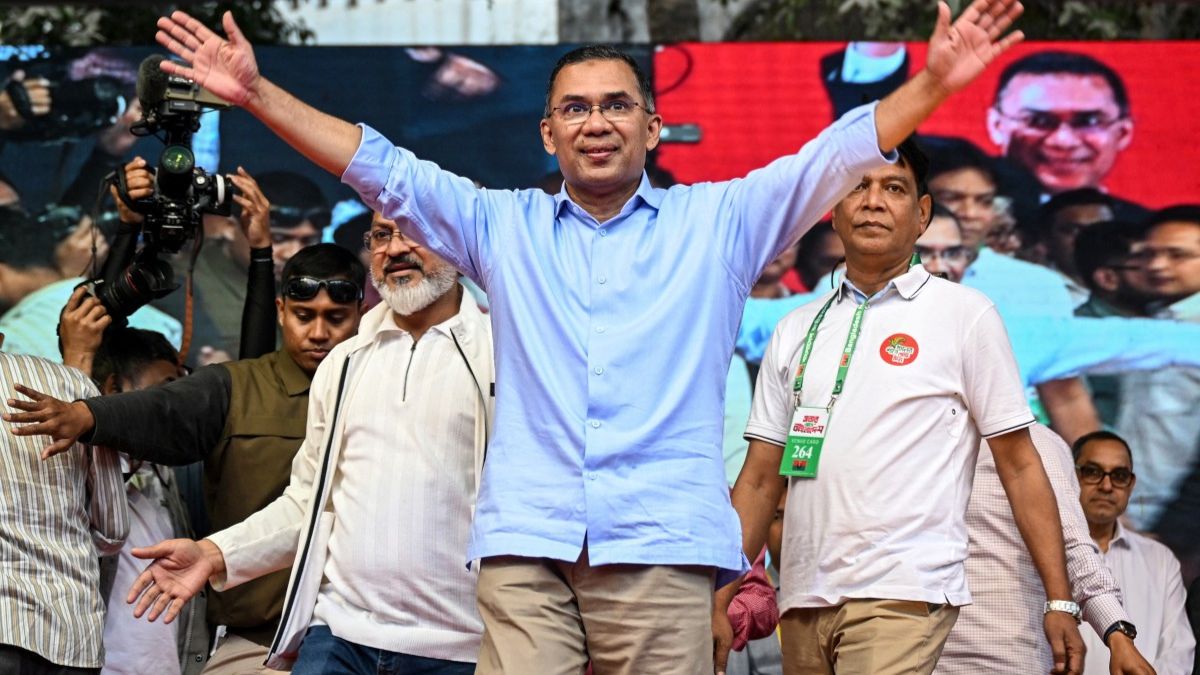
Third, and most important, is the Jamaat win. It's not just its largest win in its history. Even in the Dhaka-17 constituency, where Tarique Rehman is said to have won by a 'landslide', the actual vote difference with the Jamaat rival was a mere 4,399 votes, though he did win big in Bogura-6. Jamaat is also only marginally behind the BNP in vital seats along the Indian border, such as Lalmonirhat (where the Chinese have a strong presence in multiple capacities) and Nilphamari, winning entirely in Rangpur and other border areas. All of this is concerning for Delhi, given Jamaat's past hostility and its continuing proximity to Pakistan despite recent assurances of friendship with all neighbours (that list of neighbours even included the smallest nation - Bhutan - alongside India, sending a firm signal to Delhi).
Among major parties, it is the Jamaat that has been the most vociferous against India during election rallies. The Daily Star also reports that it was the most notable in weaponising social media to spread disinformation.
There is another critical issue. The Jamaat Chief declared total support for the referendum when others had strong reservations. That piece of complex legislation is what matters, since it will change the way Bangladesh is run for the foreseeable future. It aims to reduce the powers of the Prime Minister and give more to the opposition. And the Jamaat intends to see the step through. What one must watch out for is how it will again use its domination in universities to create disaffection against the ruling party down the line. For the immediate future, it will bat for peace and tranquillity for a population that has had enough chaos.
What Happens To Yunus?
Which, in turn, brings the story to the last actor, Muhammad Yunus himself. There is no doubt that he had a strong hand in drafting the referendum that had 84 reform proposals, of which some 70 related to the Constitution. That this hugely confusing set of changes was presented to a population that has little idea about its details was bad enough. Worse was allowing voting on it alongside the elections, an action that is unprecedented in any democracy, as much as it is unwarranted. Such constitutional changes would normally require comprehensive debates in Parliament and legal bodies. True, it has been extensively discussed among major parties, and consensus seems to have come through on many. But the timing of this is suspicious, given that some seemingly prosaic changes - such as declaring all languages equal to Bangla - now give adequate space to Urdu, long backed by the Jamaat and its Pakistani supporters. In fact, its use has seen a rise in its electoral rallies. Then there is the move to increase the powers of the President, appointing the Reserve Bank Governor without consulting the Prime Minister, and ensuring that parliamentary committees are headed by the opposition. All of this is bound to tie the hands of any future Prime Minister.
Yunus's actions have also exceeded his mandate in negotiating a trade deal with the US. It's not the relative tariff rates that are the issue. It's the announcement from officials that Dhaka will now replace Indian yarn - the largest exporter of the material - with American yarn. That's not so simple, given the sheer costs involved in bringing this from the US, when India is right next door. Yunus's motivations across the board indicate that he's not likely to 'retire' soon and may continue to 'advise' those like the Jamaat.
For India, the BNP's win has two facets. While there is certainly a troubling history behind the party's dangerous backing of militant groups, times have changed. The Indian leadership has reached out warmly to Tarique Rahman, who spent time in jail and suffered considerably earlier. Those dark memories will remain. In governing, however, the BNP's biggest threat is not India, but the Jamaat, which will certainly do all it can to stifle the new dispensation and prove that it is the best choice for the next election. The fact that it is now the second-largest party will only whet its appetite. In addition, Rahman has to contend with the 'Gen Z's' huge expectations, who have been rapidly disillusioned with their own leaders. Delivering on this will require him to cooperate strongly with neighbours - including China - to ensure that the economy is back on its feet.
Next Steps For India
India has a strong role to play despite Yunus's dilatory moves. The total bilateral trade turnover was above USD 13 billion in 2025, with India importing goods worth about USD 2 billion. The corresponding import figure for China was about half of that (USD 1.16 billion), with an inevitable trade deficit of USD 19 billion despite huge duty-free access. With India, it is less than USD 10 billion.
As for Pakistan, its exports to Bangladesh actually declined in January 2026, amid an overall drop. India has an advantage in that both countries have been trading in local currencies since 2023, which rather ameliorates the drop in Dhaka's Forex reserves. Besides this, numerous Indian companies have a significant presence in Bangladesh across sectors like FMCG, manufacturing, pharmaceuticals, and infrastructure, with major players such as Asian Paints, Dabur, and Tata Motors operating through local subsidiaries.
Keep It 'Low-Key'
The point is that there is considerable intertwining of the two economies, which Delhi has to acknowledge and increase deftly, but in a very 'low-key' fashion. Rahman would not want to be labelled 'pro-India'; that tag would be disastrous for him in the current times.
Meanwhile, expect Pakistan to make a big push to show its support for Bangladesh in various areas, apart from the very public display of affection in cricket. Such opportunities, as are available, will be used in full, and that is only to be expected. China will be more prudent - declarations of assistance will come, but with little or no actual grants. Beijing likes to invest, not dole out free funds.
Diplomacy aside, Delhi has much to work on. Priority number one is to portray itself as a neighbour who respects its smaller neighbour to the fullest and is far more agile in offering assistance when required. Even in a Trumpian world, morality matters, even among nations. Time to exercise it while keeping our eyes and ears well open.
(Dr Tara Kartha is a former Director, National Security Council Secretariat.)
Disclaimer: These are the personal opinions of the author


