Opinion | Mumbai Polls: How The 'Marathi Manoos' Campaign Ended Up Uniting Others Against It
Mumbai's demographic transformation over the past two decades has been dramatic. The city is now home to millions of migrants from across India, who felt directly threatened by the Thackerays' rhetoric.
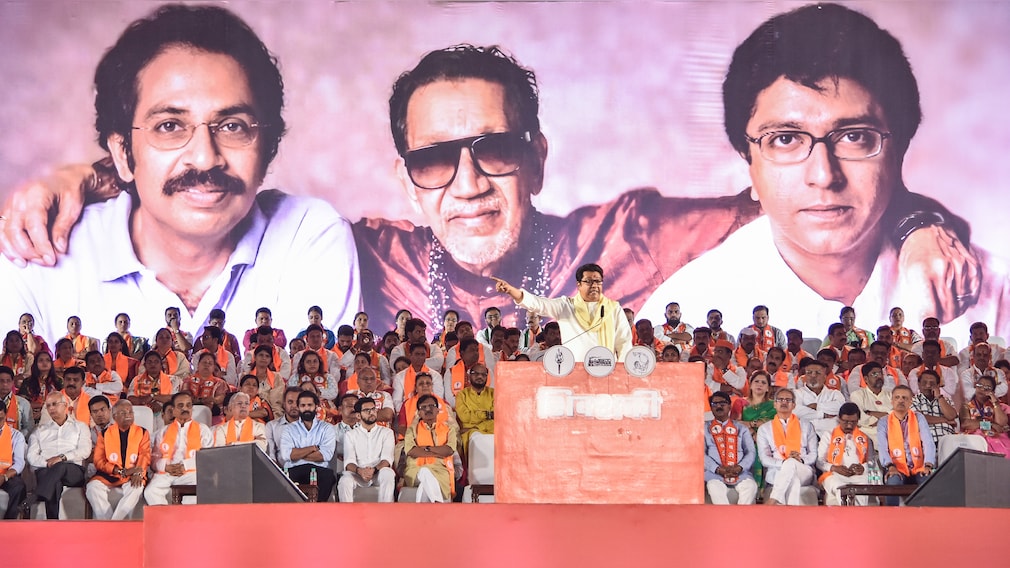
The Brihanmumbai Municipal Corporation (BMC) elections have delivered a stunning blow to the Thackeray legacy, as the Mahayuti alliance stormed what was once considered an impregnable Shiv Sena bastion. For the first time in the civic body's history, the Bharatiya Janata Party (BJP) is poised to secure the mayor's post, marking a seismic shift in Mumbai's political landscape. While the BJP-plus-Shiv Sena (Shinde) alliance secured 118 seats, (4 more than majority mark of 114), the Thackeray brothers SHS-UBT, MNS and NCP-SP alliance bagged 72 seats, with the Congress chipping in with 24 seats.
The Crumbling of a Fortress
The BMC, long controlled by the undivided Shiv Sena and later by Uddhav Thackeray's faction, has been the cornerstone of Marathi pride and Shiv Sena's political dominance in India's financial capital. Mahayuti's victory represents not just an electoral defeat but the symbolic sunset of Thackeray influence in Mumbai's civic administration. The alliance's commanding performance has given the BJP its first realistic shot at occupying the mayor's chair, a position that controls one of Asia's richest municipal corporations, with an annual budget running into thousands of crores, higher than many small and north eastern states of India.
The defeat comes despite an unprecedented alliance between the estranged Thackeray cousins who came together after a gap of 20 years. Uddhav Thackeray's Shiv Sena (UBT) and Raj Thackeray's Maharashtra Navnirman Sena (MNS) joined forces along with Sharad Pawar's NCP faction, betting that their combined appeal would consolidate the Marathi vote and present a formidable challenge to the Mahayuti juggernaut. Instead, the results have exposed the limitations of identity politics in an increasingly diverse and aspirational Mumbai.
The Marathi Card Falls Flat
The most striking revelation from the election data is the failure to consolidate even the Marathi vote bank. Despite the alliance between UBT and MNS, the Shinde faction of Shiv Sena secured 29 seats mostly in Marathi dominant / influenced seats and in direct head to head contests against each other, showcasing Shinde, too, has earned a slice of the Marathi Manoos votebank. This is a failure of strategy built entirely on linguistic and regional identity. The Marathi manoos, it appears, is no longer voting as a monolithic bloc driven solely by cultural pride or fear of outsiders.
The Thackeray brothers miscalculated the aspirations of a new generation of Marathi voters-educated, middle-class professionals who prioritize development, infrastructure, and economic opportunities over identity-based appeals. These voters remember the MNS's violent campaigns against north Indians and south Indians, the disruption of businesses, and the creation of an atmosphere of intimidation. While such tactics may have won applause from certain quarters in the past, they have increasingly alienated moderate Marathi voters who see themselves as part of a cosmopolitan Mumbai rather than a besieged linguistic community.
The Muslim Vote Conundrum
Equally problematic was the alliance's inability to secure Muslim votes, which remained largely with the Congress and parties like the AIMIM, the NCP and the SP. The Thackeray camp had assumed that Muslims would vote strategically for whichever party was best positioned to defeat the BJP. This calculation ignored the deep historical scars left by the Shiv Sena's role during the Babri Masjid demolition and the subsequent Mumbai riots of 1992-93.
Raj Thackeray's past rhetoric and the original Shiv Sena's history made it difficult for Muslim voters to trust the Thackeray alliance, regardless of current political expediency. The community chose to stick largely with the Congress and ethnic parties like AIMIM/SP, even if it meant splitting the opposition vote. This led to failure of the strategy of consolidating the 40% Marathi Manoos and 20% Muslim community vote.
The Counter-Consolidation
Perhaps the most consequential outcome of the Thackeray strategy was the counter-consolidation it triggered. Non-Marathi voters - estimated at 40% - overwhelmingly backed the Mahayuti. The speeches and historical record of Raj Thackeray, who built his political career targeting south Indians, north Indians, and Gujaratis, came back to haunt the alliance.
Mumbai's demographic transformation over the past two decades has been dramatic. The city is now home to millions of migrants from across India who have made significant economic and social contributions. These communities felt directly threatened by the Thackeray alliance's rhetoric and voted decisively to keep them out of power. The irony is stark: a campaign built on Marathi identity ended up uniting everyone else against it.
Development Trumps Identity
Devendra Fadnavis and the Mahayuti alliance recognised what the Thackerays missed - that Mumbai's voters, including Marathis, are increasingly concerned about quality-of-life issues. The Mahayuti's focus on infrastructure projects, building society amenities, improved roads, better drainage systems, and overall urban development resonated with the aspirational middle class and youth.
The Thackeray pitch, by contrast, was not forward-looking. It dwelled on grievances, fears of cultural erosion, and nostalgia for a Mumbai that exists more in imagination than reality. Many voters felt this approach was taking the city backward rather than forward. In a city where traffic congestion, flooding, housing shortages, and infrastructure gaps are daily concerns, promises of cultural preservation felt inadequate.
Women and Welfare Schemes
The Mahayuti's success was also built on targeted welfare schemes, particularly the Ladki Bahin Yojana, which directly benefited women. Female voters continued to back the alliance, appreciating tangible benefits over abstract identity appeals. This demographic shift proved crucial in several closely contested wards.
The Congress Factor
Adding to the Thackerays' woes was the disjointed nature of the opposition. The Congress, which bagged a crucial 10-12% vote share, refused to align with the MNS in Mumbai while maintaining alliances with the party in four other municipal corporations. This double standard not only split opposition votes but also confused voters about the coherence of the anti-BJP front.
The Congress's strategy, or lack thereof, meant that in many wards, opposition votes were divided three or four ways, making it easy for Mahayuti candidates to win with simple pluralities. A united opposition might have posed a more formidable challenge, but organisational rivalries and historical animosities prevented such unity.
A Narrative Vacuum
Ultimately, the Thackerays lacked a compelling forward-looking narrative. Their campaign's fear-mongering about threats to Marathi identity fell flat with voters who are navigating the realities of 21st-century urban life. The demographic changes in Mumbai were either ignored or antagonised by party strategists who seemed to be fighting elections from a playbook written decades ago.
(Amitabh Tiwari is a political strategist and commentator. In his earlier avatar, he was a corporate and investment banker)
Disclaimer: These are the personal opinions of the author
-
Opinion | The Eerily Familiar Game Behind China's Silence On Iran

What looks like a setback for Beijing in West Asia might actually be more leverage - a chance to build long-term capital without firing a single shot.
-
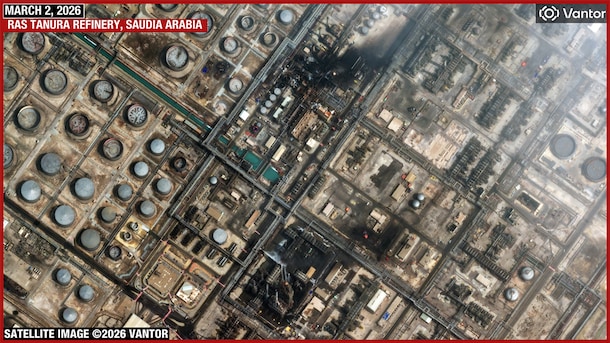
Satellite Pics Show Extent Of Damage By Iran Drones At Saudi Aramco Refinery
Iran Supreme Leader Ayatollah Ali Khamenei was killed on Day 1 of the US-Israel attacks and his death has further complicated an already tense geopolitical situation.
-
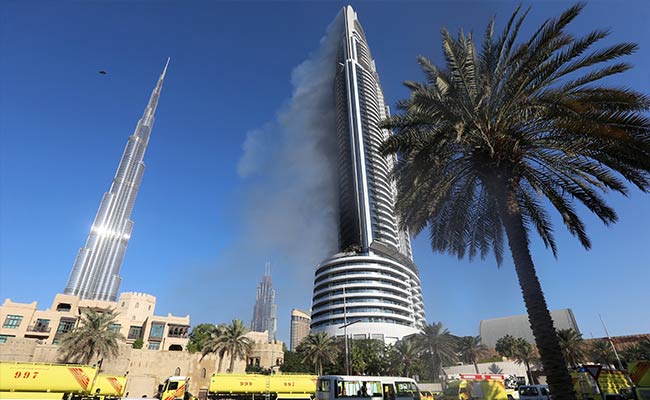
Blog | How Did Indians Become So Central To Dubai's Rise? It Goes Deeper Than Oil
The ease with which Indians have made the UAE, particularly Dubai, their home is a familiarity the two nations shared even before the oil boom of the 1970s, or the real estate boom later.
-
Opinion | How America Is Quietly Profiting Off The Oil Chaos In Gulf
In 2008, the high oil prices had helped kickstart the shale oil industry in the US. Something similar may be happening now.
-
From Aircraft To Lives: Why "Friendly Fire" Can Be Such A Big Enemy
There is not even a millimetre of room for error in judgment - and this is one of the biggest contributors to friendly fire incidents
-
Opinion | Gulf Confronts An Ugly Truth About Aligning With America
That Iran is attacking bases and other sites in the UAE, Qatar, Bahrain, Saudi Arabia - even Oman - has caused disillusionment in these countries, which thought that they were protected by the US. They are now learning they're not.
-
Cheap Drones, Claude AI, Cyberattacks: Behind US-Israel's 'New' War On Iran
Cyber warfare, Claude, cheap drones - as the US and Israel jointly pound Iran, and Tehran hits back by dragging West Asia into a regional war, are these the backbone of a new kind of military conflict?
-
Opinion | How Khamenei's Killing Is Doing Exactly The Opposite Of What US-Israel Wanted
What Israel and the US have done is make Khamenei, who was running a country dealing with extreme economic hardships, protests and internal strife, a martyr. His killing has united Shias and Sunnis across the globe in anger.