Opinion | Bitumen: A Crude Item's Curious Link To Trump's Venezuela Strike - And India
What China stands to lose after Trump's Venezuela blitz, India may soon be building at home.
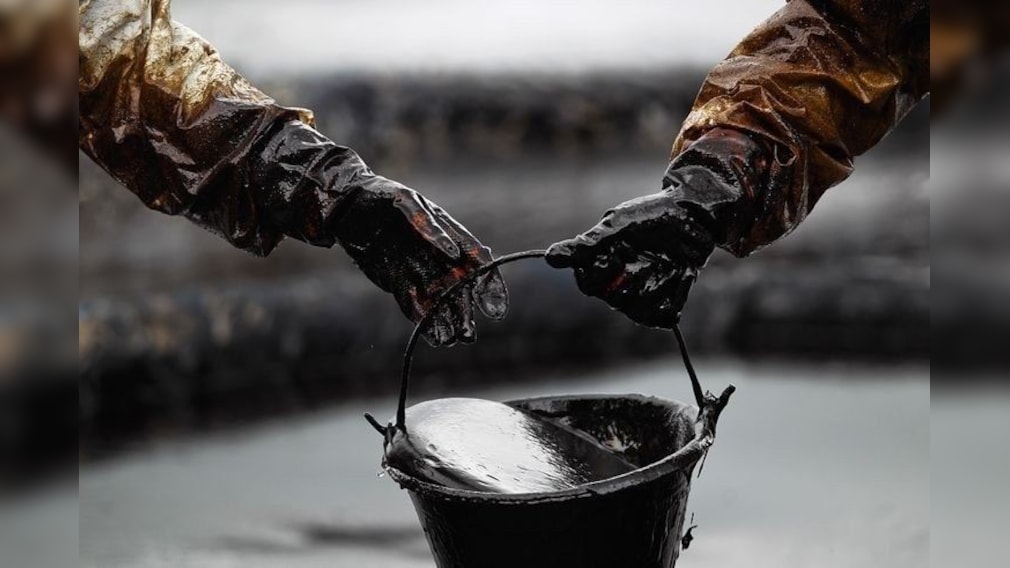
Amid the pervasive gloom and jitters of geopolitics, India has found a silver lining in innovation. It became the first country in the world to successfully develop bio-bitumen, a sustainable alternative to the petroleum-based binder widely used in asphalt for building roads. The New Delhi-based CSIR‑Central Road Research Institute and the Dehradun-based CSIR‑Indian Institute of Petroleum jointly developed commercially viable bio-bitumen from agricultural residues such as hay (think farm stubble, which is usually burnt). They made it using pyrolysis, an oxygen-free heating process popular in organic waste recycling. The Jorabat-Shillong Expressway (NH-40) in Meghalaya now sports a 100-metre trial stretch using bio-bitumen, demonstrating its feasibility. Regular bitumen, which gives roads their black top, is derived from crude oil and India imports the commodity worth about $3 billion annually.
What's the Big Deal?
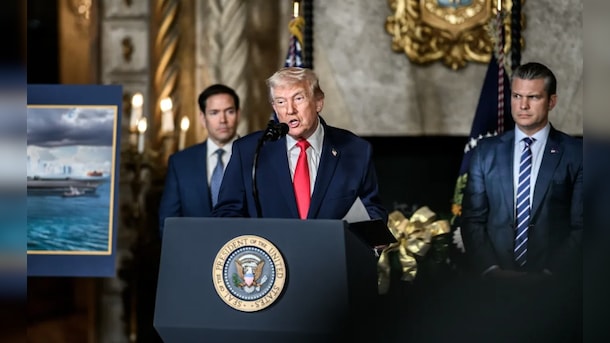
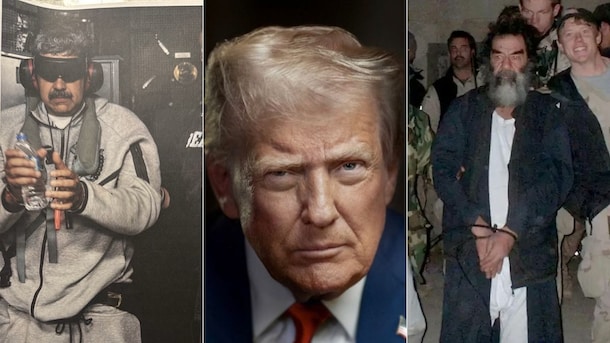
On the face of it, the innovation might appear trivial, especially when compared with headline-grabbers such as artificial intelligence or quantum computing. But if you consider the bitumen story at the centre of the geopolitical storm unleashed by President Donald Trump when he ordered the US military to march into the capital of Venezuela and kidnap its head of state, Nicolas Maduro, and his wife, the achievement gets an added sheen for its timing.
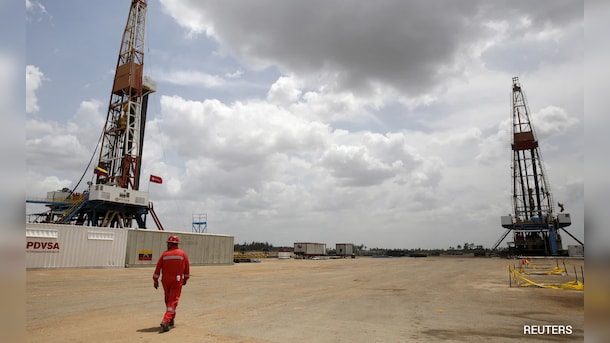
At over 300 billion barrels, Venezuela holds the largest reserve of crude oil in the world. Crucially, much of it is ultra-heavy crude, the richest source of bitumen and diesel, the former crucial for transport infrastructure and the latter for powering trucks, trains, ships and jets. For the foreseeable future, the US will control where Venezuelan oil flows to.
Blow to China
The heavy oil pumped out from the Orinoco fields of the Latin American producer used to be the main feedstock for independent Chinese refineries, nicknamed 'teapots'. China imported 3,89,000 barrels per day of Venezuelan crude in 2025. PetroChina built a refinery complex in Jeiyang in Guangdong province specifically to process heavy crude originating from fields such as Orinoco.
Now, the US intends to steer much of that oil towards refineries in Texas. The US is awash with light sweet shale crude, which is used as a diluent to pump out heavy crude. US energy secretary Chris Wright has said that the country will ship copious amounts of diluent to Venezuela and bring heavy oil back stateside.
The US move not only deprives China of discounted heavy oil but also more than half of its source for bitumen. The scarcity of bitumen can impact the expansion and maintenance of highway networks. At the very least, it will make it more expensive to build roads. The other major source countries for heavy crude are Iran, Russia and Canada. While the former two do not produce oil as heavy as Venezuela's, crude from the tar sands of Alberta in Canada matches up but is costlier to transport.
The first of China's major sources of relatively cheap heavy crude oil - Venezuela - is blocked. Buying oil from Russia is risk-ridden as Trump will soon likely be armed with fresh powers to impose punitive tariffs up to 500% on sanction-defiers. Iran is gripped by an unprecedented economic crisis and people's agitation that could result in a regime change, jeopardising its oil production and sales in the international grey market.
India's Advantage
Several Indian oil companies' shares rose soon after the US attack in Caracas. While a few Indian companies, such as ONGC, Indian Oil and Oil India, have equity stakes in some fields in Venezuela, several Indian refineries, especially Reliance Industries' Jamnagar complex, are equipped to process ultra-heavy crude oil.
One of the valuable byproducts of ultra-heavy crude is vanadium, which is used to make steel and aluminium alloys in the auto and aerospace industries. It is also key to making vanadium redox flow batteries, which have a long life and are suited for large-scale grid storage. But it requires sophisticated tech know-how to extract it from petroleum coke or refinery waste. A deep tech startup and IIT Delhi are jointly working on perfecting the technology and developing a domestic vanadium supply chain originating from refinery waste.
As India winds down oil purchases from Russia, an alternative source of crude oil could be Venezuela. Reliance Industries is already eyeing shipments from that country. Locally developed vanadium production technology would be just in time.
India often draws fire for its apathy towards research and development. Bio-bitumen could be a small but significant step in bridging the gap in industrial innovation with countries such as the US and China. Successfully developing tech to produce vanadium from petroleum waste would be another.
(Dinesh Narayanan is a Delhi-based journalist and author of 'The RSS And The Making Of The Deep Nation'.)
Disclaimer: These are the personal opinions of the author
-
Opinion | What Trump May Be Getting Dangerously Wrong About Iran

Trump has reasons to be careful. Iran is not Venezuela. It is nearly as big as Western Europe and remains a military power, despite being degraded by the Israeli and the US military action last year.
-
Blog | Madhav Gadgil: The 'Durable Optimist' Who Believed Science, Too, Has Obligations
Gadgil, despite decades of frustration and bureaucratic sidelining, believed that people could organise, that knowledge could travel, and that democracy, however delayed, could still correct its course.
-
Blog | What's Stopping Vijay's Film? 6 'Conspiracy Theories' About Jana Nayagan
In Tamil Nadu, it turns out you don't need a release date for the promise of a blockbuster. Sometimes, just a missing censor certificate is enough.
-
Opinion | The $700-Billion-Big China Problem Behind Trump's Venezuela Blitz
Venezuela is only part of the story. China has assembled a formidable economic footprint across Latin America. Trade between China and the region crossed $518 billion in 2024, making Beijing the largest trading partner for much of South America.
-
From Trump And AI To Russia And Water: The 'Top Risks' Of 2026
Ian Bremmer's Eurasia Group, one of the world's top risk research and consulting firms, has released its 'Top Risks 2026' report.
-
Opinion | Suresh Kalmadi: The Man Behind The Legendary 5-Star Dinner That Unnerved Even Sonia Gandhi
Kalmadi proved that in Indian politics, the man who controls the guest list often has more power than those whose names appear on it.
-
Europe's Different Yardsticks To Judge Events In Venezuela And Ukraine
Russia has called the US strike on Venezuela and the subsequent capture of Nicolas Maduro an act of armed aggression
-
Opinion | How Venezuela's China-Made Weapons Failed To Keep The US Away
Unlike post-Operation Sindoor, when Beijing hailed Pakistan's air-defence operations against India as a success of Islamabad's "Made in China" military force, there is an eerie silence within Beijing this time.
-
Opinion | Donald Trump Has A New Project: 'Make Venezuela Great Again'
Trump's presidency, much like of those before him, reveals the structural constraints that limit any US leader's ability to disengage from global conflicts.
-
A History Of US-Led Regime Changes And Their Disastrous Consequences
There is a familiar theme to American power when it decides to reorder the world. It is against that historical backdrop that Donald Trump's latest foreign intervention must be understood.