Opinion | Bihar Must Be A Lesson To Opposition: Value The Woman Voter
Here is a constituency that cuts across caste, religion and social economic dynamics, and we would be doing our election strategy a huge disservice by not engaging with it meaningfully.
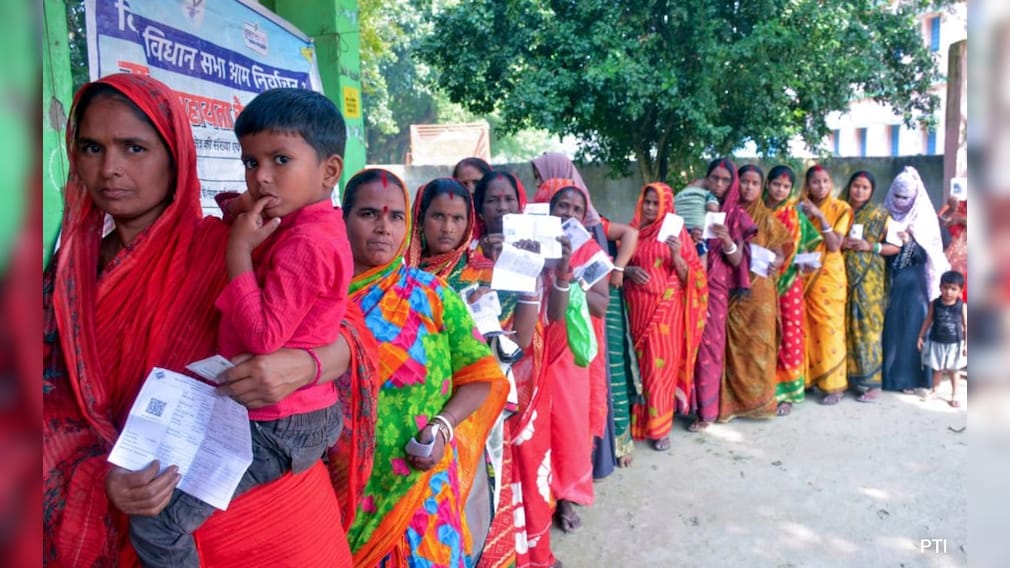
The Bihar elections were much anticipated, and the election results came as a surprise with the one-sidedness of it all. Also, one cannot deny several factors in this decisive, one-sided mandate for the National Democratic Alliance (NDA) or ignore the questions on Special Intensive Revision (SIR) as well as the Election Commission's (EC) role in this outcome. However, the mandate from the Bihar elections has shown that women voters play a decisive role in election outcomes. This is not just a one-off event that we see from time to time but a systemic shift towards the Modi narrative. It is, thus, imperative that the opposition effectively engages with them.
For decades, Indian women have been at the periphery of electoral strategy, recognised as voters but rarely acknowledged as game-changers. However, repeatedly their choice, their turnout, and their expectations have rewritten the election script as we have known. No political party can afford to discount them. If they do so, it would be at their own peril.
The Bihar Experience
Bihar recorded its highest-ever voter turnout at 66.9%, but it was women who powered this surge, turning out at an unprecedented 71.65%, a remarkable 8.8 percentage points higher than men.
In the context of Bihar, this isn't the first election where Nitish Kumar's strategy has been to tap the women voters. In fact, it has been built over two decades of his government. However, in terms of delivery, his government's record is deeply flawed and far from the progress it claims. Early initiatives like the bicycle scheme, Jeevika's self-help groups, and 50% reservation in local bodies did expand women's visibility in public life, but many of these gains have fallen short, with limited upward mobility or real decision-making power.
The 2016 prohibition policy, framed as a women-centric reform, instead led to rampant illicit trade, excessive and often arbitrary policing, and the criminalisation of already vulnerable classes. However, despite the misses, what such women-centric policy announcements did before the election was to make him the favoured choice of the women of his state.
In the current election, which has led to yet another decisive mandate for the Nitish Kumar-led alliance, the incumbent government leaned heavily on direct cash transfers, including the ₹10,000 aid to over one crore women. This decision clearly was a last-minute push that functioned more as electoral signalling than impactful empowerment.
Don't Undermine The Women
What one must not forget to highlight is that before the cash scheme was announced, there was the much-opposed Special Intensive Revision of electoral rolls that led to Bihar's gender ratio dropping sharply - from around 907 women per 1,000 men to 892. Although the total rolls shrank by 5%, women accounted for near 60% of all deletions.
This led to massive outrage, considering that the very constituency which votes in higher numbers is being disproportionately removed from the electoral register. This exposes the structural vulnerabilities regarding how the system recognises and protects women voters. More alarmingly, even as women's turnout reached historic highs, the number of women candidates contesting was the lowest in 15 years, a stark reminder that women are welcomed as voters but excluded as leaders.
See Them For What They Are
No election can be built on promises alone; real progress will depend on deeper reforms that create stable livelihoods and genuine political representation for women. Women in India today are not a passive vote bank; they are a politically aware, aspirational, and consequential demographic whose choices are shaped by governance, mobility, household economics, and dignity. They deserve not only to be counted but to represent and be represented. Their vote is not a favour, their participation is not symbolic, and their political agency is no longer negotiable. Bihar's 2025 election marks a turning point, one that shows what happens when women step out of the shadows and seize the electoral moment.
As a member of the opposition, I had posted on X after the Bihar results became clear for the opposition's need for women to become an important discourse in our engagement, to offer them an alternative vision. It invited trolling that reduced the women's support to the incumbent government to the cash handouts that incentivised women step out to vote. This is not just an insult to their intelligence but also a reductionist attitude to their choices. The women, repeatedly, have shown clear support to those who keep them at the centre of the electoral narrative. Till we as an opposition do not talk to women for who they are in terms of their choices and see them merely as a group to tap in the larger narrative of election strategy, we would be failing in our goal. Here is a constituency that cuts across caste, religion and social economic dynamics, and we would be doing our election strategy a huge disservice by not engaging meaningfully.
In the next week and the month there will be reams written on what worked and what did not. As a woman, my only humble submission would be to begin the conversation with India's women, for they hold the key to what opposition looks for and what India needs.
(The author is a Rajya Sabha MP and Deputy Leader of the Shiv Sena-UBT)
Disclaimer: These are the personal opinions of the author
-
Opinion | Trump's Iran War Is About To Become Someone Else's Problem Soon

Start alone, end alone - that may be the harshest lesson for Trump as he now tries to dash for the door in Iran.
-
What Happens If Iran War Actually Ends In 2 Weeks: The Challenges Ahead
Trump said the war could end in two weeks sans a deal to re-open the Hormuz. Analysts say it could take six to weight weeks more for oil flows to normalise, with each extra week of fighting adding seven to 14 days of recovery.
-
Opinion | Why 2 Gulf States Want Iran War To Continue - Even As They're Battered By It
If Trump withdraws from this war, the UAE, Saudi Arabia and other Gulf countries would be left to face the music alone, with an angrier, fiercer, and possibly more vengeful Iran.
-
Opinion | Why A 'Defeat' Is Now Essential For The Disoriented Left In Kerala
Power and arrogance have turned the Left in Kerala into what it once fought against. It now needs to lose its last bastion to cleanse itself of its maladies.
-
Opinion | On April Fools' Day, A Reality Check For US, Iran And The World
The paradox is this: Iran wins simply by surviving, while the US must achieve a far more overwhelmingly convincing result to claim success.
-
Opinion | Pakistan, And The One Big Difference Between 'Broker' And 'Mediator'
Neither Washington nor Tehran appears willing to invest Pakistan with the political capital required for mediation.
-
Houthis Threaten Strait No 2 As Iran War Expands. What It Means For India
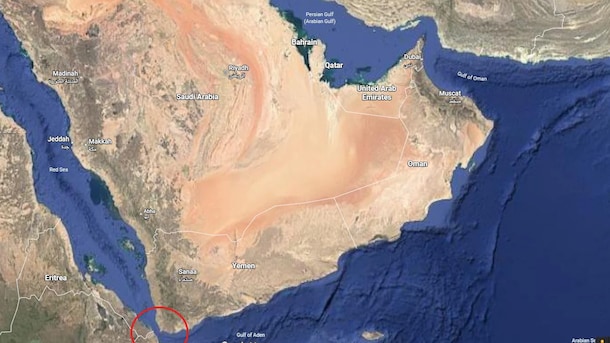
Yemen's Houthi rebels have opened a second front in the Iran war, threatening Bab al-Mandab just as the Strait of Hormuz comes under pressure, and squeezing one of the world's most important oil corridors from both ends.
-
Europe Split Over Trump's Iran War, Spain Leads Defiance
Europe is sharply divided on how to view fighting in West Asia and subsequent pressure on the global energy trade, which has seen fuel and gas prices increases worldwide.
-
Opinion | Zagros To Dasht-e-Lut, Why Iran's Terrain Could Be A Challenge For US Ground Troops
Iran is often called a 'fortress' owing to its formidable mountain ranges, which virtually form a wall to its North, West and South.
-
More Fighting, Deaths, Oil Prices: 4 Worrying Points If US Invades Iran
In case of a ground invasion, US troops will likely be forced to fight on multiple fronts - Iran proxies Houthis in Yemen, Hezbollah in Lebanon, and Hamas in Gaza, as well as smaller Shiite militia in Iraq and Bahrain.