Opinion | Bihar's Lesson For Congress And Rahul Gandhi? Just Photo-Ops Won't Do
Rahul Gandhi's relationship with allies may have managed to produce some striking media moments, but not public trust. The result is a politics of half-gestures: common pressers without common strategies, joint slogans without joint cadres.

The National Democratic Alliance (NDA) has romped back home in Bihar - this time with a mandate more unambiguous than the one it received in 2020. In order of dominance, Bihar's current electoral landscape is divided among three parties - the Bharatiya Janata Party (BJP), the Janata Dal (United, or JDU) and the Rashtriya Janata Dal (RJD). One outcome of this election has been the emergence of the JD(U) as the party with the second-largest number of seats. But a more significant outcome is the resurrection of Nitish Kumar as the kingmaker (and, possibly, king himself) and undisputed leader of the JD(U).
The Stunning Delivery Of JD(U) And Nitish
In the run-up to the elections, Kumar was being described as someone whose shelf life was over after 20 years in office. Doubts were cast - by his political detractors as well as by his allies - on the state of his mental and physical health. The NDA could not project an alternative chief ministerial face as there was none. The JD(U) had no leader who could seamlessly slip into Kumar's shoes. The ones the BJP had were either out of favour with the party's central leadership (Ravi Shankar Prasad, Rajiv Pratap Rudy) or had passed on (Sushil Modi), forcing it to bring to the fore controversial figures like Samrat Choudhary.
So, what kind of turnaround happened in Bihar? Back in 2020, the NDA had won 125 out of a total of 243 seats, just three above the majority mark of 122. The Mahagathbandhan alliance (MGB) had won 110 seats. Despite the 15-seat gap, the popular vote was nearly tied, with the NDA at 37.26% and the MGB at 36.58%. The RJD was the single-largest party with 75 seats and 23.11% of the vote, followed by the BJP with 74 seats and 19.46% votes. The JDU had won 43 seats with 15.39% of votes, while the Congress took 19 seats with around 9.5% of the vote.
At the time of writing, the BJP's tally is 94, the JDU's 83, and the Lok Janshakti Party (Ram Vilas) (LJP-RV) is hovering around 20. Within the Mahagathbandhan alliance, the RJD's tally is likely to be less than half (around 25), with the Congress getting around five seats. In terms of vote share, while the BJP seems poised around 21%, it is the JD(U)'s share that is seeing an upward swing of around 4%. If we take into account the performance of parties like the LJP(RV) or the Hindustani Awam Morcha (Secular) (HAM-S), the NDA alliance's tally will go up by at least 25 more seats, accounting for eight more percentage points of vote share.
What Really Happened In Bihar?
As the results come in, two striking factors stand out in Bihar. Whether driven by the ₹10,000 cash transfer or by other incentives is a matter for deeper research - but the first clear trend is that more women turned up to vote this time. The second trend challenges the conventional belief that higher voter turnout signals a desire for change. Bihar witnessed a 14% increase in turnout compared to 2020, and this surge appears to have worked in favour of the NDA alliance. In fact, it seems as though even after 20 years in office, voters came out in greater numbers to keep Nitish Kumar in power.
It is clear that within the NDA, it was the BJP and the JDU which did the heavylifting. On the campaign trail, NDA partners were speaking in harmony, messaging across the board on local issues based on good governance, development and promise of jobs. This ensured a clear and uncluttered communication addressed to the voter.
Where The MGB Faltered
In comparison, the Mahagathbandhan's messaging had different, even contradictory, strands. While Tejashwi Yadav was harping on jobs, welfare, and development issues targeted at Bihar's youth, Rahul Gandhi continued to highlight “vote chori” and issues aligned more with a pan-India perspective. The Congress party's initial reaction to the early trends stuck to the same line. The party also dithered on projecting Tejashwi Yadav as a clear chief ministerial face. This lent credibility to the NDA's narrative that all was not well with Rahul Gandhi and Tejashwi Yadav.
One subplot that ended quietly in this election was Prashant Kishor's electoral debut. After months of padyatras (foot marches), mobilisation drives and a high-voltage narrative of political disruption, his party failed to make a meaningful dent in either vote share or seats. For someone long regarded as India's most influential election strategist, the verdict underscored a sobering truth: political consultancy and political mass-building are fundamentally different crafts. Bihar's electorate did not see Kishor's party as a credible alternative, and his experiment, at least in this cycle, collapsed under the weight of its own expectations.
Congress Must Now Really Listen
Bihar's outcome sharpens a question that has haunted the Congress ever since the INDIA experiment was conceived: what place does a weakened national party carve out for itself vis-à-vis assertive regional chieftains? In the NDA, the bargain in Bihar was crystal clear: the BJP would drive the national narrative and organisational machine while conceding the leadership of the state to Nitish Kumar and allowing the JD(U) to grow. The campaign, seat-sharing, and messaging were aligned to that compact - and the results reflect that coherence. In the Mahagathbandhan, by contrast, the Congress neither fully embraced Tejashwi Yadav as the face of change nor offered a counter-vision of its own. The alliance looked less like a partnership and more like a negotiation in progress, and voters sensed that.
That hesitation is not confined to Bihar. Rahul Gandhi's relationships with potential allies - Tejashwi in Bihar, Akhilesh Yadav in Uttar Pradesh, Mamata Banerjee in Bengal, Arvind Kejriwal in Delhi and Punjab, and others - have produced striking images and joint rallies, but not a stable architecture of trust. Regional leaders bristle at the idea of yielding space to a Congress that is organisationally weaker in their states, while the Congress is reluctant to publicly accept a junior role or commit to clear power-sharing arrangements. The result is a politics of half-gestures: common press conferences without common strategies, joint slogans without joint cadres on the ground.
An Existential Dilemma
Whether this is an institutional hesitancy or a reflection of Rahul Gandhi's personal style of engagement is open to debate. What Bihar shows with brutal clarity is that the cost is being paid at the ballot box. The Congress cannot revive itself nationally without encroaching on the anti-BJP space occupied by its regional partners. Yet, whenever it does so without a prior, honest settlement, it weakens the broader coalition and hands the BJP an advantage. That is the party's existential dilemma. And the BJP, far more disciplined in stitching together and managing its alliances, has learnt how to exploit it election after election.
Ultimately, Bihar's verdict is not just a rejection of one alliance and an endorsement of another; it is a reminder that Indian voters reward clarity, cohesion, and credibility over sentiment and symbolism. The BJP-JD(U) formula worked because its hierarchy was settled and its message was stable. The Mahagathbandhan faltered because its centre of gravity was never agreed upon. For the Congress and Rahul Gandhi, the deeper lesson is that alliances cannot be episodic or personality-driven. They must be built, tended, and trusted - long before the first vote is cast.
(Rasheed Kidwai is an author, columnist and conversation curator)
Disclaimer: These are the personal opinions of the author
-
Opinion | 'Go Get Your Oil': Is Trump About To Cut And Run On His Own War?

Trump's decision to end the war without achieving any of his previously stated objectives will be viewed by many as a cut-and-run move. Some will interpret this as an admission of defeat.
-
What Happens If Iran War Actually Ends In 2 Weeks: The Challenges Ahead
Trump said the war could end in two weeks sans a deal to re-open the Hormuz. Analysts say it could take six to weight weeks more for oil flows to normalise, with each extra week of fighting adding seven to 14 days of recovery.
-
Opinion | Why 2 Gulf States Want Iran War To Continue - Even As They're Battered By It
If Trump withdraws from this war, the UAE, Saudi Arabia and other Gulf countries would be left to face the music alone, with an angrier, fiercer, and possibly more vengeful Iran.
-
Opinion | Why A 'Defeat' Is Now Essential For The Disoriented Left In Kerala
Power and arrogance have turned the Left in Kerala into what it once fought against. It now needs to lose its last bastion to cleanse itself of its maladies.
-
Opinion | On April Fools' Day, A Reality Check For US, Iran And The World
The paradox is this: Iran wins simply by surviving, while the US must achieve a far more overwhelmingly convincing result to claim success.
-
Opinion | Pakistan, And The One Big Difference Between 'Broker' And 'Mediator'
Neither Washington nor Tehran appears willing to invest Pakistan with the political capital required for mediation.
-
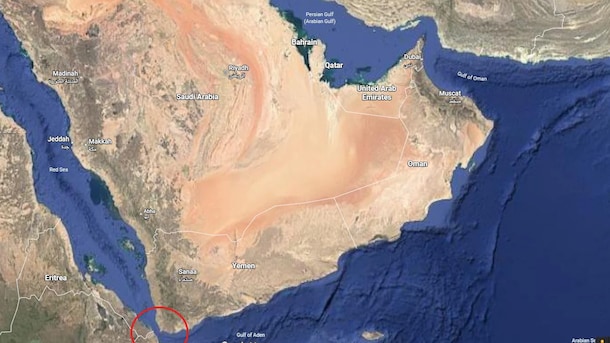
Houthis Threaten Strait No 2 As Iran War Expands. What It Means For India
Yemen's Houthi rebels have opened a second front in the Iran war, threatening Bab al-Mandab just as the Strait of Hormuz comes under pressure, and squeezing one of the world's most important oil corridors from both ends.
-
Europe Split Over Trump's Iran War, Spain Leads Defiance
Europe is sharply divided on how to view fighting in West Asia and subsequent pressure on the global energy trade, which has seen fuel and gas prices increases worldwide.
-
Opinion | Zagros To Dasht-e-Lut, Why Iran's Terrain Could Be A Challenge For US Ground Troops
Iran is often called a 'fortress' owing to its formidable mountain ranges, which virtually form a wall to its North, West and South.
-
More Fighting, Deaths, Oil Prices: 4 Worrying Points If US Invades Iran
In case of a ground invasion, US troops will likely be forced to fight on multiple fronts - Iran proxies Houthis in Yemen, Hezbollah in Lebanon, and Hamas in Gaza, as well as smaller Shiite militia in Iraq and Bahrain.