Opinion | Self-Inflicted Wounds? How Mamata Became The Architect Of Her Own Collapse
For a leader who built her identity on being the "sole protector" of Bengali sub-nationalism and the provider of a sprawling welfare state, the transition to the Opposition benches will be devastating.
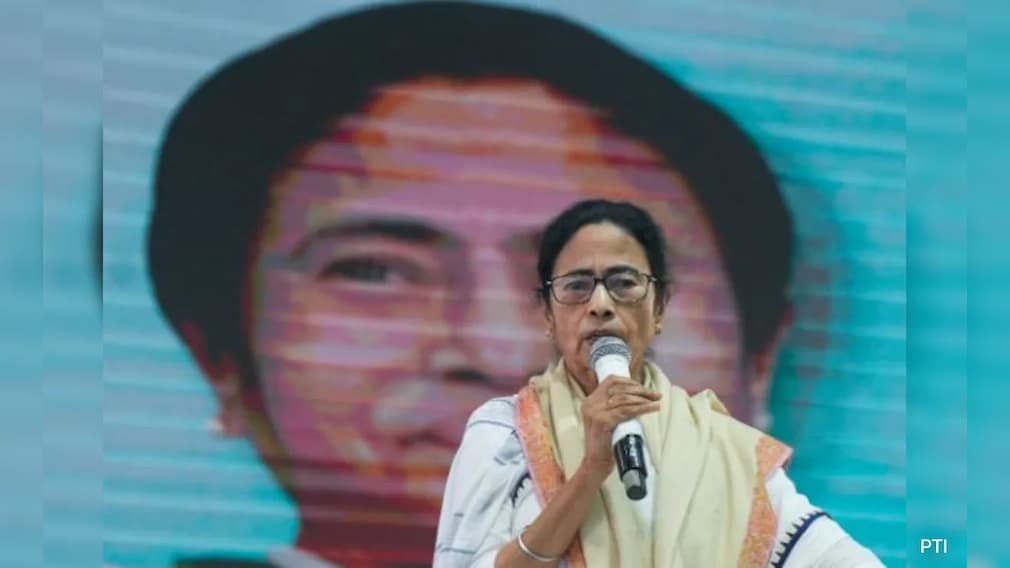
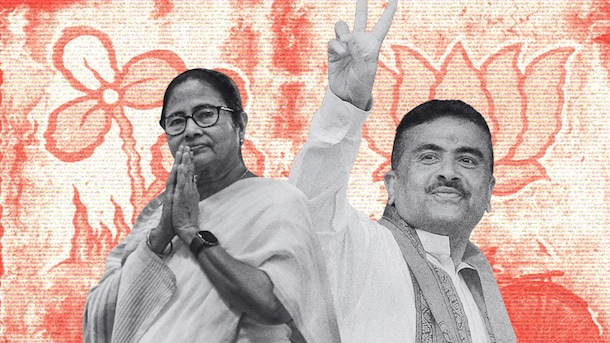
May 4 has turned out to be much more than just another counting day in Bengal. It will go down as the day when a 15-year political order imploded in full public view. By mid-afternoon, it became clear that the Trinamool Congress's 15-year rule in West Bengal was coming to an end as news of the Bharatiya Janata Party's (BJP) electoral successes came pouring in from across the state. Out of a total of 294 seats in the assembly, the BJP has bagged a whopping 206, while the Trinamool Congress (TMC) has been reduced to a mere 81, a bitter loss of 133 against its 2021 sweep. The rest of the tally is divided among the CPI(M), the Congress and others, whose outcome could not tilt the scale.
It was a six-to-seven per cent swing of votes in its favour that pulled the BJP from 77 seats in 2021 to where it is today, all thanks to a campaign where it not only capitalised on the TMC's mistakes but also steadily pushed its own goals.
RG Kar, Nirbhaya, And How Governments Fall
For the Trinamool, the main talking points in its election campaign were its welfare schemes that focused on women's empowerment, education, and rural development. Key initiatives included the flagship Lakshmir Bhandar scheme, which offers monthly financial aid to women, and other programmes such as Kanyashree, Swasthya Sathi, and Karmashree, targeting social security.
The BJP, on the other hand, came with the promise of extending to Bengal its schemes from other states, and also raising the amount distributed through them. Many existing beneficiaries appear to have been convinced that even if a new government came in, the ongoing schemes would not be stopped.
Despite women's issues making up much of the core of Mamata Banerjee's policymaking - Ma, Mati, Manush was its clarion call this election - doubts about women's security in the state could not be dispelled. Incidents like the rape and killing of a young doctor on duty at Kolkata's RG Kar Medical College in 2024 cast a long shadow over the effectiveness of the state government. One could almost draw a parallel between RG Kar and the Nirbhaya incidents, both of which eventually snowballed politically, and, coupled with other factors, unseated the governments of the day.
Mamata Made It Easy For BJP
It is fair to state that West Bengal's political and social landscape has undergone a drastic change in the past few decades when it comes to communal politics. Through its relentless Hindu-versus-Muslim narrative, the BJP was able to convince a large section of the electorate, especially in the urban and peri-urban areas, that Bengal faced an impending danger of being overrun by Muslims.
Banerjee herself handed such talking points to the BJP by aggressively engaging with the state's orthodox Islamic leaders and attending their religious events, often in hijab. Schemes such as honorariums for imams also met with disapproval from a large section of Hindus. Banerjee tried to balance this by constructing lavish temples in Digha (the Jagannath temple) and Kolkata's New Town (Durga Angan), which further entrenched her in competitive communalism in a society that had, for long, imagined itself to be relatively resistant to these forces.
The Construction 'Syndicates'
Construction and material supply syndicates were another bane for the TMC. In the absence of large or medium-sized industries, a large section of Bengal's youth resorted to supply networks to earn a living. These often boiled down to extortion of money from local businessmen in exchange for protection. Such syndicate-controlled activities ranged from construction and road-building in rural areas to illegal coal supply and cattle smuggling. Syndicates also controlled bidding for state government contracts, and part of the money generated through such operations came back to the party via its local leaders. It will be interesting to see how the BJP dismantles this syndicate system, as it promised during its election campaign. It will need to do this because syndicates often tend to co-opt whoever is in power.
No More An Outsider
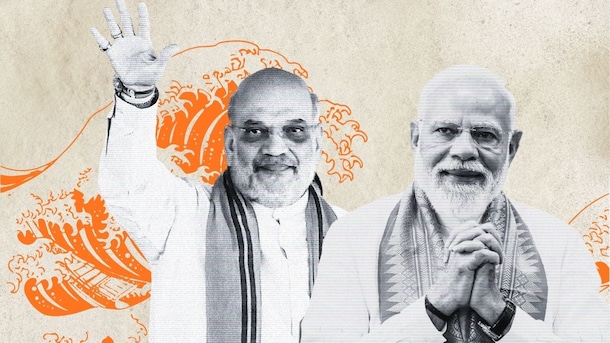
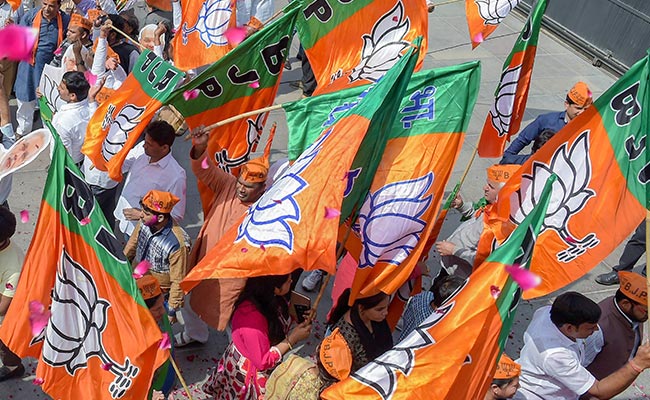
The BJP owes the astounding result significantly to Narendra Modi and Amit Shah's election management. Both made Kolkata their second home in the run-up to voting in late April. While Modi spoke about big-picture issues, it was left to Shah to take care of the nuts and bolts. The campaign was also aided by a much harder booth-level and seat-level focus than before. Without putting Hindutva front and centre of its messaging, the BJP doubled down on the idea of "Paribartan" (change) - one of their campaign slogans was "Paltano dorkar, chai BJP sorkar" ("We need change, we need a BJP government") - giving the TMC a taste of the same medicine it had administered to the Left Front in 2011, the last time Bengal's political landscape shifted seismically.
The election also unfolded under an extraordinary security and administrative architecture. Shah deployed nearly 250,000 paramilitary forces of various kinds, aided by armoured personnel carriers - the kind usually seen in insurgency-prone areas such as Jammu and Kashmir, Naxal-dominated regions, or conflict zones like Manipur. The entire state administration, from Chief Secretary to Block Development Officers, was transferred, replaced by handpicked officers from BJP-ruled states. Hundreds of special election observers from outside the state were deployed, right up to polling personnel, sending a clear message that the Election Commission (and the central government) did not trust officers from West Bengal. And all this after some 27 lakh people were struck off the electoral list through the much-debated Special Intensive Revision (SIR) exercise.
With more than 92% average polling, it appears that the people of Bengal, especially its youth, have given the BJP the mandate it was desperately seeking. The state is beset with unemployment and a lack of opportunities, which have led to thousands of youth migrating to other parts of India in search of jobs. It is clear that the TMC's leadership and a section of Bengal's media - steeped in conventional modes of narrative-building - had little sense of the tectonic shift that was underway in Bengal.
Where The BJP Worked The Hardest
One of the sharper explanations for the result lies in electoral arithmetic. Back in 2021, the TMC's advantage was not evenly spread: nearly a third of its 215 seats had been won by margins of more than 20 percentage points. This meant the BJP did not need to overturn Bengal everywhere. It needed to write off difficult seats and concentrate on the competitive ones, where a five-to-seven percentage-point swing could be decisive. The results suggest that the BJP did exactly that: it overperformed in vital pockets, made inroads into peri-urban belts, and chipped away at the margins in enough seats to turn vote share into power.
The women's vote, too, appears to have moved from being an unassailable TMC asset to a more contested terrain. Banerjee's welfare architecture had created a durable support base among poorer and lower-middle-class women. But the RG Kar and Sandeshkhali incidents, coupled with local-level resentment against the party machinery and the BJP's promise to outdo the TMC's welfare schemes, made the question more complicated.
The other major shift was cultural. In 2021, the BJP looked like an outsider trying to use a Hindi-heartland playbook in Bengal. In 2026, it seems to have learned that Bengal cannot be won by religious consolidation alone. It had to speak the language of Bengali pride, cultural memory, and everyday grievance. Modi and Shah made visible efforts to connect with Bengali identity, while leaders such as Samik Bhattacharya helped soften the party's image among sections of the 'bhadralok'. This did not erase the BJP's ideological edge but rather made it less alien to a state that had long resisted it.
An Existential Crisis: For Mamata, For Abhishek, For Opposition
The current election verdict presents an existential crossroads for the TMC. After 15 years of uninterrupted rule, it could trigger a systemic collapse of the party's organisational and ideological framework. For a party that has built its identity on being the "sole protector" of Bengali sub-nationalism and the provider of a sprawling welfare state, the transition to the Opposition benches would be fraught with institutional risks, internal fractures, and the potential for a "political vacuum" in the state's long-standing regionalist politics.
Bengal's history shows that cadres from the incumbent party often migrate to the winning force to preserve their local influence. The results are likely to trigger such movement at mid-level and booth-level leadership of the TMC. It would also reformat the syndicate networks, cutting off the financial lifeblood that sustained the TMC's massive ground machinery during non-election years.
Nationally, too, the result is significant. A BJP victory in Bengal strengthens Modi's political position midway through his third term and weakens Mamata Banerjee's leverage within an already fragmented Opposition. In that sense, Bengal is not merely a state result. It is a message to the national Opposition that regional satraps, however formidable, cannot rely indefinitely on personality, welfare, and identity without renewing governance and organisation.
Lastly, the mandate whittles down Mamata Banerjee's nephew Abhishek's heft within the TMC and outside, throwing a spanner in the succession plan that seemed inevitable. Will it now galvanise the TMC's old guard, who built the party years ago against twin assaults from the Left and the Congress?
But such twists and turns are what make Indian politics so compelling. A new story is about to be written in Bengal, with an entirely new cast.
(Rasheed Kidwai is an author, columnist and conversation curator)
Disclaimer: These are the personal opinions of the author
-
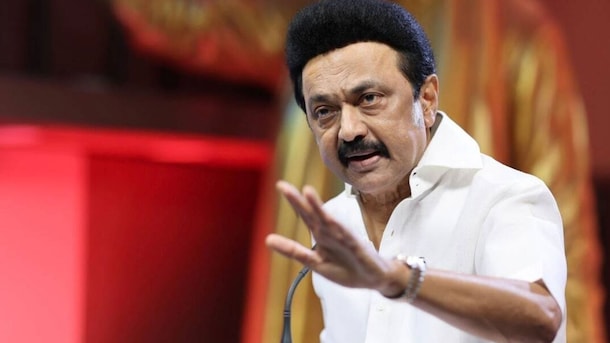
Opinion | MK Stalin: The Strongman Who Dismissed Voters As 'Fools' - And Paid For It

The DMK ecosystem kept dismissing Vijay's supporters as "tharkuris", that is, "idiots". It's this short-sightedness they are now paying for.
-
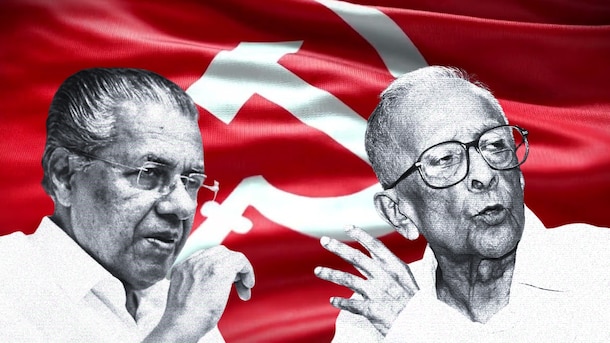
Left Behind? Left Not In Power In Any State For 1st Time In 50 Years
When the first elections were held in the country in 1951-52, it was the Communist Party of India that had the highest number of seats among Opposition parties in the Lok Sabha.
-
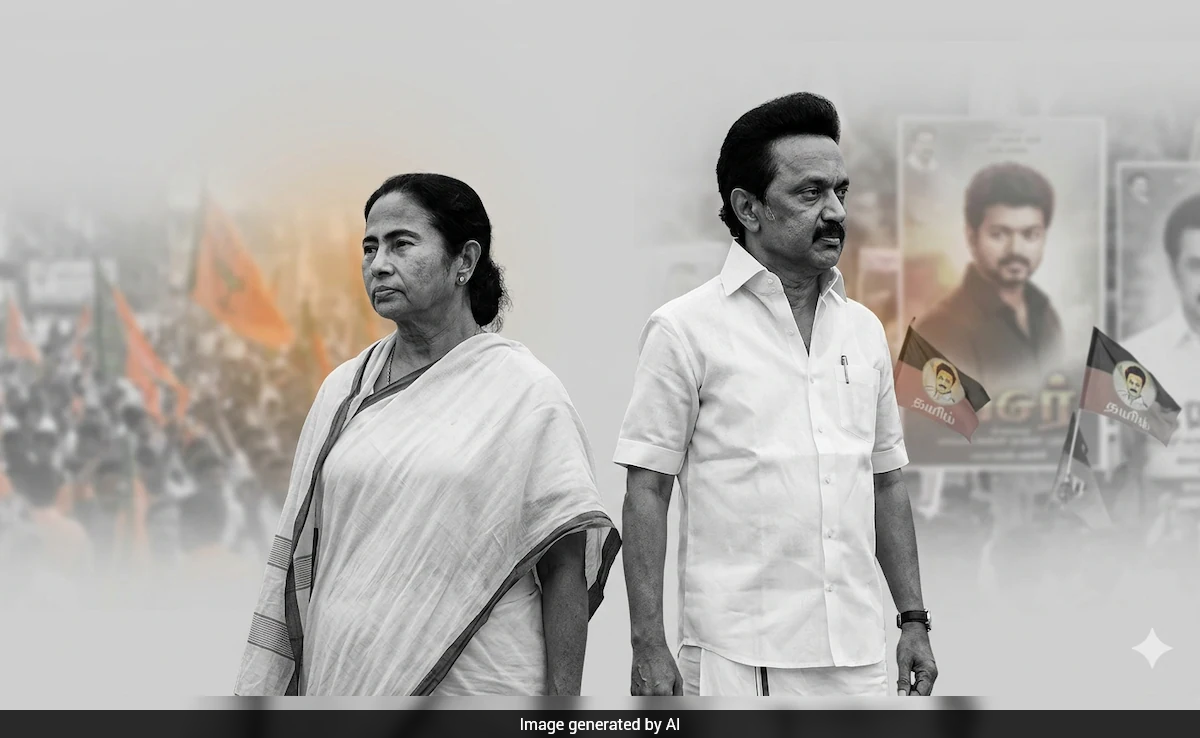
Beaten In Their Backyards: Is This The End For Mamata Banerjee, MK Stalin?
Mamata Banerjee and MK Stalin faced major defeats in their home states - the BJP made history by dominating Bengal and actor Vijay made history in Tamil Nadu with his successful cinema-to-politics jump.
-
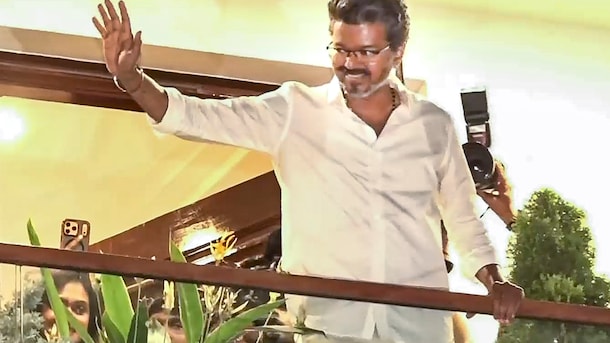
Analysis | The V-Team: What Vijay's Game-Changing 'Cabinet Of Firsts' May Look Like
High-profile names such as KA Sengottaiyan and JCD Prabhakar are expected to provide the necessary experience ballast, while figures such as Aadhav Arjuna, KG Arunraj, and CTR Nirmal Kumar represent the new guard of strategic thinkers.
-
Opinion | What Our 'Liberals' Really Need To Understand About Bengal's Voters
When it comes to Bengal, 'liberal' standards tend to quickly bend. Principles are replaced by poetry. Accountability by abstraction. Cases that would provoke nationwide outrage elsewhere are treated with caution, sometimes even scepticism.
-
Anga-Banga-Kalinga: How BJP Completed Its Eastern India Arc
Election Results 2026: For the BJP, what is unfolding is the completion of a political corridor across the eastern flank of the country from Bihar to West Bengal to Odisha.
-
Opinion | The Rise Of Vijay, The Fall Of Stalin - And A Puzzle For Palaniswami
For the defeated Stalin, this verdict is almost a reminder of the misfortune that beset his father, who was brought down by Jayalalithaa in 1991, 2001 and 2011. Except that his father never lost an assembly seat.
-
Opinion | The 'Silent' Bengal Voter Was Always Keeping Score. Mamata Just Didn't See It
Bengal is not an easy audience. So if the saffron wave has broken in here, the deepest explanation is this: people did not vote only for a party. They voted for a different emotional contract.
-
Opinion | They Sniggered At Vijay In 2024. That Was DMK-AIADMK's Biggest Mistake
The mistake the DMK and AIADMK made vis-a-vis Vijay was to underestimate him. They did not realise what he quietly took away from them in two years.