Opinion | Why India, Which Sends Rice To 170 Nations, Must Ignore Trump's Basmati Blues
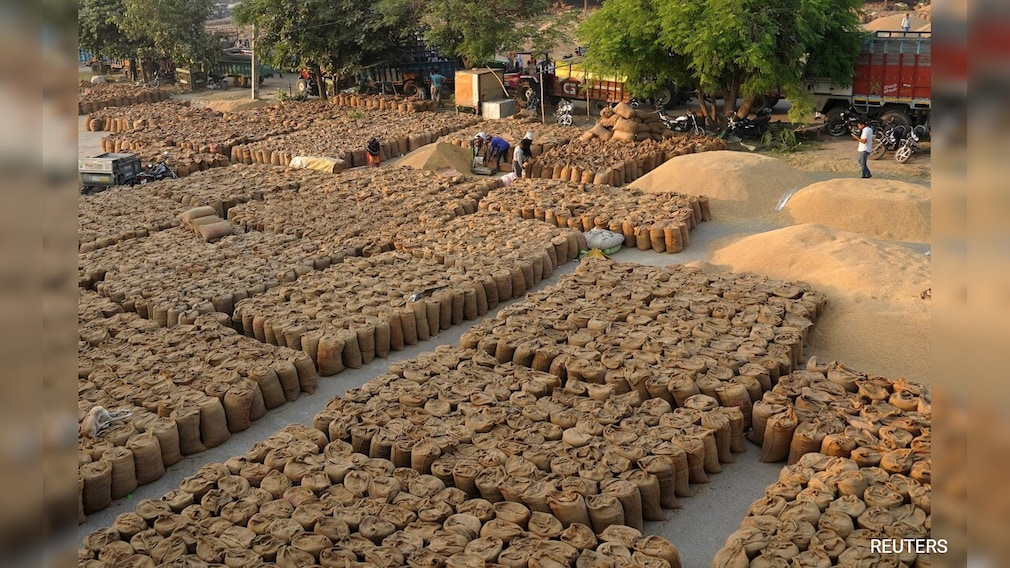
India exported over 20 million metric tonnes of rice in 2024 to more than 170 countries. It is easily the world's largest rice exporter, bigger than the next four countries combined. The US buys only a sliver of India's shipments.
President Donald Trump's latest threat against India has quite literally stirred the rice pot, and everyone from growers to grocery shoppers is now waiting to see if it will reach the boiling point. This time, he has set his sights on India's basmati, accusing India, without providing evidence, of "dumping" cheap rice into the American market. In an off-the-cuff remark, the President in his usual style promised tariffs to punish what he called "unfair" trade.
The threat came during a White House meeting with farmers and lawmakers. Indeed, this is the kind of political theatre in which Trump thrives. Just to remind the readers, a grumbling farmer spoke of cheaper imports from India and a couple of other rice exporting countries. Mr Trump seized the moment and assured the complaining farmer he would take action. He boasted that tariffs can solve the problem in two minutes.
Sounds Like Desperation
It sounds a lot like a campaign slogan. Mid-term polls are only less than a year away. The warning did not come in isolation. Only minutes earlier, President Trump had unveiled a $12 billion support package for American farmers who have been squeezed from all sides. Costs are rising. Inflation has not eased despite promises. Input prices are spiralling because tariffs have made imported fertilizer and machinery more expensive. Also, let's not forget retaliatory measures from strong trading partners have dented American exports to some extent. Rural anger in the US, the kind that hurts political fortunes, is also thick in the air. In such a moment, blaming foreign competitors is emotionally satisfying and perhaps politically convenient. Therefore, blaming India was even easier. Mr Trump insisted that India was "dumping" rice, asking again and again why it was allowed, as if repeating the question made it true.
India's Big Pie
India exported over 20 million metric tonnes of rice in 2024 to more than 170 countries. It is easily the world's largest rice exporter, bigger than the next four countries combined. Yet, the US buys only a sliver of India's shipments. In 2025, Indian rice exports to the US amounted to about $392 million, roughly 3% of India's total rice exports. Most of that is basmati, the long-grain aromatic rice loved by the Indian diaspora as well as immigrants from the Persian-Arab world. American farmers do not grow basmati. They cannot. The soil needs different minerals and the grain needs Himalayan foothill air. The US produces long-grain and medium-grain varieties suited to Louisiana, Arkansas and California. So the idea that India is undercutting American farmers by dumping basmati is like saying Italian olive oil is destroying the soybean market. They are not substitutes.
Mind you, dumping, in trade law, is not an insult. It is a technical finding. A country must investigate whether the exporter is selling below cost. It must also prove that these sales are harming domestic producers. This involves months of paperwork, hearings and appeals. Who will dare to tell the President that this complicated, long-drawn out process is as bureaucratic as rice is simple. And if tariffs are raised without proof, India will always have the option to challenge the move at the World Trade Organisation (WTO), however subservient it has become to the US these days. India has done so before and has won in several cases.
Trump, however, uses tariffs like a magic wand. He waves it and expects the world to be frightened. No mention of legal requirements. No mention of due process. No mention that the US has lifted tariffs on some products because they were hurting American households just as much as they were hurting foreign exporters.
A Misdirected Threat
If the US President were to raise tariffs on Indian rice any further, the impact would be uneven. For American consumers, especially immigrant families who use basmati every day, the price will rise. Restaurants, from Indian to Persian, will feel the squeeze. Retailers who depend on imported aromatic rice will have fewer choices. Some shoppers will switch to Thai jasmine, others to cheaper grades, but the overall bill will go up. For American farmers, the gesture may feel protective, but it will not solve structural challenges. Domestic varieties do not fill the basmati gap. Tariffs will not help them. So, the benefit, if at all, will be emotional rather than economic.
For Indian rice exporters, the impact will be slightly sharper. Firms such as KRBL and LT Foods have built solid basmati brands in the US. A sudden tariff may slow demand but it won't make too much of a difference to them, as India's rice exporters are not dependent on America. They supply Europe, the Gulf, Africa and Southeast Asia - to 172 countries. The business is extremely diversified and resilient. When one market closes, shipments could move to another. It is inconvenient, but it is manageable. Exporters say they are preparing for any turbulence, working with the government to expand sales in new regions. India is already pushing deeper into Africa, where basmati consumption is rising and into Latin America, where niche markets are forming. It is targeting 26 new countries for rice exports.
It's Not About Rice
Now let's return to Trump's latest allegations against India. His threat has far less to do with rice and far more to do with geopolitics. Washington has been uneasy, sometimes quietly and sometimes loudly, about India's continued purchases of discounted Russian crude. While the West tried to isolate Moscow economically, New Delhi used that discounted Russian crude to keep domestic inflation in check. President Vladimir Putin, during his state visit to New Delhi last week, even pledged uninterrupted supplies.
Trump, meanwhile, was seeking from India a public show of solidarity. But Prime Minister Narendra Modi wanted economic stability at home. Trump has repeatedly raised India's energy ties with Moscow and used the tariff stick as political pressure. His earlier duties on Indian steel and aluminium followed the same pattern. They arrived just after India declined to condemn Russia in the language Washington preferred. Seen in this backdrop, the new threat on Indian rice fits the pattern. It is not a carefully built legal case of dumping, but a political warning wrapped in trade language, aimed at signalling displeasure over India's independent foreign-policy choices. It is less about farmers in Arkansas and more about diplomatic expectations from India.
Basmati has Civilisational Value
In India, basmati is the queen of fragrance. Persians, who love Indian basmati, call it the soul of their meals. In such a world, a tariff fight feels pedestrian.
India's response, if the threat does become reality, will be measured. It may challenge the duties at the WTO. It may retaliate in ways that remain within diplomatic boundaries. It may also work quietly with other rice buyers to ensure stable and continued demand.
The diplomats at the MEA understand the broader game. Perhaps they know that this is as much about Russia as it is about rice. India also knows that Washington's domestic issues often spill into its trade positions. And surely, we all know that the strength of India's rice sector rests not on one market but on hundreds. That is India's shield.
As they say, the aroma of basmati is the world's softest invitation to sit, eat and belong. The American delegation is in Delhi today and tomorrow (December 10-11) for the next round of trade talks. One hopes the Indian side serves them the country's famed basmati biryani dishes. Let them see for themselves that raising tariffs on an aroma is a strange idea. Remember, tariffs can change the cost, but they cannot change the craving.
(Syed Zubair Ahmed is a London-based senior Indian journalist with three decades of experience with the Western media)
Disclaimer: These are the personal opinions of the author
-
The Beast Of Kandahar: How One Captured Drone Changed Modern Warfare

One December day in 2011, a Sentinel mission ended in a moment that would reshape the global drone arms race. Instead of returning to its base in Afghanistan, the Sentinel landed inside Iran.
-
Trump Started War Against Iran. He's Still Figuring Out How It Ends
The US-Israel campaign began with coordinated strikes in Tehran and the killing of Iran's Supreme Leader Ayatollah Ali Khamenei on the first day.
-
Opinion | A $10 Billion Threat: How Exposed India Really May Be To Middle East's Oil Crisis
Every $10 increase in the price of Brent crude could widen India's current account deficit by roughly 0.3 to 0.4% of GDP, translating into over USD 10 billion in additional import expenditure.
-
Opinion | Iran-Israel War And The Limits Of India's 'Strategic Autonomy'
India needs to figure out how to manage the fallout of the Middle East crisis without letting strategic autonomy start to look like a slogan.
-
Opinion | Can A Gen Z-Influencer-Rapper PM Really 'Change' Nepal?
Observers say it's high time the former mayor evolved and grew, as well as became more mature, diplomatic and friendly with journalists, opponents and, most importantly, friendly neighbours like India and China.
-
Opinion | This Parliament Session, Watch What Is 'Expunged'
Is mentioning Donald Trump or Epstein unparliamentary? Are the surnames of India's two richest families unparliamentary proper nouns?
-
Regime Change, Uranium Stockpile, And The US Dilemma To Invade Iran
US Defence Secretary Pete Hegseth has declined that US troops were already on the ground in Iran.
-
Tale Of Two Protests: How Balen Shah Trumped In Nepal, But Bangladesh's Students' Party Failed
The protests in Bangladesh and Nepal, countries that are separated by the narrow Siliguri corridor, had the same goal - replacing the existing system.
-
AI That Edits Your Photos Now Drops Bombs From Sky, And Iran Paid The Price
The entry of AI in warfare has changed how we assess battlefields. What took hours to take a shot at has become a second's job.