Opinion | 10 Days After Bangladesh Polls, Lingering Questions About Pak, Hasina, US
No smooth sailing of bilateral relations can be expected. The effort would be to restore normalcy. The good days of India-Bangladesh ties under Sheikh Hasina are likely over.
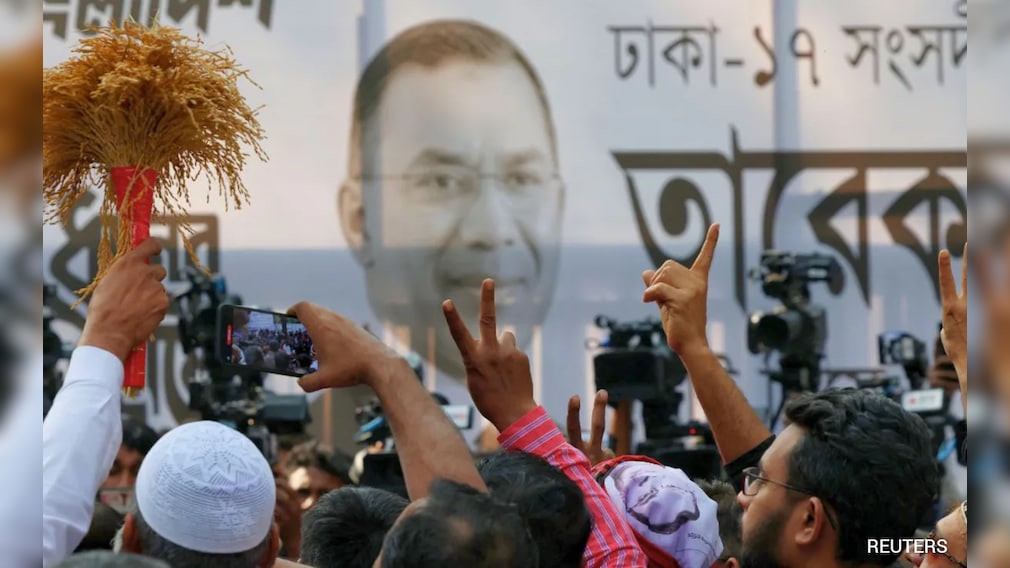
The turmoil in Bangladesh leading to the ouster of Sheikh Hasina, the internal and external forces behind it, the installation of Yunus as the Interim leader, the recent election bringing the BNP to power, all have changed the landscape of India-Bangladesh relations. India has to map the contours of this new landscape and navigate accordingly.
The Yunus phase of our relations was taut with tensions. Yunus was catapulted into his role as the Chief Advisor with US support. The Islamist student leaders in his immediate entourage were inimical towards India. Yunus played down Indian concerns about the security of the Hindu minority. The resurgence of Jamaat-e-Islami caused serious concern in India. The interim government was diplomatically belligerent towards India. The moves to erase the legacy and the symbols of the country's liberation struggle diminished India's key role in it. This inevitably meant opening the political doors to restoring ties with Pakistan, including military and intelligence. The dubious trial of Sheikh Hasina in absentia, sentencing her to death and seeking her extradition from India, added to the strains in ties.
The interim government had announced that Bangladesh would hold elections in February 2026. That time table has been met, which is creditworthy. Fears that elections would be marred by violence have been belied. India, wanting to see the interim government with transitory stakes in relationship with India replaced by a properly elected government with longer term perspectives, has favoured early elections.
What Awami League's Absence Means For Bangladesh
The decision by the interim government to ban the participation of the Awami League (AL) from the elections, which meant the disenfranchisement of a sizeable portion of the country's electorate, prompted India to call for inclusive elections. Eventually, the Awami League was excluded from participation, which unfortunately portends unstable domestic politics. This can well have a potential fall-out on India-Bangladesh relations because of the Awami League's perceived affiliation with India and Sheikh Hasina's presence in New Delhi.
The absence of the Awami League from the electoral fray meant only two contenders contesting, and, therefore, the division of votes and seats between two instead of three parties. This no doubt helped both parties to improve their respective electoral score. Some Awami League supporters would have conceivably voted for the BNP in order to keep the Jamaat at bay, which would have helped improve the former's tally.
The Jamaat has won a record number of seats, almost four times their previous performance. This makes it the principal opposition party. In the past, the Jamaat has been a coalition partner of the BNP in the government, which means the two have experience of a working relationship. With the absence of the Awami League's voice in the parliament and the party now bereft of leadership, and this coupled with pressures from the Jamaat to make Bangladesh more Islamic, the political complexion of Bangladesh's polity could well become less "secular".
Looking Ahead
India has ignored its own earlier call for inclusive elections and welcomed the success of the BNP, with PM Modi warmly congratulating Tarique Rahman as the in-coming Prime Minister. We sealed our support for the election results with the decision to send Lok Sabha Speaker Om Birla to attend Tarique Rahman's Oath Ceremony in Dhaka, and even more so by PM Modi formally inviting the new Bangladeshi PM to India along with his family.
For India, this is a pragmatic decision. We have lived with and done business with military dictatorships and Islamic regimes in our region, we do not suffer from a democracy fetish, and, therefore, a readiness to deal with the BNP government in Bangladesh in our larger national interest is to be expected. However, in the case of the US, in particular, which encouraged a regime change in Bangladesh because Sheikh Hasina was not sufficiently democratic, the silence of its ruling class and the media on the undemocratic barring of a party that governed Bangladesh for 15 years under Sheikh Hasina shows how much the West's "democracy backsliding" narrative for non-western countries is inherently politically fraudulent.
India's relations with the BNP have been difficult in the past. Tarique Rahman has a chequered past. The damning cable from the US embassy in Dhaka on Wikileaks speaks of his "flagrant" and "audaciously corrupt activities", his "history of embezzlement, extortion, and interference in the judicial process", "bribe solicitation", and his "flagrant disregard of the rule of law (that) has provided potent ground for terrorists to gain a foothold in Bangladesh". His past links with the ISI are talked about. He was in self-exile in London for 17 years where anti-Indian elements were active.
Watch The US
How the US, which was openly anti-Hasina and undermined her politically, and which thrust Yunus on the country after her ouster and reached out to the Jamaat-i-Islami as well, will work out its strategy in the period ahead would need to be watched by India. It is clear that the US has not worked in favour of India's interests in Bangladesh. This is not going to change. The US courting of the Jamaat will be a problem. Given the Trump administration's softness towards Pakistan, the Jamaat-Pakistan nexus may not be looked upon adversely by the US. The US is also likely to keep a sharp eye on China's projects in Bangladesh, including the defence trade between the two countries, which may be helpful to us. India will have to be wary of Bangladesh awarding projects to China near the Chicken's Neck.
With time, changed circumstances and new national responsibility in the elevated position of Prime Minister, when the cover of behind-the-scenes activities is not available and when decisions are subject to close public scrutiny, thinking and policies can evolve to meet the needs of the new situation. Rahman's statements after the BNP won the election have been balanced, including towards India. His top aide has talked of a reset of ties with India, which New Delhi will welcome. He has also talked of balanced ties with India, China and Pakistan, which will be tested in time, as will be the re-assuring talk of Bangladesh belonging to all communities.
What About Hasina?
On the issue of Sheikh Hasina's extradition, the discourse of the new government on the Bangladesh side has been relatively measured. The BNP cannot ignore the issue given the longstanding, deep political antagonism between Khaleda Zia and her, besides the fact that Tarique Rahman was convicted by the courts during the Sheikh Hasina government on multiple charges, including corruption, bribery, money laundering, illegal acquisition of wealth, and grenade attacks. A total of 84 cases were filed against him after 2007. A lot will depend on how active Sheikh Hasina is politically from the Indian soil. India has interest in limiting this but, at the same time, whatever leadership role she can play in keeping the party flock together in Bangladesh remains important.
For the rest, pitfalls lie ahead in our bilateral ties despite efforts by both sides to keep bilateral ties stable. The renewal of the Ganga Waters Treaty, the fencing of the border, Bangladesh's complaints about the killing of smugglers by the BSF, medical visas for Bangladeshis etc are sensitive issues on the table.
No smooth sailing of bilateral relations can be expected. The effort would be to restore normalcy. The good days of India-Bangladesh ties under Sheikh Hasina are likely over.
(Kanwal Sibal was Foreign Secretary and Ambassador to Turkey, Egypt, France and Russia, and Deputy Chief Of Mission in Washington.)
Disclaimer: These are the personal opinions of the author
-
Opinion | The Last Bet? What Trump's 'Mother Of All Bombs' Could Actually Do To Iran

Can an MOAB deliver a decisive blow to Iran that may force it to surrender immediately, as Japan did after Hiroshima and Nagasaki in World War 2?
-
Hit Songs, Empty Pockets: The Hidden Math Behind India's Viral Music Boom
Over 80,000 brands and five lakh creators in India make branded content. The opportunity is worth around Rs 1,500 crore.
-
Opinion | Great 'Exceptions': How The Oil India Was Attacked For Is The Oil Trump Now Seeks
A law written to punish the buyers of Russian oil was suspended by the US to protect a purchase of Russian oil. India spent fourteen months being lectured for less.
-
Opinion | Louis Vuitton Loot, Torched Cars: France Protests Have An Unlikely Beneficiary
It's an unbelievable moment. Crowds looting the most exclusive stores in Paris, including the famed Luis Vuitton. But what's behind this meltdown?
-
Blog: Kolkata Didn't Learn From 2015. Eleven Years Later, It Proved To Be Fatal
The City of Joy isn't a stranger to crowd control. Be it during Pujo or Christmas at Park Street, Eden Gardens cricket matches, or Derbies between Mohun Bagan and East Bengal. But during Pujo, the entire city is on alert.
-
Opinion | Slurs, Threats, Now A Temple Attack Plot: When Did America Become So Hostile To Indians?
The rising tide of anti-India, anti-Hindu, and racist attacks serves as a stark reminder that economic prosperity does not automatically guarantee social immunity from bigotry.
-
A Step Behind Neha Bora: What Rahul Gandhi's Gesture Says About Congress' Gen-Z Pitch
At INDIA bloc's march to Supreme Court, Rahul Gandhi placed himself a step behind two women, hands resting on their shoulders. One was his sister Priyanka. The one on his right was Neha Bora. Here's what the image means for the protest wave now, and for Rahul's politics in general.
-
Opinion | Imran Khan, And The Perils Of Having An 'Opinion' In Bollywood
The reality of the industry is quite grimy. More often than not, its inhabitants have been fairweather friends, happy to sing the praises of whoever is in a position of authority.
-
Exclusive: India's Food Safety Problem Goes Beyond Just Dirty Kitchens - By Tukaram Mundhe
On World Food Day, Maharashtra's Commissioner of Food Safety explains why instead of taking stopgap measures, the entire supply chain in India needs to be held accountable and made transparent.
-
Opinion | India Has Enough Coal. So Why Are Power Plants Running Short? A 76 Million 'Crunch'
As of October 5, as many as 82 of the 191 thermal plants monitored by the Central Electricity Authority were in the 'critical' category