Blog | Asha Bhosle Is Gone, But Her 'Bad Girl' Anthems Live On
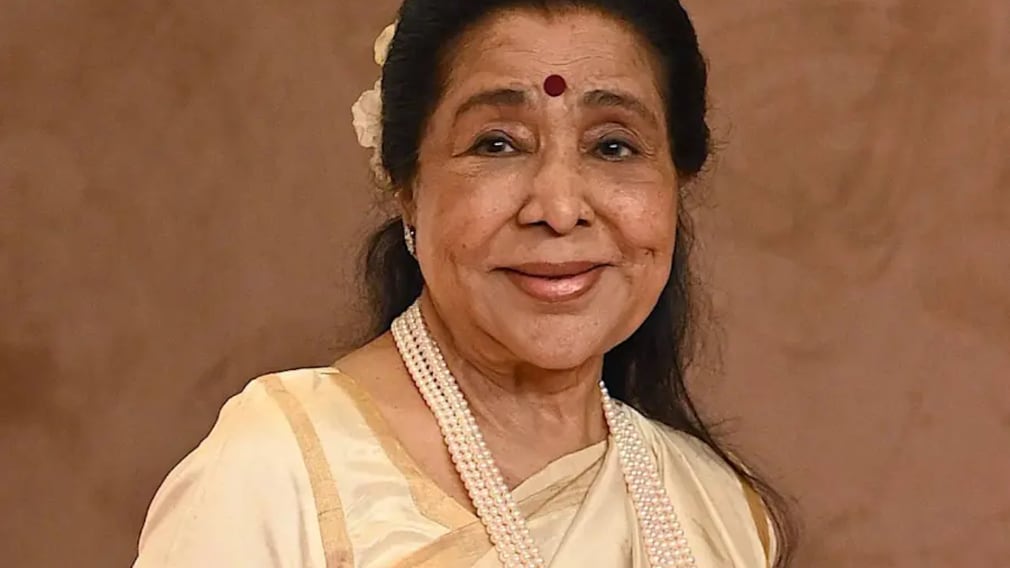
It is extraordinary how Bhosle's voice has been part of the cultural landscape of changing India, signifying freedom, independence, and risk-taking. Forever brilliant, forever bubbly, forever young, she will be missed.
Piya tu ab to aaja/Shola sa man dehke aake bujha ja/Tann ki jwaala thandi ho jaaye/Aise gale laga ja
(Please come now, my beloved/My heart is burning like an ember/my body is on fire/please come and embrace me)
The year is 1971, Helen is dancing in a blingy red dress, with a faux Big Ben in the background, in Caravan, a thriller directed by Nasir Hussain. It's described as the last word in cabaret by several writers. But for Asha Bhosle fans, it was the first glimpse of modernity, with the chorus "Monica My Darling" continuing to be echoed in popular culture, most recently in last year's Dhurandhar in the Reble rap song, 'Run Down the City', set in a Karachi night club.
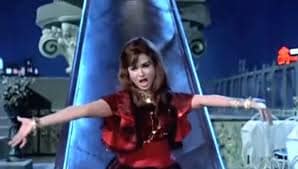
A still from the song 'Piya Tu ab toh aa ja'
The singer of the original song, Asha Bhosle, is no more, but her "bad girl" voice will live forever. Before the rise of the modernists in Hindi film industry music, composers like OP Nayyar and RD Burman, both of whom had long partnerships with Bhosle, the good girl voice was epitomised by Lata Mangeshkar, Bhosle's elder sister, with voices like that of Geeta Dutt being used for drink-sodden, late night songs.
But Bhosle was the first to bring a rare sensuousness into modern Hindi music, represented in yet another blockbuster from 1971, 'Dum Maaro Dum', in the film Hare Rama Hare Krishna. The song was originally to be sung by Usha Uthup, whom the director Dev Anand and music composer RD Burman first heard at The Oberoi in New Delhi. The song soon became the anthem of rebellious youth, with its incendiary lyrics written by Anand Bakshi: "Duniya ne humko diya kya/Duniya se humne liya kya (What has the world ever given us/What have we ever taken from the world)." It was picturised on Zeenat Aman as Jasbir/Janice in Kathmandu, wearing a marigold necklace, dark glasses on her hair, and resting her head on Gautam Sarin's broad shoulders, supposedly lost in a drug haze.
For those who grew up in the 1970s, Asha Bhosle was the voice of cosmopolitanism, which was showcased later in her global collaborations, from singing flirtatiously with Brett Lee ('You're the One for Me', 2007) to Boy George ('Bow Down Mister', with Bhosle chanting a 'Hare Krishna' mantra, 1991) to the British band Gorillaz on The Shadowy Light (along with Ajay Prasanna and Aman and Ayaan Ali Bangash) as late as early this year.
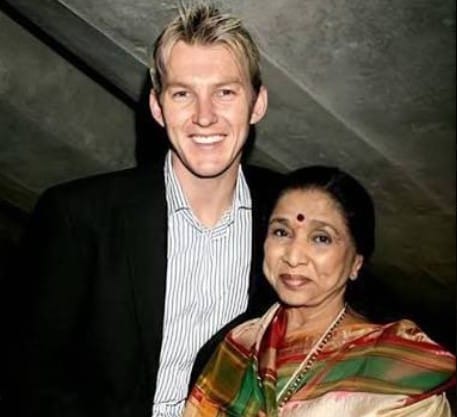
(Asha Bhosle with Brett Lee)
She was the voice of Zeenat Aman shimmying in 'Chura Liye Hai Tumne' in Hindi cinema's first modern multistarrer Yaadon ki Baarat, directed by Nazir Hussain; as much as she was the voice of Parveen Babi in the self-designed body hugging silver gown in Shaan (1980), singing 'Pyaar karne wale'. It wasn't a coincidence that both Aman and Babi were unique in breaking the good girl/bad girl binary that was the fate of women in Hindi cinema till then.
But Bhosle had range as well, as she displayed to the surprise of many in Umrao Jaan (1981), where she sang Rekha's lovelorn ghazals penned by Shahryar and set to music by Khayyam. Anyone who can listen to 'Dil cheez kya hai/Aap meri jaan lijiye' (What is my heart/You can take my life as well) without a lump in her throat can only have a heart of stone. The iconic song contains multitudes - not merely Umrao Jaan's tragic life, but also the heartbreaks of Rekha and Bhosle.
Despite her upbeat attitude to life, Bhosle's life was strewn with loss and longing, whether it was her abusive first husband Ganpatrao Bhosle, her long struggle to establish herself in an industry where her sister was already the reigning queen of music, her enduring love affair with RD Burman cut short by his untimely death at 54, the suicide of her daughter Varsha and the death by cancer of her eldest child Hemant. But whether it was in concerts or in rehearsals, rarely did she display her wounds.
Bhosle's voice created stars. Remember Tanha tanha, composed by AR Rahman, and shot on Urmila Matondkar in a variety of flowing minidresses by the beach in Ram Gopal Varma's Rangeela (1995)? Or Gracy Singh in Lagaan (2001) singing the feisty 'Radha kaise na jale' in a duet with Udit Narayan? And it solidified stars such as Madhubala, oozing mischief and playfulness with songs such as 'Haal kaisa hai janaab ka' from Chalti ki Naam Gaadi (1958) and 'Aaiye Meherban' from Howrah Bridge (1958).
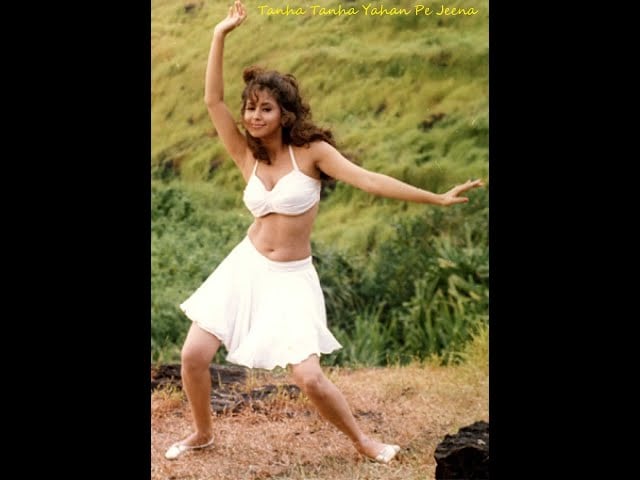
A still from 'Tanha Tanha'
To paraphrase Noel Coward, it is extraordinary how potent film music is. And indeed, it is extraordinary how Bhosle's voice has been part of the cultural landscape of changing India, signifying freedom, independence, and risk-taking. Forever brilliant, forever bubbly, forever young, she will be missed.
(The author is a journalist)
Disclaimer: These are the personal opinions of the author
-
Opinion | Three Things May Happen At The End Of The 14-Day Ceasefire (Or Earlier)

Trump may exit the war but continue to support Israel. Three recent events point in this direction.
-
Opinion | Over 1 Lakh US Troops Are Stationed In Europe. What Happens If They Leave?
The question now troubling many Europeans is, if Iran can strike American bases in the Gulf, could Russia do the same, or inflict even greater damage, on American bases in Europe?
-
Opinion | What Happens To Oil Prices If Iran Really Starts Charging A Hormuz 'Toll'?
Iran has not agreed to reopen the Strait, but to allow passage via coordination with its Armed Forces. What would that really mean?
-
Opinion | The Real Reason China Stayed 'Quiet' About Its US-Iran Ceasefire Role
Beijing may have opted for a very quiet entry into the mediation, with Pakistan apparently fronting the whole exercise.
-
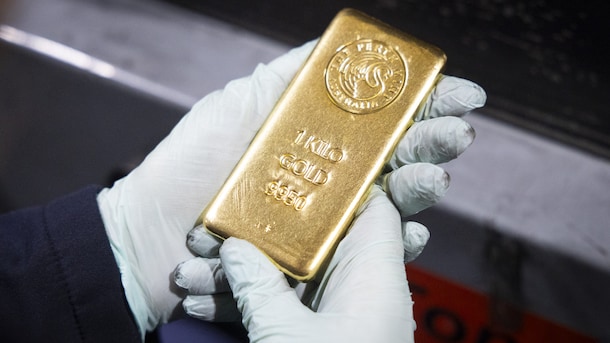
Opinion | India Sits Atop 500 Million Tons Of Gold Ore. Why Isn't It Being Mined? - By Shashi Tharoor
We mine a pittance - barely one and a half tons a year - while draining our foreign exchange reserves to import hundreds of tons annually from mines in Australia, Ghana, and Peru.
-
Opinion | How Iran Ceasefire Helps Pakistan Fix A 10-Year-Old 'Mess' With Saudi
In more ways than one, Pakistan has redeemed itself from a fallout it had with its Gulf patrons exactly a decade ago.
-
Why Lebanon Was Excluded From Ceasefire Plan
Created by the IRGC during the Lebanese Civil War, the Hezbollah, a Shiite Muslim movement, gained its moniker - 'the Resistance' - by fighting Israeli troops occupying southern Lebanon till 2000.
-
Opinion | The 'Munir Doctrine' That Drove Pak's US-Iran Brokering Project
The spate of calls, social media messaging, and diplomatic efforts from Pakistan in recent weeks, especially involving PM Shehbaz Sharif and Field Marshal Asim Munir, raises many questions.