Opinion | As Terror Strikes Delhi, A Curious 'Takeover' Is Under Way In Pakistan
With a car bomb in Islamabad following hot on the heels of the Delhi car explosion, it seems like it's back to the future. This time, however, there may be a different set of rules operating.
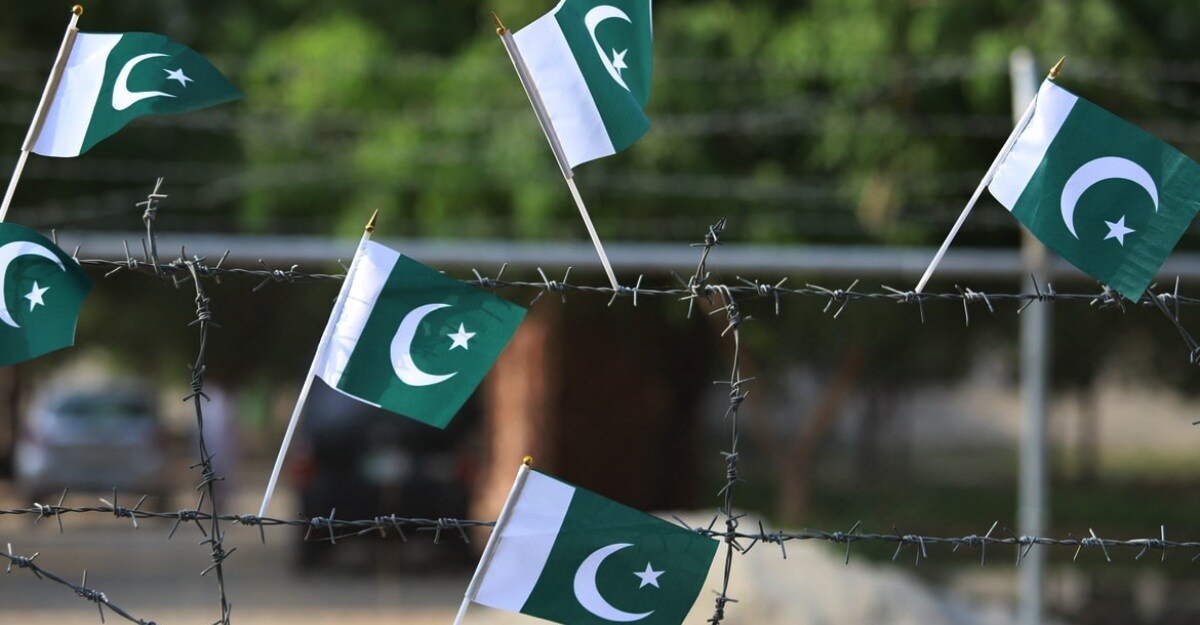
Trouble is again in the air. With a car bomb in Islamabad following hot on the heels of the Delhi car explosion, it seems like it's back to the future. This time, however, there may be a different set of rules operating. Even as Shahbaz Sharif blamed India and then India and Afghanistan, the Pakistan army is on the cusp of increasing its power and pelf, and, more explicitly, giving itself unfettered command over all weapons, nuclear or conventional, making it the senior-most force among services. That's trouble. But that amendment just got passed a day ago in the National Assembly with 234 votes in favour and four against, and now is in the Senate, where it is likely to be cleared even faster. In short, Parliament rolled over and played dead.
As terror again rears its head in India, all of this matters.
Politicians Get Some Goodies
The 27th Amendment is a shrewdly drafted document. It gives goodies to some of the elected representatives, even as it completely undercuts the Supreme Court so that it cannot challenge these changes. The total strength of the cabinet has been increased from 15 to 17, and the Chief Ministers are now to have access to the advice of seven advisors, rather than five. More money from the exchequer for a state apparently drowning in debt. Now, wait to see who is inducted, or whether these are given to political favourites or army plants.
There is also a nice reward for good behaviour. 'Notwithstanding' any judgement of a court, the President stands exempted from any prosecution for life. Prime Minister Shahbaz Sharif has, however, refused a similar 'get home free' clause for himself, which gives his party a certain cachet, unlike the Pakistan People's Party, which (reportedly) insisted on presidential immunity. Besides, imagine if an Imran Khan returns with such a 'no prosecution' clause. He would end all the Sharifs and Zardaris and get away with it. Shrewd.
The Court Retains Its Robes
Then is the issue of the Supreme Courts and its bodies. This started earlier in the form of the 26th Constitutional Amendment, which cut the power of the Chief Justice by making all appointments subject to Parliamentary approval - a Parliament, one might add, completely subservient to the Army - shortening his tenure, and, most importantly, removing his suo motu powers to take notice of gross malpractises such as setting up army courts to try civilians. It also set up a Constitutional Bench to hear such cases. Apparently dissatisfied even with this, the new amendment creates an entirely new Federal Constitutional Court, which will now take the oath of the President. A clause that ensured that a non-Muslim or a woman be part of a commission to appoint the Chief Justices has been removed. That Commission will move judges around, and, if they refuse, they have to accept retirement. That's as blatant as it gets in controlling the judiciary.
Meanwhile, a clutch of judges have already been selected, and apparently are to be appointed by the President on the 'advice' of the Prime Minister. No Parliamentary committee here. Given the extreme willingness of both of these high officials to bow to the army chief - sometimes quite literally - it was probably deemed unnecessary.
There's another interesting clause. The new court does not just adjudicate between provinces or the government, but also decides on fundamental rights. In a country where a majority of the population has no rights at all, that's serious. In one desperate fight to retain some sanity, the Lower House has ensured that the title of 'Chief Justice of Pakistan' remains with the Supreme Court, rather than the Constitutional one. But there it ends. The 27th Amendment itself cannot be challenged in the highest court, nor can it rule that it is against it in a suo motu case.
'King' Munir
The main aspect of the amendment is obviously the 'super' power of the Army Chief. Munir apparently wants it all, and he's going to get it soon. The much abused Article 243 has now ensured that the post of Chairman, Joint Chiefs of Staff (CJCS) be abolished. That post was a nod to the little inter-services equality that existed. Now that has been replaced with a 'Chief of Defence Forces', no other than 'King' Munir himself, even as he also remains the Army Chief. He will 'advise' the Prime Minister for appointments to the Strategic Command, which is in charge of all missile forces - which, in effect, means he has his finger on that arsenal as well.
In sum, he will now be senior to the other chiefs. As a sop, the navy and Air force Chiefs also get "Marshal' ranks and immunity for life. That's nice, since the present air force chief has already been implicated in corruption charges and has initiated court martials for 13 officers for being whistleblowers. He might as well choose to play along. Meanwhile, reports indicate strong disaffection within the army.
What About India?
Now consider one intriguing question. It is unclear why Munir chose to go into this extreme direction at all. After all, as Army Chief, and then a Field Marshal, surely he didn't need more power in a country where the army already is at the top of the ladder. Either he fears internal dissension, or even dislikes the new importance the Air Force has got post the conflict with India.
There is another serious possibility. He may well covet complete control so that he is free to use any weapon at his disposal - which includes the entire missiles armoury - in another conflict that is clearly anticipated. Since there is no let-up in cross-border activities with a reported seven terror plots foiled in 30 days, one can only assume that the General is planning to goad India into another war, at a time of his own choosing. It may well be that the excellent work by India's investigative agencies just ended that.
Meanwhile, wait. Dictators for life usually find it has been grievously shortened by their own compatriots.
(Dr Tara Kartha is a former Director, National Security Council Secretariat)
Disclaimer: These are the personal opinions of the author
-
Blog | 'Baap Da Brat': Kerala Mini Cooper Crash, And Why 'Daddy' Can't Keep Saving You

There are three things you should never underestimate in India: the power of 'jugaad', the elasticity of the law, and the confidence of a 'Baap da Brat' who believes his Papa Posh can fix absolutely anything.
-
Opinion | 'Say Our Name': Why A Tiny Island Nation Wants The World To Get Its Name Right
Standing before the UN hall of nations, Naoero President David Adeang asked the world to unlearn its comfortable habits and speak a restored truth.
-
TVS Succession Row Explained: Why Venu Srinivasan's Family Is Divided Over Wealth
TVS Family Dispute: TVS Holdings is a key entity because it owns a controlling stake in TVS Motor Company. It owns 50.26% of TVS Motor.
-
Opinion | The US Is Showing India Just How Cheap Its 'Friendship' Is
Can local talent fully replace Indian contribution? Why is the US leading in setting up Global Capability Centres in India - over 60% - and pocketing the IP?
-
Jantar Mantar Tells Time. The Clock Just Stopped On Its Time As An Iconic Protest Site
On Monday, October 12, 2026, Delhi Police denotified Jantar Mantar Road as a designated site for demonstrations. The Supreme Court had given it a nudge. Here's how history met politics on that street for decades.
-
Opinion | Saudi Airport Attack, And Why Pakistan Keeps Biting Off More Than It Can Chew
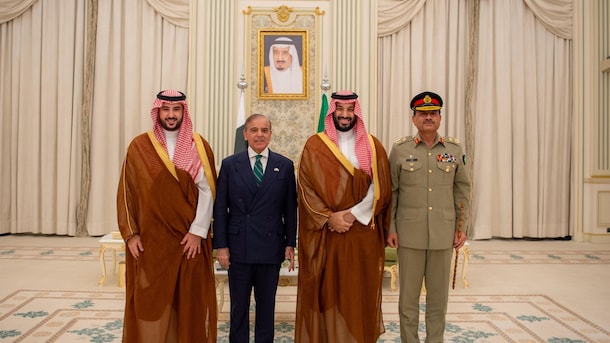
For all those who were envious of Pakistan's 'new status' as "mediator extraordinaire", here is a reality check
-
Opinion | Visa Shocks To Racist Attacks, When Did America Come To Hate Indians So?
Sometimes it is about H-1B visas. Sometimes it is jobs. Sometimes it is "foreigners." Sometimes it is about temples. The language of the attack varies, but the message is consistent
-
How El Nino And Warming Oceans Could Shape Earth's Climate In 2027
From changing ocean currents to extreme weather, scientists are watching a combination of climate signals that could influence temperatures, rainfall and ecosystems in the months ahead.
-
Blog | Nana Patekar, And The Sharp, Lasting Sting Of His 'Plain-Speak'
"Subah ghar se niklo, bheed ka hissa bano..." Nana Patekar's characters often spoke with the bluntness of men who had little patience for pretence. Just like Nana himself.