Opinion | Apple And The Art Of Not Playing Every Game
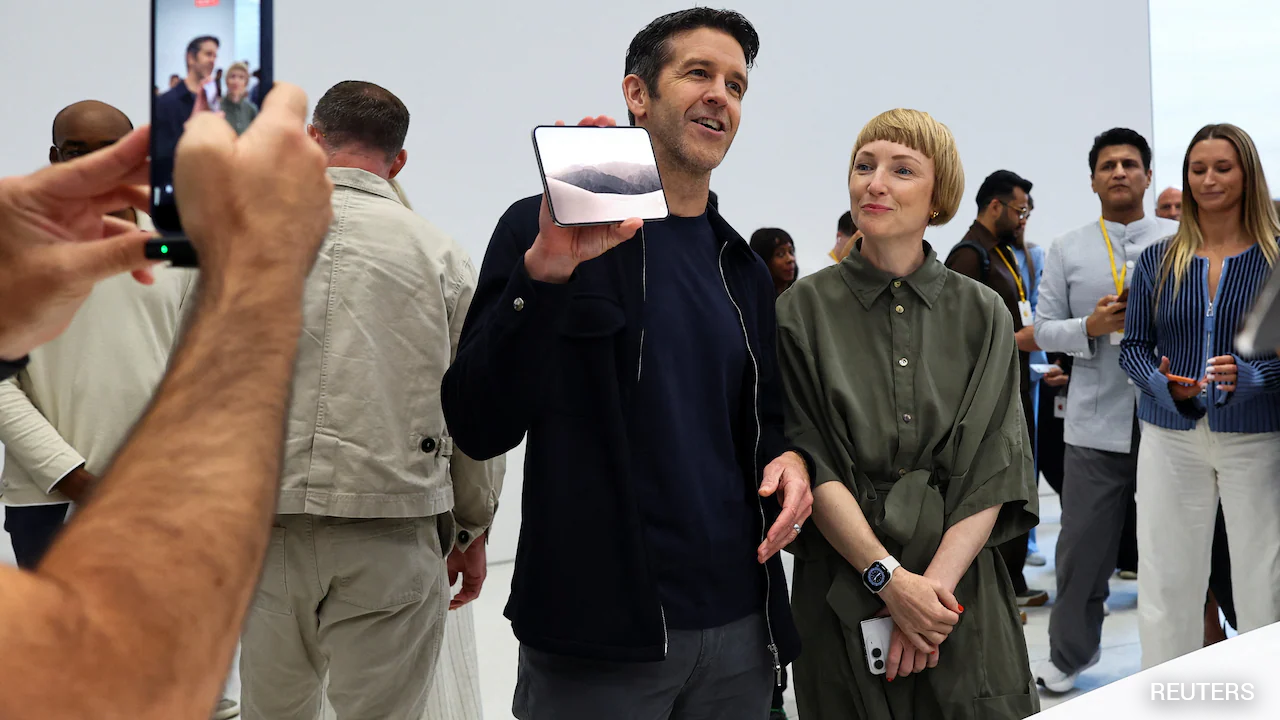
John Ternus took the stage this year as Apple's new chief executive and did something odd. At the exact moment every rival was racing to prove AI supremacy, he unveiled a foldable iPhone. Samsung had launched the first Galaxy Fold in 2019. Apple's version, the $1,999 iPhone Duo, starting at Rs 3 lakh in India, arrived seven years later, wrapped around a precision hinge, dual batteries, a custom thermal system and an A20 Pro chip. Ternus called it "the most transformational change to iPhone since the original."
No frontier AI model. No AI supremacy claim. Just a folding phone, seven years behind Samsung, presented by a hardware engineer as the biggest leap since 2007.
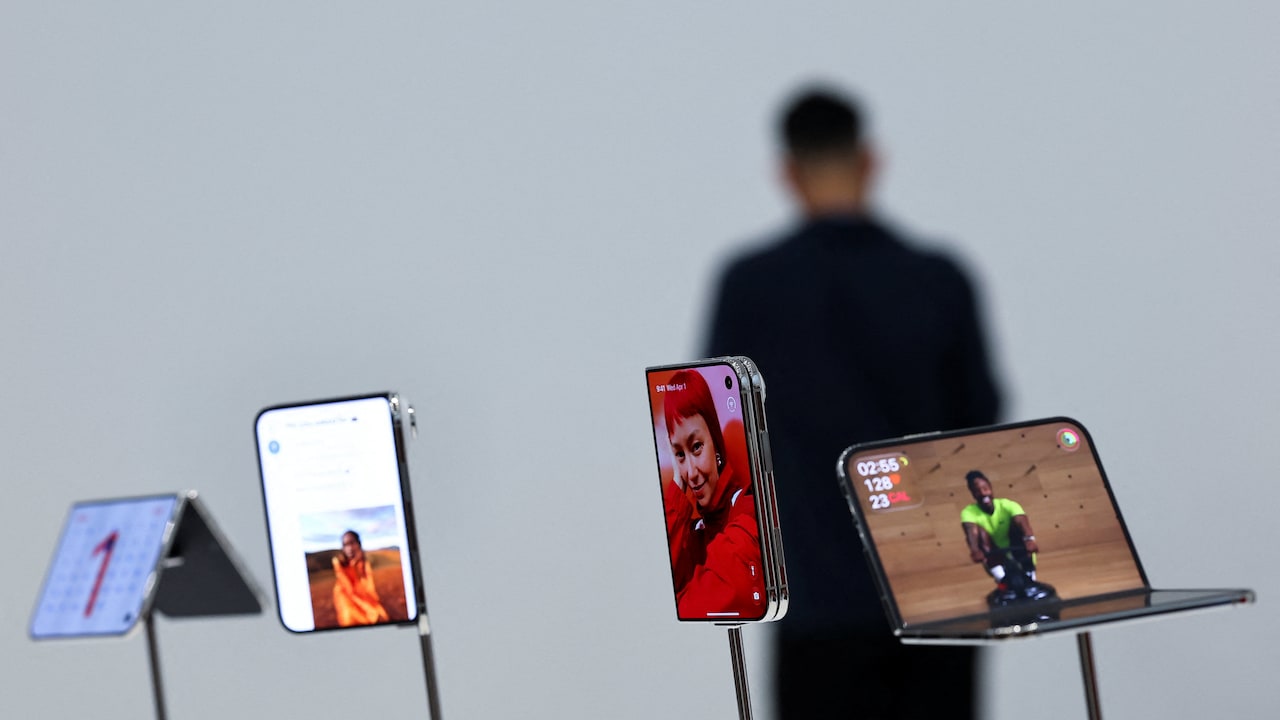
New foldable iPhone Duo devices on display during Apple's event. Photo Credit: Reuters
That, in miniature, might be Apple's entire AI strategy. And it raises the real question about the company: not whether Apple is behind in AI, but how it can afford to be.
The Outlier
AI is this generation's defining theme. Every large company commanding a rich valuation premium over the past five years has had an AI story attached to it. Nvidia is the extreme case. Microsoft, Alphabet, Amazon and Meta have poured money, computing power and management attention into the race. The largest tech firms are now spending hundreds of billions of dollars a year on AI infrastructure, a scale that has prompted the Bank for International Settlements to compare it with earlier infrastructure booms such as railways and the dot-com era.
Apple is the exception. It has not built a ChatGPT or Gemini rival. It has not matched its peers' infra spending. Instead it has bet on smaller on-device models, private cloud compute, and partnerships, most recently a January 2026 deal to run its next Foundation Models on Google's Gemini. Yet Apple still trades at a premium to most Big Tech peers, sitting atop an active installed base of 2.5 billion devices.
Apple may have spent decades building something rarer than any model: the ability to choose which races to run, which to skip, and which to enter late and still win.
Late, On Purpose
Apple didn't invent the smartphone, the MP3 player, the tablet, the smartwatch or wireless earbuds. Its habit has been to let rivals absorb the cost of educating the market, then arrive once a category is ready to feel finished. The Duo fits the pattern exactly. While competitors race to ship the next model update, Apple appears to work on a longer clock: quarters for everyone else, years for Apple. That is a hypothesis, not a certainty. But it fits a company betting that the eventual prize is worth more than being first.
In the June 2026 quarter, Apple generated $109.4 billion in revenue: $54.3 billion from iPhone, $30.7 billion from Services, $10.4 billion from Mac, $6.2 billion from iPad, and $7.9 billion from Wearables, Home and Accessories. Services alone is now nearly three times the size of Mac.
The economics matter more than the mix. Services carries a 75.6% gross margin against 40.1% for products; Apple's blended margin is 50.1%. This is a company using premium hardware to fund an increasingly profitable, recurring-revenue ecosystem built on a captive user base.
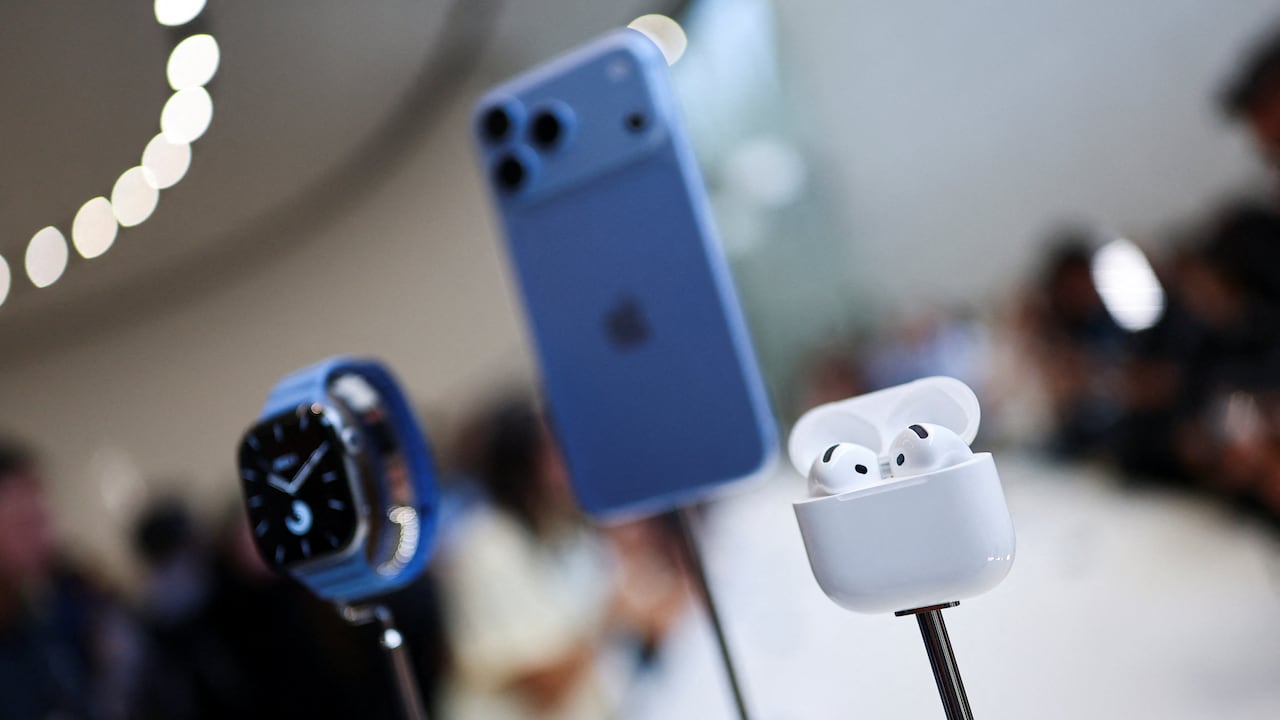
Apple Watch, iPhone 18 Pro and AirPods on display during Apple's event. Photo Credit: Reuters
That funds optionality. At June 2026, Apple held roughly $146 billion in cash and securities against about $51 billion in net property and equipment, and generated more than $101 billion in net income over nine months. Microsoft, Alphabet, Amazon and Meta are spending at extreme scale because AI now sits at the centre of their competitive position. Apple faces no such compulsion. It can build, rent, partner or simply wait.
Vertical, Not Horizontal
Big Tech has gone horizontal, chasing models, chips, cloud, data centres and apps all at once. Apple has gone vertical: silicon to operating system to device to services. Its biggest achievement of the past decade may not be a product at all, but the rebuild of its own chip stack, first through the Intel-to-Apple Silicon transition, now extending into AI through server chips developed with Broadcom and private cloud compute workloads run on Nvidia GPUs inside Google Cloud.
Nvidia's genius is horizontal: sell the picks and shovels to everyone. Apple's is vertical: own the complete experience. But vertical integration has a boundary. Apple can design remarkable chips for its own products, but frontier AI demands infra it has chosen not to replicate. It controls the endpoint while depending on Google and Nvidia for part of the intelligence running through it.
The Siri Warning
Apple does not win every race, and Siri proves it. Launched in 2011, it felt futuristic, then stagnated while Google Assistant, Alexa, ChatGPT and Gemini moved past it. A promised overhaul was delayed, ultimately pushing Apple into its Gemini deal with Google. Patience is a virtue only when the underlying product is actually improving. Siri shows how a philosophy of "wait and perfect" can sometimes become an excuse for standing still.
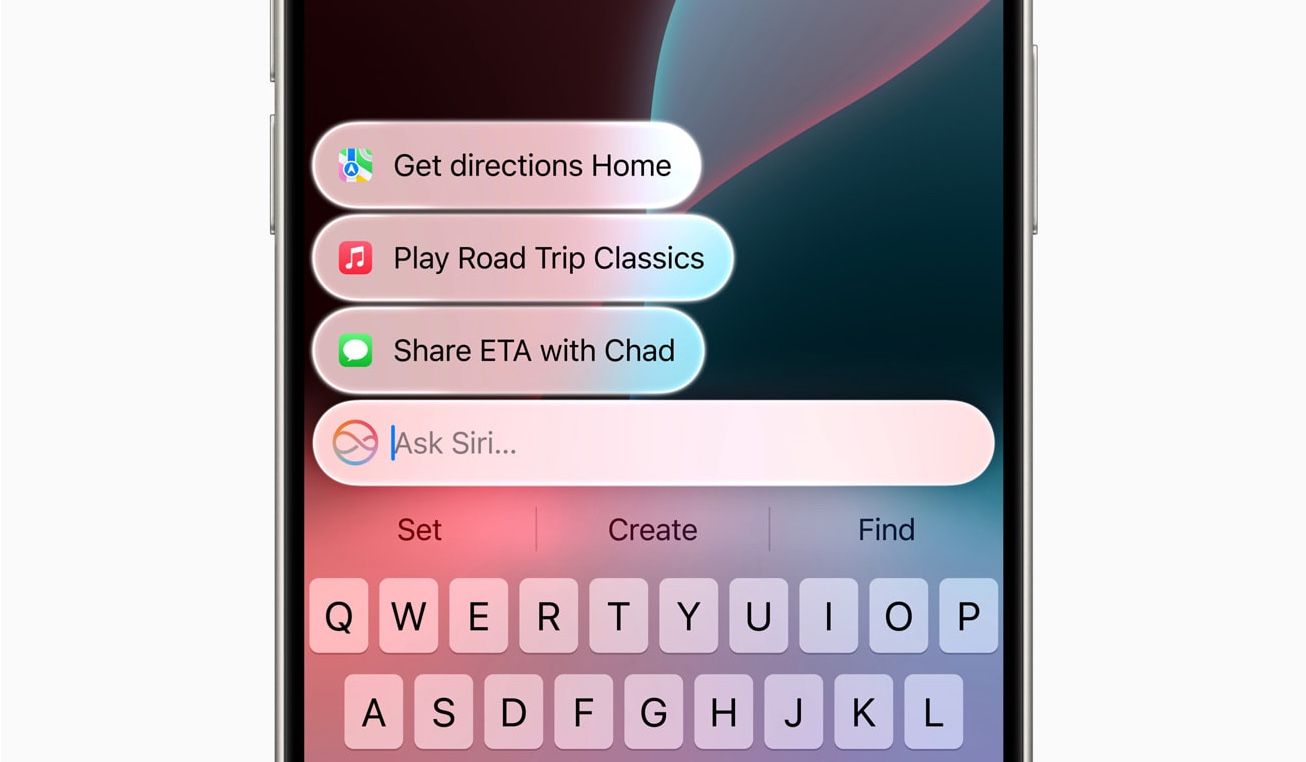
Siri AI lets users get things done across apps. Photo Credit: Apple
If AI shifts consumers from apps to agents, the value of owning the smartphone interface could erode, however well the hardware is designed.
Renting Out The Interface
Apple has a second line of defence: it may not need to own the intelligence if it owns the interface. Google paid Apple roughly $20 billion in 2022 simply to remain the default search engine on Safari. Google owned the search engine, Apple owned the doorway to it.
If OpenAI, Google and Anthropic each end up owning a model, but premium consumers reach those models through an Apple device, Apple can still capture the economics of distribution. The company that owns the intelligence doesn't necessarily own the consumer. The company that owns the interface might.
The Moat That Still Matters
None of this works without Apple's oldest asset: product and design. Dieter Rams, whose philosophy shaped Jony Ive's design language, called it "less, but better." Steve Jobs described the effect even more simply: the moment a customer senses that someone at Apple actually thought of this. Rivals can match the chip or the camera count. What's harder to copy is the accumulated experience, silicon, software, packaging, retail and service, woven into something that feels perfected. That builds trust, and trust builds pricing power. The Duo's Rs 2,99,900 starting price in India isn't just a number. It's a claim about where Apple believes it sits in the hierarchy of consumer technology.
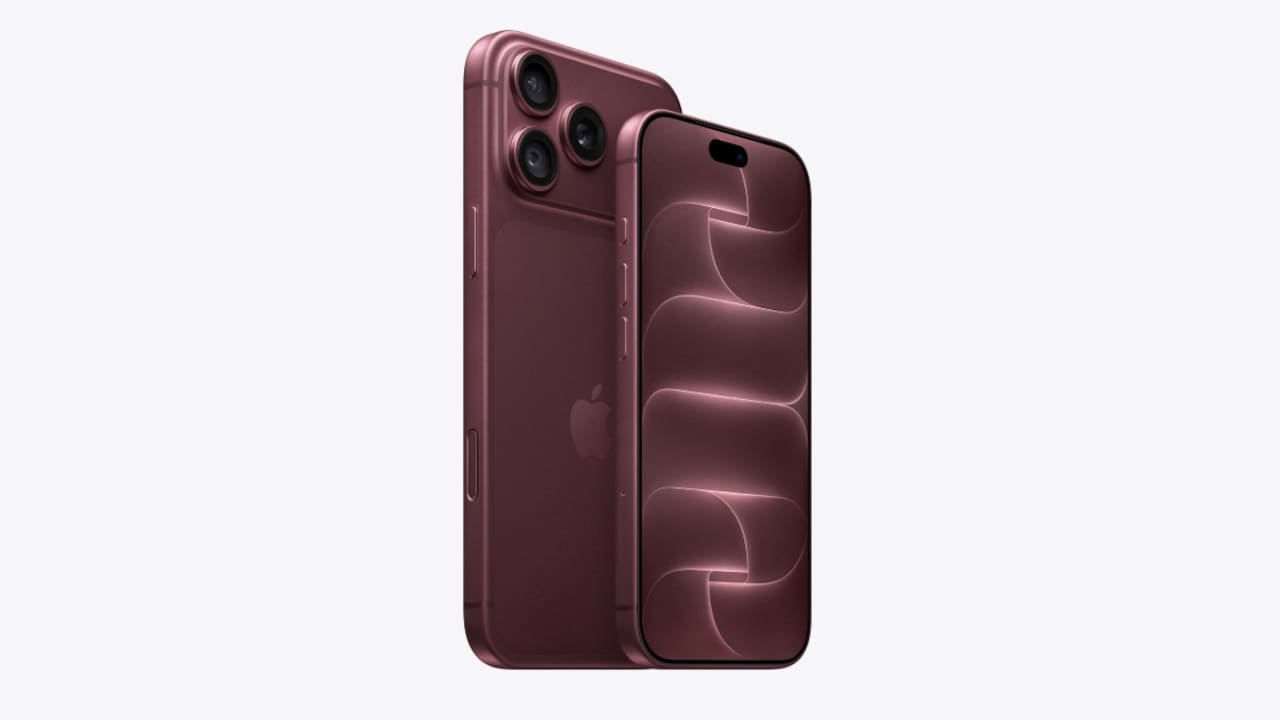
The iPhone 18 Pro's Burgundy colour replaces last year's Cosmic Orange.
One more data point. Berkshire Hathaway cut its Apple stake by roughly three-quarters from its late-2023 level, settling near 228 million shares, even as Buffett kept calling Apple an "extraordinary business". Berkshire no longer expects the explosive capital appreciation of the last decade to repeat. A great company can stay great while becoming a less extraordinary investment. That is precisely Apple's challenge now: proving the moat that built the last decade can survive the next one.
The Bet
There are two ways to read all of this. Apple is playing the long game: preserving margins, building private on-device models, partnering rather than over-building, and putting a hardware engineer in charge just as AI reshapes computing. On this reading, it isn't late. It is waiting.
Or Apple simply lost the AI race and is dressing up the loss as strategy. Siri could be organisational failure, not patience. Dependence on Google for frontier intelligence could mean Apple has ceded a critical layer of the stack. If the next interface turns out to be an AI agent rather than an app grid, Apple's hardware moat is exactly what becomes exposed.
Both readings can be true at once. Apple's biggest strength is that it doesn't need to win every technology race. Its biggest risk is that AI might be the one race that ends up setting the rules for everyone.
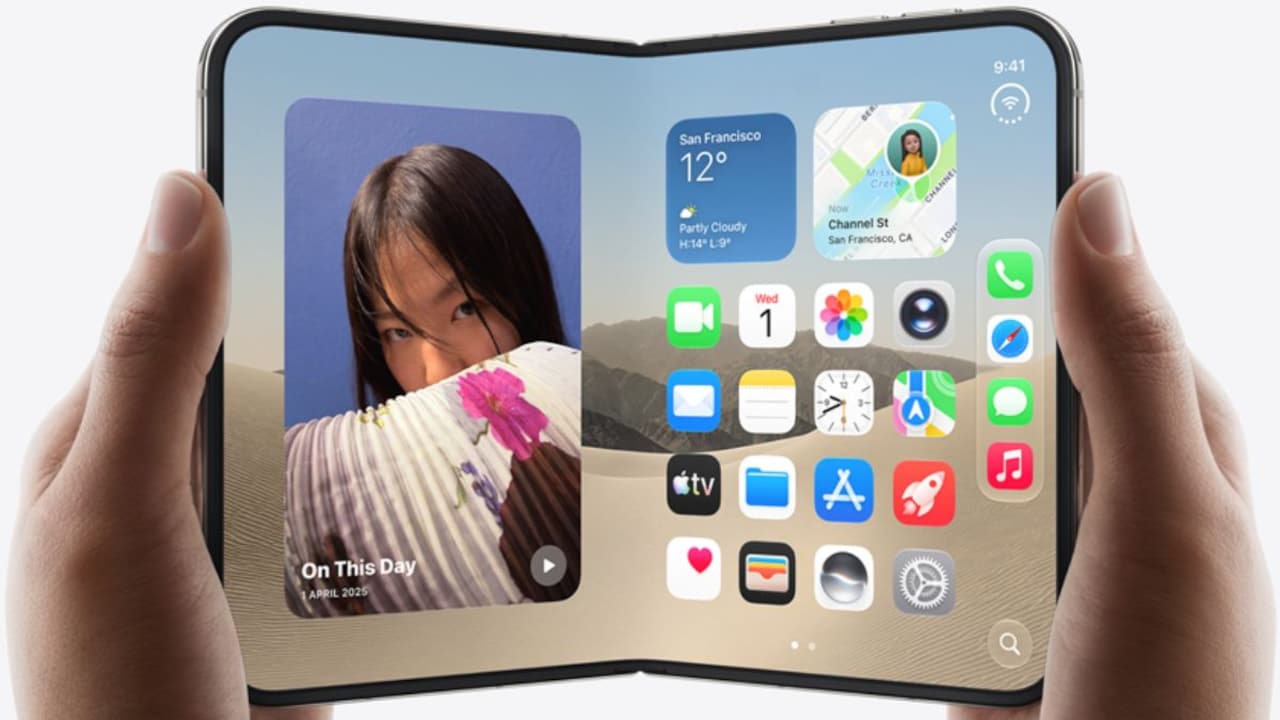
Apple has launched its first foldable phone iPhone Duo. Photo Credit: Apple
Ternus is betting that intelligence becomes abundant and commoditised while the physical interface to it stays scarce and trusted. If he's right, Apple becomes the toll road between AI and the premium consumer. If he's wrong, the moat it spent decades building will sit one layer below where the value has moved.
Either way, the signal was unmistakable. At the start of the biggest platform shift since the internet, Apple didn't put an AI scientist in charge. It put a product engineer in charge, and his first act was a foldable phone that arrived seven years late.
It may be the most Apple thing imaginable: let everyone else race to find the future, while Apple builds the version people actually want to live with.
The trillion dollar question is whether, this time, Apple is still ahead when it finally gets there.
(Vinay Sarawagi is Chief Content Officer at NDTV Network)
Disclaimer: These are the personal opinions of the author
-
Opinion | Building BRICS In New Delhi

For India as the host nation, chairing the summit tests the core tenet of its modern foreign policy: strategic autonomy.
-
Can India 'Mediate' Between Iran And UAE At BRICS? Gulf Envoy Suggested It Once
At the very start of the Israel-US war on Iran, it was a UAE diplomat who had suggested as much.
-
Opinion | When The Feed Braves The Flood
NDTV drops the 24x7 and stakes its next chapter on presence as it inaugurates a new identity
-
I Went Looking For A PG In Delhi's Kamla Nagar. Here's What I Found
In every PG visited by NDTV in Delhi's Kamla Nagar, the conversation began with amenities. Nothing in the sales pitch was about how secure the building was.
-
Opinion | How Trump Is Doing More For BRICS Than Its Critics Ever Could
By trying to bully BRICS countries into submission, Trump may be giving the grouping the very relevance he is trying to deny
-
Opinion | BRICS Has Grown Up. Now It Must Behave Like An Adult
The India-China accommodation will be a key driver of the grouping, but a 'non-Western' agenda will work well only if it focuses on ending global conflict as much as on stabilising the global economy
-
Opinion | 9/11, And The Price Of Fighting Terror For A Quarter Century
Twenty-five years later, 9/11 is more than just a lived memory for those who witnessed it in real time, as I did as a UN official
-
Opinion | US Can Threaten, Not Dictate: What India's Iran Message Really Means
If India's Bishkek message was a signal to the US, then Pezeshkian's arrival in New Delhi for BRICS will be a defining note: that India's strategic autonomy is not up for debate
-
Opinion | For Years, Azerbaijan Backed Pak, Snubbed India. Now Comes The U-Turn
Azerbaijan, which had until recently been condemning India's Operation Sindoor and even allowing Kashmir Day events by the Pakistan Embassy, is now slowly rethinking its ties. But why?