On Disagreement, Democracy: An Open Letter To Mani Shankar Aiyar - By Shashi Tharoor
Congress's Lok Sabha MP Shashi Tharoor responds to a recent "assessment" by Mani Shankar Aiyar of his positions - and 'character'.
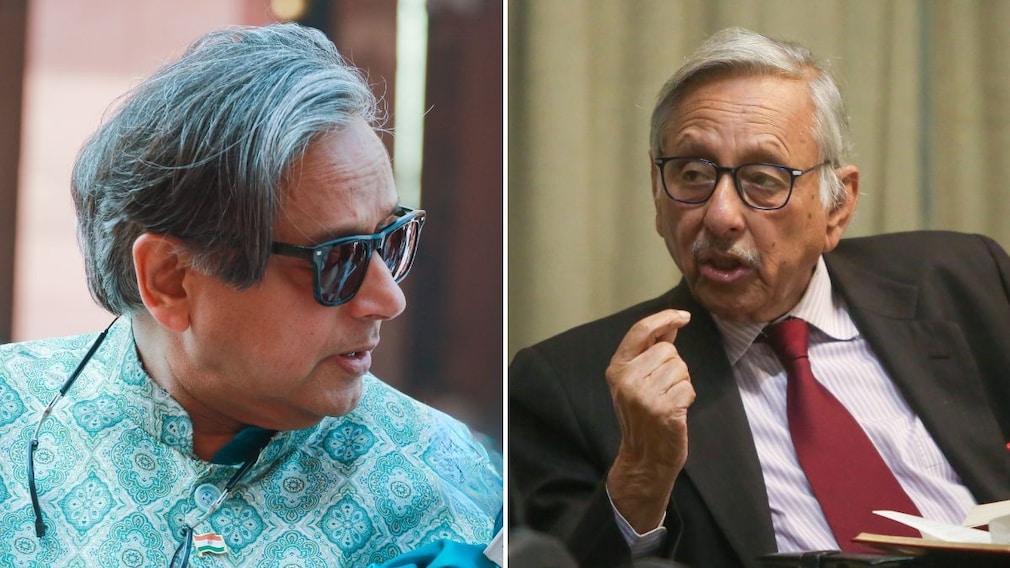
Disagreement is a hallmark of a thriving democracy, but questioning a colleague's motives or patriotism simply because they adopt a different approach to foreign policy does little to strengthen public debate. While you are entitled to your views, your recent public "assessment" of my positions (and my character) demands an unambiguous response.
I have always approached international affairs from a clear nationalist perspective, placing India's interests, security, and global standing at the heart of every discussion. Recognising geopolitical realities and weighing consequences for India's economy and strategic position is not "moral surrender"; it is responsible statecraft.
India's diplomacy has historically balanced principle with pragmatism. From Nehru's policy of non-alignment to today's complex multi-alignment in an increasingly multipolar world, the objective has remained constant: protect India's sovereignty while speaking for global justice. My record, whether in or out of Parliament, reflects that balance. No generation holds a monopoly over patriotism, nor over the interpretation of Gandhi or Nehru. The true tribute to their legacy lies in applying their values wisely to the realities of our time.
India was similarly reluctant to condemn the Soviet Union's flagrant violations of international law in Hungary, Czechoslovakia and Afghanistan because we rightly judged we had too much at stake in the relationship with Moscow to antagonise it with a moralistic stand. Today, we have far too much at stake in the Gulf Arab states that are currently facing Iranian missile and drone attacks - nearly $200 billion in annual trade, energy security and the well-being of some nine million Indian workers and residents.
To acknowledge reality is not to kowtow to anyone. We currently deal with a government in Washington that may not prioritise international law in the way we might wish, and which is often willing to lash out at those who obstruct it. In my recent Indian Express column, I explicitly described the illegality of the current war, pointed to its devastating consequences, and called for an immediate end to hostilities. It is unfortunate that you seem to have missed this clear statement of principle. My point is simple: while the war violates the tenets we stand for, jeopardising the many other strategic interests we have with the US would be unwise. Foreign policy is, above all, about the national interest. Our interests are not served by indulging in the gratification of grandstanding - unless we are confident that we can comfortably withstand the consequences.
Furthermore, your allegations regarding my foreign travels are beneath contempt. Aside from Operation Sindoor, where I was part of and led an all-party delegation, all my foreign travels are undertaken in a personal capacity. They are neither requested, organised, nor financed by the government. I receive far more international invitations than I can possibly accept, none of which have anything to do with my position as Committee Chairman. (In our parliamentary system, official travel is undertaken by the Speaker, not by a Committee Chair.) To suggest I am "pleasing the PM" to secure travel is a baseless slur.
Regarding my views on the neighbourhood and the region: they have been consistent for decades. Whether advocating for a two-state solution between Israel and Palestine in my various addresses at the International Media Seminars I ran at the UN, or observing that in Pakistan the army often has a state rather than the state having an army, my positions are rooted in a sober assessment of power dynamics and morally desirable outcomes. During the outreach after Operation Sindoor, I conveyed a clear message: India, the land of the Buddha and the Mahatma, seeks peace. But peace cannot mean passivity. We will not allow state-sponsored terrorism to take innocent lives without a firm response.
As for Sabarimala, I am slightly amused that after attacking me for allegedly heretical views, you are criticising me on this issue for going along with our Party's considered stand on the matter. I also took the trouble to explain my position at the time at length, but clearly you have not bothered to digest it.
Finally, your comments regarding my date of birth are irrelevant. One does not need to have been "carried in Mahatma Gandhi's arms" to admire his legacy. I have written extensively on Gandhiji and authored an entire book on Nehruji; my respect for them is intellectual and deep-seated, not dependent on contemporaneity or one-time proximity to them personally.
Disagreement on the "how" of foreign policy is natural. But to misread principled pragmatism as a lack of conviction is a failure of assessment. I remain an optimist in that a nationalism which balances moral conviction with the hard realities of statecraft is precisely what India needs to secure its place in the world.
I am grateful to you for having supported me in the AICC Presidential election. It was precisely the stand of principle you say you would wish to applaud, so I am sorry you now regret it. I, too, supported you very strongly with the "high command" of the party, especially when you were suspended from its membership. I have no regrets that that injustice has been reversed.
It was, nonetheless, disingenuous of you to announce a parting of the ways at the end of your letter. The parting had already come in the course of your many gratuitous comments about my character ever since I spoke up on Operation Sindoor. I have refrained from reacting publicly so far, but your recent comments leave me no choice.
Sincerely,
Dr Shashi Tharoor, MP
Member of Parliament for Thiruvananthapuram
Lok Sabha
Chairman, Parliamentary Standing Committee on External Affairs
(Disclaimer: These are the personal opinions of the author)
-
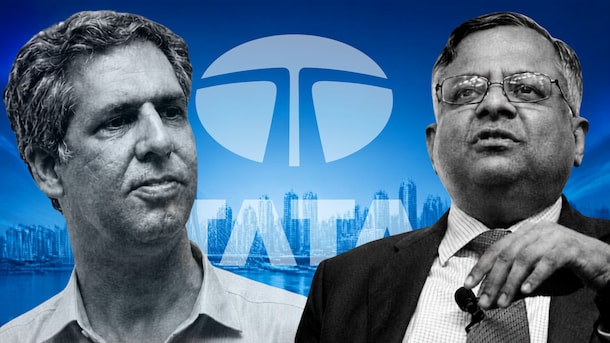
Tata Sons' Trust Issue: Two-Pronged Row Goes Beyond The Chair

NDTV Explains: Overtly, the latest conflict is whether N Chandrasekaran continues as executive chairman of Tata Sons. The controversy involves at least one more issue.
-
Opinion | US Has Institutionally Weaponised India's Russia Oil Dependence. Can New Delhi Cope?
A new legislation can connect India's Russian energy purchases to its access to the American market over a five-year period
-
Opinion | Saudi Allies Are Now Discovering The Cost Of 'Commitment' - And Not Liking It
The spectacular no-show by Saudi Arabia's two defence allies - Pakistan, a nuclear power, and Turkey, which has NATO's second-largest army - is astounding
-
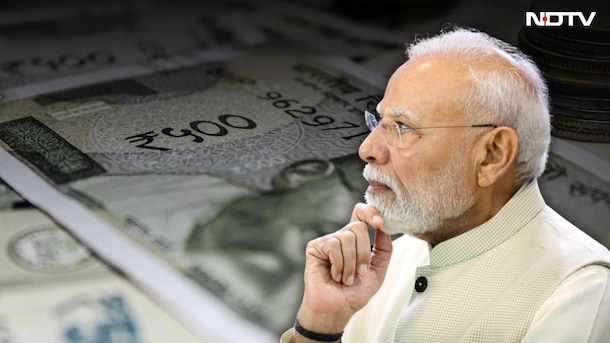
12 Years Of 'Modinomics': What Changed, What Worked, What Didn't
There is no single Modinomics textbook or formula. Instead, the term has come to describe a collection of choices made during the PM Modi years.
-
Opinion | How A Tiny 0.4% UPI Fee Could Change How India Pays
The introduction of a fee can have a psychological effect beyond its immediate financial cost. Businesses that have come to view digital payments as free may begin to look for alternative - split payments, cash, and so on
-
Opinion | Rs 75-Lakh Bounty, New Jaish Base, And The Case Of Pak's Ever-Missing' Terrorist
Pak's yearly act is back: finding Masood Azhar. But there are other questions FATF must be asking next month as it meets
-
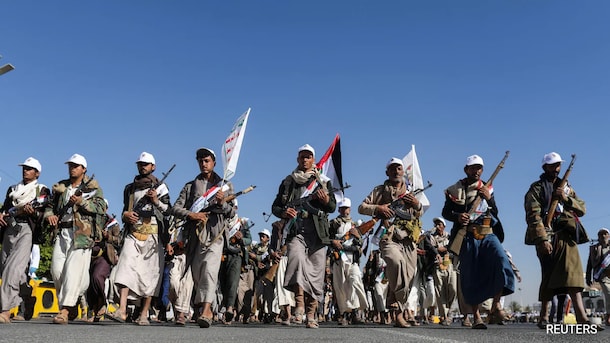
For Years, Saudi Saw Houthis As Yemen's Problem. Then, A Knock On The Door
Actual fighting between the Houthis and Saudi Arabia began late in the overall timeline of the conflict that now involves powerful belligerents
-
Lal Topi, Blue T-Shirt: Akhilesh Yadav's 'PDA' For Blue Has A Coded Message
The message is clear: the Samajwadi Party wants to talk to voters beyond its traditional Yadav-Muslim support base, particularly to Dalits.
-
The Day 600 Men Lay Siege To Islam's Holiest Site And How They Were Gassed Out
Nearly 47 years ago, on November 20, 1979, the Grand Mosque itself was seized by an armed group in one of the most extraordinary episodes in modern Saudi history.
-
New UPI Charges: If Digital Payments Save Money, Why Charge For Them Now?
UPI Payments Free For Years: The government has subsidised UPI adoption for years. Official figures show thousands of crores in payouts over years.