Opinion | Ajit Pawar: The Politician Who Didn't Pretend
Ajit Pawar bent over backwards to be in power; when there, he commandeered it to work for the public while helping his party, of course.
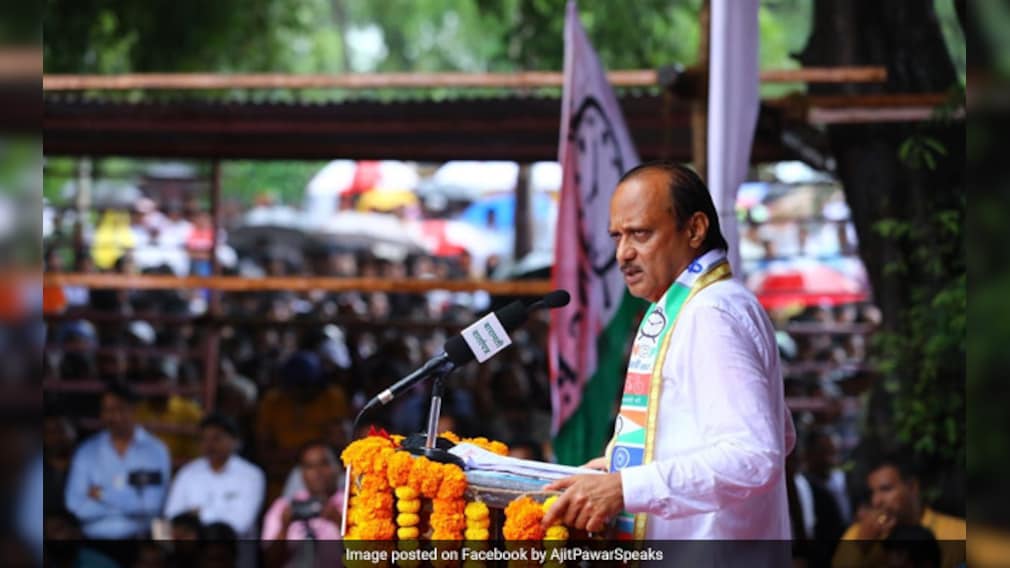
Back in the monsoon of 1999, the then Congress heavyweight Sharad Pawar had broken away from the party to set up his own. Four months later, the nascent Nationalist Congress Party (NCP) contested the Maharashtra Assembly elections with the clock symbol. That campaign was tough in many ways - old friends and compatriots had become new rivals, the organisational set-up was still being consolidated, sources of funds had trickled down. What was short on resources, Pawar decided, would be made good by the second rung of leaders he had groomed. He sent the handful across the state, especially into corners of western Maharashtra - his stronghold - and monitored every move and statement each of them made. Foremost among them was Ajit Pawar, his nephew.
What Sharad Pawar Told Me Years ago
“Is he your number two,” I asked him while accompanying on one of his many road campaigns. Pawar shook his head. “At this point, I don't know what kind of a politician and political leader he will grow into. He has everything going for him, he is sharp and intelligent, he works hard and is willing to keep long hours, he understands the value of connecting with workers and people in every village. But then there are others who show similar qualities too. Let the race begin. If he has what it takes, he will emerge the first among equals,” replied Pawar, in a rare instance of a long answer.
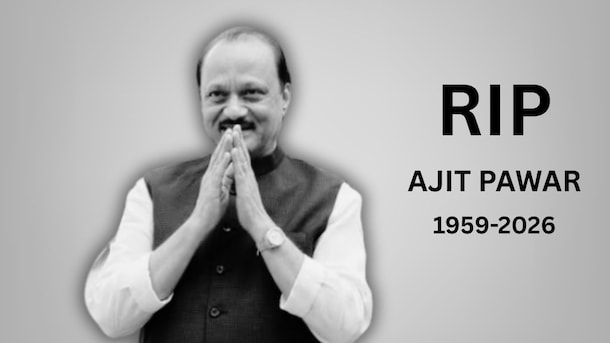
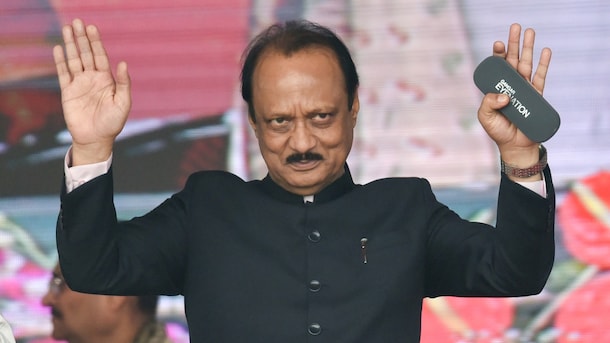
Over the next 25 years and some, Ajit Pawar not only emerged as a frontrunner among his colleagues in the party but also split the party, took away the name and the symbol - albeit with the blessings of the ruling Bharatiya Janata Party (BJP) - was sworn in as Maharashtra's Deputy Chief Minister for a record six times, presided over significant portfolios such as finance and irrigation, and decisively came out of the shadows of his uncle and political mentor. Ajit Ashatai Anantrao Pawar, as he took his name during the oath-taking ceremonies, at 66 years, was a politician in his own right, more than a powerful uncle's nephew.
He evolved a grounded approach and rustic style all his own. A straight talker to Pawar's few words. Humorous to Pawar's deadpanism. Going the extra mile for power that even Pawar might not have considered - such as openly allying with the BJP. But what he learned from his mentor was visible in his firm and steady grasp over the administrative machinery, his stern and no-nonsense approach to work, his clarity and focus with bureaucrats and his staff, his sensitivity and personal approach to people who came to him, his ability to say things publicly that drew spontaneous applause from listeners, and his friendships across party divides.
One Of Their Own
As darkness fell on January 28 at the Vidya Pratishthan grounds in Baramati, the home turf of the Pawar clan, and tens of thousands crowded every available square metre of space grieving for their Ajitdada - killed with four others that morning in an airplane crash minutes before landing at Baramati - Pawar Sr would have run the reel of Ajit Pawar's political and personal life in his mind's eye. It was a loss like no other. For the Pawar clan, a deeply personal loss. For Baramatikars, it was personal and political; they had lost a leader who knew many of them as his own.
The outpouring of grief in the wider circles too was testimony of his politics of command, compromise, and care; the corruption charges of Rs 70,000 crore in the irrigation scam were forgotten and the ‘clean chit' from the investigating agencies was hardly talked about. All said, Pawar's politics did not shift overtly even as his alliance coasted along - he did not visit the headquarters of the Rashtriya Swayamsevak Sangh (RSS) to “pay his respects”, he questioned the campaign of UP Chief Minister Yogi Adityanath during the elections in 2024, and he found a way to balance his ambition for power - which could only come if he ran with the BJP - with his basic framework of non-communal, people-centred politics.
In this lies the significance of Ajit Pawar's loss to Maharashtra, perhaps even to the nation. Few will make the claim that he was among the most honest or non-corrupt leaders to have walked this soil. Besides the serious allegations in the irrigation scam, Ajit Pawar faced the central agencies' probe for misappropriation of funds in the Maharashtra State Central Cooperative Bank and the sugar factories in his control. Fewer will applaud him for sophistication of his language and thought - remember that awful remark, ‘should I pee to fill the dam if there's no water?' - and even fewer for his social skills in the chic wine-and-cheese circles. That was not his stomping ground at all. He left it to others, including cousin and MP Supriya Sule.
Ajit Pawar, The Doer
His world lay elsewhere - early morning starts, long and hard days of file-reading and signing, meetings intended to have outcomes rather than fill calendars, abjuring the spoils of power most associated with politicians, knowing his workers, forging relationships with people of his terrain, being briefed on the latest developments in the world, and more. Ajit Pawar bent over backwards to be in power; when there, he commandeered it to work for the public while helping his party, of course. Till the end, he remained a political leader whose worldview had been crafted by his early years on the ground, in the fields and homes of farmers and teachers, his learnings from his uncle's political gurus including the late YB Chavan, and his own razor-sharp judgements of situations and people.
Ajit Pawar was no saint in politics - and never claimed to be one. He was a politician with a purpose - and made no bones about it. His aspiration, even ambition, was to be the Chief Minister of Maharashtra, a post that eluded him despite he being a step away from it on many an occasion. Still, he hoped. Would he have made a big difference to the state, to its people and development? That will remain tantalisingly unanswered. Will the NCP now merge with the Sharad Pawar faction and will it continue to ally with the BJP? The answers will take their time to come.
What will matter in the years ahead, as his impact on the state in the past 40 years of public life - 25 of them in office - and the full weight of his absence is assessed by contemporary historians or political scientists is this: in 2026, Ajit Pawar was among the extremely few who understood the state's pulse, both rural and urban, and knew how to work the levers of power, but he was perhaps the only one with these qualities as well as a steadfast commitment to non-communal politics, which kept him from bowing down politically. In this sense, the void he leaves will be hard to fill.
(Smruti Koppikar, an award-winning Mumbai-based journalist and currently the Founder Editor of Question of Cities. She led newsrooms for national newspapers and magazines including The Indian Express, Outlook, Star News, and The Hindustan Times besides reporting for The Statesman and India Today)
Disclaimer: These are the personal opinions of the author
-
NDTV Exclusive: The Hunters Of Lyman - Inside Ukraine's Deadliest Drone Unit

In an exhaustive interview with NDTV, drone pilots and operators from Ukraine's Signum Batallion go into details about drone warfare and what happens on the frontlines.
-
Ten Minutes From Kanpur, The Plane Crash That Killed Madhavrao Scindia
On September 30, 2001, the Congress lost one of its brightest leaders, Madhavrao Scindia, in a plane crash 10 minutes from Kanpur
-
Ajit Pawar, The No-Nonsense 'Dada' Of Maharashtra Politics
A seasoned politician, Ajit Pawar never hid his ambition he wanted to become Chief Minister of Maharashtra. Only, he never realised that dream, falling a step short an incredible six times.
-
Blog | "I'll Be Chief Minister, You'll See": The Many Dreams Of Ajit Pawar
Ajit Pawar, unlike most other politicians who mask their pursuit of power with pious claims of 'public service', wore his ambition on his sleeve.
-
Opinion | The Shashi Tharoor Congress - And Rahul Gandhi - Can't Quite Understand
The Congress has historically struggled to accommodate autonomous power centres that do not derive legitimacy from its central leadership structure. Placed against this historical arc, Tharoor's predicament acquires sharper relief.
-
Aircraft Carriers And Fighter Jets: US Preps For Iran Attack, Israel Watches
Trump has repeatedly threatened military action against Iran over the protesters' deaths, even claiming American pressure had forced Iran to cancel plans to execute thousands of people.
-
Bangladesh Planning New Barrage On Padma River As Farrakka Talks Stall
The Bangladesh Water Development Board (BWDB) is now preparing to implement the long-delayed Padma Barrage project at a cost of 50,443.64 crore Taka.
-
Beyond Ikkis, Border 2 - The Lesser-Known Story Of A Two-Time War Veteran
Directed by Sriram Raghavan, Ikkis (meaning 21) focuses on the life of Second Lieutenant Arun Khetarpal of The Poona Horse.
-
Opinion | Why India Must Applaud - And Learn From - Carney's Davos Speech
In the current world order, while hegemons can go it alone, everyone else is on the menu if they aren't at the table. That is the takeaway from Carney's speech, and that is what India needs to acknowledge as it tries to chart a course of its own.
-
Opinion | The Greenland 'Secret' Trump Doesn't Quite Like Talking About
Rare earths, billionaires, and the soft rebranding of a land grab - the reality behind Trump's Greenland threats.