Opinion | 'AI-Enabled' Soldiers? What An India-China-Pak Crisis May Soon Look Like
AI compresses the decision-action loop, turning hours of analytical deliberation into seconds of machine-assisted judgment. In warfare, that compression is the difference between survival and defeat.
When Prime Minister Narendra Modi inaugurated the AI Impact Summit in New Delhi this week, the gathering was more than a showcase of technological prowess. It was a signal - deliberate and unmistakable - that India intends to be a principal architect of the rules, tools, and trajectories that govern artificial intelligence in the 21st century. Embedded within that ambition is a question of acute strategic consequence: can India harness AI to transform its defence ecosystem from one defined by legacy dependencies into one that is adaptive, autonomous, and fit for the warfare of tomorrow?
The answer is both urgent and complex. Across the four pillars of modern military power - equipment modernisation, supply chain management, doctrinal guidance, and battlefield tactics - AI is not merely an incremental upgrade. It is a civilisational lever, one that offers nations the rare opportunity to leapfrog generations of capability gaps through the intelligent infusion of technology as a force multiplier.
How Major Powers Are Deploying AI In Defence
To understand where India stands, one must first appreciate the pace at which the world's foremost military powers are racing ahead. The United States has embedded AI across its Joint All-Domain Command and Control (JADC2) architecture, enabling real-time synthesis of data across land, sea, air, space, and cyber domains. The Pentagon's Replicator initiative, launched to field thousands of autonomous systems in rapid time, reflects a doctrinal shift towards attritable, AI-enabled platforms that can saturate adversary defences at minimal human cost.
China, meanwhile, has declared the fusion of military and civilian AI a national imperative. The People's Liberation Army is deploying AI for predictive logistics, autonomous drone swarms, and battlefield decision-support systems at a pace that has alarmed Western intelligence agencies. Russia has pursued AI-driven electronic warfare and target acquisition systems, with lessons from its ongoing conflict in Ukraine accelerating real-world experimentation at a grim scale. Israel's use of AI-based targeting and intelligence correlation in recent operations has further underscored how middle powers, too, can punch above their weight with the right technological integration.
The common thread is this: AI compresses the decision-action loop, turning hours of analytical deliberation into seconds of machine-assisted judgment. In warfare, that compression is the difference between survival and defeat.
From Platforms to Intelligent Systems
India's defence inventory has long been characterised by vintage platforms, chronic procurement delays, and a technology ecosystem that leans heavily on imports. AI offers a path out of this structural trap. Autonomous unmanned aerial vehicles, AI-assisted naval surveillance systems, and smart munitions are no longer futuristic concepts - they are procurement priorities articulated in India's Defence Acquisition Procedure and reinforced through the iDEX (Innovations for Defence Excellence) framework.
The integration of AI into existing platforms is equally transformative. Retrofitting legacy fighter aircraft with AI-based threat assessment modules, equipping armoured vehicles with computer-vision-driven situational awareness, and deploying AI-powered electronic warfare suites can substantially extend the operational relevance of platforms that would otherwise face obsolescence. This is where India's opportunity to leapfrog is most vivid: rather than replicating the incremental modernisation paths of Cold War-era militaries, India can embed intelligence into its platforms from the ground up, compressing what might have taken two decades of capability-building into five years of targeted investment.
The Defence Research and Development Organisation (DRDO) has accelerated work on AI-enabled systems, including swarm drones and autonomous underwater vehicles. Collaborative programmes with private industry - facilitated by relaxed foreign direct investment norms in defence - are beginning to yield indigenously developed AI tools that can be scaled across the services.
Predictive Logistics as a Strategic Asset
Militaries have historically won or lost on the strength of their logistics. Napoleon's aphorism about armies travelling on their stomachs remains as relevant in the age of algorithms as it was in the age of muskets. AI transforms logistics from a reactive function into a predictive one. Machine learning models trained on consumption patterns, maintenance cycles, and operational tempos can anticipate demand for spare parts, ammunition, and fuel weeks before a shortfall becomes critical.
For India, which manages one of the world's largest standing armies across diverse and often inhospitable terrain - from the high-altitude Himalayan front to the maritime littorals of the Indian Ocean - intelligent supply chain management is not a luxury but a necessity. AI-driven inventory optimisation, predictive maintenance for fleets of ageing equipment, and automated procurement triggers can reduce waste, prevent operational downtime, and free human logistics officers for higher-order strategic planning.
The integration of AI into India's integrated theatre commands - currently undergoing a long-overdue structural reform - will require that logistics and intelligence functions become genuinely interoperable. This is a domain where AI can serve as the connective tissue, harmonising data flows across services that have historically operated in silos.
What A Machine-Augmented War May Look Like
Technology without doctrine is an instrument without direction. The most sophisticated AI system deployed on a battlefield is only as effective as the strategic framework within which it operates. India's military doctrine has evolved considerably since the Cold Start concept of the early 2000s, but it has not yet fully grappled with the implications of AI-enabled warfare.
Questions abound. When an AI-assisted decision-support system recommends a strike, who bears moral and legal responsibility for the outcome? How does India calibrate rules of engagement in a conflict where adversary AI systems may escalate faster than human commanders can respond? What thresholds govern the use of lethal autonomous weapons systems, and how do those thresholds interact with India's stated commitment to strategic restraint?
These are not merely philosophical inquiries, but operational imperatives. India's participation in global AI governance forums, including the discussions convened at the AI Impact Summit, reflects an awareness that doctrinal frameworks must be developed in concert with the international community. A nation that develops AI warfare capabilities without corresponding doctrinal clarity risks strategic miscalculation of the most dangerous kind.
The AI-Enabled Soldier
At the tactical edge, AI is reshaping what it means to be a soldier, a pilot, or a naval officer in the field. AI-powered intelligence, surveillance, and reconnaissance systems can process satellite imagery, signals intelligence, and open-source data simultaneously, delivering a synthesised operational picture to a field commander in near real time. AI-driven target recognition reduces the cognitive burden on operators and, theoretically, reduces the likelihood of fratricide and civilian casualties.
For India, operating in multi-front scenarios with a diversity of threat profiles - conventional, sub-conventional, and hybrid - AI-enabled tactical systems offer significant advantages. Facial recognition and pattern-of-life analysis tools deployed in counter-insurgency operations, AI-driven cyber defence systems guarding critical military networks, and machine-learning-based threat classification for border surveillance are already in various stages of conceptualisation and deployment.
Ambition vs Inertia
India's approach to AI in defence is characterised by a productive tension between ambition and institutional inertia. On the one hand, the government has established a Defence AI Council, released a Defence AI Project Agency (DAIPA) framework, and allocated resources to AI-led defence innovation. On the other hand, procurement bureaucracy, inter-service rivalry, and a historically risk-averse acquisition culture continue to slow the pace of adoption.\
The AI Impact Summit being held now in India has offered an opportunity to bridge that gap - to align the country's civilian AI ecosystem, which has demonstrated genuine global competitiveness in software and data analytics, with the specific demands of defence applications. The talent, the infrastructure, and, increasingly, the capital, are present. What is required now is strategic will and institutional agility.
The window for leapfrogging is real, but it will not remain open indefinitely. Nations that invest in AI-enabled defence capabilities today will shape the security architecture of the next two decades. For India - a rising power with unresolved border disputes, a complex maritime neighbourhood, and ambitions commensurate with its size and history - that window is not merely an opportunity. It is an obligation.
The algorithm of war is already being written. The question is whether India will be among its key authors.
(Subimal Bhattacharjee moderated the Defence Panel discussion curated by the Indian Army, at the AI Impact Summit. He is an advisor on technology policy issues and former country head of General Dynamics.)
Disclaimer: These are the personal opinions of the author
-
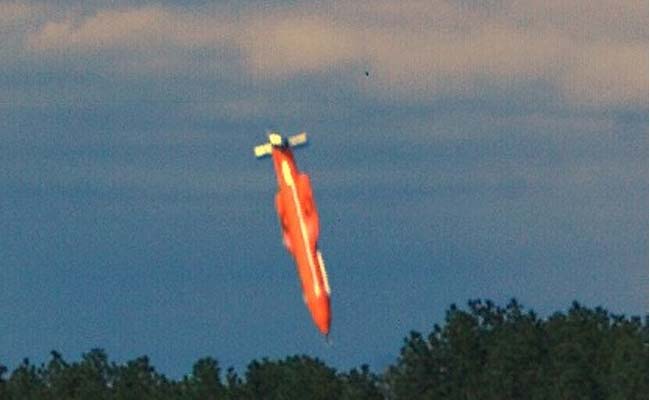
Opinion | The Last Bet? What Trump's 'Mother Of All Bombs' Could Actually Do To Iran

Can an MOAB deliver a decisive blow to Iran that may force it to surrender immediately, as Japan did after Hiroshima and Nagasaki in World War 2?
-
Hit Songs, Empty Pockets: The Hidden Math Behind India's Viral Music Boom
Over 80,000 brands and five lakh creators in India make branded content. The opportunity is worth around Rs 1,500 crore.
-
Opinion | Great 'Exceptions': How The Oil India Was Attacked For Is The Oil Trump Now Seeks
A law written to punish the buyers of Russian oil was suspended by the US to protect a purchase of Russian oil. India spent fourteen months being lectured for less.
-
Opinion | Louis Vuitton Loot, Torched Cars: France Protests Have An Unlikely Beneficiary
It's an unbelievable moment. Crowds looting the most exclusive stores in Paris, including the famed Luis Vuitton. But what's behind this meltdown?
-
Blog: Kolkata Didn't Learn From 2015. Eleven Years Later, It Proved To Be Fatal
The City of Joy isn't a stranger to crowd control. Be it during Pujo or Christmas at Park Street, Eden Gardens cricket matches, or Derbies between Mohun Bagan and East Bengal. But during Pujo, the entire city is on alert.
-
Opinion | Slurs, Threats, Now A Temple Attack Plot: When Did America Become So Hostile To Indians?
The rising tide of anti-India, anti-Hindu, and racist attacks serves as a stark reminder that economic prosperity does not automatically guarantee social immunity from bigotry.
-
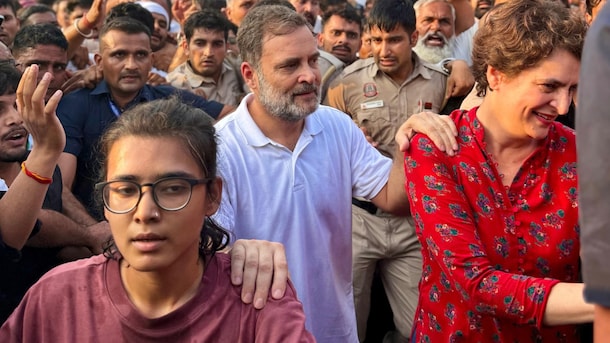
A Step Behind Neha Bora: What Rahul Gandhi's Gesture Says About Congress' Gen-Z Pitch
At INDIA bloc's march to Supreme Court, Rahul Gandhi placed himself a step behind two women, hands resting on their shoulders. One was his sister Priyanka. The one on his right was Neha Bora. Here's what the image means for the protest wave now, and for Rahul's politics in general.
-
Opinion | Imran Khan, And The Perils Of Having An 'Opinion' In Bollywood
The reality of the industry is quite grimy. More often than not, its inhabitants have been fairweather friends, happy to sing the praises of whoever is in a position of authority.
-
Exclusive: India's Food Safety Problem Goes Beyond Just Dirty Kitchens - By Tukaram Mundhe
On World Food Day, Maharashtra's Commissioner of Food Safety explains why instead of taking stopgap measures, the entire supply chain in India needs to be held accountable and made transparent.
-
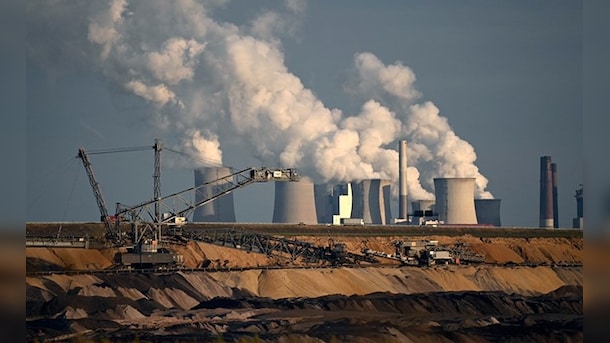
Opinion | India Has Enough Coal. So Why Are Power Plants Running Short? A 76 Million 'Crunch'
As of October 5, as many as 82 of the 191 thermal plants monitored by the Central Electricity Authority were in the 'critical' category